

 Nila Kartika Wati

The detention and subsequent shooting of 28-year-old Wilber Rafael Garces Perez by Immigration and Customs Enforcement (ICE) agents has ignited a firestorm of controversy, casting a harsh light on the practices of federal immigration authorities and the systemic lack of transparency regarding the use of force. As of late September 2026, Garces Perez remains in federal custody with a bullet lodged in his back—a stark symbol of the ongoing struggle between administrative deportation mandates and basic human rights.
The Incident and Immediate Aftermath
The crisis began on a Sunday afternoon when Garces Perez, a Venezuelan national and legal asylum seeker, was performing DoorDash deliveries in Texas. During a confrontation with ICE agents, he was shot. The circumstances surrounding the encounter remain murky, exacerbated by the revelation that the federal agent involved was not equipped with a body-worn camera.
Following the shooting, Garces Perez was not treated as a victim of a violent encounter but as a detainee processed for swift removal. He was transferred to the South Texas ICE Processing Center in Pearsall, Texas. His legal team, led by attorney Kate Lincoln-Goldfinch, reported that his condition deteriorated rapidly, including reports of loss of sensation in the left side of his body—a terrifying complication potentially linked to the proximity of the bullet to his spine.
A Chronology of Bureaucratic Negligence
The timeline of events following the shooting highlights a disturbing pattern of medical neglect and procedural maneuvering:
- Sunday: Garces Perez is shot by an ICE agent while working.
- Monday: After reporting severe neurological symptoms, he is moved to a hospital. His attorney attempts to facilitate care and communication.
- Tuesday Morning: During a video call, Garces Perez reveals that guards at the Pearsall facility confiscated his communication tablet and relocated him from the infirmary to an isolated cell with a non-adjustable bed, hindering his recovery from a fractured clavicle.
- Tuesday Afternoon: A federal judge intervenes, granting an emergency request to stay the deportation and ordering that Garces Perez be present at a hearing scheduled for September 30.
- Wednesday: Members of Congress prepare to visit the facility, demanding accountability and the immediate release of the detainee.
The Human Element: An Asylum Seeker’s Journey
Wilber Rafael Garces Perez entered the United States in 2024, utilizing the Biden-era CBP One application process—a digital portal designed to facilitate lawful asylum appointments. He arrived with a valid work permit and a clear intention to navigate the U.S. legal system.
His path to detention was not paved by criminal activity, but by administrative error. A notice for an immigration hearing was mailed to an outdated address, causing him to miss the appointment. This procedural oversight resulted in an automatic deportation order, despite his lack of a criminal record. Advocates argue that his case illustrates the inhumanity of an immigration system that prioritizes "efficiency" and swift removal over due process and the nuance of individual circumstances.
The Lack of Transparency: The Body Camera Void
Perhaps the most alarming aspect of the case is the absence of objective evidence. The ICE agent’s lack of a body camera has drawn sharp criticism from civil liberties groups and legislators. This is not an isolated incident; it echoes the July 2026 fatal shooting of Johan Sebastián Durán Guerrero in Maine, which also lacked video documentation.
Critics argue that ICE’s internal policies regarding surveillance are fundamentally flawed. While the agency has publicly committed to increasing transparency, these incidents suggest that technology is being utilized for surveillance rather than accountability. Attorney Lincoln-Goldfinch put the burden of proof squarely on the agency: "Before we hear anything from ICE about, ‘We pulled him over, or he was fleeing, or he was aggressive,’ our response to any statements like that is, ‘We won’t believe you until you show us.’ Show us your body cam footage, show us your dash cam footage."
Congressional Scrutiny and Official Responses
The case has reached the highest levels of legislative oversight. Representative Joaquin Castro (D-Texas) and Representative Greg Casar (D-Texas) have taken an active role, labeling the Pearsall facility "nothing more than a prison."
In a powerful display of solidarity, over 100 members of Congress signed a letter addressed to Homeland Security Secretary Markwayne Mullin and acting ICE Director David Venturella. The letter explicitly demands that the Department of Homeland Security (DHS) cease efforts to deport Garces Perez. The document highlights a systemic issue within the agency: "DHS has a history of withholding information and attempting to obstruct active investigations into wrongdoing by its agency."
The lawmakers’ message is clear: the administration must not interfere with the investigation or attempt to move Garces Perez out of Texas to evade oversight.
The Medical Reality: A Prisoner of Policy
Medical reports obtained by his legal team confirm that Garces Perez suffered a fractured clavicle and significant physical trauma. Despite this, he has been relegated to Tylenol and ibuprofen, housed in isolation, and stripped of his ability to communicate with his counsel and family.
The move to isolate him after he spoke publicly about his condition raises serious concerns regarding retaliation. By removing his access to his tablet and placing him in a non-medical environment, the detention center has effectively silenced a victim of state violence. This environment is not conducive to healing, and it suggests a punitive approach to a man who, at the time of his shooting, was simply a delivery driver trying to support himself.
Implications for Immigration Policy
The shooting of Wilber Rafael Garces Perez is a litmus test for the current administration’s commitment to humane border and interior enforcement policies. The case serves as a focal point for three major issues:
- Use of Force: The lack of body cameras for field agents in high-stakes encounters creates a "he-said, she-said" scenario that favors the state over the individual.
- Due Process: The reliance on outdated address records to trigger deportation orders demonstrates a rigid bureaucracy that fails to account for the realities of migrant life.
- Medical Oversight: The fact that a gunshot victim was discharged from a hospital into an isolation cell without adequate medical bedding highlights a profound failure in the standard of care for those held in federal custody.
As the September 30 court date approaches, the eyes of the public and the political establishment remain fixed on the South Texas ICE Processing Center. The outcome of this case will likely set a precedent for how federal agencies handle the intersection of enforcement, transparency, and medical necessity.
Conclusion: A Demand for Justice
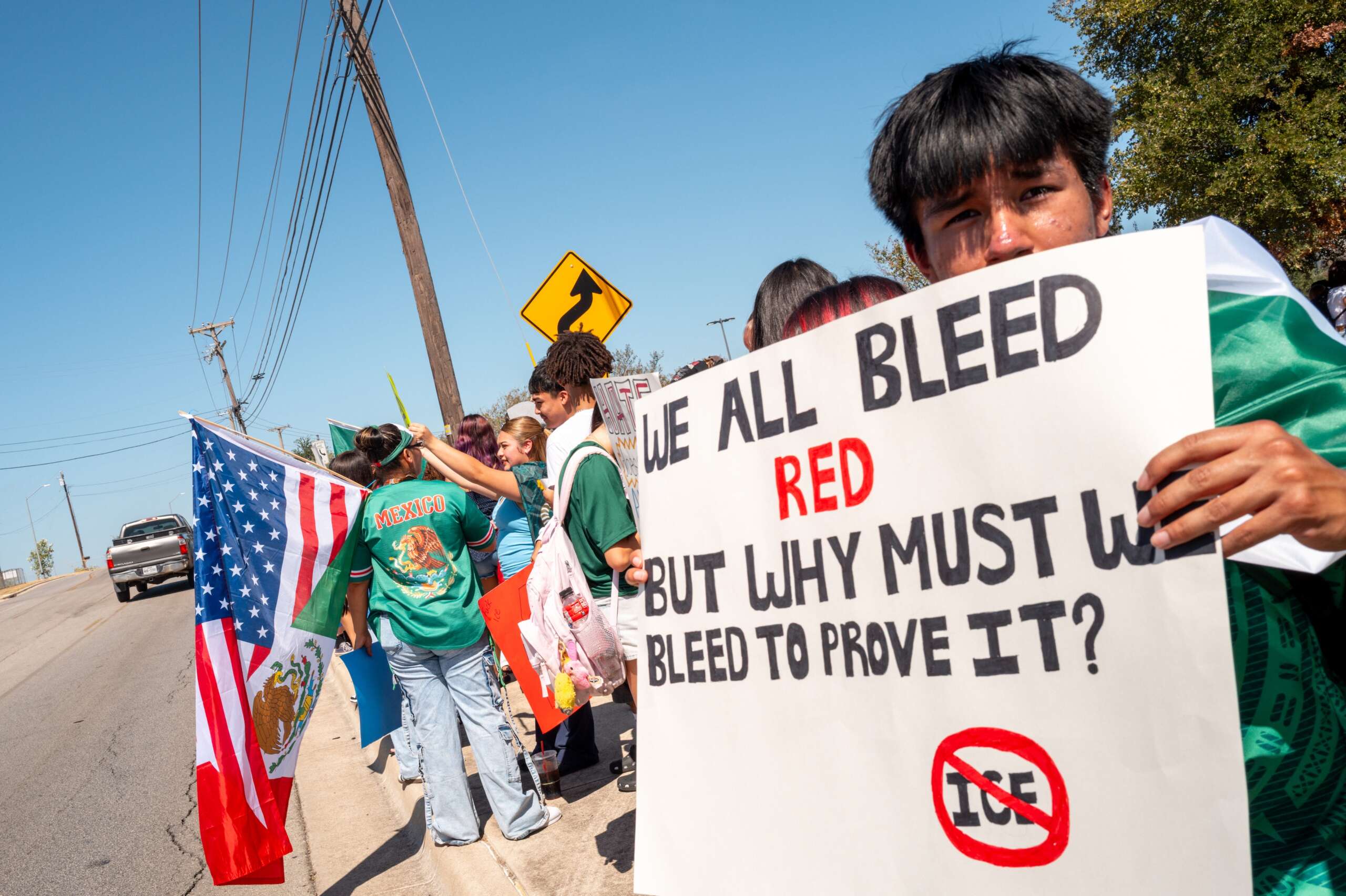
The movement supporting Garces Perez is growing, with student protesters and human rights advocates demanding that the government go beyond a temporary stay of deportation. They are calling for a full investigation into the shooting, the release of all available evidence, and the immediate release of Garces Perez so he can receive the medical care he requires in a non-carceral setting.
For now, the bullet remains in his back—a chilling reminder of the violence inherent in an opaque system. Whether justice is served will depend on the continued pressure from the public, the tenacity of his legal team, and the willingness of the federal government to answer for the actions of its agents. As the 100 members of Congress noted, the DHS must not be allowed to obstruct the truth. The story of Wilber Rafael Garces Perez is not just about one man; it is a fundamental question of what kind of justice system the United States intends to uphold in the face of its own power.


 Nana Wu