



 Ammar Sabilarrohman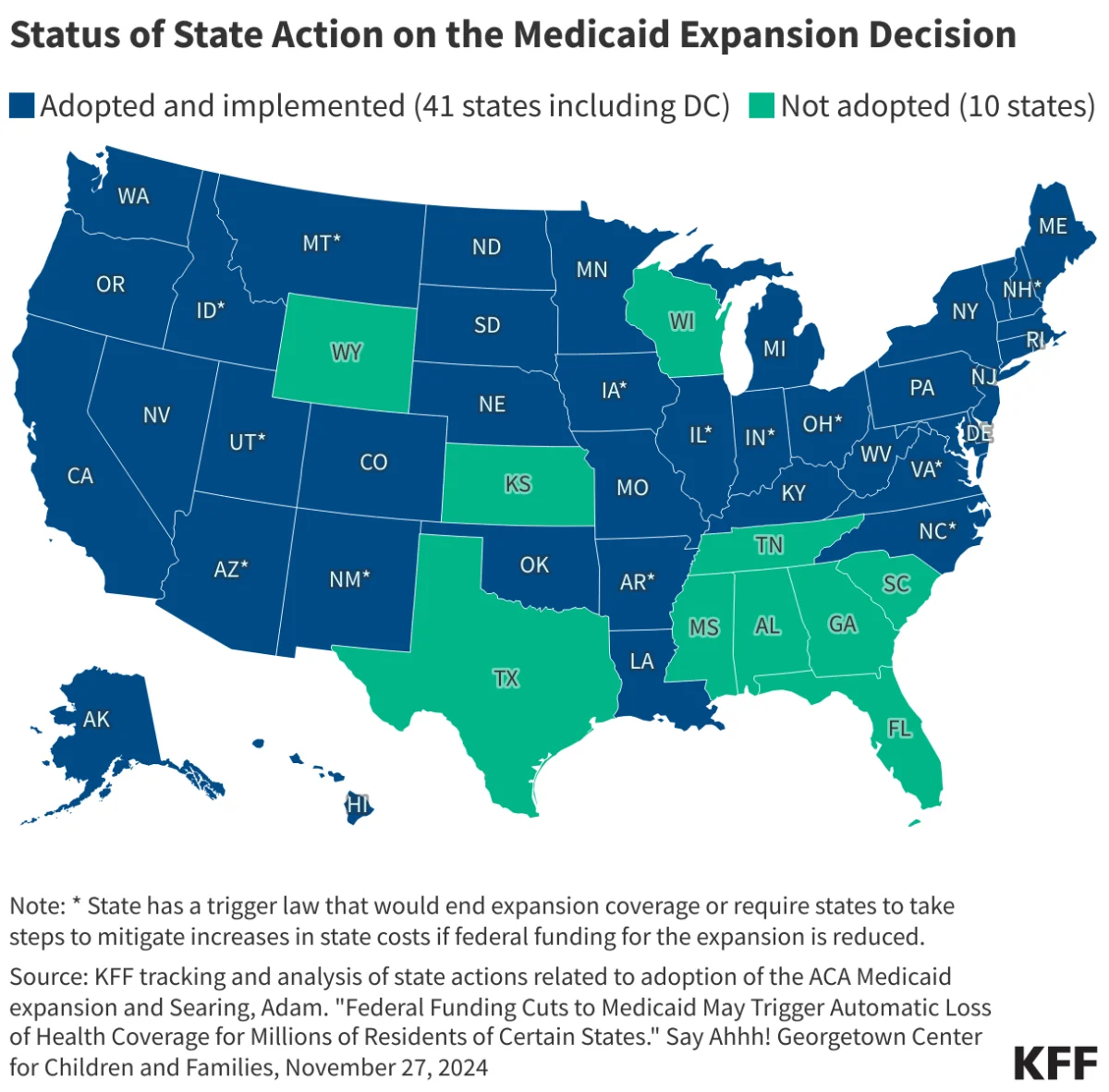
More than a decade after the passage of the Affordable Care Act (ACA), the landscape of American public health insurance remains defined by a stark, persistent divide: the Medicaid expansion. This policy, which fundamentally restructured the safety net for low-income adults, continues to be a cornerstone of federal health reform, even as it remains a point of intense political and economic debate at the state level.
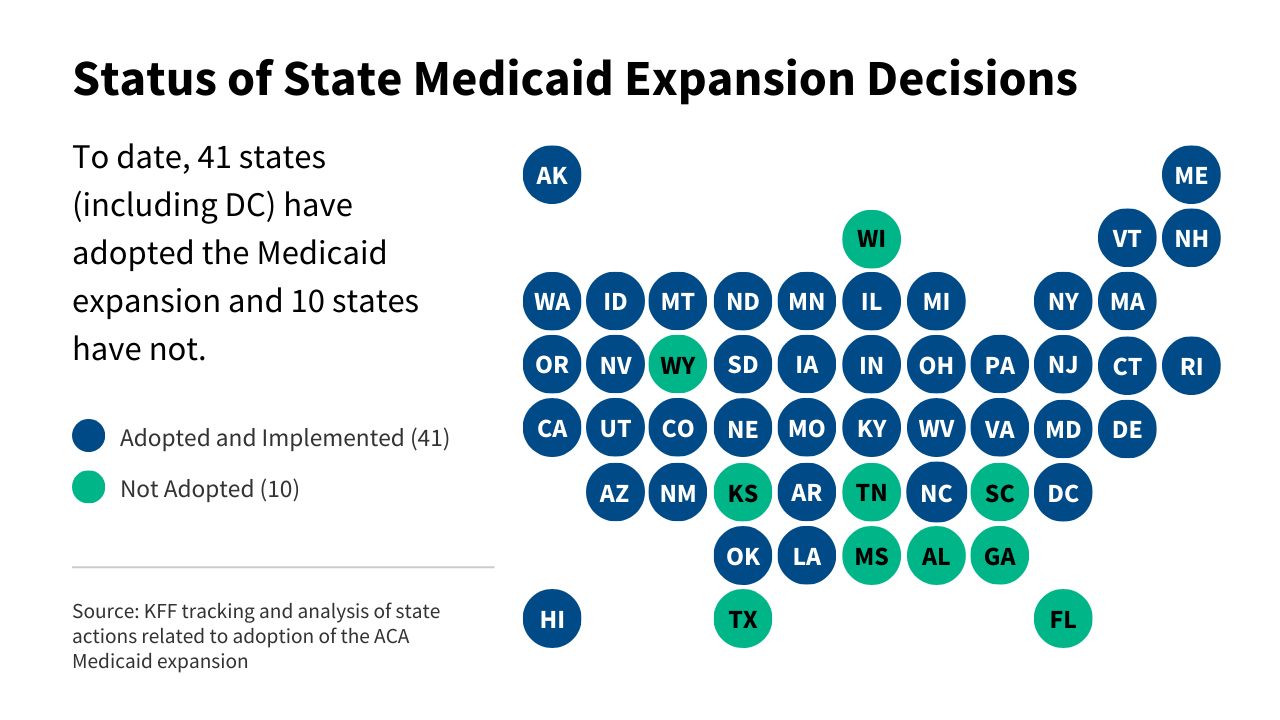
As of 2025, the program stands at a critical juncture. With 41 jurisdictions—including the District of Columbia—having embraced the expansion, and 10 states holding firm in their opposition, the disparity in healthcare access between state borders is as pronounced as ever.
The Mechanics of Expansion: Redefining Coverage
At its core, the Medicaid expansion under the ACA was designed to close the "coverage gap" that historically left many working-age, low-income adults without access to either private insurance or traditional Medicaid. Under the federal guidelines, states are encouraged to extend Medicaid eligibility to nearly all adults with incomes up to 138% of the Federal Poverty Level (FPL). For an individual living in the United States in 2025, this threshold equates to an annual income of approximately $21,597.
The federal government incentivized this shift by providing an enhanced Federal Medical Assistance Percentage (FMAP). Under this arrangement, the federal government covers a significantly higher portion of the costs for the expansion population compared to the traditional Medicaid population. This fiscal architecture was designed to mitigate the budgetary burden on states, theoretically making the expansion a "net positive" for state economies by injecting federal dollars into local healthcare systems and reducing the amount of uncompensated care provided by hospitals.
A Chronological Look at the Expansion Journey
The history of Medicaid expansion is not merely a policy evolution; it is a legal and political odyssey.
The 2010 Landmark
The Affordable Care Act was signed into law by President Barack Obama in March 2010. Initially, the law mandated that all states expand Medicaid to low-income adults. However, the subsequent legal challenges led to a Supreme Court ruling that fundamentally altered the program’s trajectory.
The 2012 Supreme Court Turning Point
In National Federation of Independent Business v. Sebelius (2012), the Supreme Court upheld the constitutionality of the ACA but struck down the mandate that forced states to expand Medicaid. The Court ruled that the federal government could not withhold existing Medicaid funding from states that refused to participate in the new expansion. This decision transformed Medicaid expansion from a federal requirement into a state-by-state option, setting the stage for the current patchwork system.
The "Slow-Walk" and Steady Adoption
Following the 2012 ruling, adoption was initially concentrated in states with Democratic-led legislatures. However, over the subsequent decade, the political map began to shift. Through a combination of voter-led ballot initiatives and pragmatic fiscal negotiations, several states with Republican-led legislatures—such as Idaho, Nebraska, and Oklahoma—eventually adopted the expansion. By 2025, the momentum has slowed, yet the debate remains active in the remaining 10 non-expansion states.
Supporting Data: The Current State of the Union
According to the most recent tracking and analysis provided by KFF (Kaiser Family Foundation), the geographic distribution of expansion reveals a deep regional split. The 41 jurisdictions that have adopted expansion cover the vast majority of the U.S. population, while the 10 holdout states—primarily located in the South and the Great Plains—represent a significant concentration of the uninsured.
The Fiscal Impact
The fiscal implications are often the primary driver of state-level debates. Proponents point to data showing that expansion states often see a decrease in the "uncompensated care" burden borne by hospitals. When uninsured patients gain coverage, hospitals are reimbursed for services that were previously written off as losses. This is particularly vital for rural hospitals, which often operate on thin margins and rely on local residents having some form of insurance to remain solvent.
Opponents, conversely, emphasize the long-term sustainability of the federal commitment. While the enhanced FMAP is historically generous, some state legislators worry that future federal budget constraints could force states to pick up a larger share of the tab.
Official Responses and Political Rhetoric
The discourse surrounding Medicaid expansion has evolved from a debate over the ACA’s legitimacy to a nuanced argument about state sovereignty and fiscal responsibility.
The Pro-Expansion Perspective
Public health advocates and Democratic policymakers argue that Medicaid expansion is a moral imperative. They cite numerous studies indicating improved health outcomes, including better management of chronic conditions like diabetes and hypertension, earlier cancer diagnoses, and increased access to mental health services. Furthermore, supporters argue that the economic impact—job creation in the healthcare sector and the stability of the rural safety net—outweighs the state-level costs.
The Opposition Perspective
Critics of the expansion, often citing conservative fiscal principles, argue that Medicaid was never intended to cover able-bodied, working-age adults. Many of these policymakers advocate for market-based solutions, such as private insurance subsidies or "work requirements" for Medicaid recipients. They argue that expanding the government’s footprint in healthcare creates dependency and reduces the incentive for individuals to seek higher-paying jobs with private employer-sponsored insurance.
Implications for the Future of Healthcare Access
The existence of 10 non-expansion states creates a bifurcated system that has profound implications for health equity.
The Coverage Gap
In states that have not adopted the expansion, thousands of adults fall into the "coverage gap." These individuals earn too much to qualify for traditional, pre-ACA Medicaid, but not enough to qualify for the premium tax credits available through the ACA Marketplace (which are generally reserved for those with incomes at or above the poverty line). This gap effectively punishes the poorest individuals in these states, leaving them with no viable path to affordable health insurance.
Health Disparities and Life Expectancy
The divide is not just about insurance cards; it is about life expectancy and morbidity. Research consistently demonstrates that residents in expansion states experience better health outcomes. The lack of access to preventive care in non-expansion states leads to a higher reliance on emergency rooms for primary care, which is both inefficient and costly. Over time, this exacerbates existing health disparities, particularly among minority populations and rural residents who already face systemic barriers to care.
The Policy Outlook
Looking toward the remainder of the 2020s, the battle over Medicaid expansion will likely hinge on two factors: administrative flexibility and local political pressure. The Centers for Medicare & Medicaid Services (CMS) has, at times, allowed states to implement "waivers" that include work requirements or other conservative reforms in exchange for expansion. Whether such compromises will entice the final 10 states to join the fold remains to be seen.
Furthermore, as healthcare costs continue to rise, the economic case for expansion—specifically the influx of federal dollars—may become even more attractive to fiscally conservative state governments that are struggling to balance their budgets while supporting struggling local healthcare infrastructure.
Conclusion
The Medicaid expansion remains one of the most significant public health policy interventions in modern American history. While 41 states have recognized the benefits of extending coverage to their most vulnerable citizens, the persistence of the 10 holdout states serves as a reminder of the ideological and regional divisions that continue to define the U.S. healthcare system.
As stakeholders continue to analyze the data, the focus must shift from the political battles of the past to the practical realities of the present. The question is no longer just about the ACA itself, but about the fundamental role of state governments in ensuring that their citizens have access to the medical care necessary to lead healthy, productive lives. Whether through federal incentives, state-level ballot initiatives, or future legislative compromises, the trajectory of Medicaid will continue to shape the American healthcare narrative for years to come.
For researchers and policymakers interested in the granular data regarding state-by-state activity, KFF remains the primary repository for ongoing tracking and analysis. Detailed tables and map visualizations are available through their health reform portal, providing a comprehensive view of how this policy continues to evolve across the nation.


 Ali Ikhwan
 Asep Darmawan