



 Asep Darmawan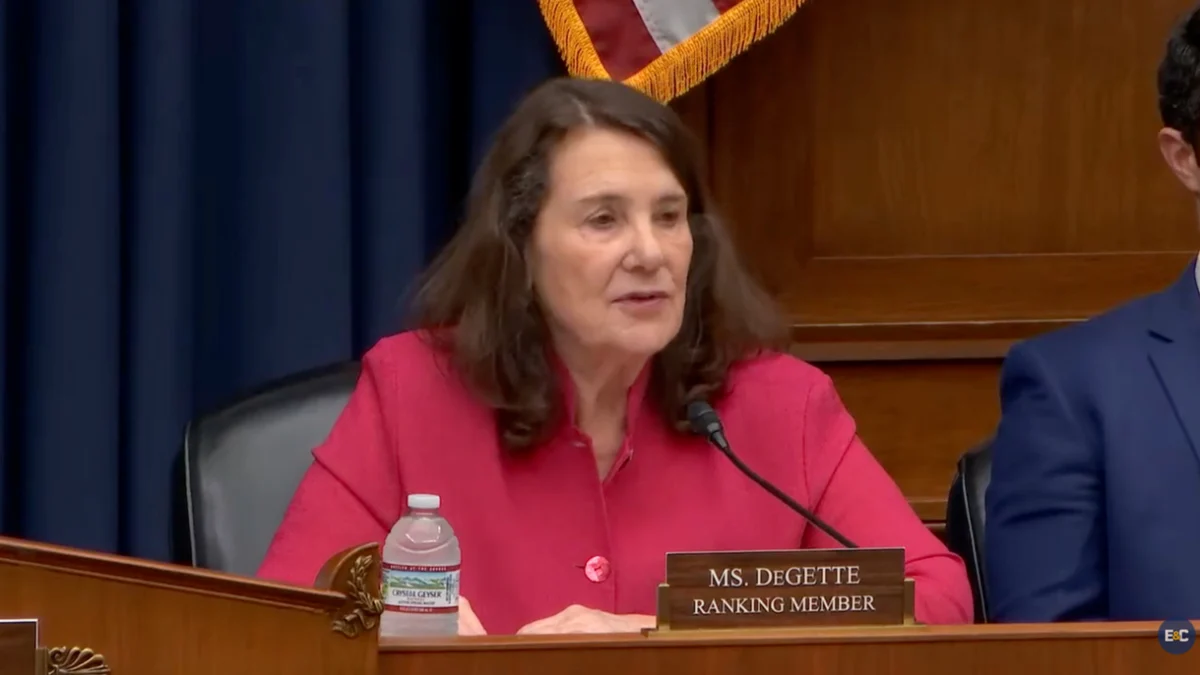
In a high-stakes session on Capitol Hill, the House Energy and Commerce Health Subcommittee convened this week to address a systemic crisis that threatens the viability of American medical practice. As the Medicare Physician Fee Schedule (PFS) continues to face intense scrutiny, lawmakers and industry leaders gathered to debate how to reconcile the program’s crumbling financial framework with the urgent need to shift toward Advanced Alternative Payment Models (AAPMs).
While the hearing, led by Ranking Member Rep. Diana DeGette (D-Colo.), achieved a rare bipartisan consensus on the existence of deep-seated structural failures, the path toward a legislative remedy remains fraught with political and logistical uncertainty. The overarching narrative from the hearing was clear: the current trajectory of Medicare reimbursement is unsustainable, serving as a primary driver for the consolidation of independent practices and the degradation of patient access.
The Erosion of Physician Purchasing Power: A Chronology of Decline
To understand the current urgency, one must look at the fiscal reality facing clinicians. Since 2011, Medicare physician payments have plummeted by approximately 33% in real terms when adjusted for inflation. During the hearing, Rep. DeGette highlighted the gravity of this trend, noting that because 95% of clinicians rely on Medicare-linked payment structures, the "fee schedule isn’t just a Medicare problem—it’s a healthcare system problem."
The Timeline of Stagnation
- 2011–2015: The pre-MACRA era, characterized by the flawed Sustainable Growth Rate (SGR) formula, which necessitated constant congressional intervention to prevent draconian payment cuts.
- 2015: The enactment of the Medicare Access and CHIP Reauthorization Act (MACRA). Designed to transition the industry toward value-based care, the legislation was intended to incentivize quality over volume.
- 2016–2023: A period of mounting frustration as the "quality" metrics under the Merit-Based Incentive Payment System (MIPS) proved administratively burdensome and failed to provide the promised financial stability.
- 2024: The present day, where the Medicare Economic Index (MEI)—the benchmark for medical practice inflation—has consistently outpaced the actual updates provided to physicians, leading to a decade-long erosion of practice margins.
Consensus on the "Budget Neutrality" Trap
Perhaps the most significant takeaway from the hearing was the universal condemnation of "budget neutrality." In the arcane world of federal budgeting, this rule dictates that any increase in payment for one medical service or specialty must be offset by a corresponding decrease elsewhere.
This mechanism has turned the medical community into a zero-sum battleground. When cardiologists see a payment adjustment, it often comes at the expense of primary care physicians or radiologists, pitting medical specialties against one another rather than incentivizing systemic efficiency.
"End Physician Fee Schedule budget neutrality and create stable and predictable annual physician reimbursement updates linked to the MEI," argued Dr. William Fox, an internist and former board chair of the American College of Physicians. This sentiment was echoed by Dr. Steven Furr of the American Academy of Family Physicians, who emphasized that the current "rob-Peter-to-pay-Paul" methodology prevents long-term practice planning and creates an environment of fiscal instability that drives physicians out of independent practice.
The MACRA Failure: Why Value-Based Care Has Stalled
A significant portion of the hearing was dedicated to dissecting the failure of MACRA to meet its stated objectives. The legislation was envisioned as a two-pronged transition: MIPS for generalists and AAPMs for those ready to take on financial risk.
Dr. Farzad Mostashari, former head of the Office of the National Coordinator for Health Information Technology, provided a scathing critique of the current status quo. He noted that the original congressional intent—using "carrots and sticks" to push practices into AAPMs—has failed because the incentives are insufficiently differentiated.
"Most practices do not see a stark difference between AAPMs and remaining in fee-for-service," Mostashari explained. Because the Centers for Medicare & Medicaid Services (CMS) has been hesitant to impose meaningful penalties on low-performing MIPS participants, the "stick" is ineffective. Simultaneously, the "carrot" of AAPM bonuses has failed to offset the risks and capital requirements of moving away from fee-for-service models.
Furthermore, the "one-size-fits-all" nature of these models has left specialty care behind. Dr. Dana Smetherman, CEO of the American College of Radiology, argued that current frameworks are clinically irrelevant to consultative specialties. "We need models that are more specialty-specific," she asserted, pointing out that radiologists are currently forced into quality reporting structures that do not reflect the realities of diagnostic or interventional imaging.
The "Disturbing Elevator Ride": Site-of-Service Disparities
One of the most vivid moments of the hearing occurred during the testimony of Dr. Rick Snyder, an independent cardiologist from Dallas. He provided a practical example of what economists call "site-neutrality" failures—a phenomenon where the same procedure costs vastly different amounts depending on where it is performed.
Dr. Snyder detailed how an echocardiogram performed in his independent office incurs a technical fee of $123, with a patient copay of $24. If that same patient travels one floor down to a hospital-owned outpatient lab, the cost to Medicare and the patient skyrockets—often by a factor of four.
"That’s what I call magic and a very disturbing elevator ride," Snyder remarked. This pricing discrepancy is widely viewed as a primary driver of the rapid consolidation of private practices into hospital systems, as hospitals use their ability to charge higher facility fees to acquire smaller, more efficient physician groups.
Modernizing the RBRVS: Is the RUC Obsolete?
The hearing also took aim at the mechanics of how procedures are valued. The Relative Value Scale Update Committee (RUC)—an AMA-convened body of specialists—has long been responsible for advising CMS on the "worth" of billing codes.
Critics, including Dr. Fox, argued that the RUC’s methodology is anchored in 1980s-era data, failing to account for the technological advancements that have made many procedures faster and less resource-intensive. Rep. Lori Trahan (D-Mass.) expressed a keen interest in modernizing these processes, suggesting that the industry should look toward electronic health record (EHR) data and time-motion studies to provide more accurate, real-time valuations.
"We have newer methods now," Fox noted, advocating for a shift away from low-response-rate surveys toward data-driven analysis of actual operating room logs and clinical workflows.
Implications: The Road Ahead
The hearing concluded with a sobering reality: while there is profound agreement on the "what" and the "why" of the Medicare payment crisis, the "how" remains elusive.
- Legislative Momentum: Rep. Raul Ruiz (D-Calif.) and Rep. Gus Bilirakis (R-Fla.) are pushing for legislation that would mandate an inflationary update based on the MEI. Such a move would be a major victory for physician groups, though it faces stiff opposition from fiscal hawks concerned about the long-term impact on the federal deficit.
- Anti-Trust and Consolidation: Rep. Buddy Carter’s (R-Ga.) call for "Teddy Roosevelt-style" trust-busting reflects a growing sentiment in Congress that hospital consolidation is an existential threat to the independent practice model. Future legislative efforts may focus on site-neutral payment policies to strip away the financial incentives that fuel this consolidation.
- The Death of Fee-for-Service: Despite the frustrations with MACRA, the transition to value-based care appears irreversible. The challenge for the next Congress will be to refine these models so they are not just "administrative burdens," but truly reflective of clinical care pathways.
As the hearing adjourned, the message to the healthcare industry was clear: the era of incremental adjustments is coming to an end. Whether through a wholesale revision of the MACRA framework, the implementation of site-neutral payments, or a modernization of the code-valuation process, Washington is signaling that the current Medicare Physician Fee Schedule is no longer fit for purpose.
The ultimate test for lawmakers will be whether they can overcome the partisan gridlock and the intense lobbying of powerful hospital and specialty groups to deliver a system that rewards quality, ensures fiscal sustainability, and protects the independence of the American physician. For now, the "disturbing elevator ride" continues, but the conversation has finally moved to the top floor of policy reform.


 Ali Ikhwan
 Jia Lissa