


 Reynand Wu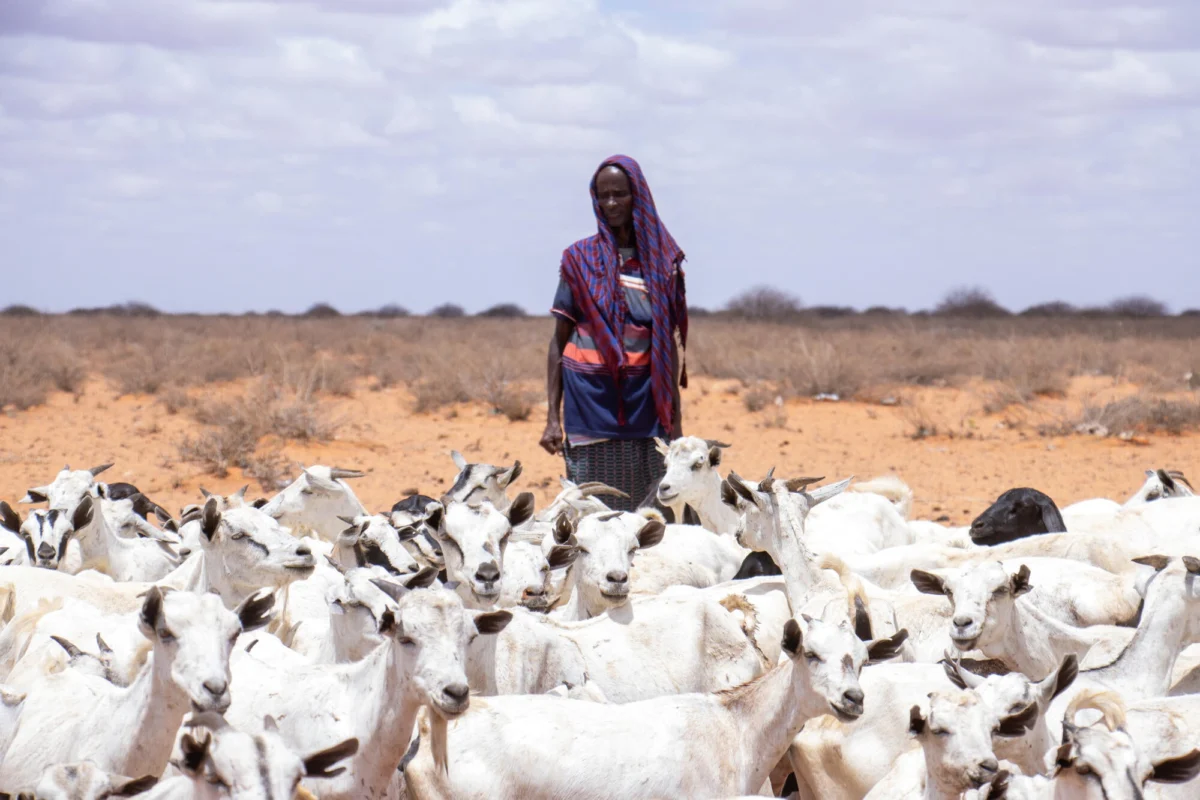
The Horn of Africa is currently witnessing a humanitarian emergency of staggering proportions. Across Somalia and the Somali region of Ethiopia, the cumulative impact of four consecutive failed rainy seasons has crystallized into a full-scale climate catastrophe. As millions teeter on the brink of famine, the international community’s withdrawal of financial support has left a vacuum that is, by all accounts, costing lives.
The Epicenter of the Crisis: Somalia and Ethiopia
The federal government of Somalia officially declared a national drought emergency in November 2025, but for the millions living in the arid lowlands and the rapidly expanding displacement camps, the crisis began long before the ink dried on the decree.
The Integrated Food Security Phase Classification (IPC) estimates that over 6.5 million people—approximately 25% of the Somali population—are currently grappling with acute food insecurity. Of these, over 2 million individuals have plummeted into IPC Phase 4. This classification is a dire warning sign, indicating extreme food gaps that, without immediate intervention, lead directly to severe malnutrition and mortality.
The medical implications are particularly harrowing for the youngest. Projections for 2026 suggest that over 1.8 million children under the age of five will suffer from acute malnutrition. In clinics operated by Doctors Without Borders/Médecins Sans Frontières (MSF), the reality is already visible: wards are overflowing with children whose small bodies are succumbing to the ravages of hunger and preventable disease.

A Chronology of Climate-Induced Displacement
The collapse of local ecosystems has triggered a massive, involuntary migration of people. To understand the scale, one must look at the trajectory of the last 24 months:
- Mid-2024 to Early 2025: Successive rainy seasons fail to materialize. Pastoralist communities, which rely on predictable rainfall to sustain livestock, begin to report significant animal losses.
- November 2025: The Somali government issues an official national drought emergency declaration. Displacement begins to accelerate from rural areas toward urban centers like Baidoa and Galkayo.
- December 2025: A critical tipping point is reached in Puntland, where infrastructure begins to fail. Approximately 170 boreholes and shallow wells are rendered non-functional, cutting off water access for tens of thousands.
- Early 2026: Displacement sites reach breaking point. Humanitarian funding, already strained by competing geopolitical crises in the Middle East and elsewhere, begins a precipitous decline.
- May 2026: The current state of emergency. Humanitarian organizations report that resources are stretched to the absolute limit, with "lean season" hunger indicators signaling an even bleaker outlook for the coming months.
Voices from the Front Line: The Human Cost
Regay Ali, a mother of ten, recently completed a harrowing journey from her rural home in Weelbelil to a displacement camp near Baidoa. She represents the millions who have lost their ancestral livelihoods. "We are farmers, and our crops were destroyed," she says. "We borrowed money from neighbors to get here, hoping for help. But even here, we are struggling. We get two jerrycans of water per day for a family of eleven—for washing, cooking, and drinking. It isn’t enough to survive."
The story is mirrored across the border in Ethiopia’s Somali region. In the Afder and Shebelle zones, the pastoralist way of life is vanishing. Isaq Ibrahim Mohamed, a resident of the Barey District, describes a landscape defined by loss. "Most of us were livestock rearers. When the rain stopped, we lost everything. People walk an hour or more just to find water, and often we have to share the same contaminated sources with our animals. We see malnutrition and diarrhea everywhere."
Supporting Data: The Anatomy of Underfunding
The current humanitarian crisis is not merely a product of climate change; it is exacerbated by a deliberate, systemic withdrawal of financial aid. According to data from the United Nations Office for the Coordination of Humanitarian Affairs (OCHA), the 2026 Humanitarian Needs and Response Plan for Somalia is funded at a dismal 10.9 percent.

This financial shortfall has had immediate, lethal consequences:
- Food Assistance: The World Food Program (WFP) has been forced to slash emergency rations. Currently, only 1 in every 7 Somalis in need of food assistance is actually receiving it.
- Water Access: More than 300,000 people have been stripped of access to safe water because the funding to maintain and operate boreholes has evaporated.
- Healthcare Collapse: In Puntland alone, over 70 health facilities have been forced to close their doors due to a lack of operational funds and medical supplies.
The Ripple Effect: Geopolitical Constraints
The crisis in the Horn of Africa is colliding with a volatile global economy. Rising fuel prices—driven by the escalation of conflict in the Middle East—have significantly increased the cost of transporting aid. Furthermore, supply chain disruptions have hindered the delivery of basic life-saving materials.
Humanitarian workers on the ground, such as Abdullahi Mohammad Abdi, the deputy medical team leader at MSF Ethiopia, warn that the "scaling back" of aid is a false economy. "We are seeing a reduction of services that patients previously relied upon," Abdi explains. "Water and sanitation programs are the most affected, which leads directly to an increase in waterborne diseases. The burden is falling entirely on the existing, overstretched health systems."
Official Responses and the Call to Action
The humanitarian sector is issuing a collective, desperate plea to the international community. Mohammed Omar, MSF’s head of programs in Somalia, has been vocal about the ethical implications of the current funding drought. "The withdrawal of aid at this moment is a choice," Omar states. "And it is a choice that is costing lives. The scale of the need exceeds what any single organization can address alone. We need sustained, flexible funding, and we need it now."

The official stance of major donors has been criticized for being reactive rather than proactive. By failing to provide early intervention funding, the international community is forced to spend significantly more on emergency interventions once the situation has reached a state of mass death and displacement.
Implications for the Future
The situation in Somalia and Ethiopia is a harbinger of a world defined by the "climate emergency." As rainfall patterns become increasingly erratic, the communities that have contributed the least to global carbon emissions are bearing the highest cost.
If the international community continues to view the Horn of Africa’s crisis as a distant, secondary concern, the implications will be profound:
- Regional Instability: Continued competition over scarce resources like water and grazing land is a proven catalyst for conflict, which in turn drives further displacement.
- Erosion of Trust: The failure of global aid mechanisms to protect vulnerable populations diminishes the credibility of international humanitarian norms.
- Demographic Collapse: The long-term physical and cognitive development of an entire generation of children in the region is at risk due to chronic malnutrition.
The message from the ground is clear: the humanitarian crisis in the Horn of Africa is not an inevitable disaster, but a preventable one. The tools to provide water, food, and medical care exist. What is currently missing is the political will to fund them. As the lean season intensifies and the displacement camps continue to fill, the world is being watched to see if it will choose to act, or if it will allow millions to be lost to preventable, man-made neglect.

 Rifan Muazin
 Asep Darmawan