



 Asep Darmawan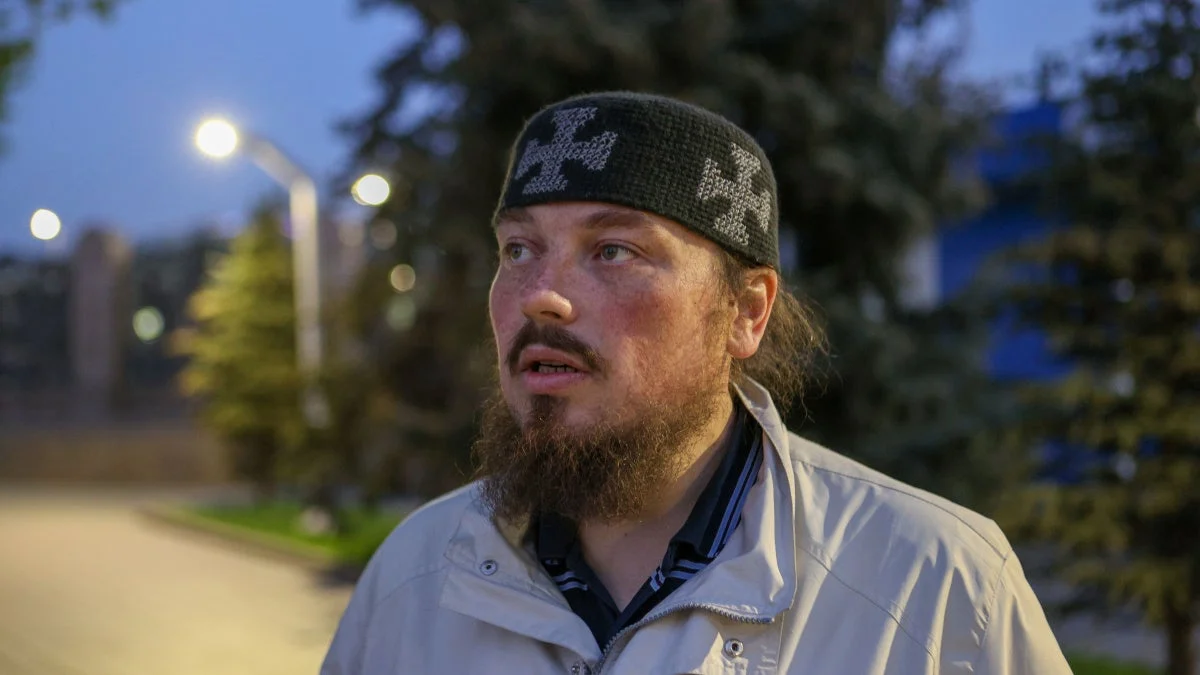
BERLIN – In a move that has drawn sharp condemnation from international human rights monitors, Kazakhstani authorities have forcibly transferred Yakov Vorontsov, a defrocked Russian Orthodox priest and outspoken critic of state policy, to a specialized psychiatric facility. The transfer, which took place on May 25, 2026, marks a disturbing escalation in what critics describe as a systematic campaign to silence dissent through the weaponization of the judicial and medical systems.
Human Rights Watch (HRW) and other international observers have labeled the detention an act of "abusive repression," noting that Vorontsov—a man with no history of mental health disorders—has been effectively sidelined under the guise of a "security measure."
The Core Facts: A Pattern of Retaliation
Yakov Vorontsov, 40, has long been a thorn in the side of the authorities in Kazakhstan. His trajectory from a respected clergyman to a prisoner of the state is characterized by a series of administrative and legal pressures that align closely with his public stances against the Russian invasion of Ukraine and his advocacy for an independent Orthodox Church in Kazakhstan.
On May 18, 2026, an Almaty court issued a ruling ordering Vorontsov’s transfer from pretrial detention to a psychiatric institution. This decision was made in the absence of both the defendant and his legal counsel, Galym Nurpiesov. Despite an immediate appeal filed by the defense, authorities fast-tracked the transfer, moving Vorontsov on May 25—effectively bypassing the due process required to challenge the court’s decision.
The charges against him are, by his account and those of his defenders, entirely fabricated. Following his arrest on February 13, 2026, police claimed to have discovered "powdered substances" during a raid on his home. These drug-related charges, which Vorontsov vehemently denies, appear to be a convenient pretext for silencing a man who had, only days earlier, filed a lawsuit against the Ministry of Justice for its refusal to register his independent religious community.
Chronology of a Targeted Prosecution
The persecution of Yakov Vorontsov did not begin with his February arrest; it is the culmination of years of state-sponsored pressure.
- February 2022: As the war in Ukraine commenced, Vorontsov signed an open letter alongside 300 global Orthodox clergy calling for peace. He further broke rank by publicly urging Kazakhstan to withdraw from the Collective Security Treaty Organization (CSTO) and the Eurasian Economic Union (EEU).
- March 2022: The Russian Orthodox Church in Kazakhstan suspended Vorontsov, citing his political statements as a violation of his priestly oath and religious law.
- June 2023: The Moscow Patriarchate officially defrocked Vorontsov, a move widely viewed as retaliation for his continued independent religious activity and anti-war stance.
- December 2023: Authorities launched a criminal investigation into "inciting religious discord," targeting his social media posts. This case was eventually dropped in May 2025 due to a total lack of evidence.
- Late 2025: Vorontsov and his associates founded an independent Orthodox community, attempting to gain legal registration.
- February 13, 2026: Almaty police, accompanied by narcotics dogs, raided his home. Within hours, he was sentenced to 10 days of administrative detention for "nonmedical drug use," a finding he disputes.
- February 23, 2026: Upon completing his initial sentence, he was immediately charged with criminal drug possession and maintaining a "drug den."
- May 18, 2026: An Almaty court ordered his transfer to a psychiatric facility for a mandatory "mental health examination."
- May 25, 2026: Authorities forcibly transferred him to a facility outside Almaty, pre-empting his pending appeal.
Supporting Data: The Weaponization of Psychiatry
The use of psychiatric confinement as a tool of political suppression is a dark legacy in the region, one that appears to be experiencing a resurgence in Kazakhstan. Mihra Rittmann, senior Central Asia advisor at Human Rights Watch, underscored the gravity of this development: "Kazakhstan’s record of politically motivated prosecution of critics, activists, and others engaged in peaceful expression is well-documented. But Kazakhstan also has a growing and troubling record of using psychiatric detention as another abusive repression tactic."
The evidence suggests that Vorontsov’s detention is not about public safety or health, but about control. His legal counsel, Galym Nurpiesov, has highlighted a series of procedural violations since the arrest, including the initial denial of access to his family, the confiscation of his Bible, and the forced shaving of his head and beard—acts that carry profound psychological weight for a man of his faith.
Furthermore, three UN experts issued a formal communication on March 31, 2026, expressing deep concern over the irregularities in the case. The government’s failure to address these questions, coupled with the refusal to grant the defense full access to case materials, points to a lack of transparency and a disregard for the principles of a fair trial.
Official Responses and Administrative Stance
To date, the Kazakhstani government has maintained that the proceedings against Vorontsov are purely legal in nature and unrelated to his religious or political views. The Ministry of Interior has characterized the drug charges as standard criminal procedure, and the courts have defended the psychiatric transfer as a "security measure" deemed necessary by investigators.
However, these official claims are undermined by the timing of the events. The proximity of the raids to Vorontsov’s filing of the lawsuit against the Ministry of Justice creates a compelling narrative of state retribution. The authorities have provided no public evidence of the alleged "narcotics" beyond the initial claim of the police raid, nor have they provided a medical justification for why a man who has held leadership roles in the church and operated as a public figure would suddenly be subjected to a psychiatric "security measure."
Implications: A Chilling Effect on Civil Society
The detention of Yakov Vorontsov carries significant implications for Kazakhstan’s international standing and its domestic civil society. By targeting a former priest who advocated for peace and independent worship, the state is sending a clear message: no sphere of life, not even the church, is beyond the reach of the security services if it challenges the government’s alignment with Moscow or its internal administrative control.
The Erosion of Religious Freedom
The suppression of Vorontsov’s independent Orthodox community reflects a broader trend of restricting religious freedom to state-approved channels. By delegitimizing independent religious leaders through criminal accusations, the government effectively erases the possibility of a diverse, pluralistic religious landscape.
A Test for International Partners
The international community—including the European Union, the United Kingdom, and the OSCE—is now at a crossroads. The case of Vorontsov is a litmus test for Kazakhstan’s commitment to its international human rights obligations. Should these partners remain silent, it may embolden the Kazakhstani authorities to expand their use of coercive psychiatric detention against other journalists, bloggers, and activists.
Conclusion: A Call for Justice
Human Rights Watch and various civil society groups are calling for an immediate reversal of the current course. The requirements for restoring the rule of law in this case are clear:
- Immediate Release: Vorontsov must be released from the psychiatric facility immediately.
- Due Process: The authorities must grant the defense full access to all case materials and allow for a transparent, public review of the evidence.
- End to Coercion: The state must cease the use of "psychiatric detention" as a tool of political suppression.
As the international community watches, the case of Yakov Vorontsov stands as a stark reminder of the fragility of human rights in the face of an unchecked state apparatus. If the authorities cannot produce credible evidence to support their claims—evidence that has been absent thus far—the only conclusion that can be drawn is that this is a case of political persecution, and it must be brought to an immediate end.

 Rifan Muazin
 Neng Nana