

 Pevita Pearce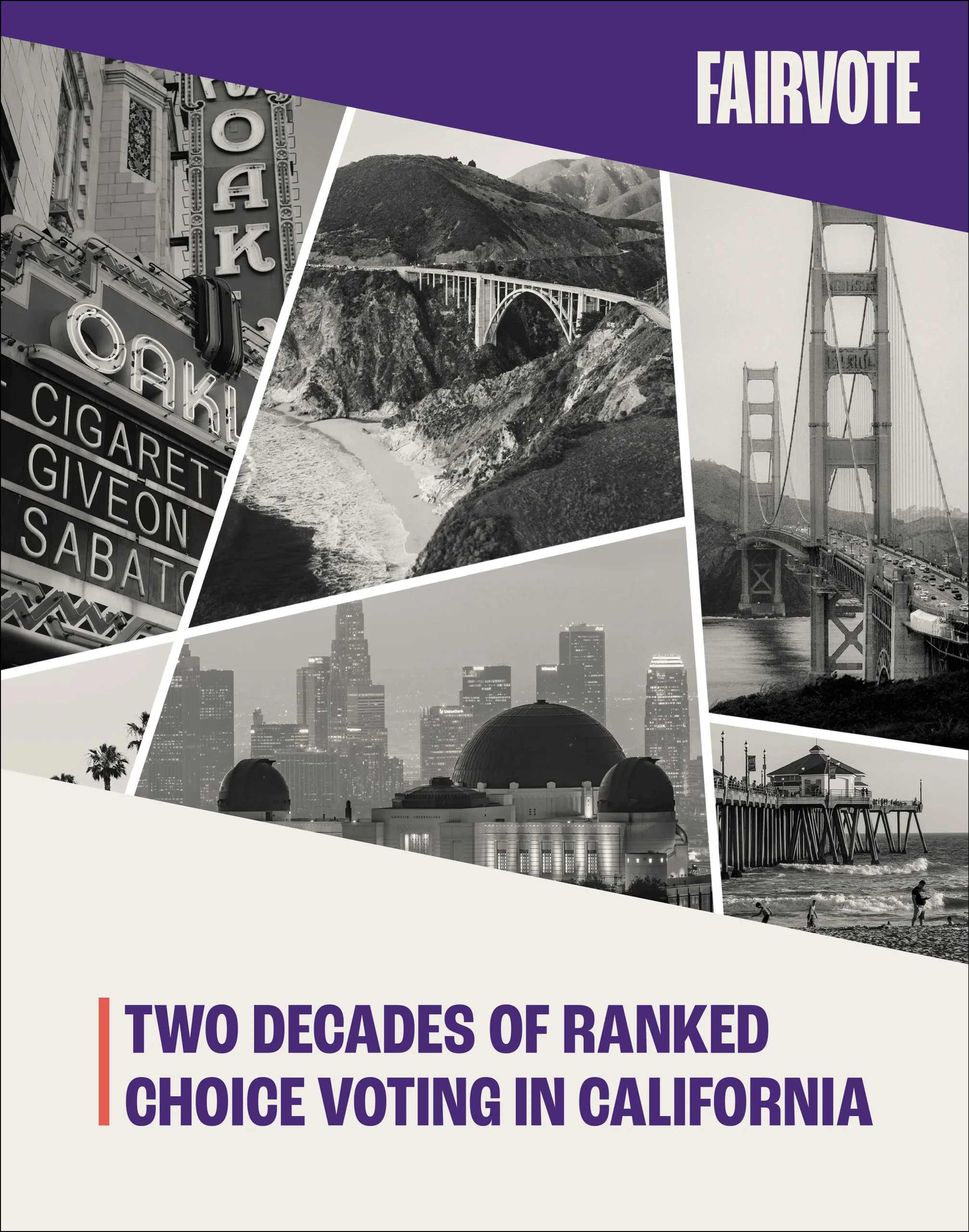
As the American political landscape braces for the 2028 presidential cycle, a growing movement is challenging the traditional "winner-take-all" paradigm. A new report and polling data released this week by FairVote, a nonpartisan organization dedicated to electoral reform, suggests that voters are increasingly receptive to alternative mechanisms for selecting their leaders. With a fresh analysis of two decades of implementation in California and a pioneering mock-primary poll, the data provides a compelling case for the modernization of the U.S. electoral process.
Main Facts: A Shift in Voter Sentiment
The core of the recent discourse centers on a Lake Research Partners poll, which simulated a 2028 Democratic primary using ranked choice voting (RCV). The survey, which included a diverse field of 13 potential candidates, allowed voters to rank up to five preferences rather than selecting a single nominee. The results were telling: 63% of likely Democratic primary voters expressed support for implementing RCV in presidential primaries. Perhaps most significantly, that support climbed to 70% after respondents participated in the ranking process, indicating that exposure to the system diminishes skepticism. Furthermore, 84% of participants reported that the process of ranking candidates was "easy," effectively debunking the narrative that RCV is too complex for the average voter.
The poll highlighted a competitive field, with Vice President Kamala Harris and California Governor Gavin Newsom emerging as frontrunners in the simulated rounds. By allowing for a more nuanced expression of voter preference, the simulation offered a glimpse into a potential future where candidates must appeal to a broader base to secure second- and third-choice rankings, rather than focusing solely on a narrow, energized plurality.
Chronology of Reform: From Local Experiments to National Discourse
The push for ranked choice voting is not a sudden phenomenon; it is the culmination of two decades of experimentation across the United States.
- Early 2000s: The movement gained initial traction at the municipal level, as cities sought ways to reduce negative campaigning and ensure that winners hold majority support.
- 2004–2010: California cities, including San Francisco, began implementing RCV, providing the first longitudinal data on how the system affects voter behavior and candidate diversity.
- 2010–2020: The success of these local initiatives led to state-wide adoption in places like Maine and Alaska, shifting the conversation from "fringe reform" to "mainstream policy."
- May 2026: FairVote releases its comprehensive study, "Two Decades of Ranked Choice Voting in California," providing empirical evidence of the system’s impact on the Golden State’s political ecosystem.
- Present Day: The release of the 2028 Democratic primary poll signals that the conversation has officially moved into the presidential sphere, testing the waters for potential national implementation.
Supporting Data: The California Case Study
To understand the long-term effects of RCV, one must look at the data coming out of California. The new study published by FairVote examines the performance of RCV across seven distinct California cities. The findings are categorized by several key performance indicators:
1. Increased Candidate Diversity
The data suggests that RCV helps create a "level playing field." By eliminating the "spoiler effect"—where multiple candidates with similar platforms split the vote, allowing a less popular candidate to win—RCV encourages a more diverse array of voices to enter the race. In the seven cities studied, the presence of RCV correlated with an increase in the number of women and people of color serving in local government.
2. Reduced Negative Campaigning
Under traditional plurality systems, candidates are incentivized to attack their opponents to carve out a distinct base. Under RCV, candidates need to be the "second choice" of their opponents’ supporters. This mathematical reality incentivizes civil discourse and coalition-building. The report highlights that voters in these jurisdictions reported lower levels of "hostile" campaigning compared to neighboring cities utilizing traditional ballots.
3. Voter Accessibility
Critics have long argued that ranking candidates is too confusing for the general public. However, the data from California contradicts this. Over twenty years, the rate of "exhausted ballots"—ballots that cannot be counted because a voter only ranked candidates who were eliminated early—has remained low and consistent. When voters understand that they can express a full range of preferences, they engage more deeply with the ballot.
Official Responses and Perspectives
The academic and political community has responded to these findings with a mix of enthusiasm and cautious observation. Election integrity experts have noted that the "ease of use" statistic—84%—is a critical metric.
"When we look at the barriers to voting, complexity is often cited," says one political strategist involved in the study. "If the voter finds the process intuitive, the primary argument against RCV—that it creates an administrative or cognitive burden—largely evaporates."
However, not all reactions are uniform. Traditionalists argue that the "winner-take-all" system is foundational to the American two-party structure and that changing the ballot structure could have unforeseen consequences for party stability. Despite this, the FairVote report emphasizes that the primary goal is not to dismantle parties, but to make them more responsive to the actual preferences of the electorate.
Implications for the 2028 Presidential Cycle
The implications of this data for the 2028 election are profound. If the Democratic Party were to adopt RCV for its primaries, the entire campaign strategy would shift.
A Shift in Campaign Strategy
In a standard primary, a candidate can win by mobilizing a small, passionate base. In an RCV primary, a candidate must be "the candidate for everyone." This necessitates a strategy of broad appeal. We would likely see less "scorched earth" advertising and more emphasis on policy platforms that resonate across ideological subgroups within the party.
Impact on Party Coalitions
RCV forces candidates to build coalitions. If Candidate A knows they need the second-choice votes of Candidate B’s supporters to win, they are less likely to alienate those voters. This could lead to a more unified party platform following the primary, as the eventual nominee has spent the entire cycle building relationships with the constituencies of their competitors.
Administrative Feasibility
The 2026 report also touches on the administrative side. While updating election infrastructure for RCV is an investment, the report concludes that the costs are outweighed by the long-term benefits of increased voter trust and participation. As the U.S. continues to struggle with issues of political polarization and voter apathy, RCV offers a structural solution to a systemic problem.
Conclusion: The Path Forward
The movement for ranked choice voting is no longer a localized experiment; it is a serious contender for national electoral reform. The data from the 2028 primary poll and the longitudinal study of California cities provide a roadmap for how modern democracies can adapt to a changing electorate.
As the 2028 cycle approaches, the question for party leaders and voters alike is whether they are ready to embrace a system that prioritizes majority consensus over plurality rule. If the trend in voter sentiment continues, the next presidential race may be the first to fundamentally challenge the way Americans express their will at the ballot box.
For those interested in the future of the American political process, the evidence is clear: voters are not only ready for change—they are actively asking for it. Whether that change comes in the form of widespread adoption of RCV remains to be seen, but the conversation has officially begun in earnest.
For more information on the methodology of the 2028 Democratic primary poll, or to download the full "Two Decades of Ranked Choice Voting in California" report, visit the FairVote official website. Stay tuned for further updates as the 2026 election cycle continues to unfold.


 Neng Nana
 Nana Muazin