

 Raul Delapena Setiawan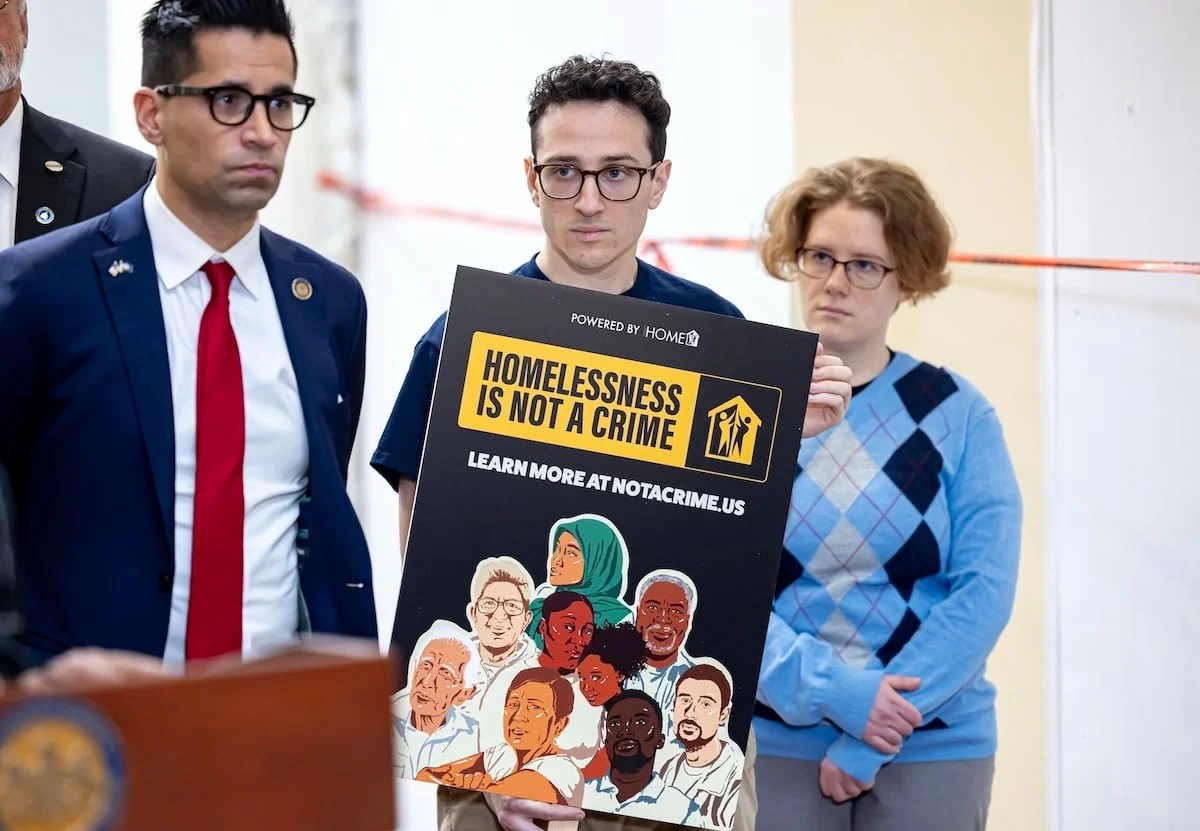
In June 2024, the Supreme Court of the United States handed down a decision in City of Grants Pass v. Johnson that fundamentally altered the legal landscape of American homelessness. By ruling that municipalities possess the constitutional authority to criminalize sleeping in public spaces—even in the absence of adequate shelter—the Court effectively removed the last federal barrier preventing local governments from using police power to address the visibility of extreme poverty.
In the months that have followed, the nation has witnessed a stark divergence in policy. While some jurisdictions have accelerated the use of encampment "sweeps" and punitive ordinances, a growing coalition of lawmakers, advocates, and housing experts is fighting to codify protections for the unhoused at the state and local levels. This article examines the fallout of the Grants Pass ruling and the emerging legislative efforts aimed at replacing criminalization with a "housing-first" paradigm.
A Chronology of Escalation and Resistance
The Grants Pass decision arrived during a period of rising housing costs and stagnant wages, serving as a catalyst for a wave of aggressive municipal policies.
- June 2024: The Supreme Court rules in Grants Pass v. Johnson, overturning Ninth Circuit precedents that had previously prohibited the punishment of unhoused individuals for sleeping in public when no shelter was available.
- Summer 2024: Emboldened by the ruling, various cities intensify "encampment removals." California Governor Gavin Newsom makes national headlines with a highly publicized photo op showing him dismantling an encampment under the 5 Freeway in Los Angeles, signaling a shift toward more aggressive state-level intervention.
- Late 2024–2025: A reactionary legislative movement gains steam. From Maryland to Illinois and Pennsylvania, state legislators introduce bills modeled after the "Gloria Johnson Act," designed to protect "life-sustaining activities" on public land.
- November 2025: Connecticut becomes a pioneer in the anti-hostile architecture movement, passing a law that bans the use of design features specifically intended to prevent people from resting in public spaces.
The "Carrot and the Stick": A Polarized Landscape
The political discourse surrounding homelessness has become increasingly bifurcated. For many, the "stick"—the use of law enforcement to clear public spaces—is framed as a necessary component of urban management and public safety. In his memoir, Governor Gavin Newsom argues for a balanced approach of the "carrot and the stick," suggesting that while services are vital, the maintenance of public order requires firm enforcement.
However, advocates argue that this "stick" approach is both inhumane and counterproductive. Jesse Rabinowitz, campaign and communications director at the National Homelessness Law Center (NHLC), notes that criminalization does not address the root causes of homelessness; rather, it creates a cycle of incarceration that makes it even harder for individuals to secure employment or stable housing. "People recognize that the solution to homelessness is housing," Rabinowitz states, emphasizing that the focus should be on systemic capacity rather than displacement.

Legislative Protections: The Housing Not Handcuffs Act
At the federal level, the NHLC has championed the Housing Not Handcuffs Act, introduced in June 2025. The legislation seeks to provide a federal baseline of rights for those experiencing homelessness. If passed, the act would:
- Protect Life-Sustaining Activities: The bill prevents the arrest or penalization of individuals for resting, sleeping, eating, or storing personal property on public land.
- Establish Search and Seizure Protections: It grants the same protections to belongings stored on public land as those afforded to property in private dwellings.
- Define "Adequate Alternative": The act stipulates that these protections only lapse if an individual is offered "adequate alternative indoor space"—defined as a space that is accessible, free of charge, and allows the person to remain with their pets, partners, and belongings.
Despite having over two dozen cosponsors, the bill has faced significant legislative gridlock. With a Republican majority in Congress and a political climate often hostile to mandates that limit local control, the bill has yet to receive a hearing.
State-Level Innovations: The Gloria Johnson Model
In response to federal inertia, advocates have turned to state houses. The Gloria Johnson Act, a model piece of legislation drafted by the NHLC, has been introduced in several states, including Illinois and Maryland. Its primary goal is to codify the status quo that existed under the Ninth Circuit prior to Grants Pass: prohibiting the criminalization of public homelessness unless truly adequate shelter is available.
Illinois: A Case Study in Legislative Progress
In Illinois, House Bill 1429 has emerged as a significant test case. Introduced by State Representative Kevin Olickal, the bill prohibits the arrest of people experiencing unsheltered homelessness for engaging in life-sustaining activities.
The bill has undergone several iterations to broaden its appeal. By removing certain "necessity defense" clauses that previously required the burden of proof to fall on the unhoused individual, the legislation has managed to neutralize opposition from groups like the Illinois Parks and Recreation Association. "This is not the way to address homelessness," Olickal stated in an email to Next City/Shelterforce. "People experiencing homelessness deserve to be treated with dignity and respect, not penalized for simply trying to survive."

Pennsylvania: The "Shelter First" Approach
Pennsylvania lawmakers have introduced a pair of bills—Senate Bill 1089 and House Bill 2028—that prioritize a "Shelter First" approach. These bills mirror the Gloria Johnson model, making it illegal to enforce camping bans without the provision of adequate, non-restrictive indoor space. According to Natasha Cahill, communications director for State Senator Nikil Saval, the goal is to provide a legislative blueprint that municipalities can adopt even while the state builds the political will for broader systemic change.
Hostile Architecture: The Invisible Barrier
Beyond the criminalization of the person, there is the criminalization of the environment. "Hostile architecture"—such as slanted benches, spiked ledges, and dividers—has become a common, if quiet, tool in urban planning.
Connecticut’s 2025 comprehensive zoning update represents a watershed moment. As part of a larger housing bill, the state became the first in the nation to explicitly ban hostile architecture in publicly owned or accessible buildings. This victory was largely the result of a compromise; while a broader affordable housing mandate was vetoed by Governor Ned Lamont, the hostile architecture ban remained as a conciliatory gesture to housing advocates.
"It felt like a small win," says Jessica Kubicki of The Housing Collective. While Connecticut has a relatively low prevalence of such architecture, the law serves as a crucial preemptive strike, ensuring that the state does not succumb to the trend of designing public spaces that exclude the most vulnerable.
The Path Forward: Implications and Challenges
The implications of the Grants Pass era are profound. While the Supreme Court provided the legal framework for exclusion, the subsequent legislative pushback demonstrates that the moral and policy arguments for housing-first strategies remain potent.

The Data Gap
A recurring challenge for advocates is the disconnect between shelter availability and the realities of unsheltered life. For instance, in Illinois, there is a documented shortage of more than 5,300 shelter beds and 10,900 permanent supportive housing units. When governments enforce camping bans without meeting these deficits, they are essentially mandating the displacement of people into environments that may be less safe than the streets they are forced to leave.
The Role of Local Autonomy
Opposition to these protective bills often stems from the concept of "local autonomy." Municipalities frequently argue that they need the flexibility to manage public parks and transit centers as they see fit. However, proponents of the Gloria Johnson-style legislation argue that "local control" should not include the power to violate the fundamental human rights of residents.
Future Prospects
As the country approaches the end of 2025, the legislative trend is characterized by a "bottom-up" approach. Because federal action remains unlikely in the current political climate, the burden of protecting the unhoused rests on state legislators and city councils.
The success of these initiatives will ultimately depend on the ability of advocates to shift the narrative. By framing the protection of the unhoused not merely as a social safety net issue, but as a fundamental civil rights issue, proponents are beginning to find success in unexpected places. Whether these individual state victories can coalesce into a national standard remains the central question for the next decade of housing policy.
In conclusion, while Grants Pass gave municipalities the right to punish, it did not compel them to do so. The legislative activity in Illinois, Pennsylvania, and Connecticut serves as a powerful reminder that the political response to homelessness is not predetermined. It is a choice—a choice between the "stick" of incarceration and the "foundation" of housing.

 Muslim
 Asro
Asro