



 Jia Lissa

In the modern digital age, the human eye has become a tool of constant, near-field labor. For students, remote workers, and professionals alike, the screen is the primary interface through which we engage with reality. However, as the boundaries between professional obligations and digital immersion blur, a quiet crisis of ocular and mental health is emerging. Joey Dua, an Ayurvedic medical student, recently shared his personal experience with "digital fatigue," a condition that serves as a profound metaphor for the narrowing of modern human attention.
Dua’s journey highlights a growing concern among health professionals: we are not merely straining our eyes; we are fundamentally altering our relationship with the world around us. By examining the physiological and psychological impact of prolonged screen exposure, we can better understand how to reclaim the breadth of our attention.
The Chronology of Digital Constriction
The narrative of digital eye strain often begins in the quiet, focused environment of the workspace. For Dua, the realization arrived during his second year of Ayurvedic medical school. As he prepared for rigorous examinations, his academic life migrated entirely to digital platforms—lecture slides on a laptop, reference texts in PDF formats, and practice modules on a smartphone.
The Cycle of Neglect
By his own admission, Dua was spending twelve to thirteen hours a day in a state of hyper-focus. Around 9:00 p.m. nightly, his eyes would begin to burn. His initial response was habitual: rubbing his eyes, blinking forcibly, and returning to the screen. He treated his eyes as "equipment"—mere biological hardware designed to facilitate the transfer of data into his memory.
The irony was not lost on him. As a student of Shalakya Tantra—the branch of Ayurveda dedicated to the eyes and head—he was studying the very conditions that lead to ocular deterioration: excessive close-focus, chronic fatigue, dryness, and the suppression of natural rest. Yet, he was actively engaging in the behaviors he was trained to avoid.
The "Flicker" Moment
The turning point occurred during a winter evening when a power failure plunged his room into darkness. When the lights returned, Dua discovered he could not immediately focus on the far wall of his room. The visual world beyond arm’s length appeared soft and unfocused, a sensation that lasted only a few seconds but left a lasting psychological impact.
He realized that he had not looked at anything distant in weeks. The sunset, the neem tree outside his window, and the vast urban horizon had been relegated to the periphery of his consciousness, while his reality had shrunk to a rectangle forty centimeters from his face. He had, in his own words, "stopped being a person who looked."
Supporting Data: The Physiology of Screen Fatigue
The phenomenon Dua describes is clinically recognized as Digital Eye Strain (DES) or Computer Vision Syndrome (CVS). While individual anecdotes provide the emotional weight, the physiological evidence is robust.
The Mechanics of Strain
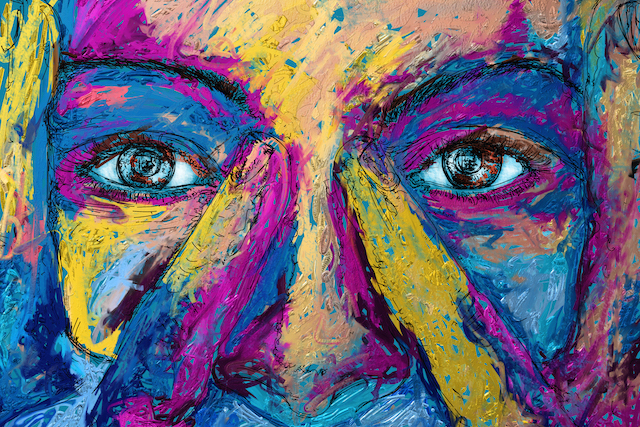
When humans look at a screen, our blink rate drops significantly—often by 50% or more. This lack of blinking leads to tear film instability and dryness, which manifests as the "burning" sensation Dua experienced. Furthermore, the human eye is evolutionarily designed to scan the horizon and track movement at varying distances. Constantly locking the ciliary muscles at a fixed, close distance creates a state of "accommodative spasm," where the muscles of the eye remain contracted, leading to headaches, blurred vision, and neck strain.
The Psychological Narrowing
Beyond the eyes, there is a cognitive toll. Modern research into the "attention economy" suggests that the way we engage with screens promotes "narrowed focus." When we focus solely on a screen, we engage in what psychologists call "tunnelling." This prevents the brain from entering the "diffuse mode" of thinking—a state associated with creativity, problem-solving, and emotional regulation. By staying in a state of high-intensity, localized focus, we inadvertently signal to our bodies that we are in a state of "emergency," keeping cortisol levels elevated and preventing true mental rest.
Ayurvedic Perspectives and Integrative Practices
Dua’s recovery process relied on traditional Ayurvedic practices that prioritize the restoration of balance. He did not seek a pharmaceutical cure; rather, he implemented structural changes to his daily routine to break the cycle of narrowing.
Practical Interventions
- Palming: A technique involving the cupping of warmed palms over closed eyes. This provides immediate sensory deprivation, allowing the ocular muscles to relax in total darkness and helping the practitioner reconnect with their physical state (e.g., recognizing clenched jaws or shallow breathing).
- Distance Gazing: The intentional act of shifting focus from a screen to the furthest possible point in one’s environment. This forces the eye muscles to relax their accommodative grip.
- Intentional Blinking: Consciously breaking the "stare" to ensure the cornea remains lubricated and the brain remains engaged with the physical environment.
- Hydration and Sensory Breaks: Using cool water to soothe the eyes and, more importantly, using breaks as a psychological "reset" to acknowledge the world beyond the task at hand.
These practices, while simple, serve as a form of mindfulness. They act as a "stop-gap" for the narrowing of attention, forcing the practitioner to admit that a world exists outside the digital interface.
Implications: Redefining Rest in the Digital Age
The broader implication of this experience is a shift in how we define "rest." In our current culture, rest is often viewed as the "cost" of working—a necessary evil to regain energy to return to the screen. Dua’s experience suggests a paradigm shift: rest is what attention is made of.
The Need for Horizon
Our cognitive architecture requires the same environmental cues as our visual system. We need distance as much as we need closeness; we need darkness as much as we need light. When we deny ourselves the ability to "look" into the distance, we are not just straining our eyes; we are limiting our capacity to think broadly and feel deeply.
Recommendations for the Digital Worker
For those navigating similar environments, the lessons learned from this case study are clear:
- Acknowledge the Signal: When the eyes burn, it is not just an irritation—it is a data point. It is a report on where your attention has been and how long it has been trapped in a narrow, digital field.
- Respect the Horizon: Integrate "horizon breaks" into the workday. Even a few minutes spent looking at a distant object or a natural landscape can reset the nervous system.
- The "Presence" Habit: Treat the transition away from the screen as a ritual of re-entry into the physical world. Do not just move from a screen to a phone; move from a screen to a state of wider awareness.
Conclusion: A Durable Change
Joey Dua’s transition from a student of medicine to a student of his own limitations provides a roadmap for the modern age. He has not abandoned the screen; he has learned to govern his relationship with it. He notes that the burning still happens, but he no longer perceives it as an obstacle to be "pushed through." Instead, it has become a reminder to look up, to breathe, and to remember that his professional identity does not require the complete surrender of his physical presence.
In an era where technology promises to make our lives more efficient, we must be vigilant about what we sacrifice in the process. True focus is not found in the intensity of our gaze, but in the balance between the light of the screen and the vast, unmonitored space beyond it. By integrating rest into the very fabric of our working hours, we ensure that our tools remain our instruments, rather than our masters.
As we continue to build our lives on glass, we must remember to occasionally look through it—and then, importantly, to look away.


 Dwi Wanna

 Nana Wu