
 Muslim
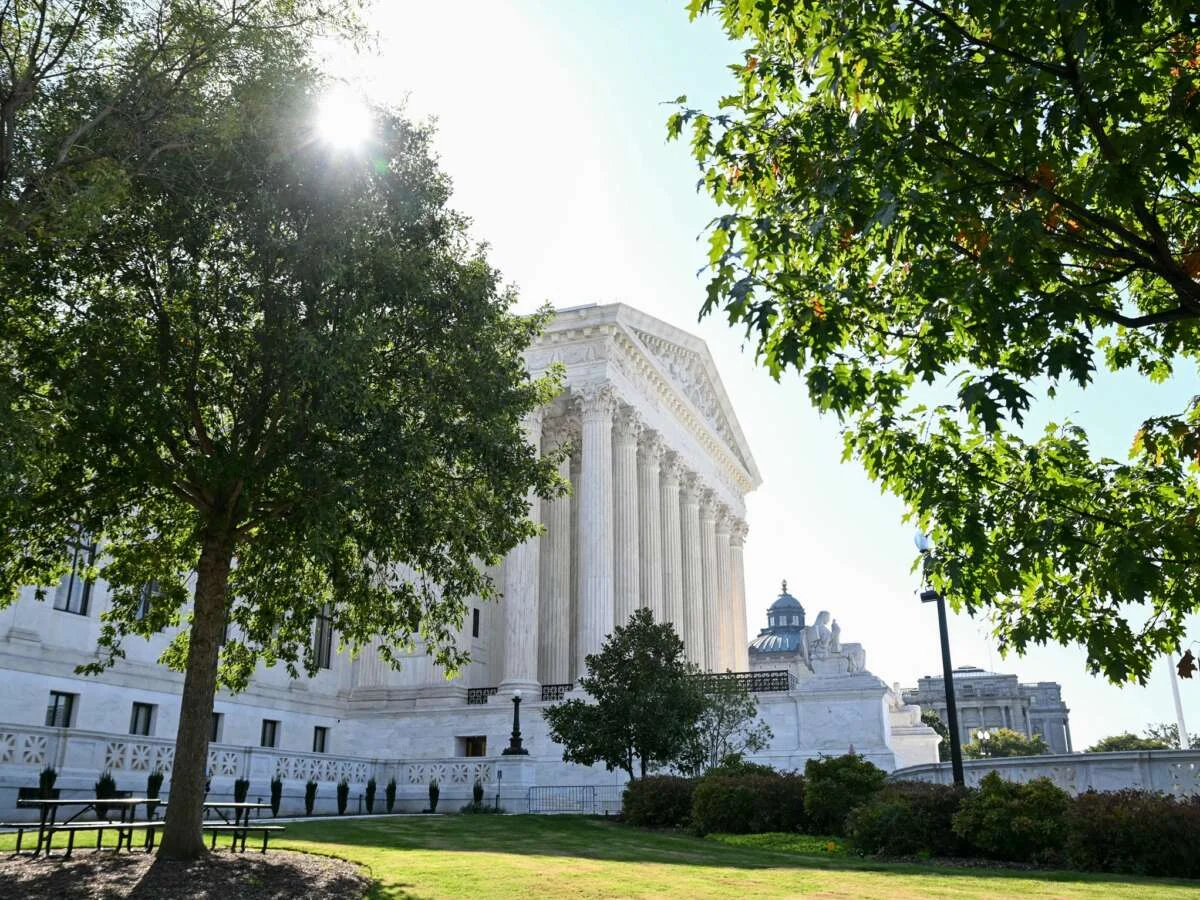
WASHINGTON, D.C. — In a significant legal development that underscores the ongoing tension between executive authority and constitutional protections, the United States Supreme Court has declined to intervene in a high-stakes battle over the medical rights of transgender individuals in federal custody. On Wednesday, the Court denied an emergency petition from the Trump administration that sought to lift a lower court’s injunction against a policy barring gender-affirming care for federally incarcerated persons.
The decision represents a rare and notable departure for a conservative-leaning court that has, in recent years, consistently ruled against the expansion of transgender rights. The ruling ensures that for the time being, approximately 1,000 transgender inmates diagnosed with gender dysphoria will continue to have access to essential medical treatments, including hormone therapy and other gender-affirming procedures, as the underlying litigation proceeds through the appellate system.
Main Facts: The High Court’s Silent Directive
The Supreme Court’s order was brief, a characteristic typical of "shadow docket" decisions—rulings made on emergency applications rather than through the full briefing and oral argument process. The court stated simply, “The application for stay presented to The Chief Justice and by him referred to the Court is denied.”
While the majority did not provide a detailed legal rationale for the denial, the order did reveal a predictable ideological split. Associate Justices Samuel Alito and Clarence Thomas noted their dissent, indicating they would have granted the Trump administration’s request to allow the ban to take effect immediately. The remaining seven justices, including the court’s three liberals and four of its conservative members, declined to disrupt the status quo established by lower courts.
The core of the dispute involves a January 2025 executive order issued by President Donald Trump, titled “Defending Women from Gender Ideology Extremism and Restoring Biological Truth to the Federal Government.” This order directed federal agencies, specifically the Bureau of Prisons (BOP), to cease all expenditures on medical procedures or treatments intended to conform an inmate’s appearance to a sex other than their biological sex assigned at birth.
The denial of the stay means the preliminary injunction issued by a federal district judge remains in place. Consequently, the Bureau of Prisons is legally prohibited from enforcing the ban while the U.S. Court of Appeals for the District of Columbia Circuit reviews the constitutionality of the policy.
Chronology: The Path to the Supreme Court
The legal conflict began shortly after President Trump’s inauguration in January 2025. Following the issuance of the executive order, the Bureau of Prisons moved swiftly to overhaul its medical guidelines. These changes effectively halted new prescriptions for hormone therapy and suspended ongoing treatments for hundreds of incarcerated individuals, prompting immediate alarm among civil rights advocates.
- January 2025: President Trump signs the executive order. The Attorney General is directed to ensure the BOP revises its policies to eliminate funding for gender-affirming care.
- Spring 2025: A group of incarcerated transgender individuals, represented by the American Civil Liberties Union (ACLU), files a class-action lawsuit. They argue that the sudden withdrawal of medically necessary care constitutes “deliberate indifference” to serious medical needs, a violation of the Eighth Amendment’s prohibition on cruel and unusual punishment.
- August 2026: A federal district judge issues a preliminary injunction. The judge rules that the plaintiffs are likely to succeed on the merits of their Eighth Amendment claim, noting that gender-affirming care is recognized as the standard of care by major medical associations.
- September 2026: The Trump administration appeals the injunction to the U.S. Court of Appeals for the D.C. Circuit. The administration also requests an emergency stay to allow the policy to go into effect during the appeal.
- Early October 2026: The D.C. Circuit denies the request for a stay, upholding the lower court’s injunction.
- October 21, 2026: Solicitor General John Sauer submits an emergency application to the Supreme Court. The High Court denies the application, leaving the injunction in place.
Supporting Data: Medical Necessity and the Eighth Amendment
The legal arguments in this case hinge on the intersection of medical science and constitutional law. The Eighth Amendment protects incarcerated individuals from "cruel and unusual punishments," which the Supreme Court defined in the landmark 1976 case Estelle v. Gamble as including "deliberate indifference to serious medical needs of prisoners."
The Medical Consensus
Advocates for the plaintiffs provided extensive data to the courts regarding the medical necessity of gender-affirming care. Organizations such as the American Medical Association (AMA), the American Psychological Association (APA), and the World Professional Association for Transgender Health (WPATH) recognize gender dysphoria as a serious medical condition.
According to court filings:

- Approximately 1,000 individuals in federal custody have been formally diagnosed with gender dysphoria.
- Untreated gender dysphoria is associated with high rates of self-harm, depression, and suicide.
- Gender-affirming care, which can range from psychotherapy to hormone replacement therapy (HRT) and, in rare cases, surgical intervention, is the only clinically proven treatment for the condition.
The Administration’s Stance
The Trump administration’s Solicitor General, John Sauer, argued that the executive order was a lawful exercise of policy-making authority intended to preserve "biological truth" and protect the integrity of the federal prison system. The administration contended that the Eighth Amendment does not mandate specific types of elective treatments and that the government has broad discretion in how it allocates medical resources within the carceral system.
Furthermore, the administration argued that the lower court’s injunction overstepped by "judicializing" a matter of executive policy, potentially infringing on the BOP’s ability to manage its facilities and budget.
Official Responses: Victory and Vow to Continue
The Supreme Court’s decision was met with immediate praise from civil rights organizations, while the administration signaled its intent to continue the fight in the lower courts.
The ACLU’s Perspective
In a statement released shortly after the order, the ACLU heralded the decision as a victory for the rule of law and human rights. "This ruling affirms that federal prison officials cannot deny transgender people essential health care based on political ideology," the statement read. "The Eighth Amendment is clear: the government has a constitutional obligation to provide necessary medical care to those in its custody. Today’s decision ensures that our clients will not be subjected to the physical and psychological trauma of having their medical treatment stripped away while this case proceeds."
The Administration’s Reaction
While the White House did not issue an immediate formal statement, sources close to the Department of Justice indicated that the administration remains committed to the principles outlined in the January 2025 executive order. Solicitor General John Sauer’s filings emphasized the belief that "taxpayer funds should not be used for procedures that deny biological reality." The administration is expected to focus its efforts on the upcoming arguments before the D.C. Circuit, where they will seek to have the preliminary injunction vacated permanently.
Implications: A Shifting Legal Landscape
The Supreme Court’s refusal to grant a stay is particularly noteworthy given its recent track record. The court has previously allowed state-level bans on transgender athletes, upheld restrictions on transgender people serving in the military, and permitted state laws that prohibit gender-affirming care for minors.
Why This Case Differed
Legal analysts suggest several reasons why the court may have acted differently in this instance:
- The Eighth Amendment Context: Unlike cases involving schools or the military, the rights of prisoners are governed by a specific "deliberate indifference" standard that is well-established in case law.
- Procedural Restraint: The court may have been reluctant to interfere with a preliminary injunction at such an early stage of the litigation, preferring to let the D.C. Circuit rule first.
- The "Status Quo" Argument: Granting a stay would have disrupted ongoing medical treatments for hundreds of people, potentially creating an immediate health crisis within federal prisons—a factor that often weighs heavily in stay applications.
Future Consequences
While this is a victory for transgender advocates, it is a temporary one. The Supreme Court has not yet ruled on the merits of the case, only on whether the policy should be blocked during the appeal. If the D.C. Circuit eventually rules in favor of the Trump administration, the case will almost certainly return to the Supreme Court for a final determination.
Furthermore, this case could set a precedent for how federal medical standards are applied across other agencies. If the courts ultimately find that the executive branch cannot unilaterally ban specific medical treatments for prisoners, it could limit the scope of future executive orders aimed at restricting healthcare access for other marginalized groups within federal systems.
For now, the roughly 1,000 transgender people in federal custody remain in a state of legal limbo, though their access to care is secured for the immediate future. The case remains one of the most significant tests of the Eighth Amendment in the modern era, pitting the ideological goals of the executive branch against the established medical rights of the incarcerated.


 Sagoh

 Siti Muinah