


 Nila Kartika Wati

OMAHA, NE — In the heart of the American Midwest, a silent crisis is brewing that threatens to stall the economic engine of the "Silicon Prairie." The Omaha Public Power District (OPPD), a utility that has long been the backbone of eastern Nebraska’s industrial and residential growth, is facing a stark reality: it is running out of available electricity.
This investigative report, a collaboration between Grist and The Flatwater Free Press, reveals a utility at a crossroads. As data centers proliferate and industries seek to electrify, the physical limits of the power grid are clashing with the ambitious growth goals of state and local leaders. With less than 100 megawatts of capacity currently unallocated for large-scale projects, Nebraska’s ability to attract the next generation of jobs and tax revenue is hanging in the balance.
Main Facts: The 100-Megawatt Bottleneck
The Omaha Public Power District currently serves approximately 419,000 customers across 13 counties in eastern Nebraska. For decades, the utility operated with a comfortable surplus, but that era has ended. Today, OPPD projects it has less than 100 megawatts (MW) of available power capacity for new or expanding large-scale customers over the next several years.
To put that figure into perspective, a single modern data center—the kind operated by tech giants like Google or Meta—can require upwards of 1,000 MW. Even a modest manufacturing facility typically demands between 10 and 100 MW. Consequently, OPPD President and CEO Javier Fernandez has issued a sobering warning: any new or expanding development project requiring more than 2 MW of power will likely be placed on a waiting list.
The shortage is not a result of residential growth—OPPD maintains it can still meet the needs of typical housing and small commercial developments—but rather a "perfect storm" of surging industrial demand, aging infrastructure, and regulatory shifts following extreme weather events. The utility is now forced to navigate a high-stakes balancing act: building enough capacity to fuel growth without overextending itself and passing ruinous costs onto existing ratepayers.
Chronology: From Winter Storm Uri to the Data Center Boom
The current crisis can be traced back to a series of pivotal events over the last four years that fundamentally reshaped how energy is managed in the Great Plains.
2021: The Wake-Up Call of Winter Storm Uri
In February 2021, Winter Storm Uri swept across the United States, plunging temperatures to historic lows and causing a massive failure of the energy grid in Texas. While Nebraska avoided a total collapse, the Southwest Power Pool (SPP), which manages the regional grid, was forced to implement rolling blackouts to prevent a system-wide catastrophe.
In the aftermath, the SPP overhauled its reliability standards. It mandated that member utilities like OPPD maintain significantly higher "planning reserve margins"—extra power kept in reserve specifically for emergency situations. This regulatory shift effectively "locked away" a portion of OPPD’s capacity that previously would have been available for new customers.
2022–2023: The Industrial Surge
As the world emerged from the pandemic, the demand for high-intensity computing and domestic manufacturing spiked. Nebraska, with its relatively low energy costs and central location, became a prime target for data centers. Simultaneously, the push for electrification in transportation and home heating began to place additional strain on the grid.
2024: The Capacity Ceiling
By mid-2024, the queue for new projects reached a breaking point. OPPD’s internal projections showed that the "cushion" of available power had evaporated. In late 2024, Javier Fernandez announced his upcoming departure from the utility, leaving the board to decide on a massive, multi-billion-dollar expansion plan that will define the region’s economic trajectory for the next decade.
Supporting Data: The Magnitude of the Demand
The numbers underlying OPPD’s current dilemma illustrate the scale of the challenge. The utility’s current total portfolio consists of 4,583 MW of energy capacity. However, the projected demand over the next ten years suggests that this may need to more than double.
The Queue and Potential Growth
- Active Queue: Companies with projects totaling nearly 2,000 MW are currently in OPPD’s formal queue through 2031.
- On the Radar: An additional 5,000 MW worth of potential projects are currently scouting the Omaha area but have not yet entered the formal queue.
- The Industrial Shift: In 2024, industrial customers represent 32% of OPPD’s peak demand. By 2035, that figure is expected to soar to 52%, eclipsing both residential and commercial use.
The Fiscal Context
Nebraska is currently facing a projected $208 million budget deficit for the upcoming year. State income tax revenues fell by $703 million over the past year compared to 2022. This fiscal pressure makes economic development—and the energy required to power it—a matter of state survival. If OPPD cannot provide the power, these tax-paying industries will simply move to other states, taking jobs and revenue with them.
Official Responses: A Conflict of Priorities
The tension between utility management and economic development leaders has become increasingly public as the capacity shortage halts new deals.
The Utility’s Perspective
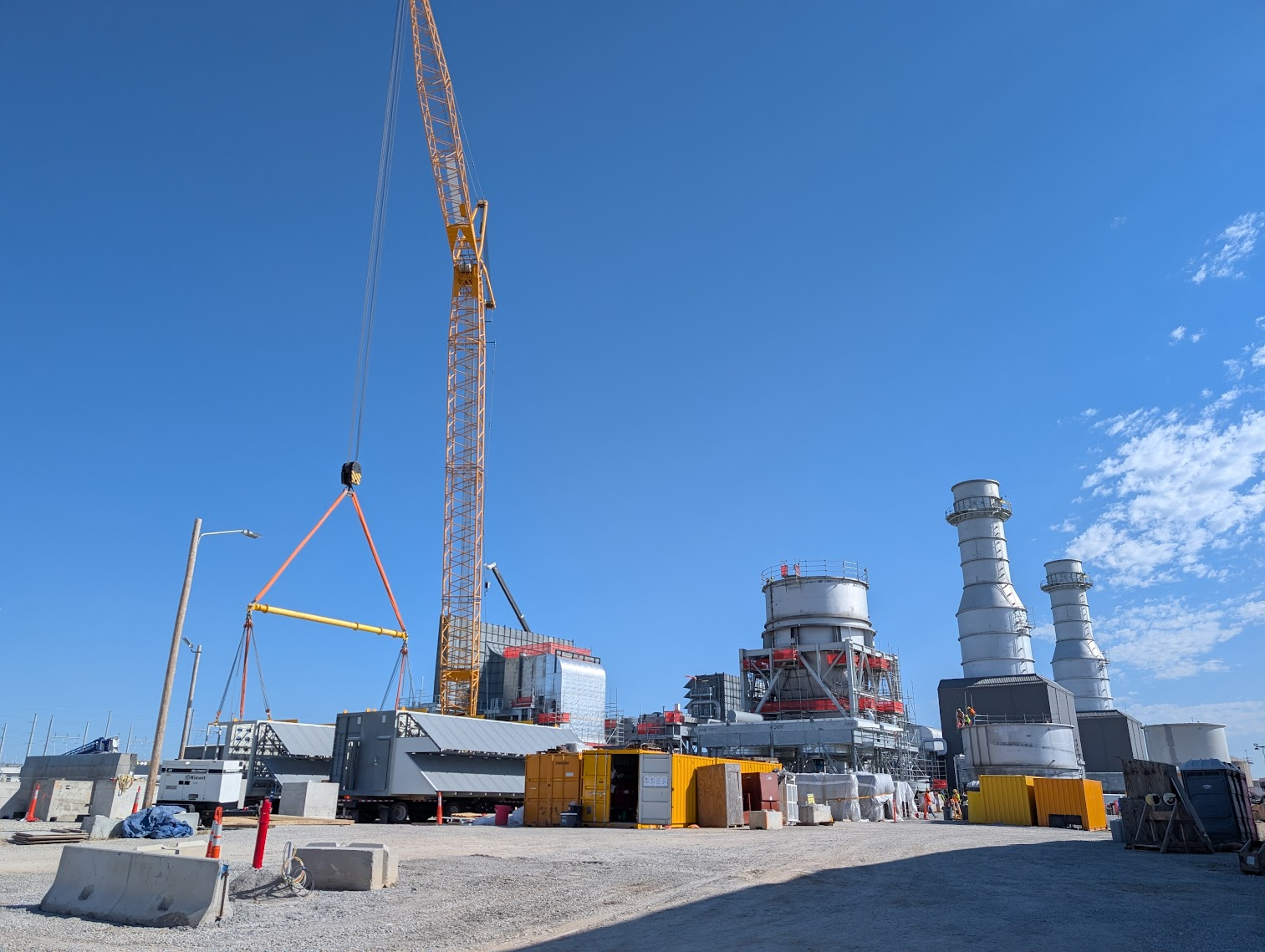
Javier Fernandez, OPPD’s outgoing CEO, has been candid about the limitations. "We are bending over backwards. We’re trying to figure out creative solutions," Fernandez told Grist. He noted that buying capacity from neighboring utilities is no longer a viable option because "literally, no one has excess capacity. Everyone is in the same boat."
Fernandez emphasized that the utility’s primary obligation is to maintain the reliability of the grid for its current 419,000 customers. "The biggest question my board is likely going to have to answer is going to be how big of a plan we approve. And that is going to be informed by… state, counties, cities, chambers: How much do you want us to grow?"
The Economic Development Perspective
Economic leaders are sounding the alarm. Heath Mello, President and CEO of the Greater Omaha Chamber, recently sent a letter to the OPPD board urging them to plan for more aggressive growth through 2036.
Paul West, chair of the Chamber’s board, noted that energy availability is now one of the top two reasons the region loses deals to other states. "Now it’s a true competition," said Larry Gigerich, chair of the Site Selectors Guild. "We can’t generate enough new power fast enough to meet everybody’s needs."
Implications: The High Cost of "No"
The path forward for OPPD and Nebraska involves navigating three primary obstacles: public opposition, supply chain constraints, and financial risk.
The Renewable Energy Paradox
To meet demand quickly and cheaply, OPPD is looking toward a mix of natural gas and renewable energy. However, renewable projects—specifically wind and solar—have faced fierce resistance in rural Nebraska. Misinformation regarding fire risks and the preservation of agricultural land has led several communities to reject clean energy developments.
Fernandez pointed out the irony of this situation: "Everyone is saying no [to renewables], and then we end up in a really bad place" where there isn’t enough power to support the very jobs those communities want.
The Ratepayer Risk
The financial stakes are immense. If OPPD builds a massive 4,500 MW expansion and the projected data center demand fails to materialize—perhaps due to a shift in the tech economy—the utility’s existing residential customers will be left to pay off the debt. Conversely, if they build too little, Omaha faces economic stagnation.
The Manufacturing vs. Data Center Struggle
There is a growing concern that "passive" data centers, which require massive amounts of power but provide relatively few long-term jobs, are crowding out "active" manufacturing facilities. Manufacturers are beginning to use their voices more directly, demanding that utilities prioritize industries that provide high employment density over those that simply house servers.
Conclusion: A State at the Crossroads
The energy shortage in eastern Nebraska is more than a technical hurdle; it is a fundamental threat to the "Nebraska Dream." As the state grapples with budget deficits and the need to retain young talent—preventing the "brain drain" to the coasts—the availability of reliable, affordable power is the primary catalyst for success.
"If Omaha doesn’t grow, if Omaha doesn’t prosper, the rest of the state very likely won’t," Fernandez warned.
As OPPD prepares to finalize its 10-year plan and transition to new leadership, the decisions made in the coming months will determine whether Nebraska remains a competitive player in the global economy or becomes a cautionary tale of infrastructure failing to keep pace with ambition. For now, the message to new industry is clear: the Silicon Prairie is open for business, but you may have to bring your own lightbulbs.


 Asro

 Neng Nana