


 Dwi Wanna
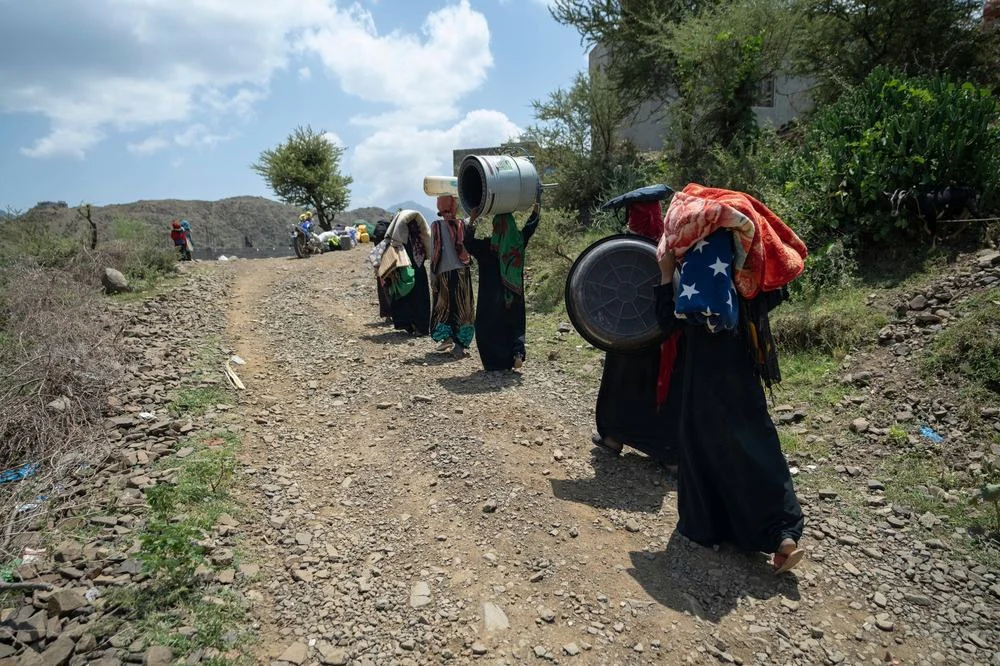
As world leaders gather in New York for the 81st session of the United Nations General Assembly (UNGA 81), a coalition of humanitarian, development, and civil-society organizations has issued a clarion call to address the rapidly deteriorating situation in Yemen. With 22.3 million people—nearly three-quarters of the population—in dire need of assistance, the country stands at a critical juncture. The signatories, including Oxfam, the International Rescue Committee (IRC), and the Danish Refugee Council, are demanding immediate diplomatic and financial intervention to prevent a total collapse of essential services and to halt the slide back into large-scale conflict.
The Humanitarian Landscape: A Crisis of Unprecedented Scale
The crisis in Yemen is not merely a lingering shadow of past hostilities; it is an active, intensifying emergency. Current data paints a harrowing picture of a nation starved of resources and increasingly isolated by regional instability. At least 18.3 million people are currently facing acute food insecurity, a figure that underscores the catastrophic failure of food systems in the region.
Perhaps most alarming is the impact on the most vulnerable. More than 2.2 million children under the age of five, alongside 1.3 million pregnant and breastfeeding women, are suffering from acute malnutrition. These figures represent more than just statistics; they represent a generation of Yemeni children whose physical and cognitive development is being permanently stunted by the lack of basic nutrition.
The disparity in available data remains a significant hurdle. While partial IPC (Integrated Food Security Phase Classification) analysis for government-controlled areas suggests that 5.4 million people are currently in IPC Phase 3 (Crisis) or worse, the lack of comparable, updated data for northern Yemen creates a "blind spot" that international observers fear hides even deeper suffering. The most recent projections for Sana’a-based authority areas indicated that 12.8 million people were in Phase 3 or above, with 41,000 individuals facing outright famine-like conditions (IPC Phase 5). These numbers demand that the international community treat the absence of current data not as a sign of improvement, but as an urgent reason to restore independent monitoring and humanitarian access across all governorates.
Chronology of Escalation: From Fragile Truce to Renewed Conflict
The fragile stability established by the 2022 truce, which once offered a glimmer of hope for a peaceful resolution, has been severely undermined by recent developments.
- April 2022: A nationwide truce is announced, significantly reducing violence and allowing for the flow of some commercial goods.
- 2024–2025: Persistent economic decline, characterized by a 1.5% contraction in real GDP in 2025, begins to erode the gains made during the truce.
- June 2026: A sharp escalation in military activity begins, marked by renewed fighting across multiple front lines, including Ta’iz and Lahj.
- August 7, 2026: The UN Special Envoy to Yemen issues a stark warning, noting that the country faces a greater risk of large-scale conflict than at any point since the truce began. This follows attacks on civilian infrastructure, including airports, and increased volatility in Ma’rib and Hadramawt.
- September 2026: The Displacement Tracking Matrix (DTM) records over 120,000 newly displaced persons since June, a number that continues to climb as shelling and military operations force families to flee their homes in search of safety.
This timeline illustrates a clear, downward trajectory. The "wider regional confrontation" has begun to spill over into Yemen, with regional tensions threatening to draw the country back into the full-scale, multi-front war that defined the preceding decade.
Supporting Data: The Intersection of Economics and Survival
The humanitarian catastrophe in Yemen is inextricably linked to the total degradation of the national economy. The World Bank’s assessment that government revenue has fallen to a mere 5.6% of GDP highlights the state’s inability to provide basic services. When the state fails to pay salaries, provide water, or maintain electrical grids, the burden of survival shifts to families who are already struggling with hyperinflation and the high cost of imports.
Yemen’s reliance on imported essentials makes it acutely vulnerable to global supply chain disruptions. The instability in the Middle East and the threats to shipping lanes have increased transport costs, driving the price of food and fuel beyond the reach of the average household.
Furthermore, public health infrastructure is in a state of advanced decay. Only 59.3% of health facilities remain fully functional. This translates into millions of people being denied access to maternal care, childhood vaccinations, and emergency treatment for preventable diseases. The lack of clean water and sanitation (WASH) infrastructure, affecting 14.4 million people, acts as a force multiplier for disease outbreaks, including cholera and other waterborne illnesses.
Official Responses and the Obstruction of Aid
A deeply concerning trend identified by the aid community is the systematic targeting of humanitarian and diplomatic personnel. Since June 2024, dozens of national staff from the UN, international NGOs, and civil society have been subjected to arbitrary detention by the de facto authorities in Sana’a.
These detentions are not merely a violation of human rights; they are a direct assault on the humanitarian response. When staff members are detained, the entire apparatus of aid delivery is paralyzed. Organizations are forced to scale back operations, and the fear of detention makes it nearly impossible to retain skilled local workers.
The coalition of NGOs has issued an unequivocal demand: All arbitrarily detained UN, NGO, civil-society, and diplomatic personnel must be released immediately, safely, and unconditionally. Furthermore, they urge member states to use their diplomatic leverage to ensure that humanitarian access is not used as a bargaining chip in political negotiations.
Implications: The Choice Between Relief and Recovery
There is a dangerous misconception that aid agencies must choose between immediate life-saving relief and long-term recovery efforts. The humanitarian community argues that this is a false dichotomy. In a country as fragile as Yemen, life-saving aid is only a temporary patch. Without investments in the systems that people depend on—such as water grids, agricultural support, and local market livelihoods—the humanitarian need will simply reset to zero every time a new shock occurs.
The implication for UNGA 81 is clear: donors must shift toward flexible, multi-year funding. The 2026 Humanitarian Needs and Response Plan, which seeks US$2.16 billion, is currently woefully underfunded. If these funds are not provided, the international community is effectively consenting to a future where millions of Yemenis are dependent on increasingly scarce international charity, rather than being empowered to rebuild their own lives.
A Five-Point Call to Action
For the international community to change the course of the crisis, the following five outcomes must be prioritized during the UNGA 81 High-Level Week:
- Sustained and Flexible Financing: Donors must provide immediate, multi-year funding that supports both emergency relief and the maintenance of essential systems. Protecting existing staff and infrastructure is paramount.
- Diplomatic Pressure for Access and Release: Member states must exert maximum diplomatic pressure to secure the release of detained personnel and ensure that humanitarian corridors remain open, safe, and free from administrative interference.
- De-escalation and Political Engagement: All parties to the conflict must be pushed to comply with international humanitarian law. Protecting civilians and critical infrastructure—such as ports and roads—must be a non-negotiable condition of international relations with the warring parties.
- Economic Stabilization: Support for public-sector salary payments and the protection of household purchasing power is essential. Without a functioning economy, humanitarian aid will never be enough to offset the depth of the suffering.
- Local Empowerment and Climate Resilience: Investment must be directed toward climate-adapted water infrastructure and renewable energy. Furthermore, the voices of local civil society, particularly women’s organizations, must be central to any peace-building or recovery initiatives.
Conclusion: The Cost of Inaction
Yemen is currently facing a "compounding shock" scenario, where regional conflict, economic collapse, and climate instability have combined to create a perfect storm. The window for intervention is closing. As leaders conclude their deliberations in New York, the message from the humanitarian community is firm: Yemen cannot wait for the next famine or the next massive displacement wave to make its needs visible.
The path forward requires more than just rhetoric; it requires the political will to treat Yemen as a priority rather than a secondary theater of global concern. By protecting civilians, ensuring the safety of aid workers, and investing in the foundations of recovery, the international community can help pull Yemen back from the brink. The cost of failing to act will be measured in millions of lives, a burden that the global community will have to bear for generations to come.


 Ali Ikhwan

 Nana Wu