


 Ali Ikhwan
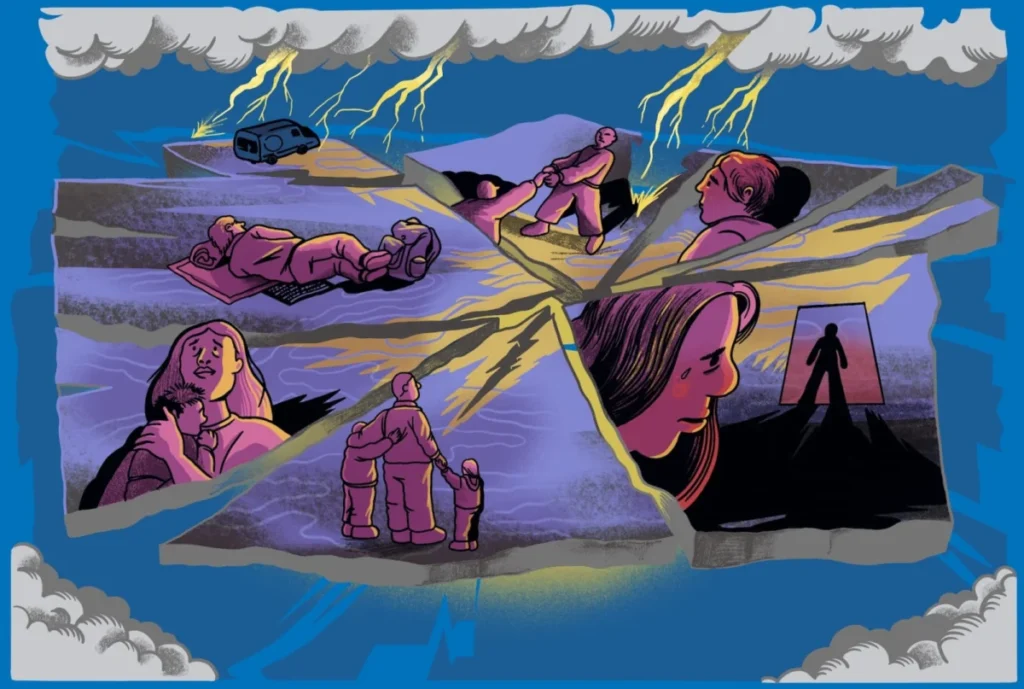
Something happened. A life was lost, a relationship imploded, or a trusted friend vanished into the ether without a word. The event itself is historical—it is over, documented, and finished. Yet, your internal landscape remains a chaotic, unresolved wreckage. Your emotions refuse to respect the calendar.
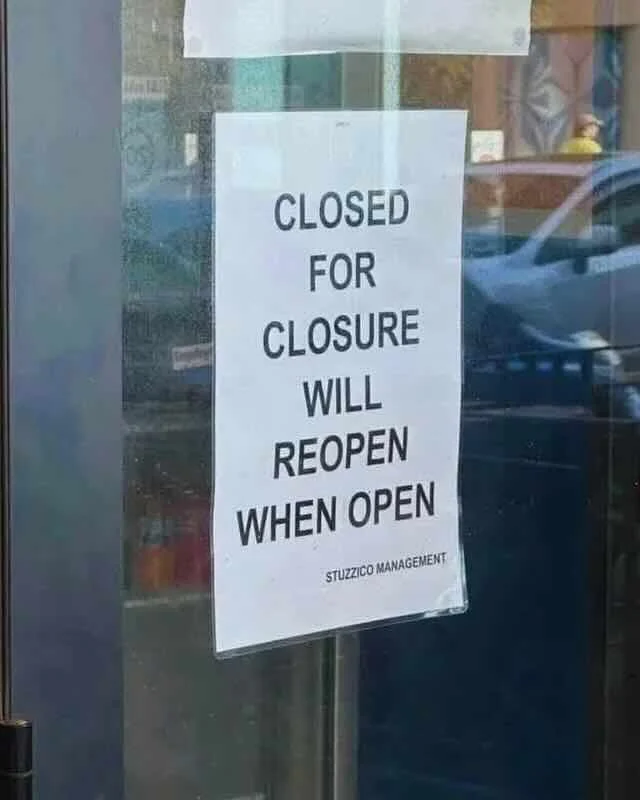
In these moments, society offers a singular, seductive panacea: "closure." Friends and family, well-intentioned and desperate to see you smile again, reach for this word as if it were a key to a locked door. The promise is simple: once you achieve closure, the agonizing questions will cease, the pain will recede, and you will be returned to your former, functional self.
But is closure a tangible psychological reality, or is it merely a comforting cultural fiction? To understand why we are so obsessed with this concept—and why it may be doing us more harm than good—we must dismantle the idea from its origins to its modern, often detrimental, implications.
The Chronology of a Concept: From Gestalt to "Friends"
Despite the ancient nature of human grief, the cultural demand for closure is a remarkably recent phenomenon. For millennia, humanity endured loss, mourning, and betrayal without the expectation of a neat, final emotional bow.
The term "closure" did not enter the vernacular of grief until the mid-1990s. Sociologist Nancy Berns, author of Closure: The Rush to End Grief and What It Costs Us, traces the mainstreaming of the word to a specific cultural touchstone: the 1995 episode of the sitcom Friends, in which the character Rachel Green drunkenly leaves a voicemail for Ross claiming she has achieved "closure." The irony, of course, was the point—she was clearly still deeply attached.
However, the term’s academic roots lie in 1923, within the realm of Gestalt psychology. Max Wertheimer used "closure" to describe a cognitive phenomenon: the brain’s tendency to perceive an incomplete image—such as a series of dots forming a circle—as a complete, closed shape. It is a brilliant observation regarding visual perception. Yet, applying a mechanism for how we recognize patterns in geometry to the profound, messy, and non-linear experience of human sorrow is a category error of the highest order. Grief is not a shape; it is a life-altering transformation.
Supporting Data: Why "Closure" is an Impossible Metric
If closure is the standard for recovery, we are setting ourselves up for inevitable failure. The primary issue, as Berns highlights, is that there is no consensus on what "closure" actually means.
Berns identifies six conflicting definitions that people frequently use:
- Closing a chapter and moving on.
- Remembering without the pain (never forgetting).
- Forgetting and erasing all reminders of the past.
- Getting even through retribution or revenge.
- Obtaining definitive answers to haunting questions.
- Confessing or receiving forgiveness.
These definitions are mutually exclusive. You cannot simultaneously "forget" someone while "remembering them in a new way." By casting such a wide net, the term "closure" becomes a hollow vessel—used to describe everything from a formal legal settlement to an internal emotional shift. When we tell the grieving that they must reach closure, we are asking them to pursue a finish line that doesn’t exist.
The Social Half-Life of Grief
Society has a set of unspoken "feeling rules," as sociologist Arlie Hochschild famously termed them. We are expected to suffer a loss, be shattered, perform the necessary rituals, learn a profound lesson, and then—within a socially acceptable timeframe—achieve closure and move on.
This creates a dangerous dynamic. The average support system provides deep, active empathy for roughly three to six months. If your sorrow persists beyond that, you have violated the "Socially Acceptable Half-Life of Grief." You transition from a sympathetic figure to a source of social discomfort. You are "making it weird."
As a result, the grieving person begins to self-censor. They learn that mentioning their loss causes others to fidget or glance at the clock. They internalize the message that their grief is an inconvenience. Eventually, the circle of people they trust enough to be vulnerable with shrinks, leaving them isolated. This creates a vicious cycle: because grief is hidden, the public assumes it is brief, which forces the next person to hide their pain even deeper.
Implications: The Failure of Catharsis and the Trap of Revenge
When the loss is caused by another person, the desire for "closure" often morphs into a desire for revenge. We are sold the idea that if we can only make the person who hurt us pay, we will finally be "free."
This is the promise of "catharsis theory"—the belief that venting anger or acting out aggression will drain the reservoir of rage. However, decades of social psychology research have debunked this. A landmark study by Dr. Brad Bushman found that people who were encouraged to "vent" their aggression by hitting punching bags actually became more aggressive, not less.
Experiments by researchers like Wilson and Gilbert demonstrate that those who focus on punishing an offender spend significantly more time dwelling on the perpetrator than those who choose not to retaliate. Revenge does not close the book; it ensures you keep reading the same agonizing chapter over and over again. To move forward, the offender must become less relevant, not more central, to your life.
A New Framework: "Continuing Bonds"
If we discard the detachment model of grief, what replaces it? In the 1990s, bereavement scholars began to advocate for the "continuing bonds" theory. This model posits that healing is not about severing the connection to the deceased or the past, but rather finding a new, transformed way to relate to them.
You do not need to "get over" someone to recover. You simply need to learn how to carry the relationship in a different form. They may no longer provide physical presence or active dialogue, but they remain part of your internal narrative. You might ask, "What would they think of this?" or honor them through values they instilled in you. This is not "holding on" in a pathological sense; it is acknowledging that the love you felt was real and that it still has a place in your present.
Practical Steps Toward Progress
If you are struggling with a loss, stop asking how to achieve closure. Instead, consider these steps:
1. Define Your Own Terms
Ask yourself: "What specifically am I hoping will change?" Be brutally honest. If you are angry, admit it. If you want an apology that will never come, acknowledge the impossibility of that outcome. Once you define what you are actually looking for, you can assess whether it is under your control or if you need to find an alternative route to peace.
2. Pick Your "Grief Experts" in Advance
Do not rely on the general public for your emotional support. Society at large is not equipped to handle the long-term reality of grief. Identify a small, reliable circle—a therapist, a close friend, or a support group—who has proven they can stay present when the conversation becomes heavy.
3. Embrace the Coexistence of Joy and Sorrow
The most damaging myth of closure is that grief and joy are sequential. You do not need to wait for grief to finish before you are allowed to laugh. It is entirely possible to feel profound sorrow and genuine pleasure on the same day. Do not feel guilty for the moments of brightness; they are not a betrayal of your loss, but evidence of your resilience.
4. Be the Person Who Stays
If you are supporting someone else, ignore the pressure to "fix" them. You cannot finish their grief, but you can ensure they don’t have to hide it. Call after six months. Listen to the same story for the tenth time without checking your phone. The greatest gift you can offer is the confirmation that their grief is not an imposition on your time.
Conclusion: The Capacity for Depth
We have spent millions of years evolving into creatures capable of loving so deeply that the absence of a person fundamentally alters the landscape of our lives. It was always an overly optimistic—and perhaps insulting—notion that we could resolve such a monumental human experience by "achieving closure."
Progress is not the same as an ending. It is the growing capacity to contain contradictory emotions, to build a life around the void rather than trying to fill it, and to continue moving forward while carrying the people and experiences that shaped us. We don’t need closure; we need the courage to stay present with the truth of our own hearts, however long that process may take.


 Azzam Bilal Chamdy

 Rifan Muazin