


 Siti Muinah
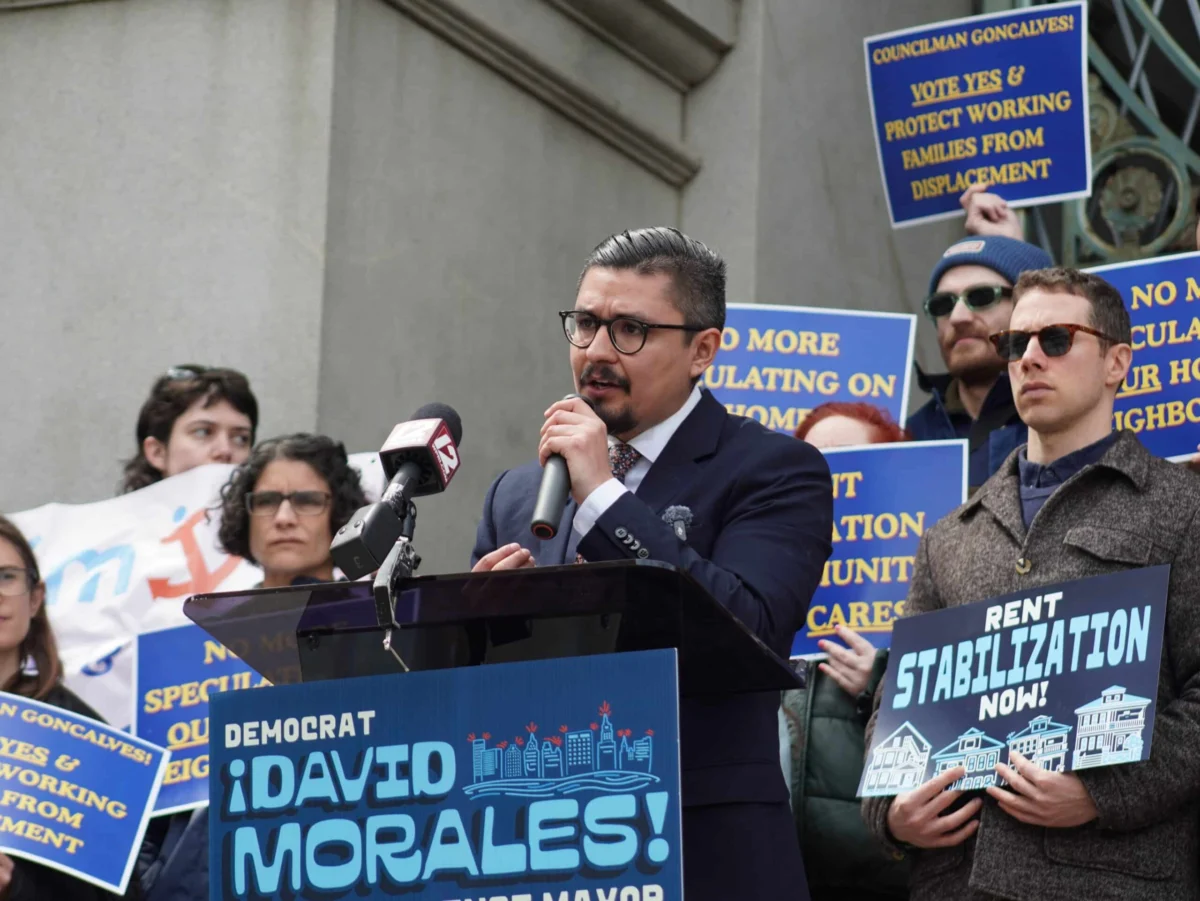
In the landscape of American municipal politics, some victories are expected, and others represent a fundamental shift in the electorate’s priorities. When 28-year-old Democratic Socialist David Morales secured a staggering 81-to-17 percent victory over Republican challenger Dave Talan on Tuesday to become the next mayor of Providence, Rhode Island, the outcome was mathematically predictable. In a city that has not elected a Republican mayor since the tenure of Buddy Cianci began in 1974, the general election was a formality.
However, the true earthquake occurred weeks earlier, during the Democratic primary. Morales’s decisive defeat of incumbent Mayor Brett Smiley—a political veteran who had spent years attempting to steer the city toward a supply-side housing solution—sent a shockwave through the Ocean State. The primary results were not merely a referendum on a candidate; they were a stinging indictment of the status quo in the face of an unprecedented cost-of-living crisis.
For Providence, a city once defined by its bohemian spirit and affordability, the "least affordable U.S. city for renters" designation by Redfin in 2025 has become a defining characteristic. As residents struggle to keep pace with soaring housing costs, the election of Morales signals that the era of waiting for supply-side economics to trickle down to the working class may be coming to an end.
A Chronology of a Housing Crisis
The path to this political shift was paved by years of mounting economic anxiety. By the time Brett Smiley assumed office in January 2023, Providence was already grappling with the fallout of the post-pandemic migration. The city, known for its arts scene and proximity to expensive hubs like Boston and New York, became an increasingly attractive destination for remote workers with higher incomes.
This influx triggered a rapid appreciation in housing costs that quickly outpaced local wages. By 2026, the data had reached a boiling point. According to the 2026 Housing Fact Book published by HousingWorks RI, nearly 60 percent of the city’s 191,767 residents were renters. The average rent for a two-bedroom apartment had climbed to $2,396, requiring a household income of nearly $96,000 to be considered "affordable"—far above the city’s median household income of $68,119.
The tension reached its zenith in April 2026, when the Providence City Council passed a landmark bill to cap annual rent increases at 4 percent. The bill included key exemptions for new construction and small, owner-occupied rentals, but it was viewed by the real estate industry and the mayoral administration as a step toward excessive government interference. True to his campaign promises, Mayor Smiley vetoed the measure the following day. When the City Council failed to muster the 10-vote majority required to override the veto, the battle lines for the 2026 mayoral election were permanently drawn.
The Smiley Agenda: A Policy-Driven Approach
To characterize the Smiley administration as inactive would be a misreading of the data. Throughout his term, Smiley pursued a "pro-housing" agenda favored by many urban planners and YIMBY (Yes In My Backyard) advocates. His approach was rooted in the theory that the housing crisis could only be solved through increased density, streamlined permitting, and market-rate development incentives.
"The city’s administration really leaned into it," says Melina Lodge, executive director of the Housing Network of Rhode Island. "The comprehensive plan revision was really aggressive… reducing lot sizes, parking requirements, just streamlining the development process."

The results were statistically significant. By 2026, the city had issued certificates of occupancy for 988 new housing units—40 percent of which were deed-restricted as affordable. This was a marked improvement over the 299 building permits issued in 2022. Furthermore, the city poured $58.7 million into its housing trust fund to subsidize the construction of deeply affordable units.
Despite these achievements, the political reality was that residents were not feeling the relief. For the average renter, the construction of new high-end units or the promise of long-term supply stabilization did not address the immediate, monthly threat of eviction or price gouging.
The Morales Surge: Organizing for Power
David Morales, a member of the Rhode Island House of Representatives, entered the race in September 2025 with a platform that rejected the incrementalism of the Smiley administration. His campaign was built on the foundation of "tenant power."
The infrastructure for this victory was provided by Reclaim RI, a progressive organization that grew out of the 2020 Bernie Sanders presidential campaign. Reclaim RI recognized that in a city where the majority are renters, housing is the primary economic driver of voter behavior. While Smiley focused his campaign rhetoric on public safety and fiscal management, Morales focused exclusively on the "rent squeeze."
"It was very interesting and revealing that voters wanted to talk about the housing crisis," says Daniel Denvir, co-chair of Reclaim RI. "Smiley talked about crime. There’s been very little crime in Providence for quite a while now."
Denvir’s assessment highlights a disconnect between the administration and the electorate. While Smiley accused Morales of wanting to "defund the police"—a claim that resonated less as voters focused on their rent bills—Morales successfully framed the housing crisis as a moral failure of the current leadership. By linking the incumbent’s policies to his ties with the real estate industry, the Morales campaign turned the housing issue into a question of whose interests the city serves: those who own property or those who live in it.
Official Responses and the Clash of Philosophies
The disagreement between the incoming and outgoing administrations highlights a broader national debate: should cities focus on increasing the total supply of housing, or should they implement direct protections for current residents?
"Mayor Smiley believes that addressing the housing crisis requires a comprehensive approach that increases housing supply, expands affordability and protects residents from displacement," wrote mayoral press secretary Carl Austin Miller Grondin. "His position was rooted in evidence from other municipalities… and his belief is that Providence needs long-term, sustainable solutions."

Conversely, Morales argues that such long-term solutions are meaningless to families currently being priced out of their neighborhoods. "Providence has become far too expensive for so many working people and families that have called our city home," Morales noted during his campaign. "It’s clear that we need to see urgent action coming from local government."
The tension is shared by housing advocates like Kris Brown, Executive Director of Neighbors Welcome! Rhode Island. While acknowledging the urgency of the crisis, Brown expresses concern that a focus on rent control might stifle the very growth that is beginning to take root in the city. "We’re concerned about maintaining the growth in housing units coming online in the city," she noted.
The Road Ahead: Implications for Urban Policy
As David Morales prepares to take office, he has set an ambitious goal: to pass a rent control measure within his first 100 days. With a City Council that now features a majority of members who were backed by the same progressive coalition that supported his mayoral run, the likelihood of this legislation passing is high.
Beyond rent stabilization, the new administration has signaled its intent to explore "social housing"—a model where the city, or non-profit entities, takes a direct role in developing and managing housing to ensure it remains permanently affordable, independent of the volatility of the private market.
The implications for other cities are clear: the "pro-housing" label is no longer a monolith. Voters in cities like Providence are signaling that they are no longer satisfied with the promise of future supply. They are demanding immediate, tangible relief.
For policymakers, the lesson of Providence is that effective governance requires more than just meeting housing production targets; it requires a visible, aggressive effort to address the immediate financial pain of the working class. If the market is not working for the majority of the residents, the residents will eventually use the ballot box to demand a different system entirely.
As the city transitions to the Morales administration, all eyes will be on Providence to see if rent stabilization can indeed act as a stabilizer for the local economy, or if it will fundamentally alter the housing development landscape. One thing is certain: the era of the status quo is over, and the debate over the future of the American city has been irrevocably changed.

 Reynand Wu