

 Lina Irawan
The political trajectory of Brazil under President Luiz Inácio Lula da Silva represents one of the most compelling case studies in modern governance. Since his return to the presidency in 2023, Lula’s administration has functioned as a bulwark against the erosion of democratic norms, environmental degradation, and the humanitarian crisis of hunger. By mid-2025, Brazil achieved a historic milestone: removal from the United Nations Hunger Map, a feat accomplished by lifting over 40 million people out of food insecurity.
Yet, this progress exists in a state of perpetual friction. While the current administration champions agroecology and the rights of Indigenous peoples, it operates within a political landscape dominated by a deeply entrenched rural oligarchy. This report examines the duality of the Brazilian model—a nation successfully engineering a transition toward social equity while simultaneously grappling with the immense, often obstructive influence of globalized agribusiness.
The Chronology of Recovery and Resilience (2023–2026)
The narrative of Lula’s second era is defined by a rapid pivot from the deregulation-heavy policies of the Bolsonaro administration toward a model centered on social welfare and ecological stewardship.
- 2023: Lula assumes office, immediately prioritizing the "Zero Hunger" agenda. The administration reinstates the National Food and Nutrition Security Council (Consea), signaling a return to civil society participation in policymaking.
- 2024: The government aggressively expands the Bolsa Família cash transfer program, increases the national minimum wage, and mandates the inclusion of locally sourced food in public school meals.
- 2025: A watershed year. Brazil is officially struck from the U.N. Hunger Map. Concurrently, environmental monitoring data confirms that Amazon deforestation has plummeted by 41.8 percent compared to previous cycles, the lowest level recorded since 1988.
- 2026: Progress continues in the Cerrado region, where deforestation rates fall by 23.8 percent. Despite these successes, political tensions reach a boiling point as the "ruralist caucus" in Congress successfully overrides several key presidential environmental vetoes, highlighting the volatility of the current legislative environment.
Supporting Data: The Success of Political Will
The success of the Brazilian approach to hunger and the environment is not a result of "technological silver bullets" or industrial intensification. Rather, it is the product of deliberate political choices.
The Human Impact
The transformation of Brazil’s food landscape has been driven by a bottom-up approach. By focusing on family farmers—who produce the majority of the food consumed domestically—the government has stabilized supply chains and reduced food costs for the urban poor. The integration of family farmers into public procurement programs has created a virtuous cycle, ensuring that nutritious, agroecologically produced food reaches the most vulnerable populations while guaranteeing a steady income for rural producers.
The Environmental Turnaround
The decline in deforestation is not merely a statistical anomaly but the result of rigorous enforcement and the demarcation of Indigenous territories. By restoring the authority of environmental oversight agencies—which had been hollowed out during the previous administration—the Lula government has proven that state intervention is the most effective tool for climate mitigation in the tropics. However, these gains are fragile. The pressure to convert forest land for soybean and cattle production remains high, particularly in the MATOPIBA region (the agricultural frontier of Maranhão, Tocantins, Piauí, and Bahia).
The Political Architecture: The "Ruralist" Hegemony
To understand the challenges facing the current administration, one must analyze the power structure of the Frente Parlamentar da Agropecuária (FPA), or the Agricultural Parliamentary Front.
The Institutional Power of Agribusiness
The FPA acts as a shadow cabinet of sorts, maintaining majorities in both the Chamber of Deputies and the Senate. Their influence is bolstered by the Instituto Pensar Agro (IPA), a think tank that provides the legislative and economic framework for the "ruralist" agenda. While they frame their advocacy as "modernizing agriculture," their operational focus consistently trends toward:
- Deregulation: Loosening restrictions on the use of toxic pesticides.
- Land Expansion: Promoting agricultural encroachment into Indigenous and traditional territories.
- Institutional Weakening: Diluting the power of environmental licensing and oversight agencies.
The Parallel Ministries
The administration’s policy of "accommodation" is most visible in the existence of two distinct ministries: the Ministry of Agriculture and Livestock and the Ministry of Agrarian Development and Family Farming.
This duality reveals the internal contradictions of the Lula government. While the Ministry of Agrarian Development supports women farmers, agroecology, and rural land reform, it operates on a fraction of the budget allocated to the Ministry of Agriculture. The latter oversees a sector that enjoys massive tax breaks, export subsidies, and debt forgiveness, ensuring that even under a progressive presidency, the engine of the Brazilian economy remains geared toward the export of commodities rather than the food sovereignty of its own citizens.
Official Responses and Strategic Implications
The government’s official stance, as articulated by officials within Consea and related agencies, is one of "cautious optimism." They argue that the demonstration effect of their success—proving that hunger, inequality, and climate change can be tackled simultaneously—is the most potent weapon they possess.
However, the implications for the future are complex:
- Global Market Dependence: Brazil’s agribusiness sector is inextricably linked to global demand. The potential shift in Chinese demand—specifically their efforts toward soybean self-sufficiency—could either force a diversification of the Brazilian economy or lead to an aggressive push for even greater land exploitation to maintain margins.
- Legislative Gridlock: The erosion of environmental legislation in Congress signifies that a presidential decree is no longer enough to guarantee sustainability. Future progress will require a broader social movement to force the legislative branch to align with the government’s ecological goals.
- The Moral Imperative: The re-election of Lula provides a window of opportunity, but it is not a permanent solution. The persistence of the colonial-era power structure, which concentrates land and wealth, remains the primary barrier to a truly sustainable Brazil.
Conclusion: A Model for the World
Brazil stands at a crossroads. Its recent achievements in eradicating hunger and slowing deforestation serve as a beacon for the Global South, demonstrating that food security is not a matter of food production volume, but of access, distribution, and political priorities.
The greatest challenge facing the nation is whether it can transition from a policy of "accommodation" with the ruralist elite to a policy of "transformation." If Brazil can successfully shift the balance of resources from the export-oriented commodity model toward a more inclusive, agroecological framework, it will provide the world with a blueprint for survival in the 21st century.
However, as long as the political institutions remain captured by extractive interests, the gains made in the last two years will remain vulnerable to reversal. The true test of Lula’s legacy will not be the numbers achieved in 2025 or 2026, but whether he can dismantle the structural power of the rural oligarchy, thereby ensuring that Brazil’s future is defined by the needs of its people and the health of its ecosystems, rather than the dictates of global commodity markets.
Articles like the one you just read are made possible through the generosity of Food Tank members. Can we please count on you to be part of our growing movement? Become a member today by clicking here.
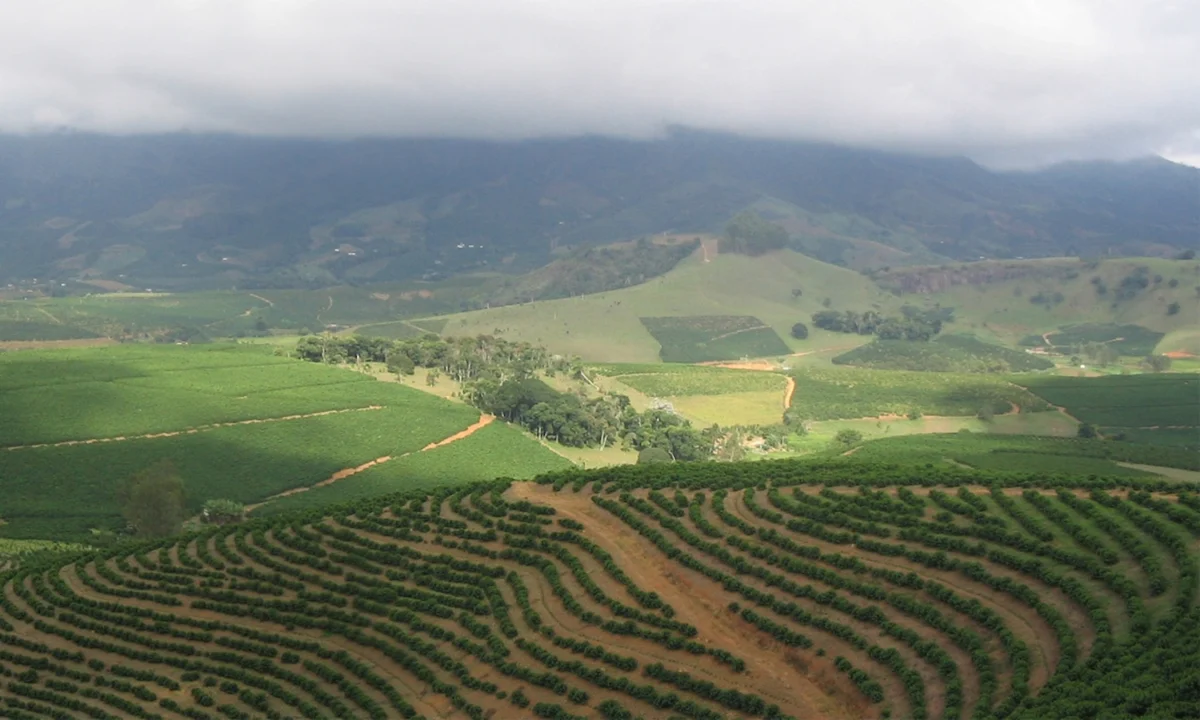
Photo courtesy of Fernando Rebêlo, Wikimedia Commons


 Laily UPN
 Azzam Bilal Chamdy