

 Neng Nana
By [Your Name/Editorial Desk]
November 4, 2026
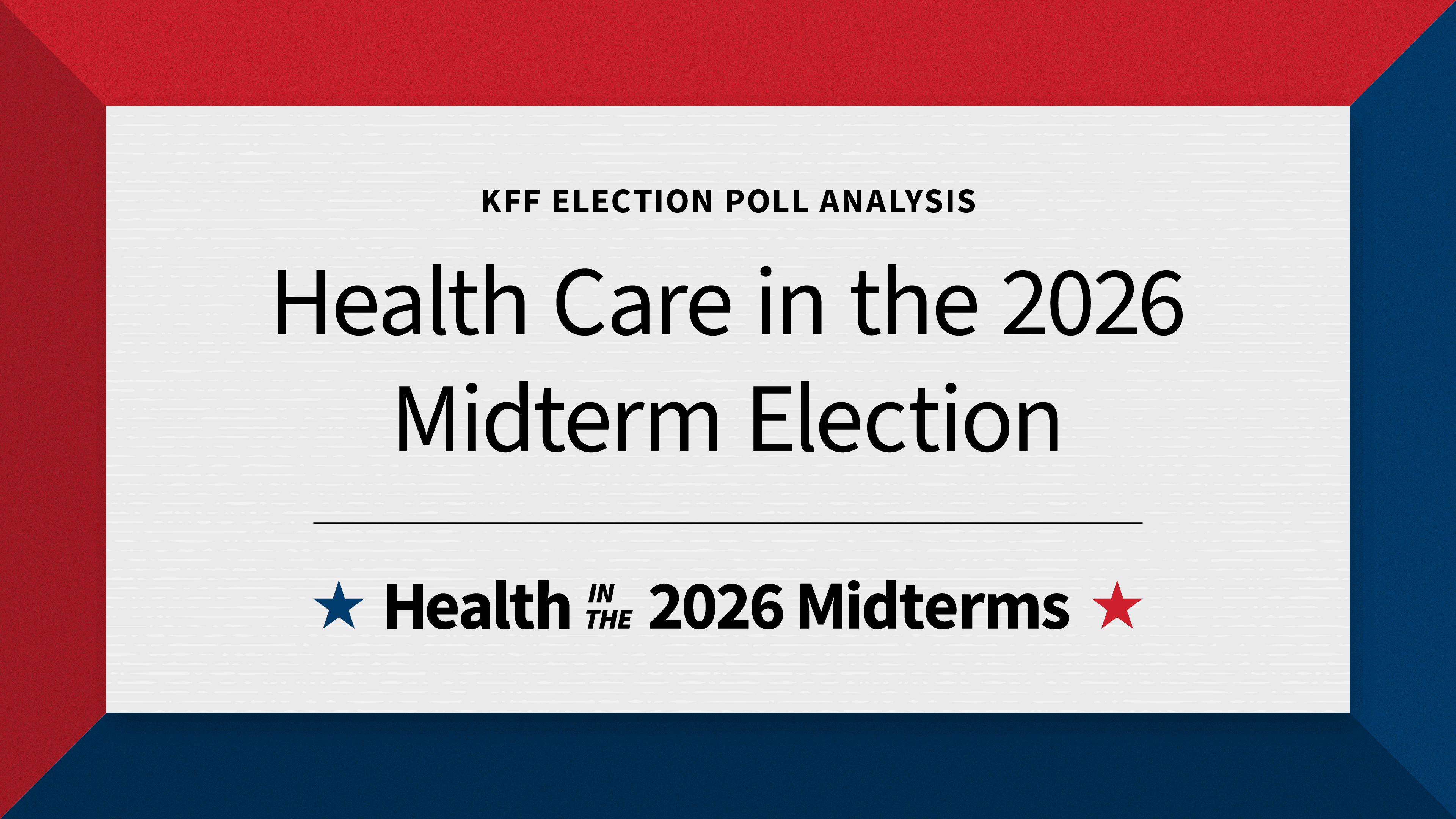
The 2026 midterm elections have concluded, leaving behind a clear mandate from the American electorate: health care is no longer just a peripheral policy debate; it is a fundamental pillar of the cost-of-living crisis. According to a comprehensive analysis by KFF, drawing on data from The Voter Poll by SSRS and the NORC Civic Health and Elections Project, voters across the United States prioritized health affordability as a decisive factor in their choices for both the House and the Senate.
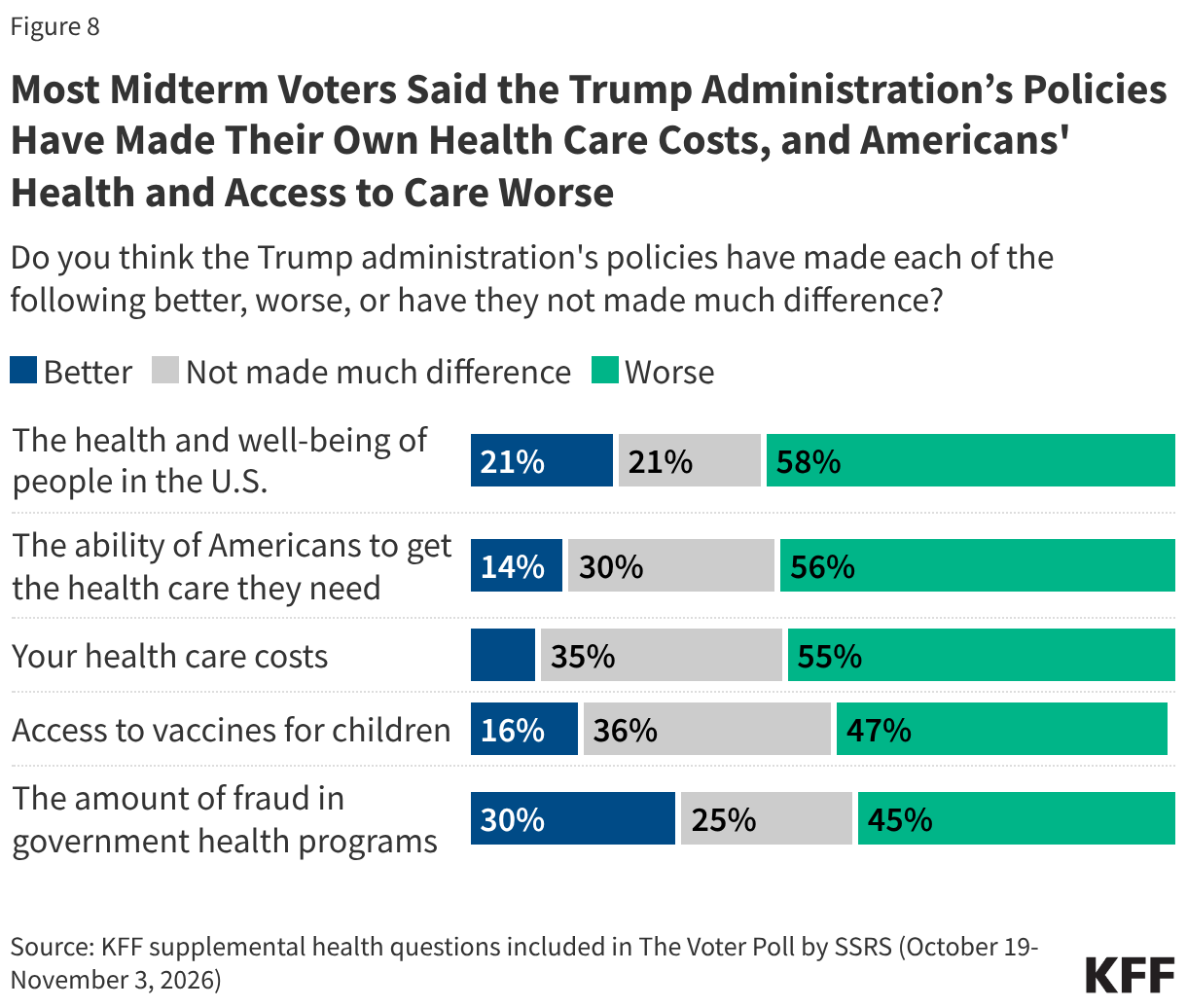
As the dust settles, the data reveals a stark shift in political dynamics. Where health care costs were once a liability for Democrats, they became a potent rallying cry in 2026. Conversely, the policies of the Trump administration faced a stern rebuke from voters, who largely characterized the former president’s health agenda as a catalyst for rising personal expenses and diminished access to care.
Main Facts: The Health Care Imperative
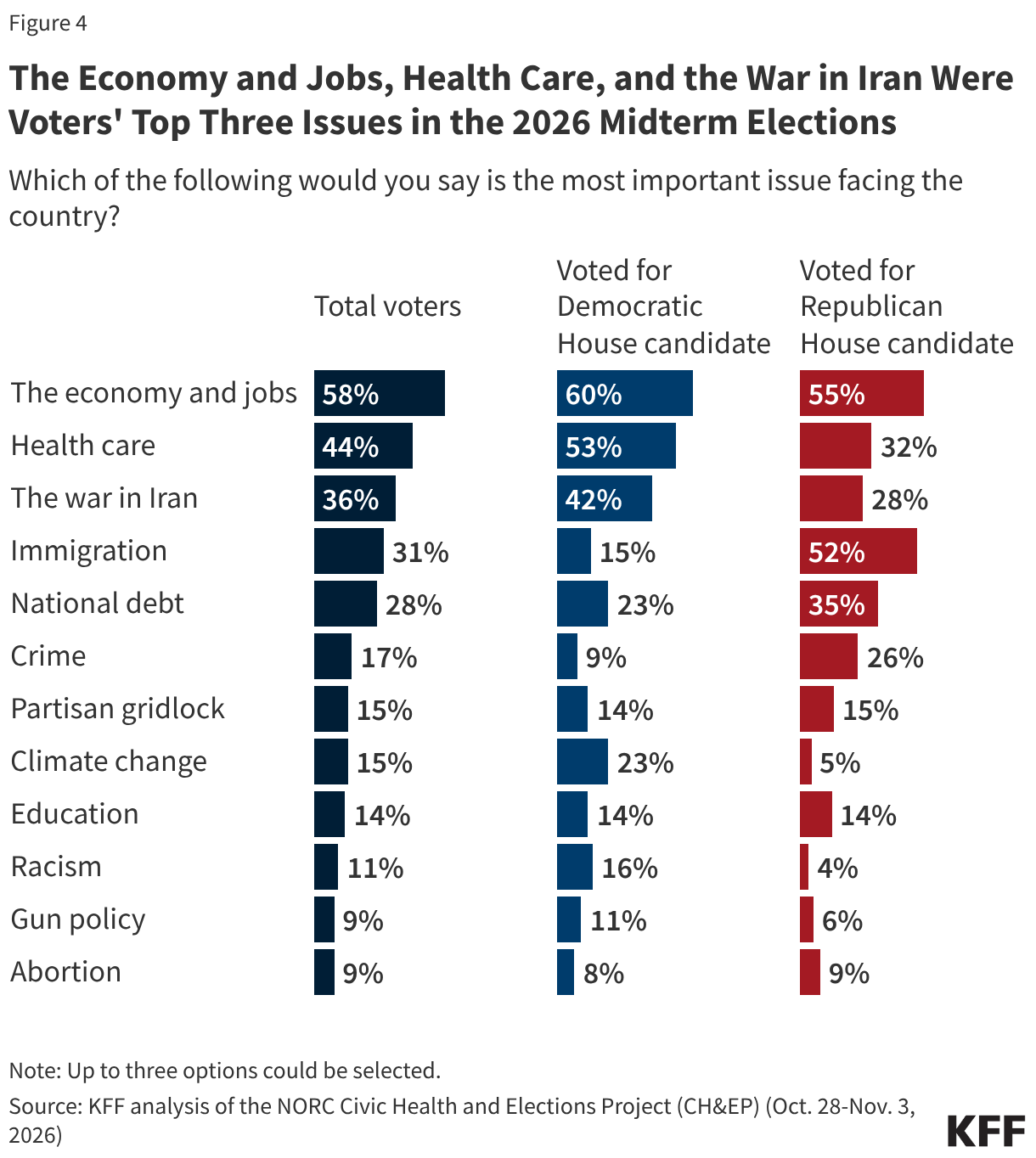
The 2026 midterms were defined by a "kitchen table" anxiety that transcended traditional partisan lines. While the economy and job creation remained the primary concerns for most voters—with roughly 60% identifying them as the most important issues facing the nation—health care emerged as a secondary, yet equally pressing, force.
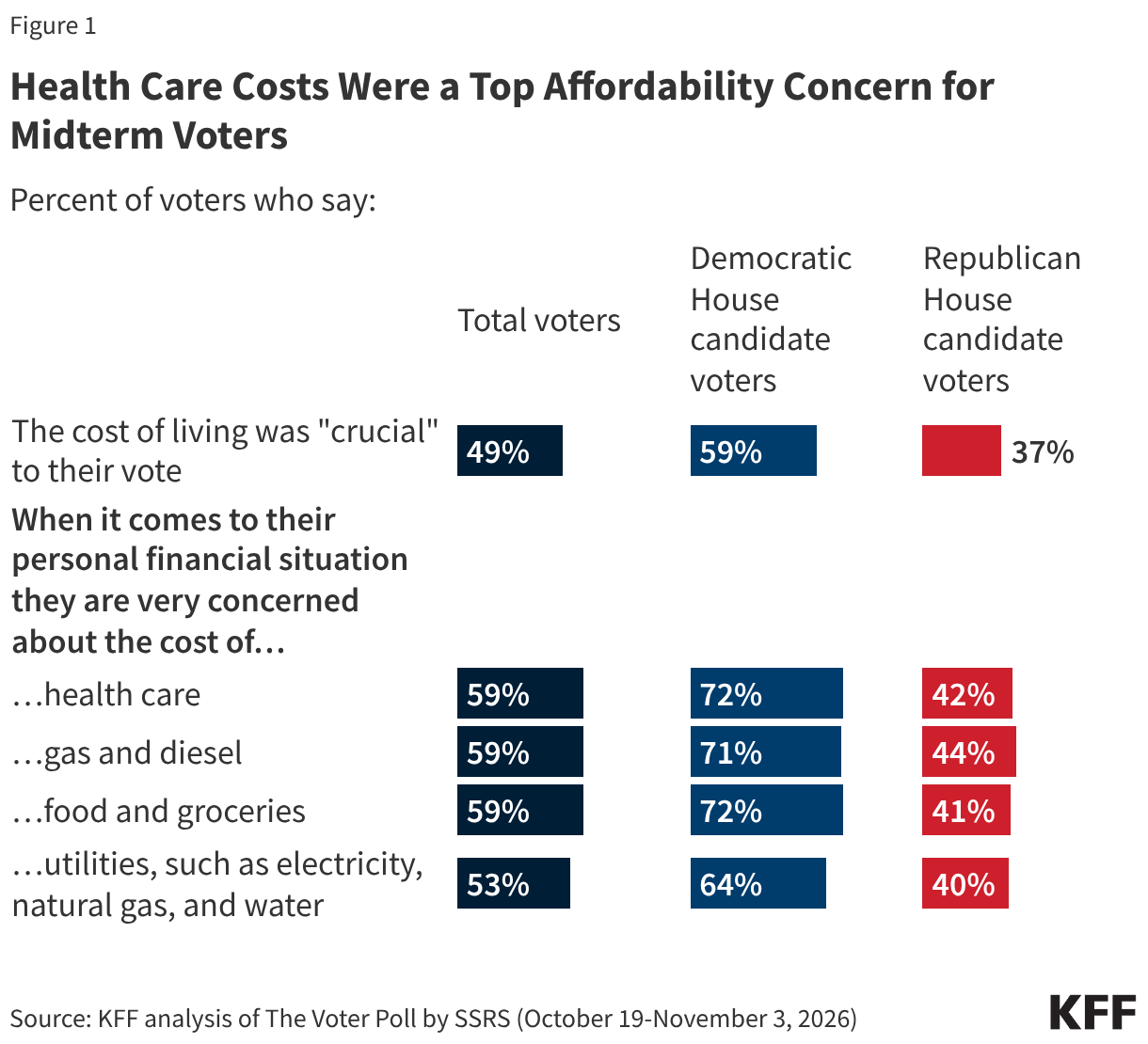
Data indicates that roughly half of all voters viewed the "cost of living" as a "crucial" factor in their decision-making process. Crucially, this concern was not abstract. Six in ten voters reported being "very concerned" about the price of gas, groceries, and—most significantly—health care. Among those who cast their ballots for Democratic House candidates, the intensity of this concern was pronounced, with approximately two-thirds citing health care costs as a top-tier anxiety.
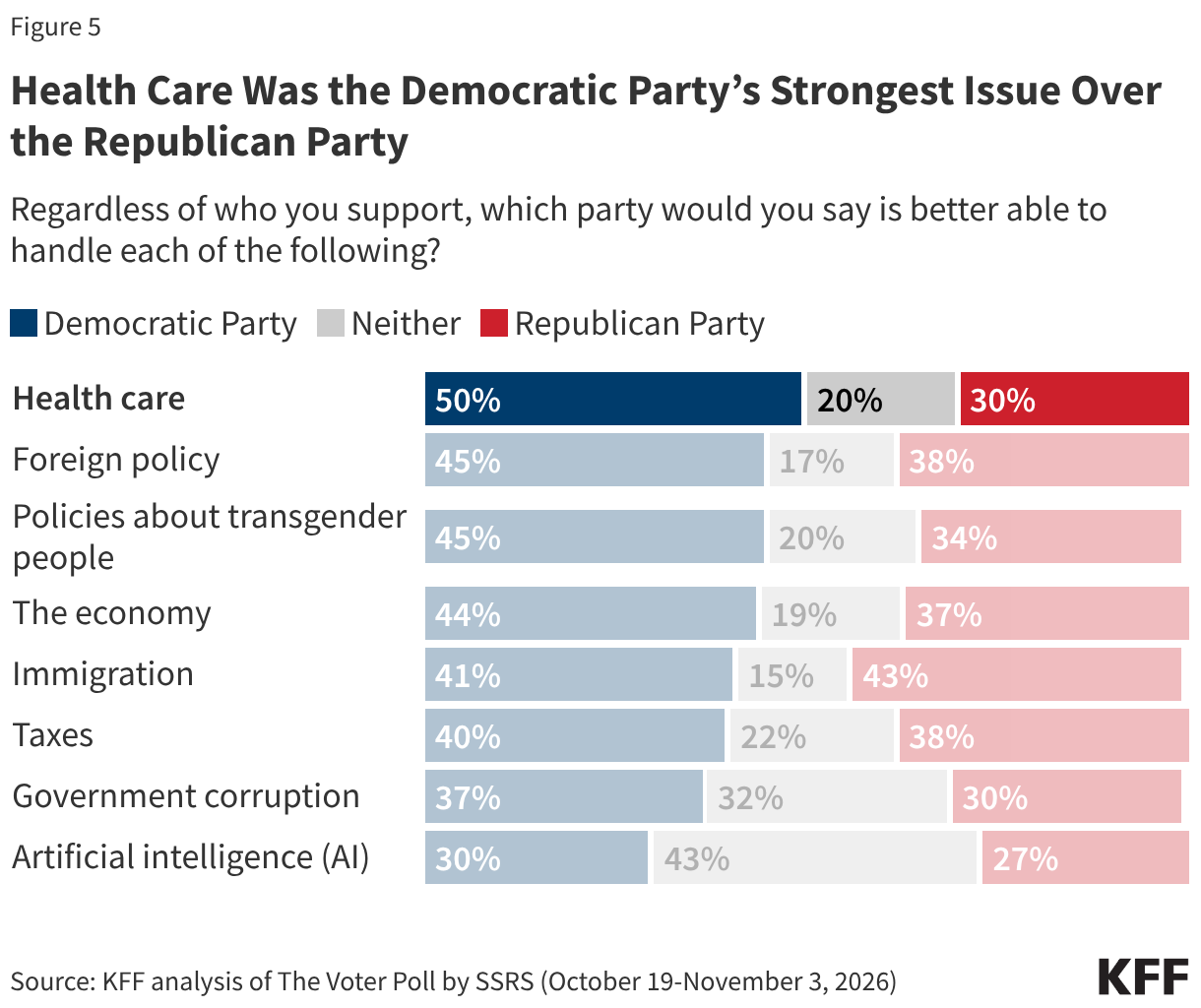
The political implications are profound: the Democratic Party has successfully repositioned itself as the party of health security. While Republicans have historically held an advantage on economic messaging, the 2026 electorate viewed the Democratic platform as more capable of managing health care, with a 50% to 30% lead over the GOP.
Chronology of Voter Sentiment
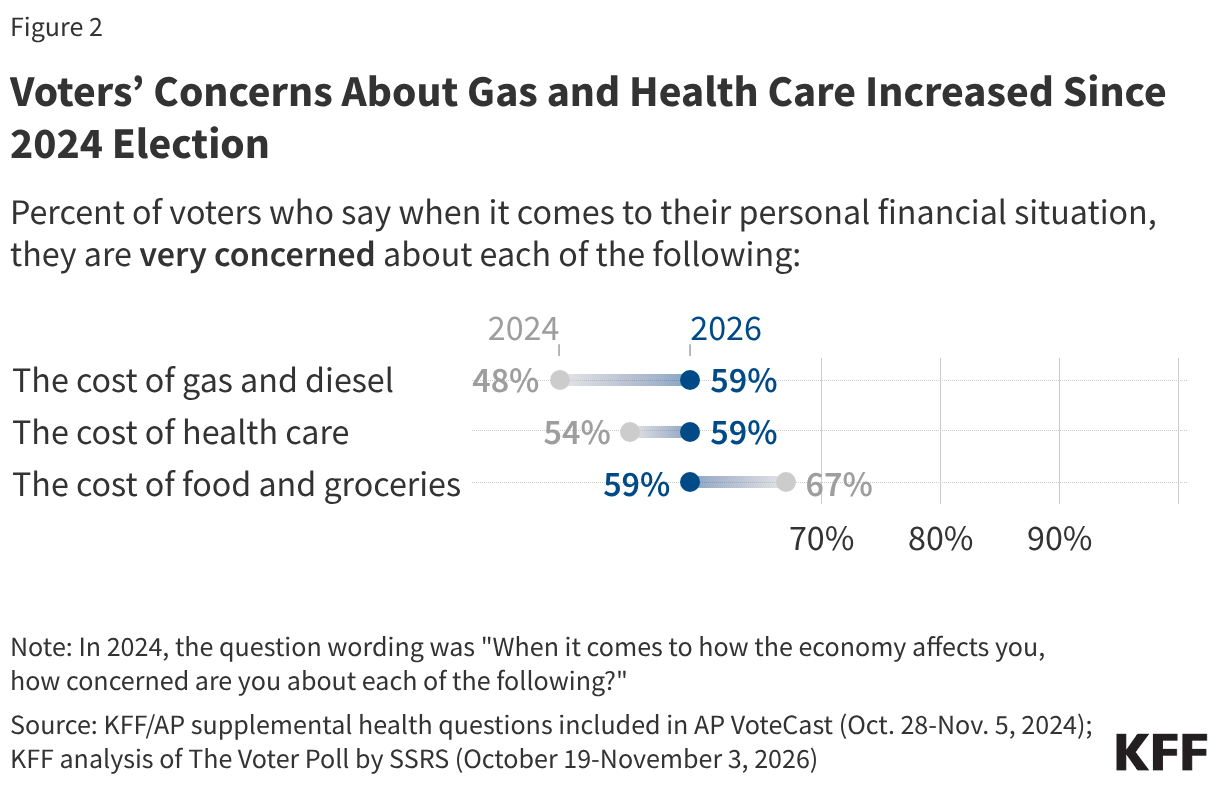
The evolution of these sentiments can be traced back to the preceding two years of the second Trump administration. Polling conducted between October 19 and November 3, 2026, illustrates a measurable cooling in support for the administration’s health policies compared to the 2024 presidential cycle.
- Early 2026: Rising costs for prescription drugs and insurance premiums began to dominate the political discourse.
- Summer 2026: As Senate candidates in key states like Michigan and Maine elevated "Medicare-for-All" to the center of their campaigns, health care shifted from a background issue to the main stage.
- October 2026: The Voter Poll by SSRS observed an eleven-percentage-point spike in concerns regarding fuel costs and a five-percentage-point increase in worries over health care costs compared to the 2024 election.
- Election Day (Nov 3): Exit polling revealed that for the critical cohort of voters "very concerned" about health care, the political alignment shifted significantly toward the Democratic Party, representing a total reversal from the 2024 presidential results.
Supporting Data: The Anatomy of the Vote
The KFF analysis provides a granular look at how specific demographics and regions reacted to the health care landscape.
The Shift in Battleground States
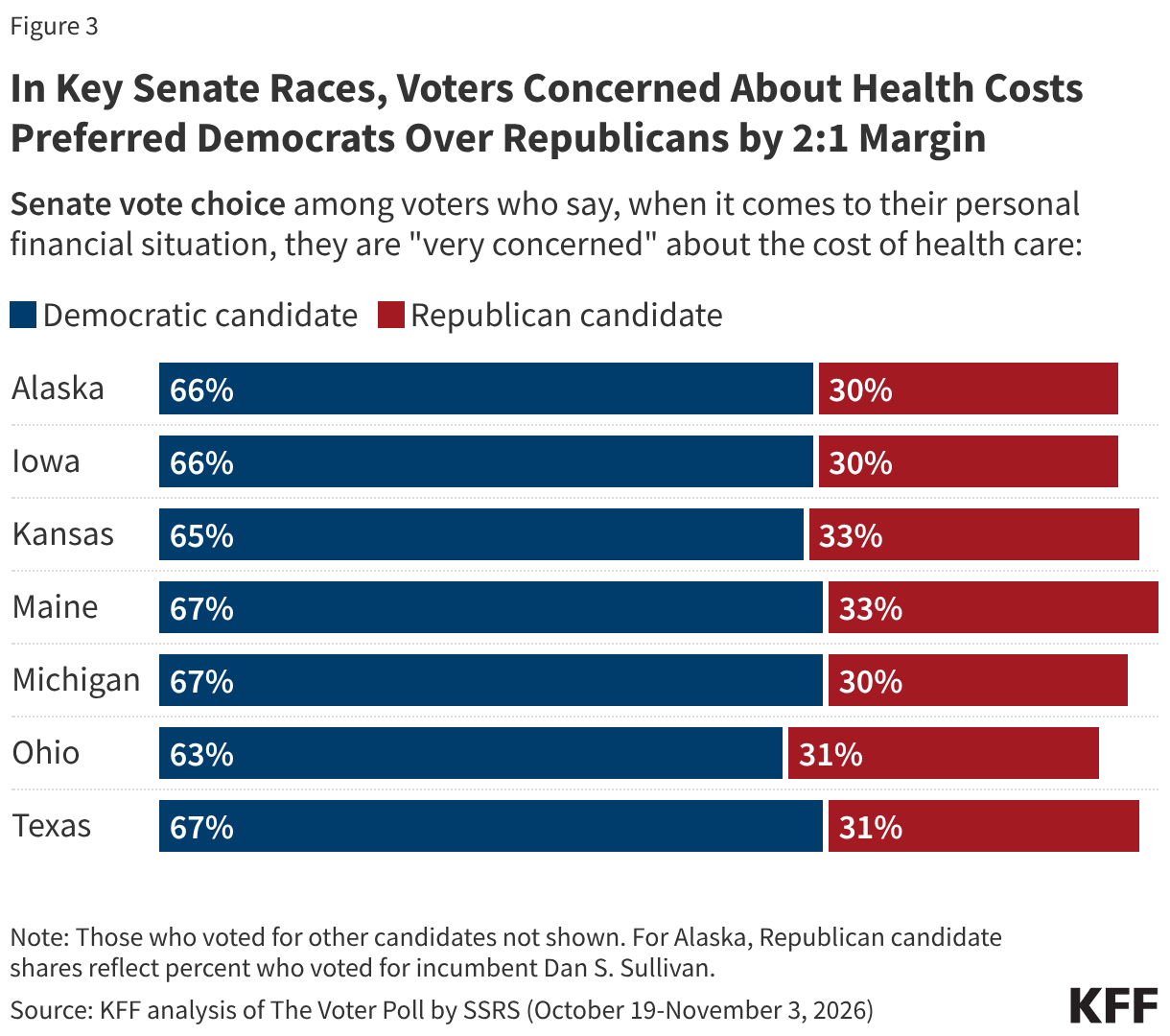
In seven key Senate battleground states, voters who identified themselves as "very concerned" about health care costs broke heavily for Democratic candidates, with two-thirds supporting the Democrat and only three in ten opting for the Republican. This data point is arguably the most significant reversal of the cycle. In 2024, that same demographic had favored Donald Trump over his opponent by a ten-point margin.
The "Medicare-for-All" Influence
In Michigan and Maine, the impact of specific candidate platforms was palpable. Democratic candidates Abdul El-Sayed (Michigan) and Troy Jackson (Maine) centered their campaigns on universal health coverage. In both states, voters favored the Democratic Party’s approach to health care by a twenty-percentage-point margin over the GOP.
Public Opinion on Government Role
Perhaps the most telling finding is the public’s changing attitude toward federal intervention. A majority of the 2026 electorate expressed a desire for the government to play a "bigger role" in helping citizens secure health care. This desire for expansion was the bedrock of the Democratic base. Even among Republican voters, there was a notable, if split, sentiment regarding the necessity of government assistance, signaling that the traditional "small government" mantra of the GOP may be losing its hold on the average health-conscious voter.
Official Responses and Political Implications
The findings have sent shockwaves through both party headquarters. For the Democratic Party, the 2026 results confirm that health care is a winning issue when framed as an economic necessity. By linking health policy directly to the cost of living, Democrats were able to neutralize the Republican "economy-first" argument.
For the Republican Party, the data suggests an urgent need for a course correction. The "very concerned" voter demographic—which includes a slice of the Republican base—indicated that they felt the Trump administration’s policies worsened their personal financial situation. This is particularly damaging regarding fraud in government programs and vaccine access, two areas the administration had touted as successes. The fact that one in five Republicans who felt their costs had worsened crossed the aisle to vote for a Democratic House candidate suggests that the GOP is suffering from a "health-cost drag."
The Independent Factor
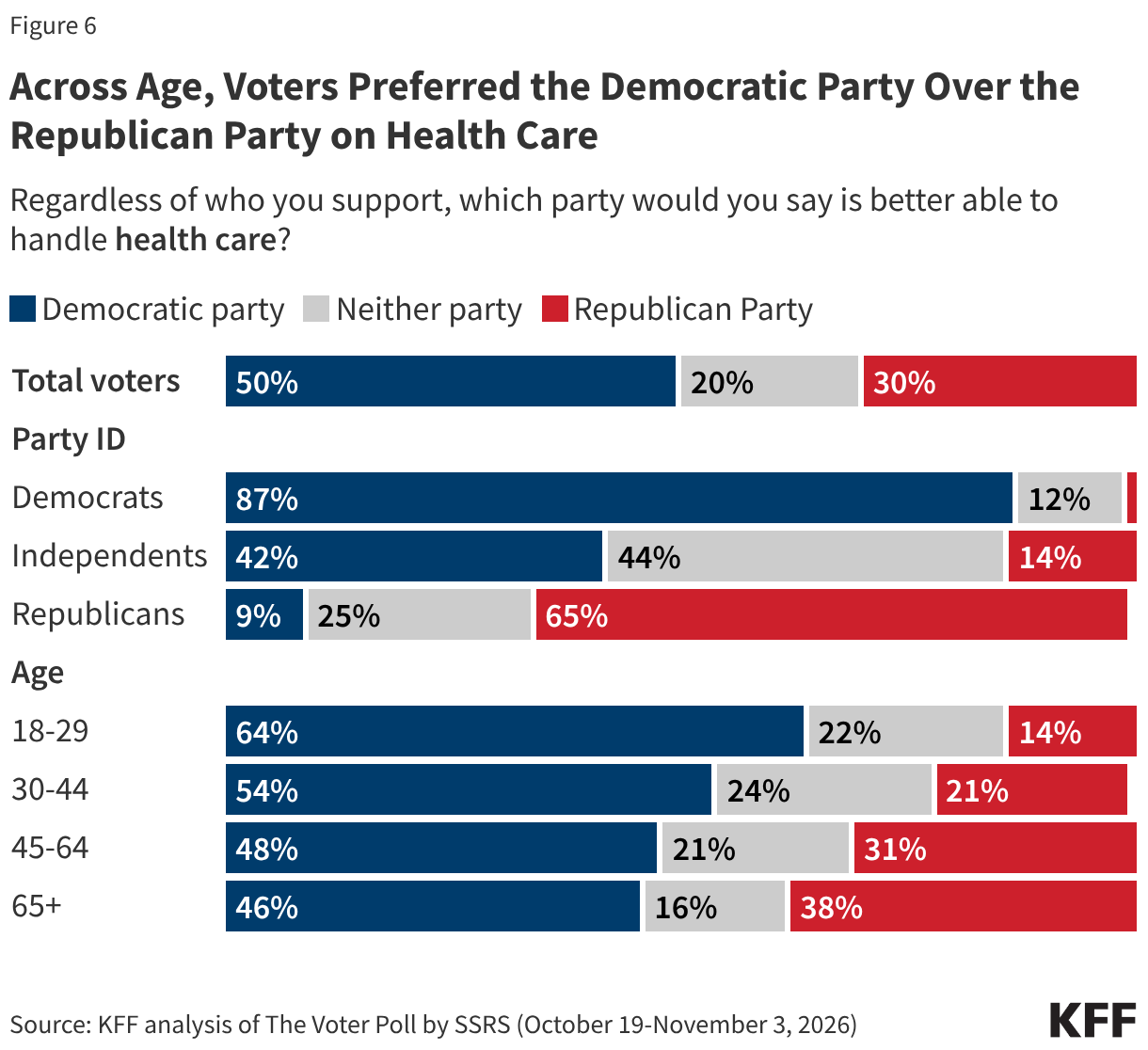
Independent voters, the perennial kingmakers of American politics, favored Democrats on health care by a 3-to-1 margin. However, the data also highlights a warning for both parties: more than four in ten independents reported that they believed neither party was capable of solving the health care crisis. This indicates a high level of cynicism and a potential opening for third-party advocacy or future populist movements if the two-party establishment fails to deliver tangible relief.
Implications: A New Era of Health Politics
The 2026 midterms mark a turning point where health care policy has become inextricably linked to the personal economic survival of the American family. As voters look toward the remainder of the decade, the demand for stability and affordability in the health sector will likely remain the primary metric by which they judge their representatives.
The failure of the Trump administration’s policies to satisfy voter concerns about rising costs has created a political opening that the Democratic Party has been eager to exploit. However, the success of "Medicare-for-All" rhetoric in states like Michigan and Maine forces a question for the future: will the federal government move toward systemic reform, or will the current climate of "neither party" skepticism continue to grow?
As policymakers prepare for the next legislative session, the KFF data serves as a sobering reminder: the electorate is not just looking for policy wins; they are looking for financial relief from a system they increasingly perceive as broken. The 2026 midterms were not just an election; they were a cry for help from a public struggling to afford the most essential of human needs.
Methodology Notes
This analysis was derived from The Voter Poll by SSRS, a survey of roughly 80,000 registered voters conducted between October 19 and November 3, 2026. The study utilized a combination of state voter files and nonprobability sampling to ensure a representative view of the American electorate. Supplemental data was provided by the NORC Civic Health and Elections Project, which sampled 95,000 voters. All percentages reflect the weighted findings of these representative samples. For further information on the data sets or the full methodology, please refer to the official KFF and NORC technical documentation portals.

 Asro
 Lina Hope