



 Suro Senen
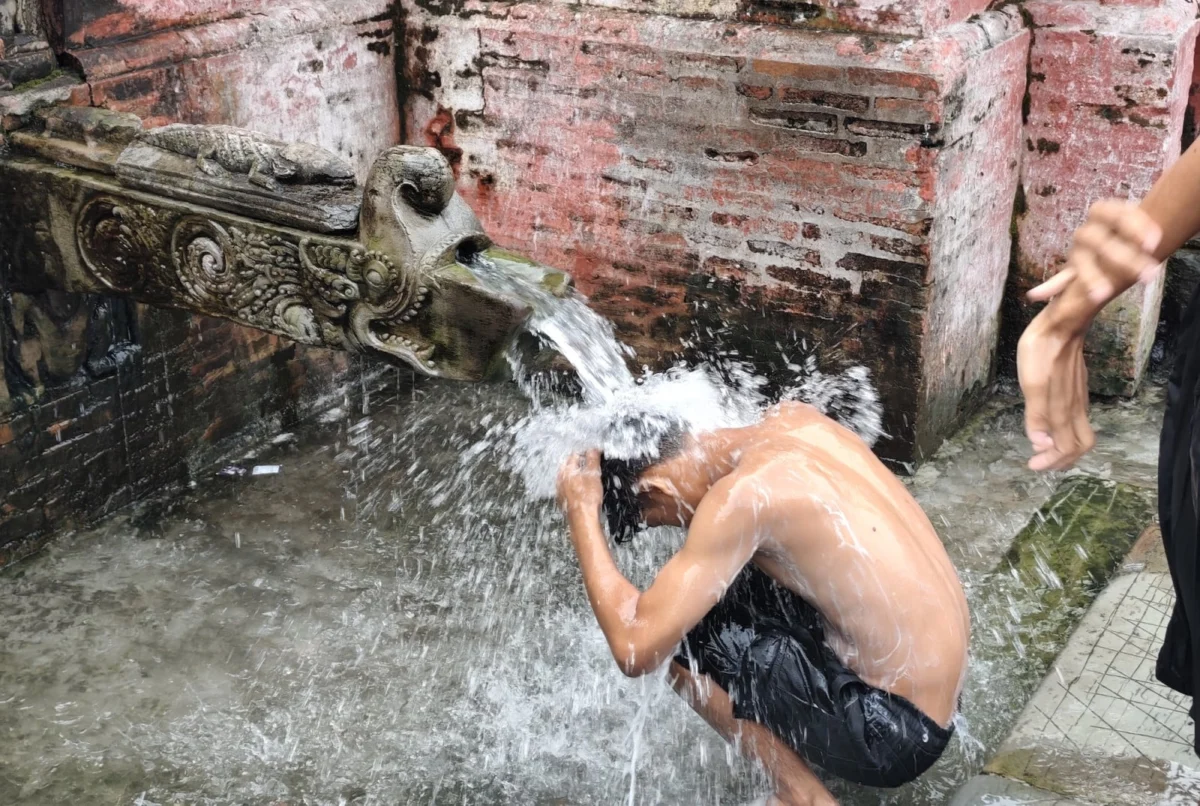
In the grey light of dawn, before the cacophony of traffic begins to choke the narrow streets of Bramhakhel, Nepal, 40-year-old Pratima Poudel begins a ritual as old as the city itself. Armed with empty plastic bottles, the Nepali language instructor makes her way to a centuries-old stone spout. For Poudel and thousands of others across the Kathmandu Valley, this is not merely a nostalgic exercise; it is a vital survival strategy in a city where the modern tap has become an unreliable, and often contaminated, source of life.
The stone spout, known locally as a dhunge dhara or hiti, is a masterpiece of ancient engineering. These interconnected stone channels, some dating back over a millennium, once served as the lifeblood of the Kathmandu Valley. Today, they represent a resilient, if imperfect, alternative to a municipal water system that is failing to keep pace with the demands of a rapidly urbanizing population.
The State of the Crisis: A Failing Infrastructure
The divide between the promise of modern utility and the reality of daily life in Kathmandu is stark. The Kathmandu Upatyaka Khanepani Limited (KUKL), the public utility responsible for the valley’s water and sanitation, reported in its 2024-2025 annual report that the city requires approximately 136 million gallons of water per day. The reality, however, is a supply that often hovers around 61 million gallons, with significant seasonal fluctuations that leave neighborhoods parched.
This systemic failure has forced residents into a precarious reliance on groundwater extraction, private water tankers, and expensive bottled water. Yet, in areas where traditional dhunge dharas remain operational, a different, more community-oriented approach prevails.

The crisis is not merely one of quantity, but of quality. Recent government analysis paints a grim picture: nearly 70% of the city’s drinking water samples test positive for E. coli and faecal coliform—bacteria that are tell-tale indicators of human or animal waste. As rivers have been transformed into open sewers and aging, leaking pipes cross-contaminate the water supply, the trust in municipal tap water has eroded. For many, like Poudel, the choice to return to the dhunge dhara is a calculated risk—a preference for the perceived purity of a natural spring over the toxic reality of the public mains.
Chronology of a Thousand-Year Network
The history of the dhunge dhara is a testament to the sophistication of early urban planning in the Kathmandu Valley. The network is not a series of isolated fountains but a complex, gravity-fed system that has functioned since the Licchavi period.
- 570 AD: The construction of the Manga Hiti in Patan marks one of the earliest known operational spouts. It remains a functional piece of architecture nearly 1,400 years later.
- The Golden Age of Water: Over subsequent centuries, the Malla kings and their successors expanded this network, integrating it with a system of ponds and canals. These served a dual purpose: recharging the aquifers during the dry months and managing monsoon floodwaters during the wet season.
- The 2015 Earthquake: The massive earthquake that struck Nepal caused widespread destruction, including the loss of historic hitis like the Ga Hiti in Thamel. This event served as a turning point, sparking a renewed wave of heritage conservation and community-led reconstruction.
- 2022 and Beyond: The World Monuments Fund added the hitis of the Kathmandu Valley to its watch list of heritage sites at risk, citing the urgent need for structural preservation in the face of climate change and urban encroachment.
Supporting Data: The Mechanics of the Hiti
The brilliance of the dhunge dhara lies in its invisibility. As climate change and springshed expert Ujjwal Upadhyay explains, the stone spout is merely the "outlet of a spring connected to groundwater." The structure itself is a stone facade, but the water originates from a sophisticated natural recharge system.
Rainwater is captured in designated recharge areas, filtering through the soil to accumulate in deep aquifers. The stone spouts were strategically placed at points where these natural pathways emerged at the surface. This creates a sustainable loop, provided the recharge area remains undisturbed.

However, the data shows that this delicate balance is under siege. A 2019 survey by the Kathmandu Valley Water Supply Management Board identified 573 spouts across the valley, but found that only 224 remained functional. A staggering 94 had been lost entirely, and the rest were in various states of disrepair. The cumulative discharge of these surviving spouts is estimated at 2.4 million liters a day—a critical volume that, while insufficient to solve the city’s total deficit, provides an essential buffer for thousands of households.
Official Responses and Medical Concerns
While the dhunge dhara offers a lifeline, health officials remain cautious. Sher Bahadur Pun, chief of the Clinical Research Unit at the Tropical and Infectious Disease Hospital, notes that his facility sees roughly half a dozen patients daily with symptoms of waterborne diseases, including persistent fevers and severe diarrhea.
"That does not make untreated stone-spout water automatically safe," Pun warns. "Boiling or purifying is essential."
Research, including a 2022 review, supports this caution, noting that water quality in these spouts is highly variable and susceptible to contamination from shallow groundwater sources. As urban density increases, the risk of surface pollutants seeping into the ancient conduits grows. Despite this, the economic reality is that for a large segment of the population, the dhunge dhara is not just a cultural relic—it is the most accessible, and often the only, water source that doesn’t carry the metallic, chemical taste of the public tap.

Implications: The Collision of Climate and Concrete
The future of the dhunge dhara is inextricably linked to the broader challenges of climate change and rapid, often unregulated, urban development. Kathmandu receives about 57 inches of rain annually, but the pattern of that rainfall has shifted significantly.
"Heavy rainfall over a short duration is more likely to run off rather than infiltrate and recharge groundwater," says Upadhyay. This increased intensity leads to flash flooding, which overwhelms modern drainage systems while simultaneously starving the aquifers that feed the spouts.
Furthermore, the physical footprint of the city is destroying the very land needed for water infiltration. When houses and roads are paved over, the earth can no longer "breathe," blocking the recharge areas. As conservationist Sushil Shrestha points out, you can restore the stone facade of a hiti, but if the underground conduits are severed or the recharge area is blocked by a new hotel or apartment block, the water will simply cease to flow.
The Path Forward: Community Revival
Despite these pressures, a movement is growing. The revival of the hitis is increasingly driven by community action rather than government intervention. The case of the Ga Hiti in Thamel is a powerful example: when the spout was destroyed in the 2015 earthquake, the local community refused to let it stay buried. By raising 20% of the $30,000 reconstruction cost themselves and partnering with the municipal government, residents saw the fountain flowing again within six months.

This grassroots model is being replicated elsewhere. From the Alko Hiti in Patan—restored following a toxic spill in 2000—to the daily maintenance performed by neighborhood clubs, the dhunge dhara is being reimagined as a "living monument."
As Shrestha eloquently puts it, these structures are not just water sources; they are social hubs. Much like the modern tea shop, they are places where news is exchanged and community bonds are forged. "If Kathmandu Valley loses them, or they stop flowing, the water crisis will deepen further, and we will lose a very important part of our history," he concludes.
In a city grappling with the consequences of modern planning failures, the stone spout stands as a humble, resilient challenge to the status quo. It is a reminder that in the search for future solutions, the wisdom of the past—if properly protected—may be the most reliable resource of all.


 Neng Nana

 Ammar Sabilarrohman