



 Ammar Sabilarrohman
For decades, the public imagination has shackled the "food co-op" to a specific, narrow aesthetic: a sunlit, wood-paneled space in an affluent, progressive neighborhood where white, college-educated shoppers fill cloth bags with organic grains from bulk bins. This "crunchy granola" archetype, while successful for a particular demographic, inadvertently created a gatekeeping narrative that suggested people of color and working-class communities were not the natural architects of the cooperative movement.
However, a profound transformation is underway. Across the United States, a "fourth wave" of Black-led food cooperatives is rising, reclaiming a tradition that predates the modern counterculture movement. From the streets of Dayton, Ohio, to the heart of Detroit, Michigan, these new institutions are proving that the co-op model is not just a boutique lifestyle choice, but a potent tool for economic sovereignty, community health, and racial justice.
A Historical Retrospective: Three Waves of Collective Action
To understand the current resurgence, one must look at the history of Black cooperative economic thought. Political economist Dr. Jessica Gordon Nembhard, a leading historian on the subject, identifies the present era as the "fourth wave" of Black co-op formation.
The first three waves—occurring in the 1880s, 1930s, and 1960s—were deeply intertwined with the struggle for civil rights. During the 1930s, in cities like Harlem, Chicago, and Gary, Indiana, Black-led grocery cooperatives were not just survival mechanisms; they were power centers. In Harlem, a local co-op was so effective at serving the community that it forced a nearby A&P chain store to shutter. These were not specialized health-food stores; they were full-service grocers designed to combat price gouging and lack of access.
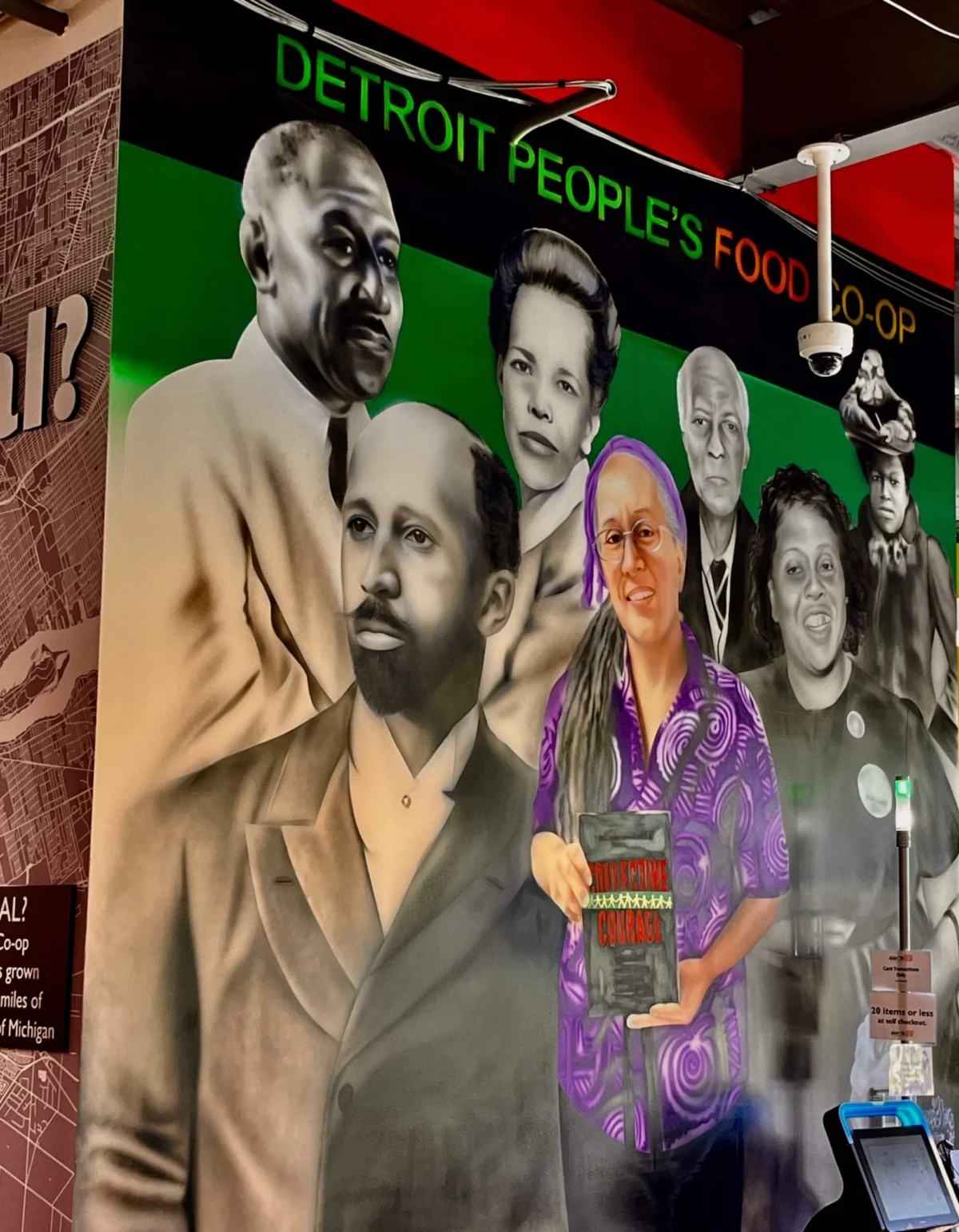
The movement was championed by titans of the civil rights era, including W.E.B. DuBois, Ella Baker, and Fannie Lou Hamer, all of whom recognized that political freedom was hollow without economic independence. As Gordon Nembhard notes, "The Black co-op movement was really a partner in the long civil rights movement."
The Counterculture Shift and the "Crunchy" Monoculture
The current "natural food" image of co-ops emerged in the late 1960s and 1970s, rooted in anti-Vietnam War counterculture. These stores, while successful, shifted the focus away from general-purpose grocery provision toward organic, locally sourced, and high-margin goods.
This model worked well within shielded, affluent niches but failed to address the systemic needs of low-income neighborhoods. By the 2010s, the "co-op consulting" industry had essentially codified this bias. A 2011 trade article, "Location, Location, Location," explicitly advised developers to target demographics with higher-than-average incomes and white-collar occupations. As Jamila Medley, former executive director of the Philadelphia Area Cooperative Alliance (PACA), explains, this sent a clear, exclusionary message: that working-class people and people of color "could not have food co-ops."

The Fourth Wave: Organizing for Survival and Sovereignty
The impetus for the current wave is rooted in the harsh realities of "food deserts" and "food swamps." According to Feeding America, 27 percent of Black children in the U.S. lived in food-insecure households as of 2023.
The new movement does not see itself as an alternative to the grocery industry; it sees itself as a necessary intervention. The development of the Gem City Market in West Dayton, for instance, was catalyzed by the 2014 police shooting of John Crawford III at a Walmart. The organizers recognized that if they wanted a reliable, safe, and community-controlled food source in a hyper-segregated city, they would have to build it themselves.
Chronology of Recent Milestones
- 2010–2012: Early organizing begins for the Detroit People’s Food Co-op and Dorchester Food Co-op.
- 2016: The Renaissance Community Cooperative (RCC) opens in Greensboro, North Carolina, serving as a landmark experiment in Black-led grocery ownership.
- 2017: Publication of Everyone Welcome, a report that begins to challenge the exclusionary practices of the wider co-op consulting industry.
- 2019: The RCC closes its doors, providing critical, albeit painful, lessons for the movement regarding capitalization and marketing.
- 2021: Gem City Market opens in Dayton, Ohio, marking a significant milestone in community-led, Black-owned infrastructure.
- 2024: The Detroit People’s Food Co-op opens, serving as a model for urban food sovereignty.
Lessons from the Renaissance: Why "Failure" Was Essential
The closure of the Renaissance Community Cooperative in 2019 was a blow to the organizers, but it served as a crucible for the broader movement. Through an honest post-mortem, organizers Marnie Thompson, Sohnie Black, and Ed Whitfield identified the "multiple challenges" that hampered them: the rise of aggressive dollar-store competition, lack of investment in marketing, and the difficulty of finding managers who could balance community mission with the harsh realities of retail margins.
However, the "failure" proved to be a success in other ways. It legitimized Black-led co-ops in the eyes of the broader, white-dominated co-op sector and provided a blueprint for what not to do. More importantly, it established a "spiritual" asset in the community—employees gained skills, training, and a sense of dignity that traditional retailers had long denied them.
Supporting Data and Scaling Challenges
The transition from a "natural food" model to a community-needs model has created significant technical challenges, primarily regarding supply chains. While the national co-op ecosystem is optimized to purchase organic produce at scale, the supply chain for conventional, affordable staples is far less robust.
Amaha Sellassie, president of Gem City Market, points out the irony: "Without the larger co-op ecosystem having more conventional products, we’re not going to get a price point where we can actually sell the products anywhere near competitive rate."
Despite this, the membership numbers for newer co-ops are robust. Both Gem City and the Detroit People’s Food Co-op launched with over 3,000 members, significantly higher than the 600–1,000 member counts that earlier, smaller co-ops relied upon. This base of member-owners is critical, as they provide the reliable foot traffic necessary for long-term viability.

A Transformation of the "Co-op Industrial Complex"
The most significant change in the last decade has been the internal transformation of the organizations that support these startups. The Food Co-op Initiative (FCI), once an organization that largely steered groups toward the "natural food" model, has undergone a radical shift. Its board is now majority people of color, and it has abandoned the practice of pushing a "one-size-fits-all" model.
The "Up & Coming Conference," which was once described by attendees as "white, white, white," has been completely transformed. Through the persistent efforts of activists who demanded a dedicated "Black-led day" and pushed for caucus spaces, the conference has become a hub for solidarity economics. This cultural shift has made it easier for Black organizers to access technical assistance without having to justify their business model to consultants who do not understand their specific demographic or geographic challenges.
Implications for the Future of Community Wealth
The fourth wave of Black cooperatives is not merely about selling groceries; it is about reclaiming the ability to define one’s own economic environment. These co-ops are proving that they can serve as centers for education, with teaching kitchens and community rooms that foster health and social cohesion.
As Dr. Gordon Nembhard emphasizes, the economic activity is what gives the political activity its teeth. While the financial path to profitability is steep—as evidenced by the current challenges in Detroit and Dayton—the value proposition of these stores goes far beyond the balance sheet. They are building the infrastructure for community wealth, training the next generation of Black managers and board members, and, crucially, normalizing the idea that Black communities possess both the capacity and the right to own the means of their own survival.
As this movement continues to evolve, the lessons learned from the Renaissance era and the ongoing growth in cities like Detroit suggest that the "fourth wave" is not a fleeting trend. It is the beginning of a long-term recalibration of the American cooperative movement—one that is finally beginning to reflect the diversity and the needs of the communities it serves.

 Neng Nana

 Basiran






