


 Rifan Muazin

Ursula von Rydingsvard, the visionary sculptor whose towering, visceral works in cedar transformed the landscape of contemporary art, passed away on the morning of October 27, 2026, at her home in Manhattan. She was 84. Her death, confirmed by her studio manager Courtney Childress, was attributed to complications from Alzheimer’s disease.
For more than five decades, Von Rydingsvard stood as a titan of the medium, best known for her ability to coax organic, emotional, and often hauntingly fragile forms out of rigid, industrial-grade cedar beams. Her work, which bridged the gap between architecture and raw, primal sculpture, served as a profound meditation on trauma, displacement, and the persistence of the human spirit.
A Life Forged in Displacement: The Early Years
To understand the weight and texture of Von Rydingsvard’s work, one must look to the harrowing origins of her childhood. Born Ursula Karoliszyn in 1942 in Deensen, Germany, her life began in the shadow of total war. The daughter of a Polish mother and a Ukrainian father, she spent her formative years navigating the brutal instability of a world in collapse.
Between 1945 and 1950, her family of nine was funneled through a series of eight different Nazi slave-labor and postwar refugee camps. These environments—marked by scarcity, barbed wire, and the constant threat of erasure—would become the psychological bedrock of her artistic practice. In a 2011 interview with Art21, she reflected on how those early years instilled in her a "hunger for a place of her own," a longing that would eventually manifest in the massive, hollowed-out vessels and mountain-like structures she built in her Brooklyn studio.
In 1950, the family secured passage on a military ship to the United States, settling in Connecticut. The transition from the anonymity of refugee camps to the suburban landscape of America was, by her own account, a jarring but pivotal metamorphosis. It was in the United States that she discovered the transformative power of art, eventually earning a BA from the University of Miami and an MFA from Columbia University in 1975, where she began her lifelong love affair with cedar.
The Cedar Master: A Chronology of Artistic Evolution
Von Rydingsvard’s career is defined by an uncompromising commitment to labor. Unlike sculptors who work through delegation, she was deeply physical, often spending hours alongside her assistants, chipping, gluing, and staining thousands of individual cedar beams.
The 1970s and 80s: Finding the Medium
After completing her studies, she moved to New York City, where the industrial grit of the city informed her aesthetic. She famously turned to cedar because of its accessibility and its unique scent, which she once described as a connection to the wooden floors and tools of her childhood. Her early work focused on smaller, more intimate vessels, which gradually evolved into the monumental scale for which she became world-renowned.
The 1990s and 2000s: The Era of the Behemoth
By the 1990s, Von Rydingsvard had moved toward works that defied gravity. She gained international acclaim for pieces like Zakopane (1987), a sculpture that evokes the ruggedness of the Polish landscape. During this period, she began to experiment with graphite, rubbing it into the wood to give her sculptures a metallic, bruised sheen that made the cedar look like ancient stone or fossilized bone.
2010 to 2026: The Global Stage
Her later career saw her works featured in major public installations worldwide, from the Yorkshire Sculpture Park in the UK to the Venice Biennale. She moved beyond wood, incorporating bronze, resin, and even animal intestines into her repertoire, pushing the boundaries of what a "monument" could represent.
Supporting Data: The Scale of Ambition
The sheer volume of material Von Rydingsvard processed is staggering. Her studio was not merely a workshop; it was an industrial laboratory.
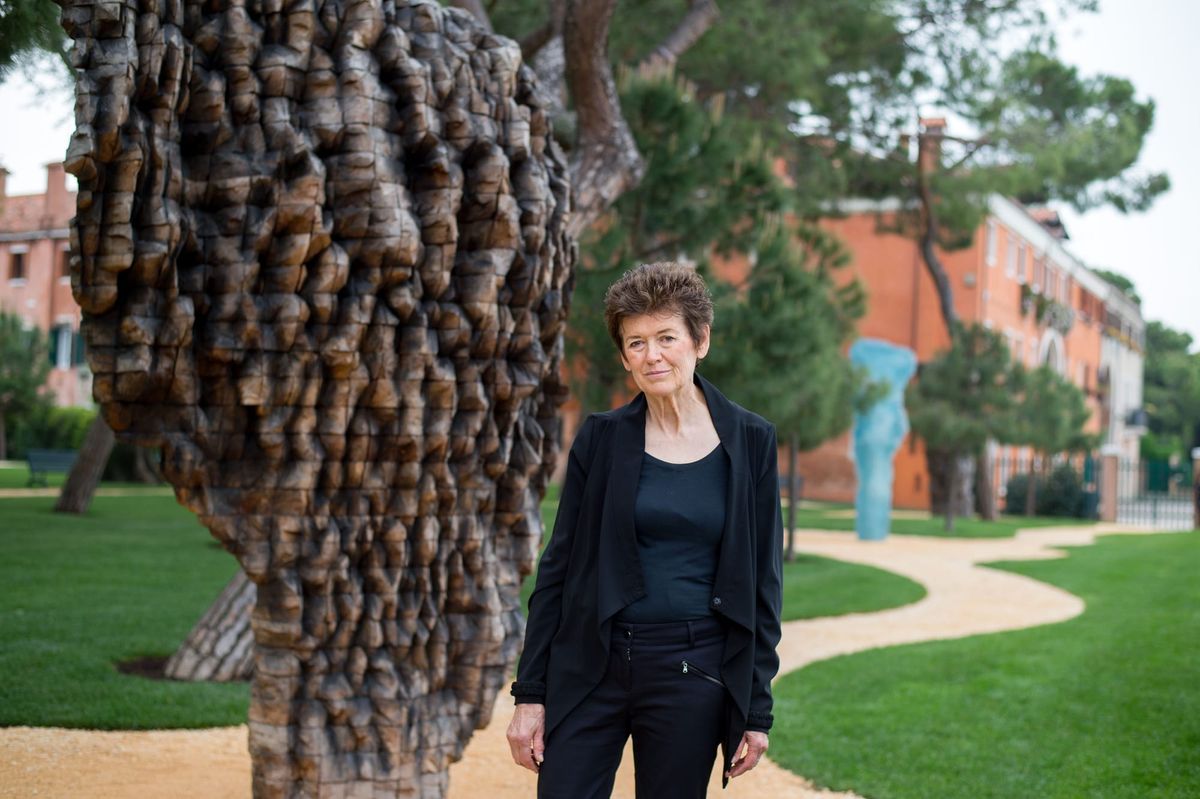
- Materiality: Her signature material, cedar, was chosen for its durability and its malleability. She famously used thousands of individual beams in a single piece, each cut with a circular saw, glued, and stacked by hand.
- Weight and Scale: Some of her sculptures, such as the 17-foot-tall "tornado" behemoth, weighed upwards of 15,000 pounds. These works required structural engineering consultation to ensure they could be safely displayed in public plazas and museum galleries.
- Institutional Presence: Her work is held in the permanent collections of the Museum of Modern Art (MoMA), the Whitney Museum of American Art, the Metropolitan Museum of Art, and the Walker Art Center, among many others.
Official Responses: A Force of Nature
The art world has reacted with a profound sense of loss, noting not only the loss of an artist but the loss of a singular personality.
Courtney Childress, her longtime studio manager, offered a poignant tribute to the woman behind the massive wood sculptures. "She was like the sun," Childress told Hyperallergic. "She was this force that pulled people in and kept them orbiting around her. She moved through the studio like her hair was on fire, and could never slow down."
This intensity—what many called her "ferocity"—was well-known to those who worked with her. She was a demanding mentor, an exacting artist, and a woman who refused to let her past dictate her future, even as it served as the source material for her art.
Museum curators have lauded her for bringing a "human hand" back into the monumental tradition. Unlike the cold, minimalist steel sculptures of her contemporaries, Von Rydingsvard’s work always felt alive. As one curator noted, "She gave wood a heartbeat. Even in the largest of her works, you can see the individual mark of the chisel, the stutter of the saw—the record of a human struggling to give shape to history."
The Implications: Why Her Work Matters
The death of Ursula von Rydingsvard marks the end of an era for a specific type of sculpture—one that is deeply tied to the tactile, labor-intensive process of creation. In an age dominated by digital fabrication and 3D-printed art, her reliance on wood, glue, and physical endurance feels like a radical act of defiance.
Memory as Architecture
The primary implication of her work is the validation of the refugee experience in high art. By building massive, abstract structures that echoed the shapes of bowls, tools, and mountains, she turned her personal trauma into a universal language. Her sculptures do not tell a specific story; rather, they hold space for the viewer to project their own sense of loss, protection, or stability.
The Future of Her Studio and Legacy
With her passing, the focus shifts to the stewardship of her massive archive and the ongoing management of her public commissions. Her estate is expected to work closely with galleries and museums to ensure that her works remain accessible to the public.
Furthermore, her passing highlights the need for ongoing scholarship regarding the influence of the postwar generation on contemporary art. Scholars will likely spend decades unpacking the "language" she developed—a lexicon of hollows, peaks, and layers that transformed the way we look at wood as a medium for emotional expression.
Final Reflections
Ursula von Rydingsvard was, in every sense, a builder. She built monuments to her own survival, to the family she left behind, and to the resilience required to thrive in a new world. As her studio manager aptly put it, she was a sun around which many orbited. While the sun has set, the gravitational pull of her work—the sheer, undeniable weight of her cedar mountains—remains a permanent fixture of the contemporary landscape.
She leaves behind a legacy of uncompromising vision. Whether standing in the middle of a bustling city plaza or nestled in the quiet corner of a museum, her sculptures remain as she intended: living witnesses to the passage of time, the beauty of the raw, and the unyielding power of the human spirit to carve its own path.


 Neng Nana
 Azzam Bilal Chamdy