

 Ammar Sabilarrohman
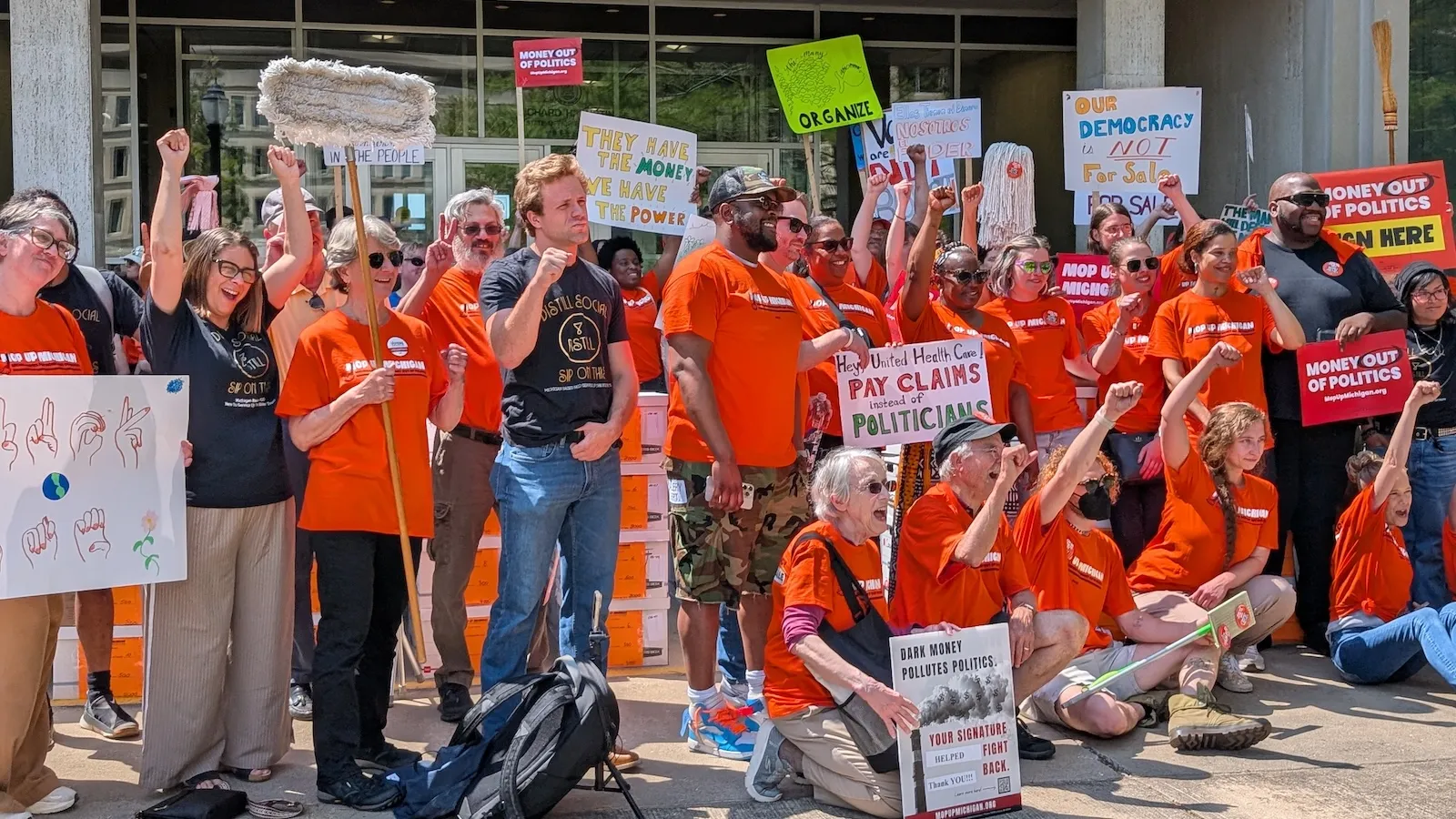
When 83-year-old Sam Getsinger looks at her five grandchildren, she sees a legacy she is desperate to protect. For the northern Michigan resident, that legacy is not merely financial or environmental—it is the structural integrity of American democracy. It was this conviction that led her to spend months knocking on doors, navigating the rural reaches of the state to discuss a topic that has become a lightning rod in Lansing: the outsized political influence of investor-owned utilities.
“I don’t want our politics to continue so that the person with the most money wins everything,” Getsinger said. “I don’t think that’s a very sound democracy.”
Getsinger’s grassroots efforts are part of a massive statewide push for Proposal 2, a ballot initiative that aims to fundamentally alter how Michigan’s powerful electricity and gas utilities interact with the electoral process. As voters prepare to head to the polls, the initiative stands as a test case for whether a state can successfully curb corporate political spending in a post-Citizens United legal landscape.
Main Facts: The Scope of Proposal 2
Proposal 2, spearheaded by the coalition "Michiganders for Money Out of Politics," is designed to plug what advocates call "leaks" in existing campaign finance laws. While Michigan already prohibits corporations from donating directly to political candidates, the law currently allows for significant workarounds that Proposal 2 seeks to eliminate.
Targeted Restrictions on Utility Influence
The core of the proposal focuses on regulated monopolies—entities like DTE Energy and Consumers Energy—which provide essential services and have their rates set by the state. The measure would:
- Ban Utility-Funded PACs: Prohibit Political Action Committees (PACs) funded by regulated utilities from contributing directly to candidate campaigns.
- Executive and Family Restrictions: Bar utility executives, board members, and their immediate family members from making contributions to state candidates or political parties.
- Contractor Limits: Apply similar restrictions to any corporation holding state or local government contracts valued at $250,000 or more.
Enhancing Transparency
Beyond the bans, the initiative aims to modernize Michigan’s disclosure requirements. It would mandate clearer "paid for by" disclaimers on political advertisements and establish the first formal legal definitions for online political advertising in the state, ensuring that digital campaigns are subject to the same scrutiny as traditional television and print media.
Chronology: From Grassroots Frustration to the Ballot Box
The road to Proposal 2 began not in the halls of the legislature, but in the dark living rooms of Michiganders during a series of increasingly frequent power outages.
2023–2024: The Catalyst of Crisis
Over the last several years, Michigan has been battered by extreme weather, including severe ice storms and tornadoes. These events exposed a fragile grid, leaving hundreds of thousands of residents without power for days—and in some cases, weeks—at a time. Coupled with the fact that Michigan residents pay some of the highest utility rates in the country, public anger reached a boiling point.
Early 2025: The "No Utility Money Challenge"
In response to the perceived inaction of lawmakers, the Michigan League of Conservation Voters launched the "No Utility Money Challenge." Initially, the movement struggled for traction; fewer than 10 candidates for state office signed the pledge to refuse utility-affiliated donations. However, as the reliability crisis deepened, the political "toxicity" of utility money grew. By late 2025, that number had surged to 126 candidates across both sides of the aisle.
May 2026: A Historic Signature Drive
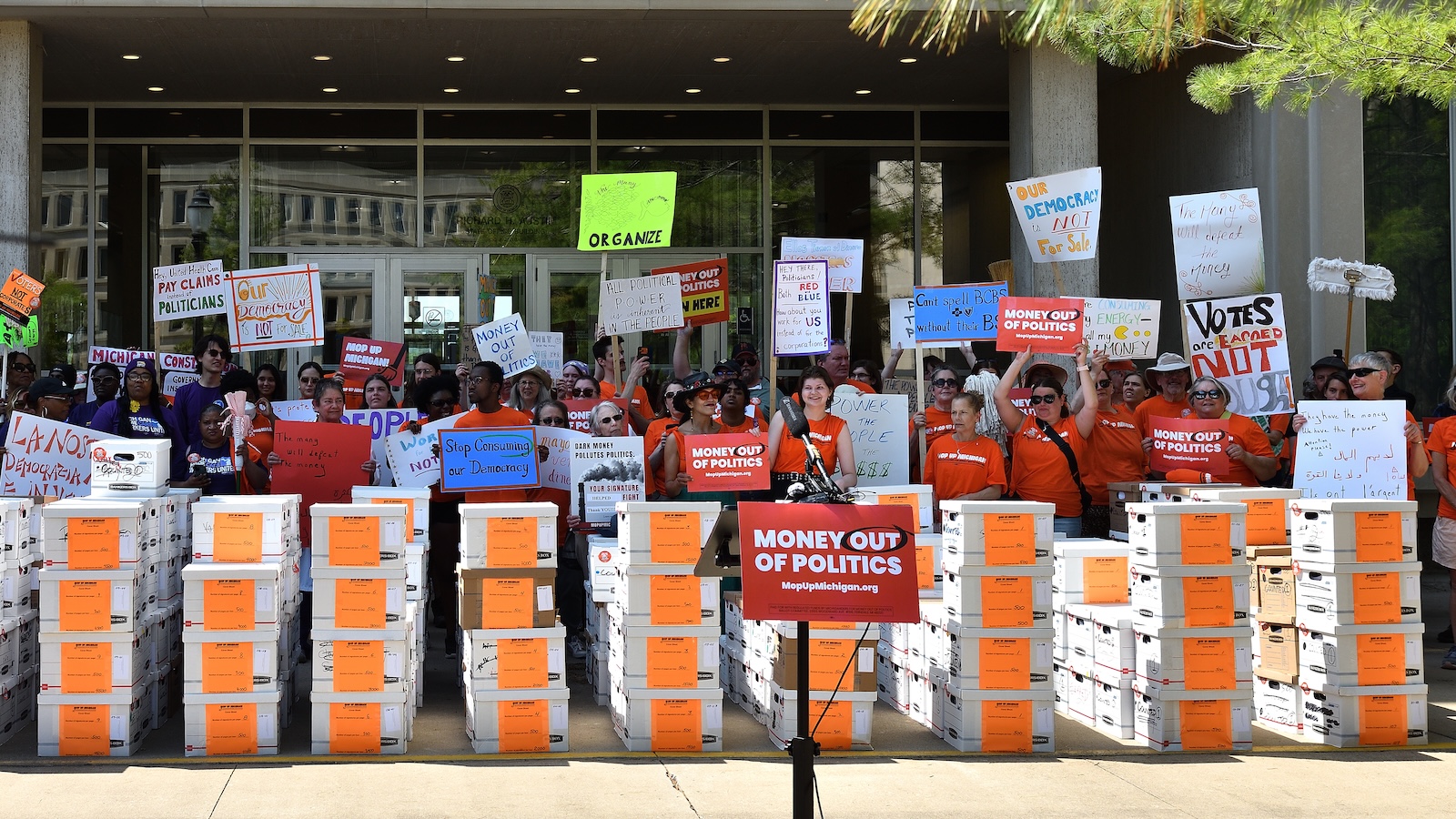
The "Mop Up Michigan" coalition, a broad group of environmental, consumer advocacy, and democratic reform organizations, mobilized a massive volunteer network. In May 2026, the group delivered more than 560,000 signatures to the Secretary of State—far exceeding the requirement to place the measure on the ballot. This effort signaled that the movement had moved beyond niche activism into a mainstream mandate.
Supporting Data: The Economics of Influence
To understand the fervor behind Proposal 2, one must look at the financial data that defines Michigan’s political landscape.
Political Expenditures
According to data tracked by the Michigan League of Conservation Voters and the Michigan Transparency Network:

- In the 2022 election cycle, utility-related donations to state and local races exceeded $1.6 million.
- In 2025 alone, despite the growing public outcry, Michigan lawmakers and committees accepted $421,000 in corporate utility donations.
- The opposition group, "Protect MI Free Speech," has raised approximately $851,000, with at least $232,000 coming directly from utility interest groups.
- Conversely, the pro-reform group "Michiganders for Money Out of Politics" has raised over $8.7 million, primarily from individual donors and voter interest groups, highlighting a significant "David vs. Goliath" funding dynamic in reverse.
Reliability and Rates
The push for reform is backed by a grim statistical reality regarding Michigan’s infrastructure. A report by the Citizens Utility Board of Michigan recently found that the state’s utility reliability is "worse than ever," ranking near the bottom nationally. This underperformance is particularly galling to residents because Michigan’s electricity rates remain significantly higher than the Midwest average.
The Climate Connection
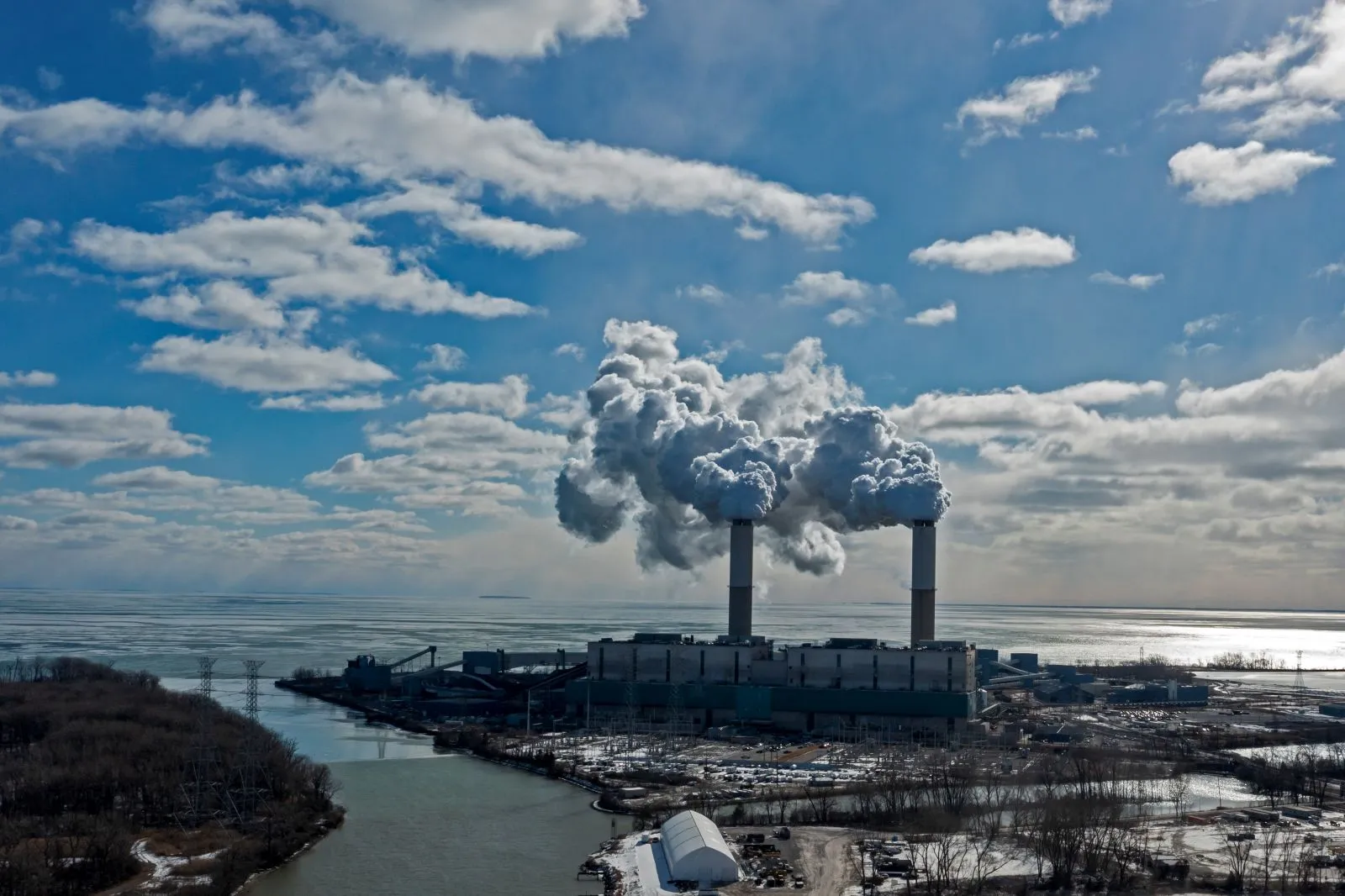
The influence of utilities is also reflected in the state’s environmental policy. Michigan has a statutory goal to reach 100% clean energy by 2040. However, advocates point to stalled legislation—such as "polluter pay" bills and community solar expansions—as evidence that utility lobbying has successfully throttled competition and delayed the transition away from fossil fuels. DTE’s Monroe Power Plant, for instance, remains the second-largest emitter of greenhouse gases in the U.S., with a closure date not set until 2035.
Official Responses: A Clash of Constitutional Interpretations
The debate over Proposal 2 has sparked a fierce rhetorical battle between those who view it as a necessary democratic safeguard and those who see it as an unconstitutional overreach.
The Proponents: Reclaiming the Legislature
Christy McGillivray, co-chair of Michiganders for Money Out of Politics, argues that the current system creates a "pay-to-play" environment that disenfranchises the average citizen. "Everything is more expensive. The quality of service is worse, and we are dealing with more air and water pollution as a result of utility influence in Lansing," McGillivray said. "Nothing happens in our state legislature if regulated gas and electric utilities don’t greenlight it."
The Opposition: First Amendment Concerns
Opponents, led by the group "Protect MI Free Speech," argue that the proposal is a "sneak attack" on the First Amendment. John Sellek, a spokesperson for the group, contends that the measure unfairly punishes individuals based on their employment or family associations. "Supporters are using voters’ frustration with high costs of living to carry out a much wider attack on Michiganders who can’t support candidates simply because of who they are related to or contract with," Sellek stated.
The Utility Perspective
Consumers Energy, one of the state’s dominant utilities, maintains that it operates within the bounds of existing law. Katie Carey, a spokesperson for the company, suggested that Proposal 2 would not actually remove money from politics but would instead shift the balance of power. "Mop Up Michigan’s approach won’t eliminate money in politics—it will simply shift influence away from Michigan companies and toward wealthy national donors and special interests," Carey said.
Implications: Legal Challenges and the National Precedent
If Proposal 2 passes, it will almost certainly face immediate litigation. The legal hurdles are significant, as the measure seeks to navigate the narrow straits left by decades of Supreme Court jurisprudence.
The Shadow of Citizens United
Since the landmark Citizens United v. FEC decision in 2010, the Supreme Court has held that political spending is a protected form of free speech. While states can ban direct corporate contributions to candidates, they have historically struggled to limit "independent expenditures" or contributions to PACs. Legal experts suggest that Proposal 2’s attempt to ban contributions from the family members of executives may be its most vulnerable provision, likely to be challenged as an infringement on individual associational rights.
A National Trend?
Michigan is not alone in this fight, but it is taking the most aggressive stance against utilities specifically.
- Hawaii: Passed a law in 2026 aiming to prevent nearly all political spending by corporations and nonprofits, which is currently facing two court challenges.
- Maine and Connecticut: Have moved to prevent utilities from using ratepayer money to fund lobbying efforts, though they haven’t gone as far as Michigan’s proposed candidate donation bans.
- Montana: Is considering a similar ambitious ballot effort this November.
The "Hydraulic" Nature of Political Money
Some analysts warn of the "hydraulic" theory of campaign finance—the idea that money, like water, will always find a way to flow into the system. Karley Abramson of the Citizens Research Council of Michigan notes that if one avenue is closed, corporate interests may simply redirect funds into "dark money" groups or uncoordinated issue advertisements that are even harder to track.
Conclusion: A Message to the Capitol
Regardless of the eventual legal outcome, the passage of Proposal 2 would send a seismic shock through Michigan’s political establishment. For advocates like Nick Dodge of the Michigan League of Conservation Voters, the measure is as much about optics and accountability as it is about the law.
"This is a really solid first step in starting to push forward some more transparency," Dodge said. Even if the courts eventually trim back parts of the proposal, the message from voters like Sam Getsinger is clear: the status quo, where the flip of a switch brings both high bills and political gridlock, is no longer acceptable. For Getsinger, the goal remains simple: a world where her grandchildren’s voices carry as much weight as a utility’s checkbook.

 Nana Wu

 Asro





