



 Lina Hope
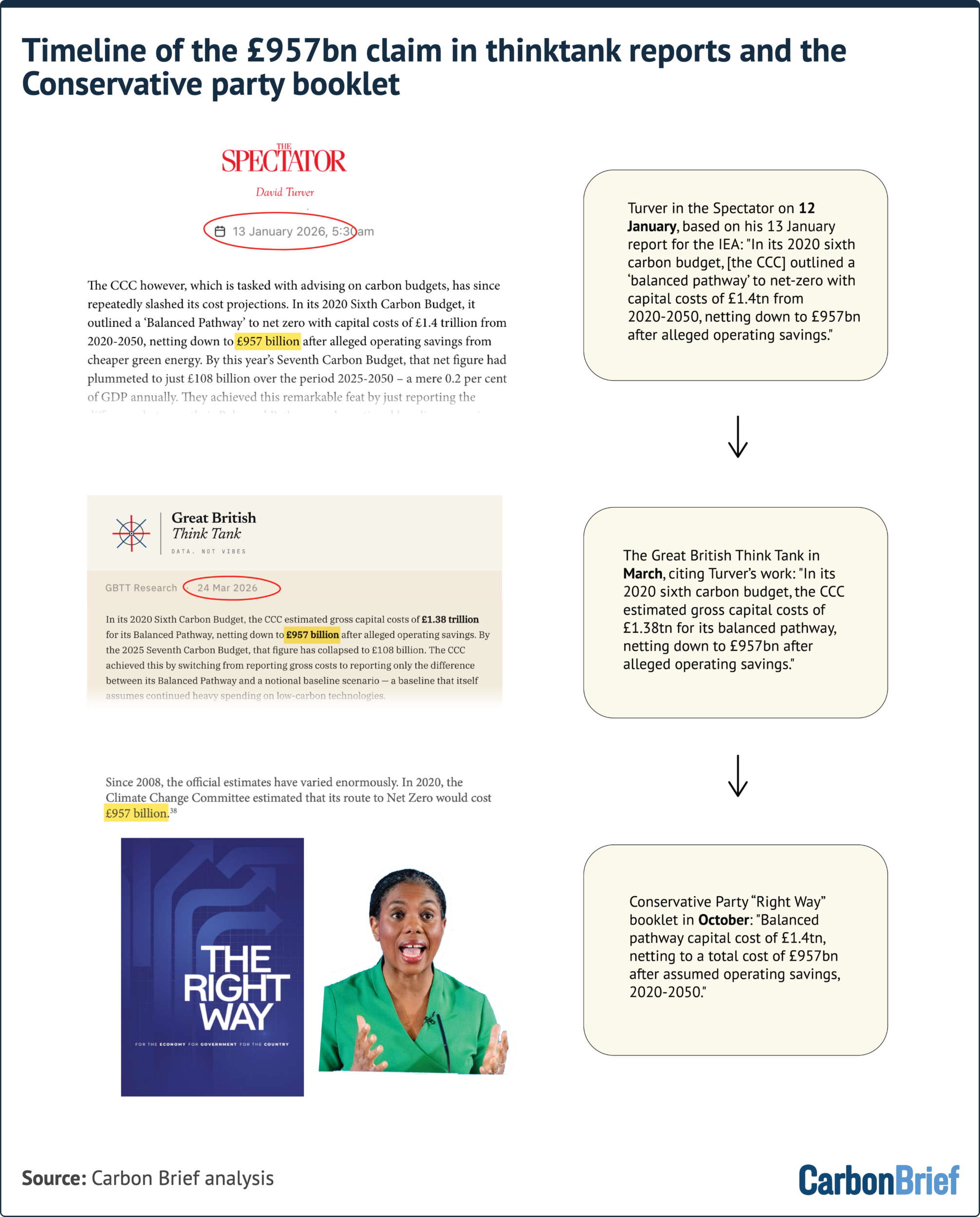
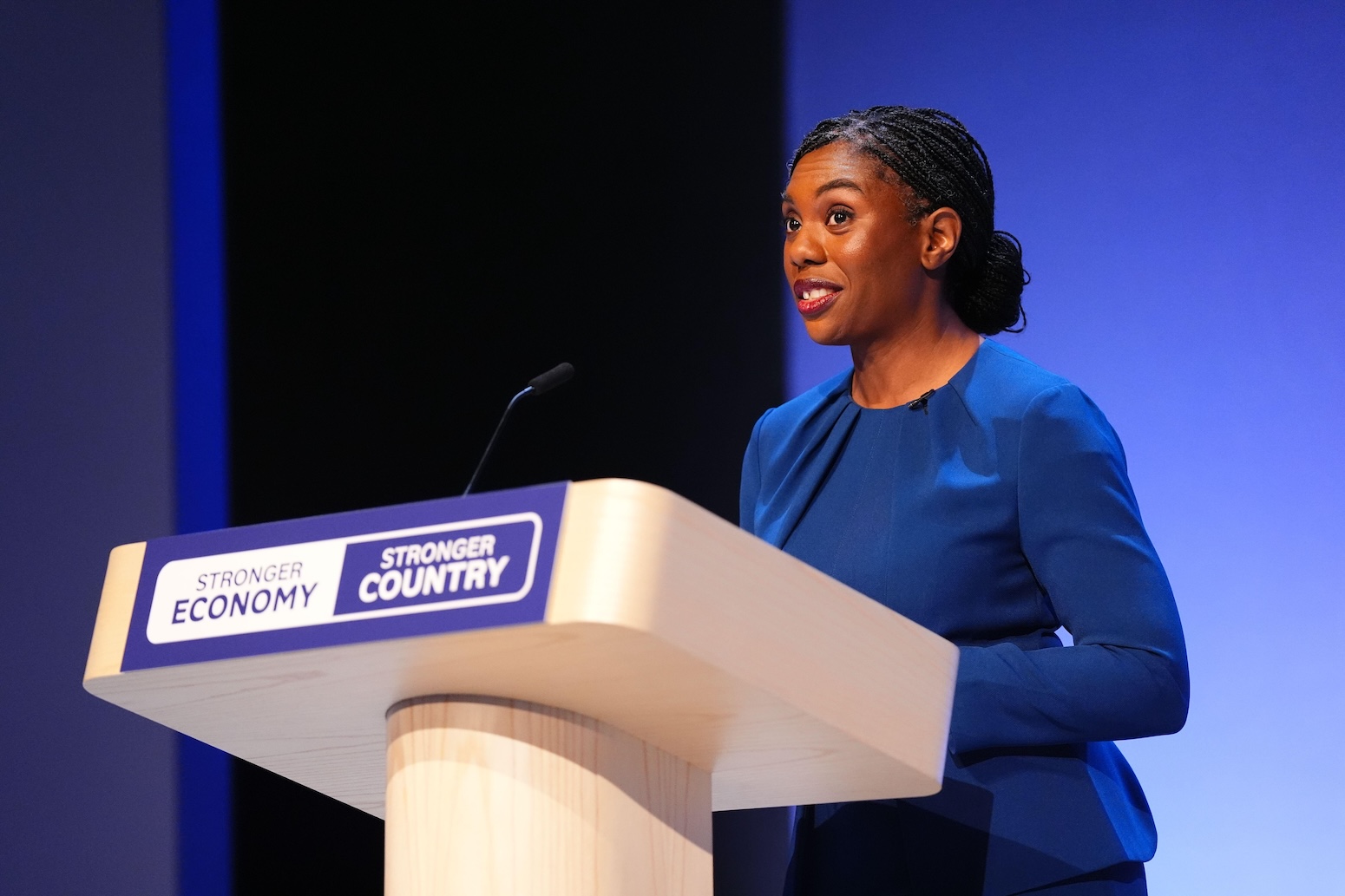
In a significant embarrassment for the UK’s opposition Conservative Party, a flagship policy document intended to demonstrate "common sense" governance has been found to rely on a massive, mathematically flawed estimate of the cost of reaching net-zero carbon emissions. The document, titled The Right Way, claims that the official government advisor, the Climate Change Committee (CCC), estimated the cost of the UK’s transition to net-zero at £957 billion.
Rigorous analysis reveals this figure is not only incorrect but appears to be the result of a basic spreadsheet error—specifically, the double-counting of costs and savings—that has circulated through think-tank reports before being uncritically adopted by the Conservative Party.
The Anatomy of the Error
The discrepancy centers on a 2020 dataset published by the CCC regarding the Sixth Carbon Budget. This spreadsheet provided a breakdown of additional investments required to transform the UK economy, covering everything from low-carbon electricity generation to the mass adoption of heat pumps and electric vehicles (EVs).
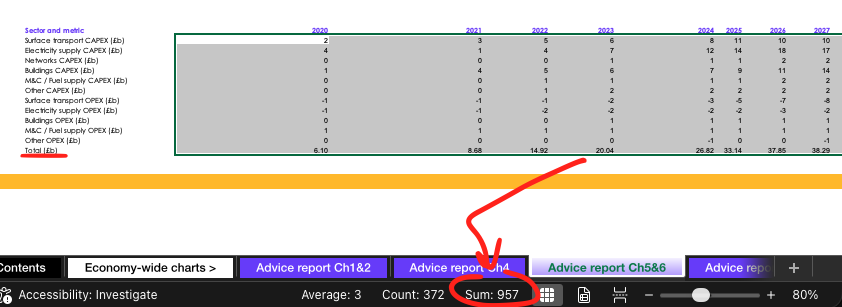
The data clearly categorized expenditures into capital expenditure (CAPEX) and operational savings (OPEX). Over the 30-year period spanning 2020 to 2050, the cumulative CAPEX requirements were listed at £1.38 trillion, while the projected operational savings were estimated at £0.90 trillion. When these figures were combined, the net cost to the UK economy was calculated at exactly £478 billion.
However, the CCC’s spreadsheet also included a row providing a combined annual total for each year. It appears that an individual, while attempting to aggregate these figures, inadvertently added the annual totals to the existing sectoral CAPEX and OPEX figures. By doing so, they effectively counted the costs and savings twice. This elementary error transformed the true net cost of £478 billion into an erroneous total of £957 billion.
A Chronology of Misinformation
The journey of this inaccurate figure from a misunderstood spreadsheet cell to the pages of a political party’s policy manifesto provides a sobering case study in the rapid spread of misinformation in the digital age.
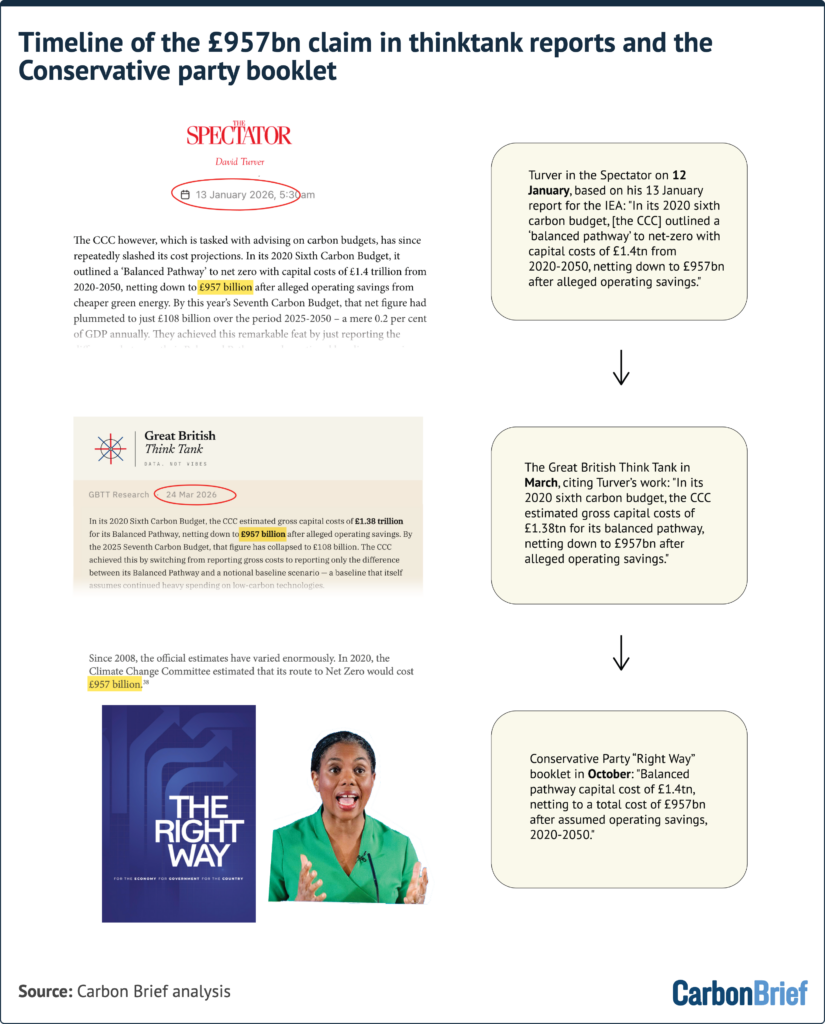
January 2026: The Spark
The earliest digital trace of the £957 billion figure appeared in a January 12, 2026, article in The Spectator. The author, David Turver, a retired engineer who identifies as an "accidental energy analyst," cited this figure as the definitive cost of the net-zero transition. Just one day later, Turver amplified this claim in a report for the Institute of Economic Affairs (IEA), a free-market think tank. Turver’s report explicitly pointed to figure 5.3 of the CCC’s 2020 advisory document. Despite this citation, the underlying data confirms that the CCC’s own totals never reached the billion-pound threshold now being claimed.
March 2026: The "Data-Driven" Echo Chamber
The error gained further traction in March 2026, when the Great British Think Tank—an organization that prides itself on a "data, not vibes" approach—repeated the £957 billion figure. Their endorsement gave the number a veneer of institutional legitimacy, despite the fact that the calculation had not been independently verified against the original source data.
October 2026: Institutionalization
The final stage of the error’s lifecycle occurred in October 2026, when the Conservative Party incorporated the figure into The Right Way. By including it in an official booklet, the party elevated a simple calculation error into a cornerstone of their political platform, using it to disparage the "sophisticated modelling" of climate experts in favor of their own "political judgement."
Supporting Data: What the Experts Actually Say
The reliance on the inflated £957 billion figure stands in stark contrast to the actual economic assessments provided by the CCC. Even at the time of the 2020 publication, the committee noted that the £478 billion cost represented less than 1% of UK GDP over three decades. Furthermore, the committee emphasized that the massive investment would not merely be an expense; it would yield substantial dividends, including reduced fossil fuel imports and a projected 2% boost to overall GDP.
The landscape has changed significantly since 2020. As technologies like electric vehicles have matured and costs have plummeted, the CCC has revised its estimates downward. In 2025, the committee published updated figures: £670 billion in investment costs against £562 billion in operating savings, resulting in a net total of just £108 billion over the period from 2025 to 2050. This represents less than 0.2% of GDP—a far cry from the nearly trillion-pound figure cited by the opposition.
Most recently, the committee has highlighted that the cost of transitioning to net-zero is lower than the economic impact of a single fossil-fuel price shock, and that the long-term benefits of the transition are estimated at £110 billion per year.
Official Responses and Political Repercussions
The Conservative Party has yet to issue a formal correction regarding the contents of The Right Way. The document, which claims that "what people ultimately want is a government competent enough to solve the problems for which it takes responsibility," now faces intense scrutiny regarding the party’s own competence in handling complex economic data.
Energy experts and climate advocates have expressed alarm at the incident. "When policy is driven by figures that are not just disputed, but mathematically impossible, the entire democratic process is undermined," said one analyst. The incident has also drawn attention to the broader issue of how think tanks and political organizations process and disseminate data. When organizations prioritize the narrative over the arithmetic, they create a "post-truth" environment where complex challenges like climate change are reduced to fear-mongering statistics.
Broader Implications for Climate Policy
The £957 billion error is not an isolated incident. It is symptomatic of a larger trend where "scary-sounding" numbers are weaponized to influence public opinion. Carbon Brief has previously documented how reports derived from the same flawed logic have led to inaccurate headlines claiming net-zero could cost upwards of £7.6 trillion or even £9 trillion. These figures often rely on the absurd implicit assumption that the alternative—continuing to use fossil fuels, including the purchase of cars, boilers, and power plants—would effectively be free.

The Cost of Inaction
The irony of the Conservative Party’s focus on the cost of the transition is that it ignores the mounting costs of inaction. Recent environmental events, such as the severe heatwave that struck England in June 2026, have resulted in tangible, immediate economic burdens, including record-breaking demand for emergency services and healthcare. By focusing on a "cost of net-zero" that is inflated by a spreadsheet error, the party risks distracting the public from the very real and present dangers of climate change.
The Need for Rigor
As the UK continues its transition toward a low-carbon economy, the necessity for data literacy among policymakers has never been greater. The current episode serves as a cautionary tale: when institutions fail to perform basic due diligence on the figures they cite, they do not only mislead the public—they weaken their own credibility and the quality of the national debate.
Whether the Conservative Party will update its document or continue to defend the flawed figure remains to be seen. However, the incident has already provided a clear lesson for the electorate: in the high-stakes world of climate policy, even the most authoritative-looking documents should be checked, verified, and treated with a healthy dose of skepticism. The "Right Way" to manage the nation’s future, it seems, begins with the accuracy of the first line of the spreadsheet.


 Sagoh

 Basiran