


 Basiran
By Alex Maitland, Nafkote Dabi, and Pubudini Wickramaratne
The year 2026 has served as a grim testament to a terrifying reality: on a warming planet, disasters do not strike with impartiality. They discriminate. As the global temperature climbs toward record-breaking heights, the chasm between the world’s wealthiest individuals and the billions struggling to survive the fallout has transformed from an economic inequality issue into a matter of existential survival.
While the super-rich retreat into climate-controlled "snow rooms" and secure themselves behind high-end, private flood defense systems, the most vulnerable populations are being erased from the map by the very same forces of climate breakdown. Oxfam’s latest report, Disaster Divide, exposes a disturbing trend: not only are the world’s wealthiest contributing the most to the carbon crisis, but they are also increasingly profiting from the wreckage left in its wake.
A Year of Unprecedented Climate Violence
The chronology of 2026 reads like a catalog of systemic failure. The climate breakdown, long predicted by scientists, has moved from the periphery to the center of global life.
In the early months of 2026, West Africa bore the brunt of intense climate instability. Devastating floods tore through Ghana, Nigeria, and Côte d’Ivoire, displacing thousands and destroying the infrastructure of fragile economies. By August, the tragedy moved to the Himalayas, where a catastrophic glacier collapse triggered flash floods in Nepal, affecting over 80,000 people and underscoring the lethal fragility of high-altitude ecosystems.

Europe, often shielded by wealth from the immediate physical destruction seen in the Global South, was nonetheless humbled by the sheer scale of the heat. May saw India endure a prolonged, brutal heatwave, followed by the weakest monsoon season in two decades—a failure linked directly to the strengthening El Niño cycle. As the heat spilled over into the Northern Hemisphere, excess mortality rates in Europe climbed, with projections suggesting that over 50,000 lives were lost to heat-related causes.
These events are not merely "natural" disasters. They are the cumulative result of decades of industrial-scale emissions and political inaction, now manifesting as a persistent state of emergency.
The Carbon Inequality Gap: Data and Disparity
The primary drivers of this crisis are not individual households or small-scale farmers; they are a concentrated elite. According to data integrated from the Stockholm Environment Institute (SEI) and climate attribution models, the consumption and investment patterns of the ultra-wealthy are responsible for a disproportionate share of global warming.
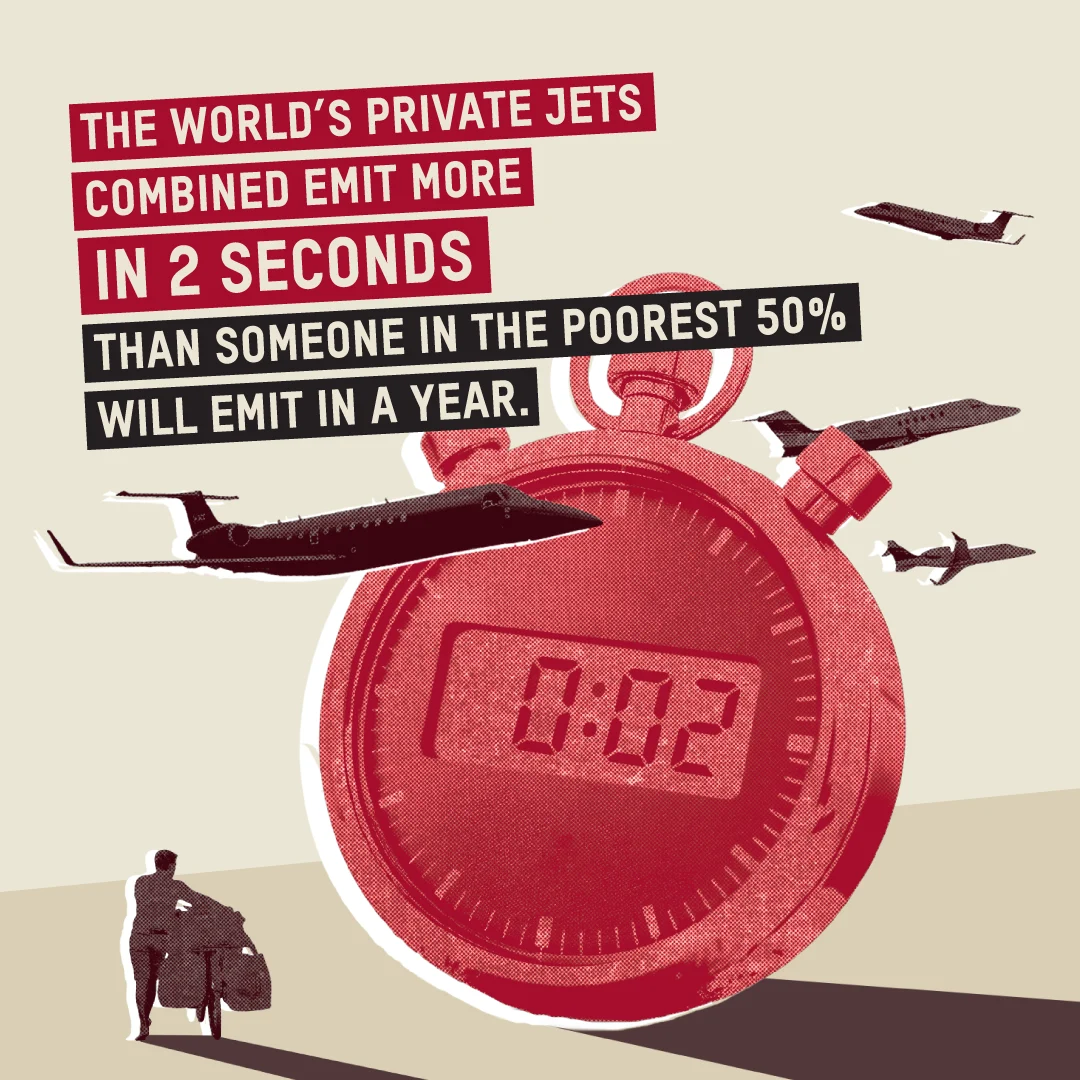
The top 0.1% of the world’s population—roughly 8 million people—emit more carbon through their lifestyles and investments than the poorest 3.5 billion people combined. This is a staggering indictment of modern consumption. Private jet travel, perhaps the most visceral symbol of this disparity, is an engine of destruction. It is estimated that every two seconds, private jets release more carbon than a person in the poorest 50% of the global population emits in an entire year.
However, the impact of the rich is not limited to their carbon footprints. It is their portfolios that dictate the trajectory of the global economy. Approximately 70% of billionaire investments are funneled into "high climate-impact" sectors, including oil, gas, and heavy chemicals. The economic damage linked to individual billionaires is quantifiable and astronomical. For instance, the investments of Mexican oligarch Carlos Slim were linked to $3.7 billion in environmental damage in 2024 alone, while French luxury magnate Bernard Arnault was responsible for $1.7 billion in climate-related destruction during the same period.

The "Destroy and Rebuild" Economy
Perhaps the most galling revelation of 2026 is the emergence of "disaster capitalism." Corporations are finding ways to turn the suffering caused by climate breakdown into a lucrative market. The global disaster recovery sector is currently forecast to expand from $70 billion to $92 billion annually by 2029.
To better understand this phenomenon, Oxfam developed the Destroy and Rebuild Index, a sample of 217 corporations that profit from the entire cycle of climate disaster—from the industrial activities that fuel the crisis to the private firms hired to "clean up" the aftermath. These corporations generated an average of $1.8 billion in profits in 2025, distributing over $1 billion to shareholders.
The financial infrastructure behind this is concentrated. Ten asset managers hold stakes in over 90% of these companies. Financial giants like BlackRock and Vanguard are the primary architects of this cycle, with their combined investments in these 217 corporations exceeding $1 trillion. This creates a perverse incentive structure: the more the planet suffers, the more these portfolios yield.
Implications: Privatization and Displacement
The aftermath of disasters is now being used as a pretext for deeper systemic changes that prioritize private profit over public welfare. Following Hurricane Irma in 2017, the reconstruction of Barbuda was heavily steered toward luxury tourism, effectively disenfranchising the local fisherfolk and residents who relied on the coast for their livelihoods. Similarly, in the wake of Hurricane Maria, Puerto Rico’s electrical grid was pushed toward privatization—a move that has resulted in recurring systemic failures and left the island vulnerable to frequent, widespread blackouts.
This is a form of climate apartheid. While the ultra-wealthy invest in fortified bunkers, private islands, and climate-resilient mansions, the rest of the world is left to contend with crumbling public services and increasingly expensive, privatized solutions.

The human cost is equally skewed. A study of flood resilience in Mumbai found that low-income households had to spend 15 times more than their wealthy counterparts to replace lost assets. For the poor, a disaster is an absolute reset button that pushes them deeper into the cycle of poverty and debt. For the rich, it is a business opportunity.
Gendered Impacts of the Climate Crisis
The inequality of climate change is not just economic; it is deeply gendered. A comprehensive review of 130 studies indicates that women and girls are disproportionately affected by climate-related health crises in 68% of cases.
Beyond health, climate instability acts as a threat multiplier for domestic and gender-based violence. Evidence suggests that following extreme weather events, the incidence of intimate partner violence increases, with two-thirds of surveyed studies linking post-disaster stress to a rise in domestic abuse. As resources become scarce and communities are displaced, the protective structures for women and girls often disintegrate first.
The Path Forward: Demanding Accountability
The current trajectory is unsustainable. If the international community continues on its current path, the UN projects that up to 1 billion people could be displaced by 2050. While the vast majority of these climate refugees will originate from the Global South, the phenomenon of the wealthy seeking their own "safe havens" will only accelerate the trend toward gated, insulated enclaves.
At the upcoming COP31, governments face a moral and political imperative to break this cycle. The solutions are clear, though they require the political courage to challenge the status quo:

- Taxing the Super-Rich: Governments must implement robust taxes on wealth, income, and carbon-intensive luxury consumption. This includes aggressive taxation on private jets, mega-yachts, and luxury high-carbon assets.
- Public Climate Finance: Revenues generated from these taxes must be redirected toward the Global South, enabling nations to adapt, recover, and rebuild without being shackled by the weight of external debt.
- Ending Disaster Capitalism: There must be a global moratorium on the privatization of essential services in the wake of disasters. Reconstruction efforts must be community-led and centered on the needs of the survivors, not the profit margins of shareholders.
- Corporate Accountability: Regulatory bodies must force asset managers to divest from the "Destroy and Rebuild" cycle. The financial sector must be held accountable for the environmental externalities of their portfolios.
The climate crisis is the result of deliberate political and economic choices. It is a system designed to protect the wealth of a few at the expense of the many. To change the outcome, we must change the system. 2026 has shown us the cost of inaction—now, we must decide if we will continue to let the few profit from the destruction of the many, or if we will build a future based on equity, resilience, and collective survival.

 Laily UPN

 Siti Muinah