


 Sagoh
AMSTERDAM – As global leaders converge for the United Nations Climate Change Conference (COP31), a stark and unsettling reality has taken center stage: the international community is failing to protect the world’s most vulnerable populations from the accelerating ravages of a warming planet. A new report from the United Nations Environment Programme (UNEP) has exposed a widening chasm in climate adaptation finance, prompting Greenpeace to issue a blistering critique of current global fiscal priorities and an urgent call for systemic reform.
The data, released in the Adaptation Gap Report 2026, reveals that despite the growing frequency of climate-driven disasters, the flow of public adaptation finance has effectively stalled. For developing nations—those that have contributed the least to global greenhouse gas emissions yet bear the brunt of climate-induced suffering—this lack of funding is not merely a political failure; it is a direct threat to human survival.
The Financial Chasm: A Fact-Based Overview
The UNEP’s latest findings paint a grim picture of the global climate finance landscape. In 2024, international public adaptation finance reached a plateau, hovering between USD 28.2 billion and USD 31.7 billion. This represents a marginal, almost negligible, year-on-year increase of only USD 1 billion.
This stagnation occurs against a backdrop of skyrocketing need. Developing countries currently face annual adaptation requirements estimated at USD 305 billion. Due to the compounding pressures of inflation and the escalating severity of climate impacts, this figure is projected to balloon to USD 420 billion by 2035.
The mathematics of this shortfall are catastrophic. Even if the international community succeeds in its stated ambition to triple current finance flows by 2035, the total would cover only 20% to 29% of the actual requirements of vulnerable nations. In essence, the global financial response is failing to keep pace with the climate crisis by an order of magnitude.
Chronology of a Crisis: From Commitments to Stagnation
To understand the current impasse, one must look at the recent history of climate negotiations:
- COP29 (Baku): The international community agreed upon a "New Collective Quantified Goal" (NCQG), establishing a target of USD 300 billion annually for climate finance. However, the operationalization of these funds has been hampered by ambiguity regarding the split between mitigation and adaptation, as well as the reliance on debt-heavy instruments.
- COP30: The Global Goal on Adaptation (GGA) was formalized, creating a framework for nations to enhance their adaptive capacities. The agreement underscored the necessity for developed nations to significantly scale up their support.
- 2026 (The Present): The release of the Adaptation Gap Report 2026 serves as a sobering midpoint audit. It confirms that the promises made in Baku and the frameworks established at COP30 are not translating into the necessary capital flows on the ground.
The Human Cost: Voices from the Frontlines
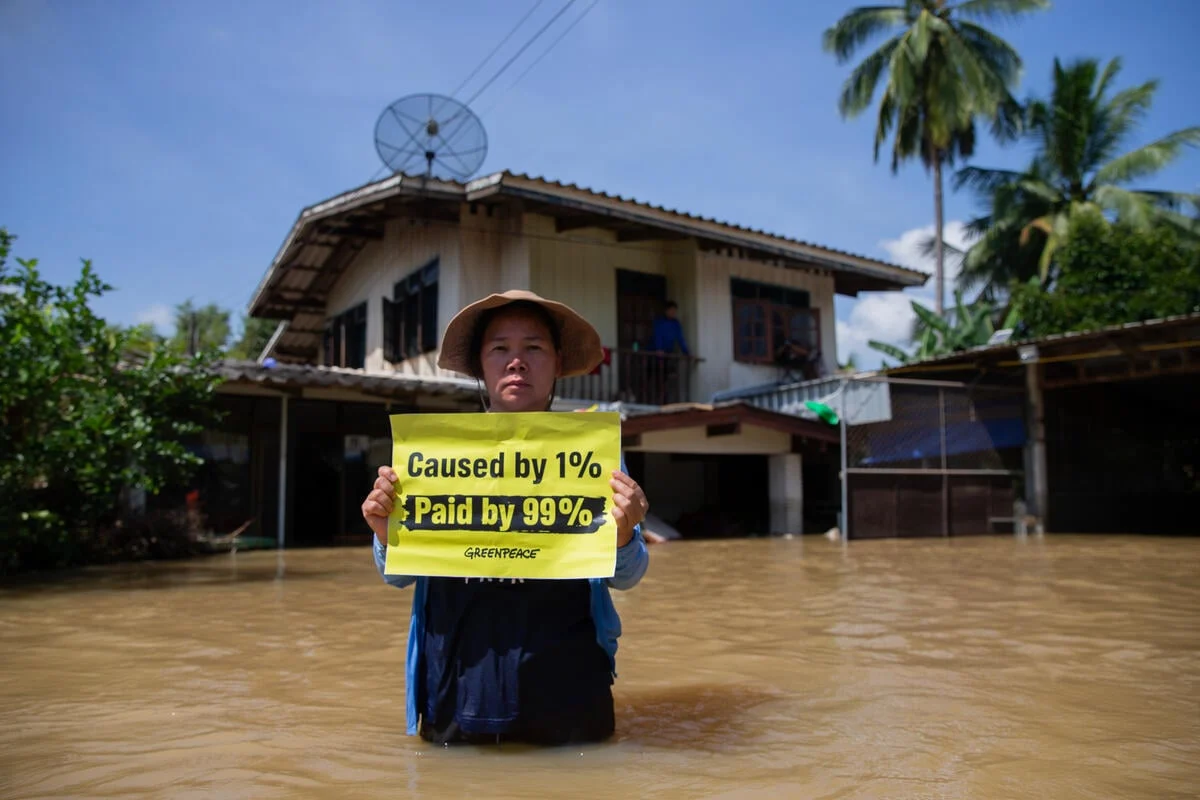
The technical language of fiscal reports often obscures the visceral reality of climate change. For frontline communities, "adaptation" is not a bureaucratic term—it is the difference between a village surviving a typhoon and being wiped off the map.
Koaile Monaheng, a Climate Finance Expert at Greenpeace International, did not mince words when addressing the discrepancy between political rhetoric and the reality of the crisis.
"The math of climate injustice is here in plain sight," Monaheng stated. "This leaves frontline communities, who have contributed the least to global emissions, facing escalating climate extremes with a fraction of the support. This is morally indefensible. Adaptation is not a luxury, but critical for human survival, dignity, and justice."
Monaheng emphasizes that every day of delay in funding is not a neutral act; it is a choice that transforms manageable climate impacts into permanent, catastrophic losses. By failing to fund sea walls, drought-resistant agriculture, and early-warning systems, the global North is effectively abandoning the global South to the mercies of a destabilized climate.
Structural Barriers: The Debt Trap and the "Polluter Pays" Principle
A critical point of contention at COP31 is not just the amount of funding, but the nature of that funding. Much of the current climate finance provided by developed nations arrives in the form of loans rather than grants.
The Debt-Climate Feedback Loop
Vulnerable nations are often forced to take on debt to build the very infrastructure required to survive climate impacts caused by the industrialization of wealthier nations. This creates a vicious cycle: a country takes a loan to build climate-resilient infrastructure; a climate disaster hits; the infrastructure is damaged; the country is left with the debt, the damage, and no resources to rebuild.
Greenpeace is vehemently calling for a pivot to grant-based and non-debt-creating mechanisms. Without this shift, the climate crisis will continue to function as a debt-multiplier, trapping developing economies in a perpetual state of fiscal instability.
The "Polluter Pays" Imperative
The question of where this money will come from remains the central tension of COP31. Greenpeace proposes a clear, albeit politically challenging, solution: making polluters pay.
"To unlock these funds, governments must make polluters pay," Monaheng argued. "Taxing the massive profits of oil and gas corporations through progressive environmental taxation is one of the clearest ways to generate new public finance."
This proposal suggests that the massive, record-breaking profits of the fossil fuel industry should be the primary source of capital for the Fund for Responding to Loss and Damage. The current state of this fund is emblematic of the broader failure: initial requests for support reached USD 2.8 billion, yet the available envelope was a mere USD 342 million.
Implications for the Future: A Turning Point at COP31
As the discussions continue at COP31, the implications of a failure to act are profound. If developed nations continue to treat adaptation finance as a voluntary donation rather than a historical obligation, the integrity of the entire Paris Agreement framework faces collapse.
1. Eroding Trust
The lack of progress on the NCQG and the GGA is eroding the fragile trust between the Global North and the Global South. Developing nations are increasingly hesitant to commit to ambitious mitigation targets when they see that the promised support for their own survival is not forthcoming.
2. Escalating Loss and Damage
Without immediate scaling of funding, the costs associated with "loss and damage"—the permanent destruction of homes, ecosystems, and cultural heritage that cannot be adapted to—will skyrocket. This shifts the burden from proactive investment to reactive, and far more expensive, humanitarian aid.
3. The Need for Ambition
Greenpeace’s expectations for COP31 are specific and demanding:
- Multi-year Commitments: Governments must move beyond single-year pledges and provide transparent, multi-year finance strategies that demonstrate their "fair share" of the USD 300 billion NCQG.
- The 2035 Goal: Developed nations must clarify their pathway to reaching at least USD 120 billion annually in adaptation finance by 2035.
- Grant-Based Delivery: A commitment to move away from loan-based finance to protect the fiscal sovereignty of vulnerable states.
Conclusion: A Moral Mandate
The Adaptation Gap Report 2026 is more than a collection of statistics; it is a mirror reflecting the priorities of the global community. As the climate changes, the world has a choice: to continue with incremental, insufficient measures that leave the most vulnerable to fend for themselves, or to embrace a model of global solidarity based on accountability and justice.
As Koaile Monaheng aptly noted, "At COP31, governments must confront this reality and the widening adaptation finance deficit by immediately scaling up grant-based funding to meet the goal to at least triple adaptation finance by 2035."
The time for empty promises has long passed. The climate is not waiting for the next round of negotiations, and neither can the communities currently living on the frontlines of the crisis. The success of COP31 will not be measured by the eloquence of its final declarations, but by the tangible, equitable, and immediate delivery of the resources required to secure a survivable future for all.

 Basiran
 Laily UPN