


 Siti Muinah

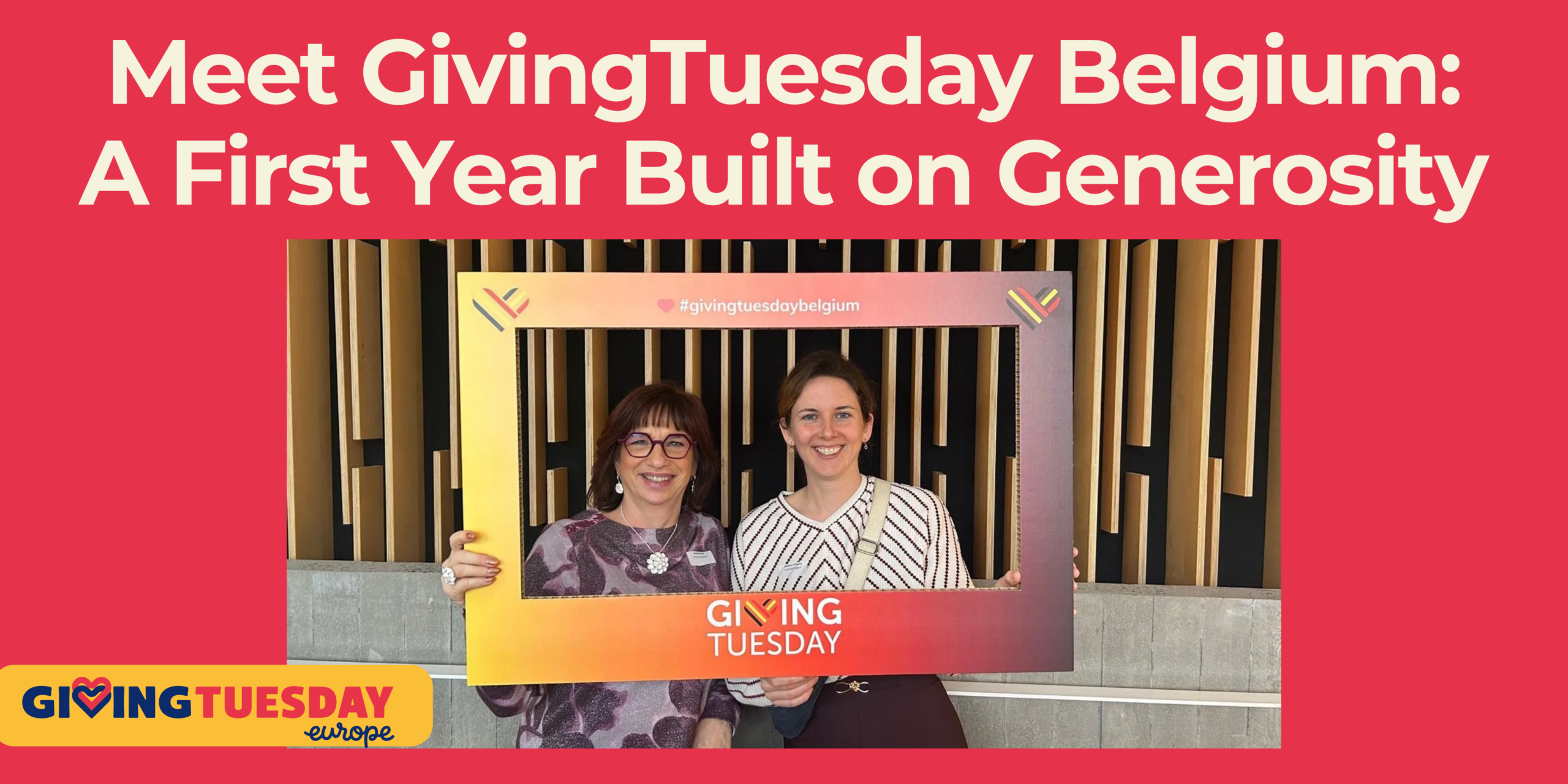
In a world where international movements are often spearheaded by large NGOs or multi-million-euro marketing budgets, a quieter, more grassroots revolution is currently taking hold in the heart of Europe. What began as a casual takeaway from a European Fundraising Association conference has transformed into a national movement. Isabel Penne and Josefien D’Haene, co-leaders of GivingTuesday Belgium, have achieved what many deemed impossible: launching a nationwide philanthropic campaign from scratch, with minimal resources, and in record time.
Their journey underscores a profound shift in how modern society views charity—not as a seasonal obligation, but as a continuous, accessible, and vital part of civic life.
The Genesis of GivingTuesday Belgium: A Vision Realized
The story of GivingTuesday Belgium is a testament to the power of individual initiative. While attending a European fundraising conference, Isabel Penne noted a glaring omission in the landscape of European philanthropy. Despite the global reach of the GivingTuesday movement—a day dedicated to global generosity—Belgium remained one of the few European nations without an official presence or ambassador.
Penne, alongside Josefien D’Haene—both key figures at Fundraisers Belgium—recognized this vacuum not as a failure, but as an opportunity. "As Belgium was one of the few countries that still had no official GivingTuesday ambassador, we felt it was our responsibility to take on this role and give generosity an extra push in Belgium," the pair noted.
The Chronology of Growth
The rapid expansion of the movement follows a deliberate, multi-phased strategy:
- The Inception: Identifying the need for a unified platform to catalyze Belgian generosity.
- The Partnership Phase: Establishing trust with established entities like Fundraisers Belgium to provide the infrastructure.
- The Technical Launch: Securing a partnership with Koalect to provide a free-to-use digital platform for NGOs.
- The Outreach Campaign: Engaging umbrella organizations and media outlets to normalize the conversation around philanthropy.
- The "Every Tuesday Counts" Initiative: Moving beyond the single-day focus to create a year-round narrative of giving.
Building a Movement Without a Budget: The Infrastructure of Altruism
Operating with virtually no financial budget, the duo relied on a strategy rooted in social capital and professional networks. The movement’s success is built on the expertise of volunteers and the goodwill of corporate and non-profit partners.
Strategic Alliances
The infrastructure of GivingTuesday Belgium is decentralized by design. By leveraging existing networks within the non-profit sector, Penne and D’Haene managed to avoid the overhead costs usually associated with such large-scale awareness campaigns:
- Platform Support: Koalect provided the essential digital infrastructure, allowing over 250 organizations to register for free. This allows these non-profits to host their own stories, donation links, and volunteer opportunities.
- Communication & Marketing: The KWIN Agency offered pro-bono expertise, ensuring that the movement’s messaging was professional, cohesive, and impactful across social media channels.
- Institutional Backing: The campaign gained momentum through endorsements from the Belgian Food Banks, the Belgian Federation of Philanthropic Foundations, Testament.be, and the NGO Federation.
This multi-sectoral approach ensures that the message of generosity reaches beyond the "bubble" of traditional charities, penetrating the corporate sector (via the VBO magazine) and local communities (via media partnerships with BRUZZ and 7Dimanche).
Data and Engagement: Measuring the Impact of Kindness
While the movement is driven by sentiment, its execution is rooted in data-driven engagement. The platform serves as a digital hub where 250+ organizations can track donor interactions and volunteer interest.
The strategy relies on a two-pronged approach:
- Organizational Empowerment: Providing smaller NGOs with a platform they might otherwise lack the technical resources to build. This democratizes the visibility of smaller, localized causes.
- Public Mobilization: By using a "weekly theme" approach, the campaign maintains a persistent presence in the public consciousness, preventing the "GivingTuesday" brand from becoming a fleeting annual event.
The "Every Tuesday Counts" Philosophy
Launched on September 1, the Every Tuesday Counts campaign is perhaps the most significant departure from the traditional model. By highlighting a different theme related to philanthropy every single week, the initiative reframes generosity as a habit rather than an episodic event. This consistent rhythm serves as a constant reminder to the Belgian public that every act—be it a donation, a volunteer hour, or a simple act of kindness—contributes to a larger societal goal.
Navigating the Challenges of Non-Profit Advocacy
Despite their success, the founders admit that the journey has not been without its hurdles. The primary challenge, paradoxically, is one of perception.
The Transparency Hurdle
"What has sometimes been challenging to explain is that there is no commercial motive behind this movement," the founders share. In an era where skepticism toward marketing is high, convincing the public—and potential partners—that the movement is genuinely non-profit requires a high level of transparency and sustained communication.
The Media Landscape
Another significant hurdle has been securing free advertising space. As traditional media outlets tighten their budgets, the competition for airtime and print space is fierce. Securing visibility for a non-commercial, altruistic initiative in a saturated news environment has required persistence and the cultivation of long-term relationships with media gatekeepers.
Official Responses and Strategic Implications
The endorsement of the campaign by the Belgian Federation of Philanthropic Foundations and the NGO Federation signals a maturation in the Belgian non-profit sector. By adopting a global brand like GivingTuesday, these organizations are signaling a desire for greater transparency and international connectivity.
The implications for the future of Belgian philanthropy are significant:
- Professionalization of Small NGOs: By providing a centralized platform, GivingTuesday Belgium is forcing smaller entities to adopt better digital communication standards.
- Increased Collaboration: The movement has forced organizations that were previously siloed to communicate, share resources, and present a united front for the common good.
- Shifting the Narrative: The focus on "generosity in all its forms"—including time, expertise, and goods—broadens the definition of philanthropy, making it more inclusive for younger generations or those who cannot contribute financially.
Looking Ahead: The Generosity Week
As December 1st approaches, the atmosphere surrounding the movement is one of anticipation. The goal for "Generosity Week" is not merely to raise funds, but to facilitate a culture of storytelling.
The founders hope to use this period to showcase the diversity of giving. Whether it is a local food bank reaching its community or a youth group organizing a neighborhood clean-up, the objective is to bring these stories to the forefront of radio and television talk shows. By highlighting these individual acts, they hope to create a ripple effect, inspiring others to find their own way to give.
A Final Call to Action
When asked what they would tell someone in Belgium who is hesitant to get involved, Penne and D’Haene offer a perspective backed by social science: "Giving, whether it is money, time, expertise, goods, or even a smile, makes you feel good."
They argue that in a time defined by economic uncertainty and social fragmentation, the act of giving is an act of agency. It is a way for citizens to reclaim their role in shaping society. By participating, Belgians are not just donating to a charity; they are contributing to a national identity defined by mutual aid and social cohesion.
As the movement continues to evolve, the story of Isabel Penne and Josefien D’Haene serves as a compelling case study for anyone looking to make a difference. It proves that the most powerful movements do not always start with a massive injection of capital. Instead, they start with a simple, shared responsibility and the courage to ask the public to join in.
For those interested in contributing or learning more about how to participate, the movement invites everyone to visit the GivingTuesday Belgium portal, where the threshold for entry is low, but the potential for impact is immeasurable.


 Ammar Sabilarrohman
 Basiran