


 Nana
By Norton Gusky
For decades, the refrain in educational reform has been to "Make the Learning Real." While the sentiment is universally supported, the execution has often been elusive. Educators have long struggled to translate abstract classroom concepts into tangible career pathways for students. Over the past three years, my journey through the educational landscape—specifically in partnership with four pioneering organizations—has revealed a transformative truth: making learning "real" is not about adding new tasks to a teacher’s already overflowing plate. Rather, it is about shifting the pedagogical focus toward a dialogic process that connects academic inquiry to the student’s sense of self.
This article examines the methodologies of four key organizations—Connect the Work (Educators Cooperative), the Consortium for Public Education, the Neighborhood Learning Alliance, and the Pittsburgh Technology Council—to understand how they are successfully bridging the K-12 and workforce divide.
The "Connect the Work" Model: A Common Language for Success
Three years ago, I accompanied a cohort of educators from Pennsylvania’s River Valley and Elizabeth Forward School Districts to San Diego to experience the "World of Work" program. Under the leadership of Superintendent David Miyashiro and former Qualcomm executive Ed Hidalgo, the Cajon Valley School District had fundamentally reimagined career development.
From Career Curriculum to Dialogic Process
What I witnessed in San Diego was not a standard vocational training program. It was a cultural shift. Ed Hidalgo, in partnership with Dr. Steve Regur at Connect the Work, has since scaled this model globally. They pivoted away from static career curricula toward a process grounded in a "Common Language" based on the RIASEC model, developed by psychologist John Holland.
By identifying a student’s strengths, interests, and values through the RIASEC framework, educators provide a Rosetta Stone for career conversations. In 2023, the River Valley model was honored by the White House, serving as a national showcase for how rural districts can effectively implement career-connected learning.
Embedding, Not Adding
The most critical realization for school leadership teams is that this model is integrative. When a 5th-grade teacher leads a lesson on persuasive writing, they can simultaneously facilitate a discussion on how that skill applies to the role of a lawyer, a marketing director, or a community organizer. By embedding these inquiries into existing curricula, schools create a continuous loop of career curiosity.
Research from the Quakertown School District, led by Dr. Cristina Santos, validates this approach. Her work highlights the need to address "assumed knowledge"—the small, unstated "inchstones" students must master to navigate future success. By using RIASEC as a shared language, educators, parents, and community members can finally speak the same dialect of potential.
The Consortium for Public Education: Designing for Sustainability
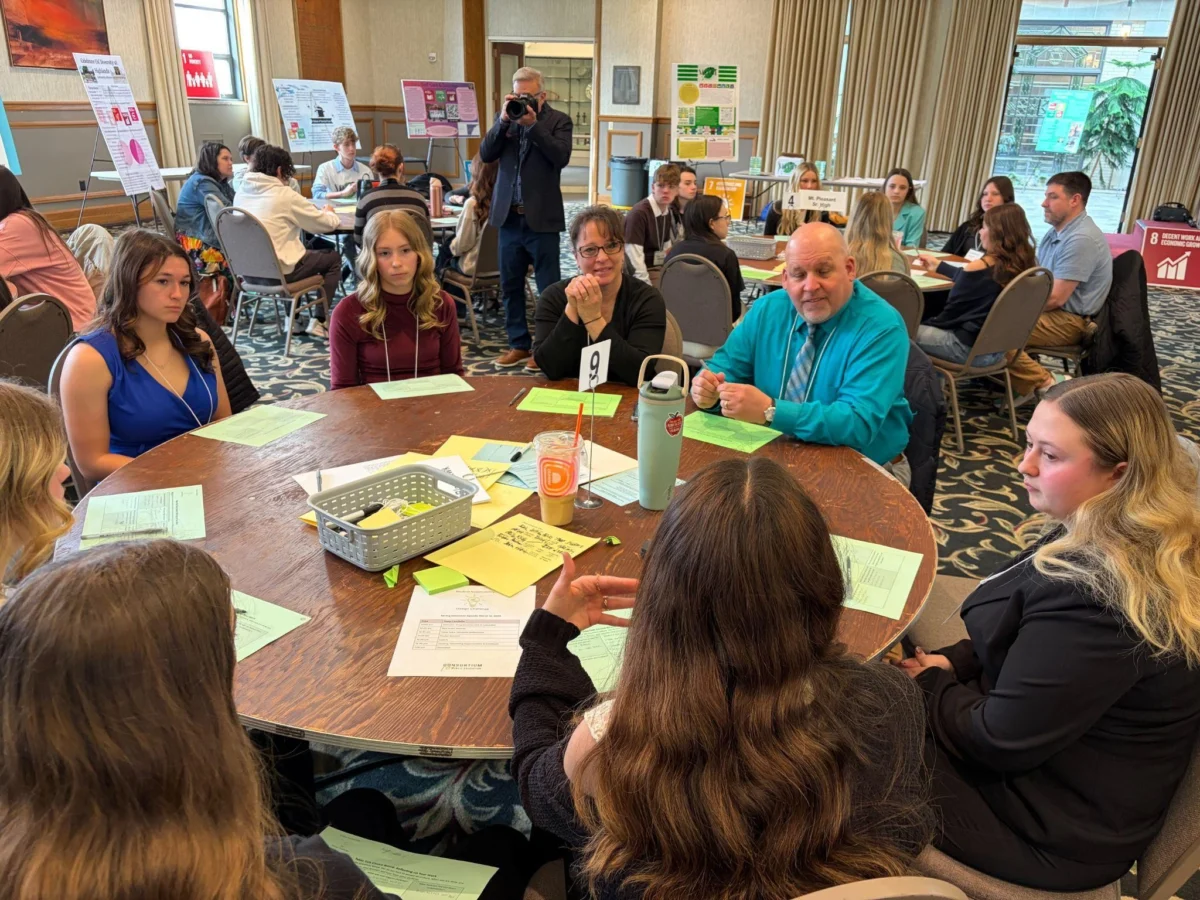
If Connect the Work focuses on the psychological alignment of students, the Consortium for Public Education (tCfPE) focuses on structural, project-based engagement. For the past three years, I have been deeply involved with the Consortium’s "Sustainability Design Challenge."
Scaling Impact Through Regional Collaboration
The Design Challenge is a masterclass in modern experiential learning. In the 2025-2026 academic year alone, over 200 students from more than 30 school districts across Western Pennsylvania participated. Students identify problems in their communities—aligned with the United Nations Sustainable Development Goals—and develop actionable, research-backed solutions.
The brilliance of this program lies in the integration of industry partners. Professionals from the sustainability sector do not merely judge the final projects; they act as mentors from the start. They provide the resources, research, and critical feedback that transform a classroom project into a real-world feasibility study.
A Legacy of Workforce Connection
As Jackie Foor, Executive Director of tCfPE, notes, this is an evolution of a long-standing mission. "Since our early years, our programming has included building partnerships between K-12 education and the workforce," Foor explains. This includes the "Career Journeys" video platform, which gives students a behind-the-scenes look at 16 major economic sectors, from healthcare to digital construction. This digital library provides the authentic perspectives that textbooks simply cannot replicate.
The Neighborhood Learning Alliance: A Pipeline for Equity
The Neighborhood Learning Alliance (NLA) represents a twenty-five-year evolution of community-based education. Having served on their board for many years, I have watched the organization transform from a tech-access provider into a powerhouse of career-focused, out-of-school programming.
Four Clusters of Opportunity
Under the current leadership of Executive Director Kashif Henderson, the NLA has implemented a rigorous, curriculum-based model centered on four key career clusters:
- Healthcare: In partnership with West Penn Hospital and the Allegheny Health Network.
- Business/Entrepreneurship: Focusing on the fundamentals of the modern economy.
- Technology: In collaboration with the University of Pittsburgh.
- Trades/Robotics: Addressing the critical demand for technical expertise.
The NLA’s secret sauce is its commitment to "bridge" education. High school students are not just participating in workshops; they are earning college credits through Carlow University and the Community College of Allegheny County. By starting this exposure at the elementary level, the NLA ensures that by the time a student reaches high school, they have a clear, informed pathway rather than a vague hope for the future.
The Pittsburgh Technology Council: The Golden Thread
The Pittsburgh Technology Council (PTC) offers a unique perspective on workforce development: it is driven entirely by the needs of the industry. Marie Pelloni, Senior Director of Talent and Workforce Development, describes their approach as a "golden thread" connecting regional talent to regional demand.
Constructivist Pedagogy Meets Industry Needs
The PTC’s programs are designed by industry members who are actively seeking talent. However, the delivery is managed by educators who understand constructivist pedagogy—ensuring that the interaction is always a learning experience rather than a one-off corporate visit.
The PTC operates on a "K-to-Gray" pipeline. Their offerings include:
- The STEM Summit: An annual immersive event where students and educators engage with innovation leaders.
- Industry Tours: Recently, I accompanied students to tour Industrial Scientific, where they didn’t just watch; they disassembled gas sensors to understand the engineering and design principles behind the technology.
- TRETC (Three Rivers Educational Technology Conference): This conference serves as a hub for professional development, bridging the gap between K-20 educators and tech-sector employers.
Implications: The Future of the "Essential Self"
The common denominator across these four disparate organizations is the shift from "job training" to "pathway development." We are moving away from an era where students are asked, "What do you want to be when you grow up?"—a question that often creates anxiety and pigeonholes young people into narrow identities.
Instead, these models ask, "Who are you?" and "How can your strengths serve the community?"
The Path Forward
The implications for school districts are clear:
- Language is Power: Implementing a framework like RIASEC creates a common vocabulary that spans from the classroom to the boardroom.
- Mentorship is Essential: Real-world professionals must be integrated into the process as mentors, not just as occasional guest speakers.
- Institutional Patience: As seen in the work of the NLA and the Consortium, the most impactful programs are those that provide sustained, long-term exposure rather than one-day field trips.
We are not just preparing students for a "future job." We are helping them uncover their "essential self." By providing the tools to reflect, the opportunities to experiment, and the language to communicate their value, we are equipping the next generation to navigate a lifetime of career transitions.
The work is challenging, and it requires a complete reimagining of the school-community ecosystem. However, as the successes in Pittsburgh, San Diego, and beyond have shown, when we make the learning real, the students do not just succeed—they thrive.
Norton Gusky has spent over forty years empowering students and educators. An educational technology broker and consultant, he has served as a national co-chair for CoSN and a global advisor for the Driving K-12 Innovation project. He continues to advocate for deeper, more authentic connections between the classroom and the world beyond.


 Azzam Bilal Chamdy

 Ali Ikhwan