



 Azzam Bilal Chamdy
At the most recent World Economic Forum in Davos, Canadian Prime Minister Mark Carney delivered a pronouncement that sent a ripple through the global political establishment: “We are,” he declared, “in the midst of a rupture, not a transition.” This stark assessment—a rejection of the idea that our current crises are merely growing pains on the road to a new stability—serves as the thematic bedrock for the fourth Toronto Biennial of Art. Titled Things Fall Apart, the exhibition does not shy away from the existential weight of Carney’s words. Instead, it positions art as a vital apparatus for navigating the wreckage of a late-capitalist epoch that feels increasingly unmoored.
Curated by Allison Glenn, an astute observer of urban landscapes and socio-political fissures, this year’s Biennial marks a significant expansion in scope. Stretching across Toronto and extending its reach to sites in Anchorage and New York City, the exhibition invites more than 30 artists and collectives to grapple with the instability of borders, the persistence of memory, and the ecological fragility of our shared waterways.
The Geography of Disruption: An Overview
The Biennial’s structural reliance on the Great Lakes as a focal point is more than an aesthetic choice; it is a tactical one. By anchoring the exhibition in these vast, shared bodies of water, Glenn frames the discourse around movement, extraction, and colonial history. At a time when Canada-United States relations are experiencing a historic decline, the choice of a cross-border, water-centric exhibition feels both timely and necessary.
The exhibition is vast, unfolding across 13 distinct sites, including the Art Gallery of Ontario (AGO), the University of Toronto Art Centre (UTAC), and the Royal Ontario Museum (ROM). This decentralization mimics the theme of the exhibition itself—fragmentation—but it also presents a significant challenge to the viewer. To experience Things Fall Apart in its entirety is to traverse not just a city, but a series of interconnected, often contradictory histories.

Chronology of Crisis and Reclamation
To understand the vision of Things Fall Apart, one must look at the specific trajectories of the works presented. The exhibition functions as an informal archive of resilience, mapping how artists from diverse backgrounds translate "rupture" into a language of survival.
The Afterlife of History: Dawoud Bey
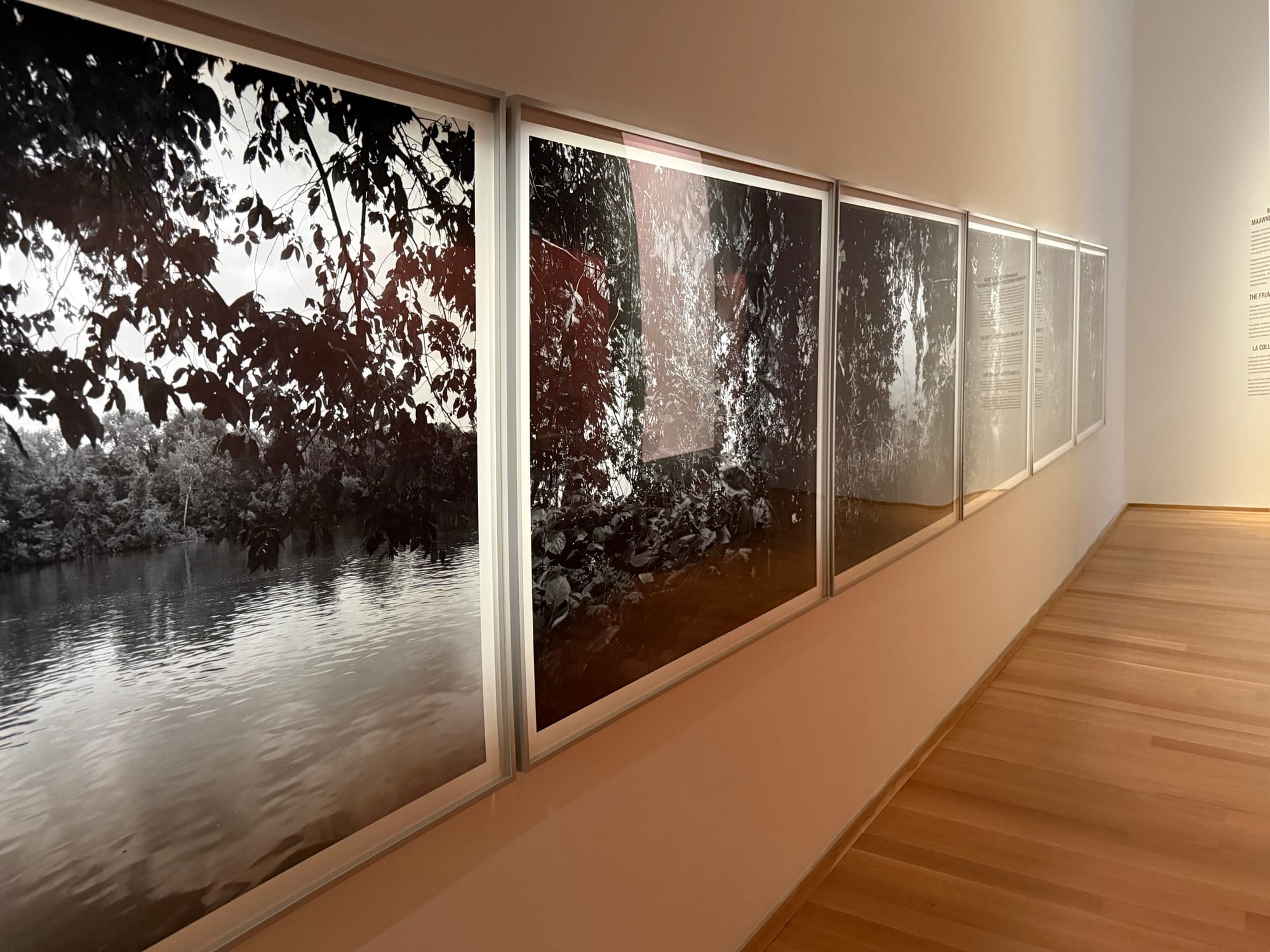
At the AGO, the tone is set by Dawoud Bey’s Material Histories, Living Landscapes. Bey’s work acts as a bridge between the physical and the spectral. By juxtaposing his own haunting, large-scale photographs of landscapes with ritual objects from Nigeria, Ghana, and the Kingdom of Kongo, Bey evokes the Middle Passage not as a closed chapter, but as an ongoing presence. His video work, "350,000" (2023), which captures the point-of-view of someone navigating a forest, uses sound and movement to turn the landscape into a witness to historical trauma. It suggests that the fight for freedom is not a past event, but a continuous, breathing requirement.

Reimagining the Archive: Antonio Obá
The University of Toronto Art Centre serves as the primary hub of the exhibition, and it is here that the concept of "re-performing" memory takes center stage. Antonio Obá’s "Jardim" (2022–26) creates a sensory, participatory environment where visitors must brush through rows of brass bells, effectively becoming part of the work’s soundscape.
His painting "A Folia: travessia" (2026) offers a radical intervention into history. By replacing the hostile, jeering crowd from the infamous 1957 photograph of Dorothy Counts with a supportive, carnival-like procession, Obá does not erase the trauma of that moment. Rather, he offers a "restorative alternate reality." He invites the viewer to imagine a world where empathy and collective action override hatred, effectively rewriting the moral trajectory of that historical scene.
Supporting Data and Materiality
The Biennial’s second pillar focuses on the body as a repository of knowledge. This is most poignantly realized in the work of Wen Liu and Taqralik Partridge.
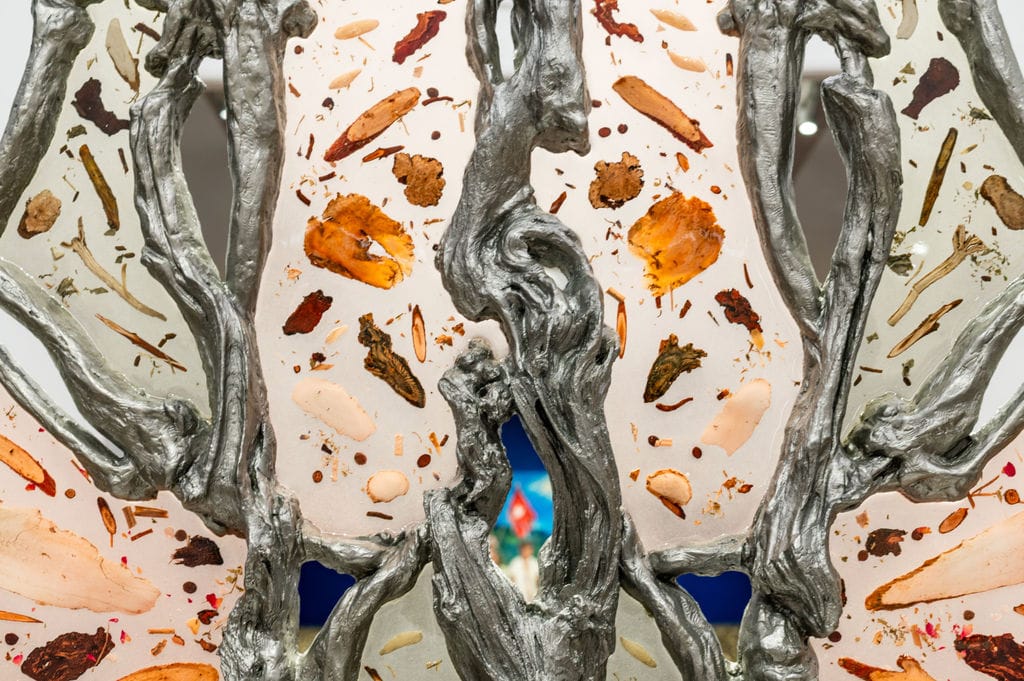
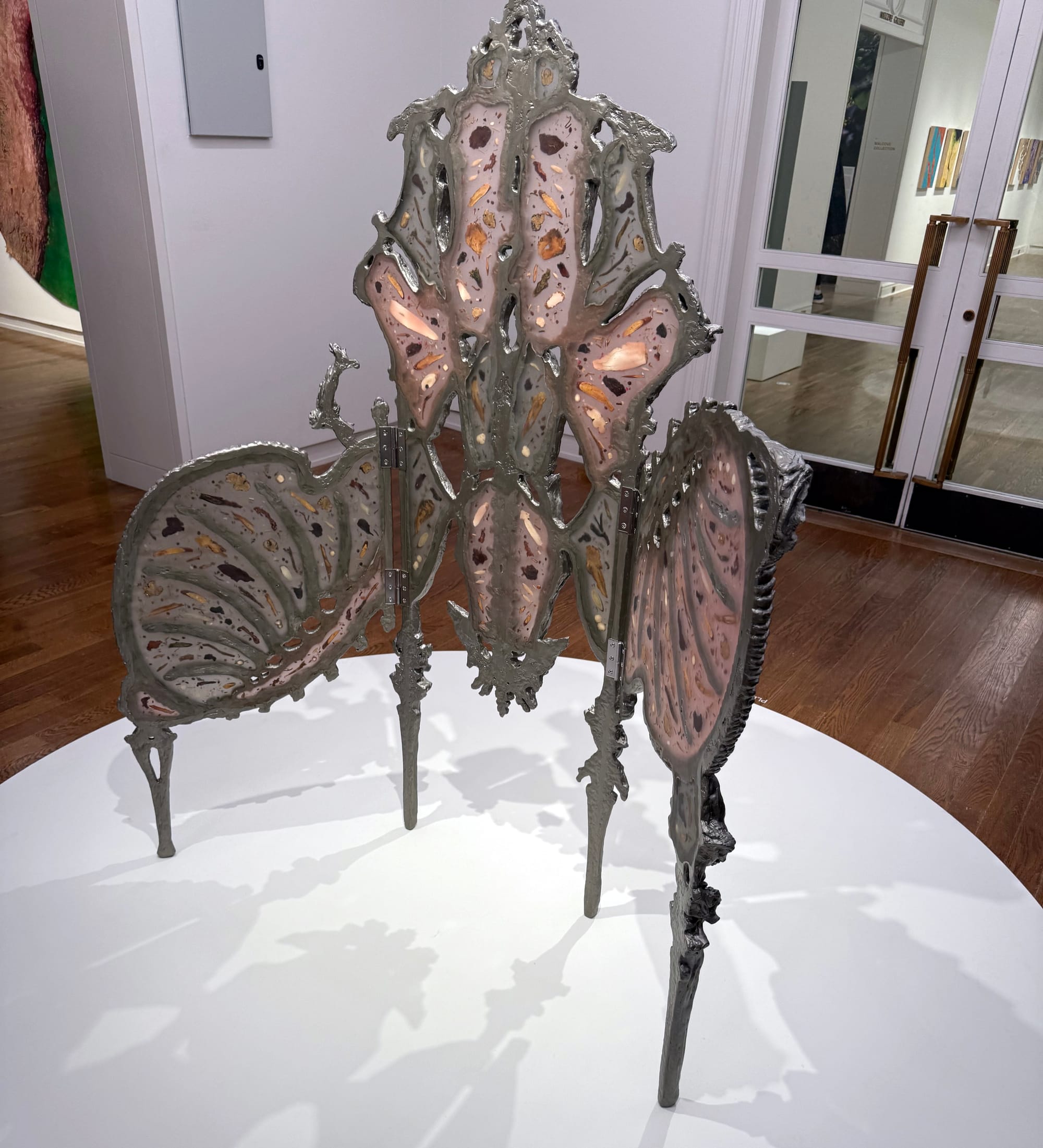
- Wen Liu’s "In Light, Where Edges Yield" (2025): Utilizing a human-scale steel-and-resin structure that mimics a spinal column, Liu integrates Chinese herbal medicines prescribed following her father’s death. The result is a luminous, stained-glass-like structure that serves as a literal and metaphorical support system. It suggests that even in the face of death and bureaucratic or social collapse, the body retains ancestral wisdom.
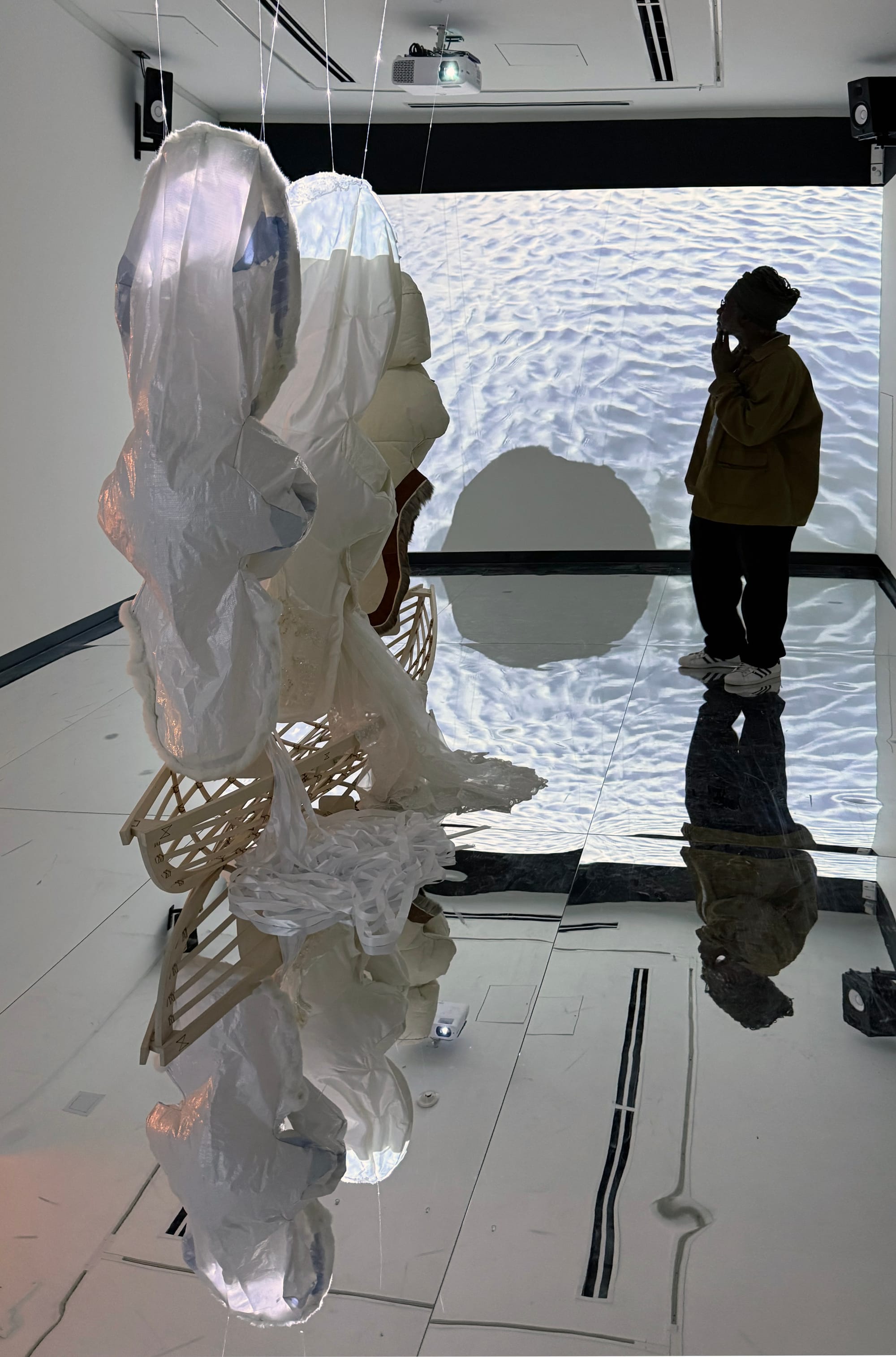
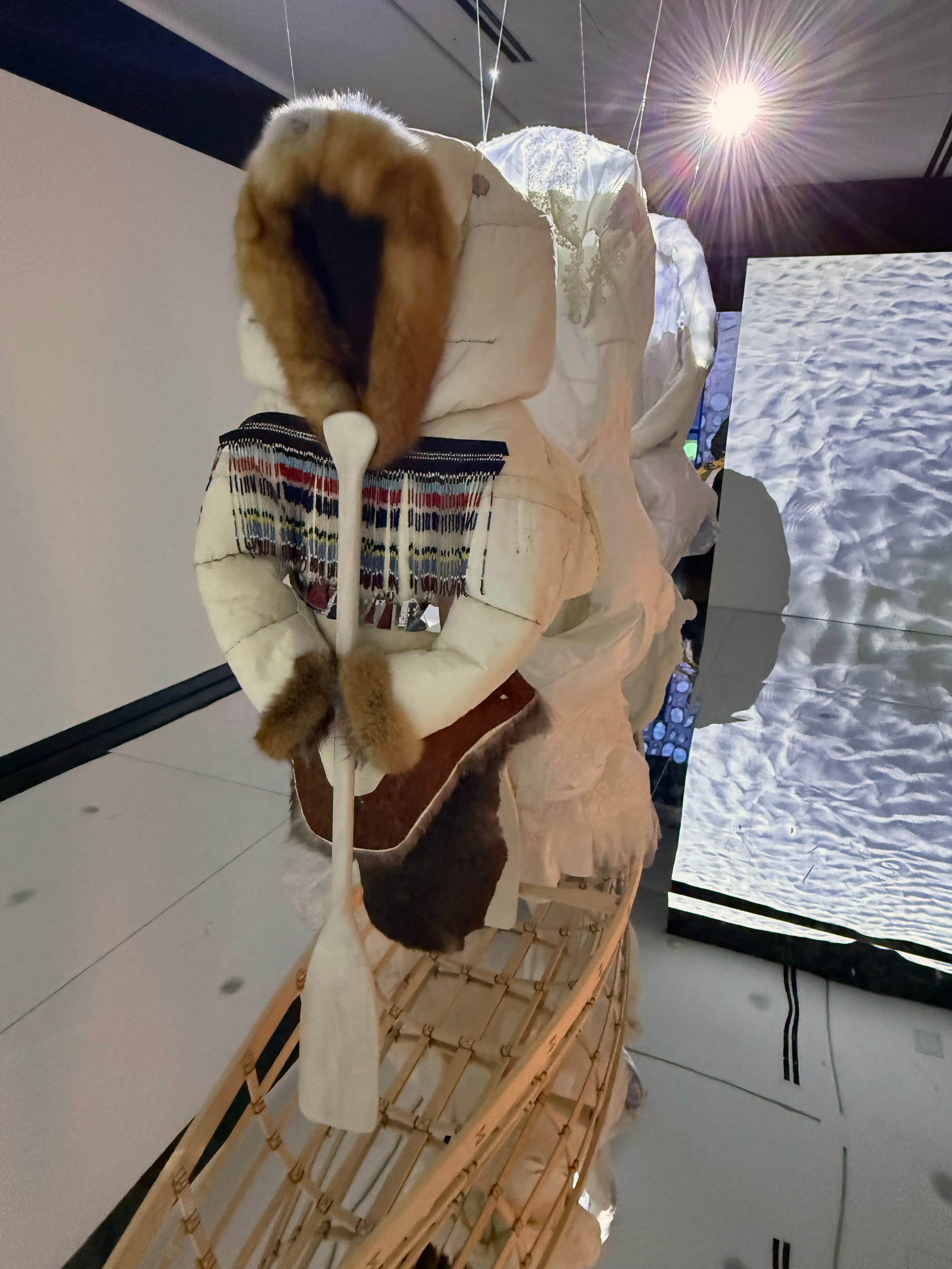
- Taqralik Partridge’s "umiakkut (by boat)" (2026): Partridge utilizes found materials, sewing, and beadwork to reconstruct the umiaq boat her ancestors used to traverse the Hudson Strait. Accompanied by the recorded voices of elders, the piece functions as a navigational tool for the present. In an era of climate devastation, Partridge argues that Indigenous technology and oral history are not relics, but essential survival guides for an uncertain future.
Official Perspectives and Critical Discursive Framework
Allison Glenn’s curatorial vision is deeply rooted in the premise of the "rupture." In her catalog essay, she poses the central question: "Rupture to what, and by whom?" This question haunts the entire exhibition. While the works are consistently high-caliber and intellectually rigorous, they occasionally struggle to hold together under the sheer weight of their diverse subjects.
The exhibition is explicitly anti-nostalgic. It rejects the impulse to mourn "what has been broken," opting instead to explore how one might function within the ruins. However, a critical tension remains. By framing these artistic interventions through the lens of a "rupture" in the world order, the Biennial inadvertently risks validating a narrative that views the status quo as having been "stable" prior to recent events.
Implications: The Illusion of Order
Perhaps the most significant contribution of Things Fall Apart is the unintended question it forces upon the viewer. Is the feeling of "rupture" a universal experience, or is it merely the realization of those who have historically benefited from the "order" that the world has now finally begun to slip away from?
For communities marginalized by centuries of colonial extraction, slavery, and genocide, the world has never felt "stable." For them, the current "rupture" is simply the status quo made visible to those who previously remained blind to it.
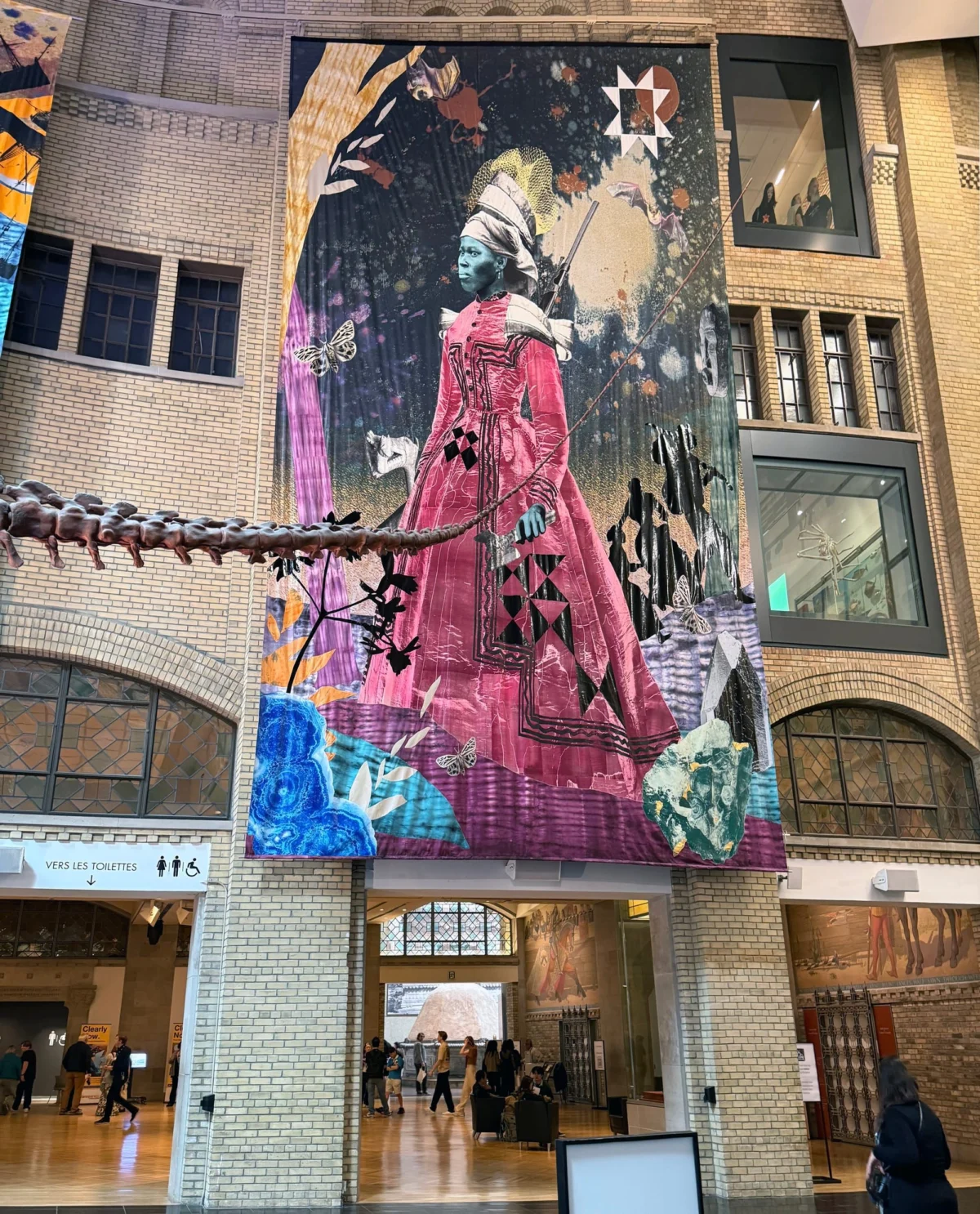
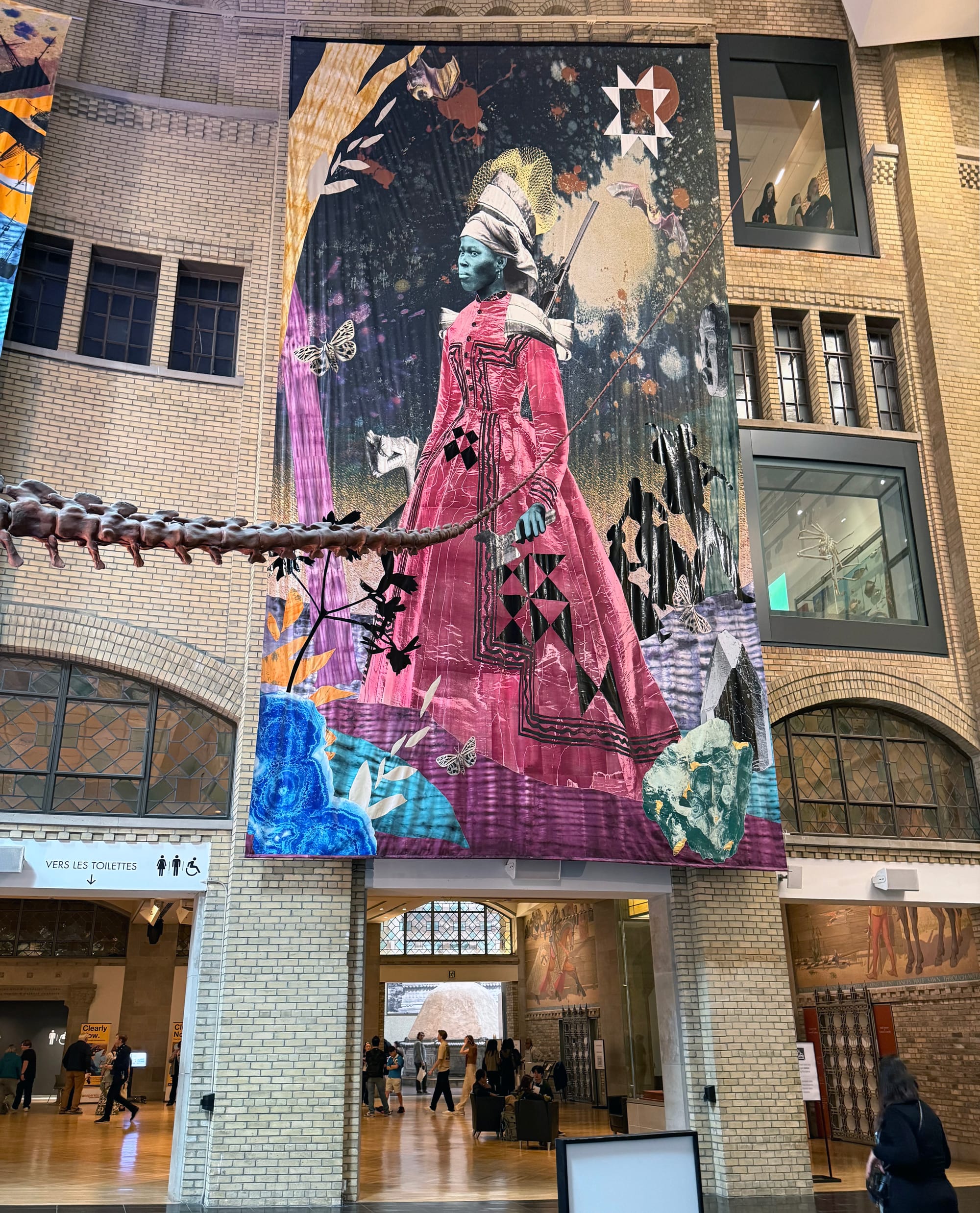
The work of Raphaël Barontini at the Royal Ontario Museum—specifically "Follow the North Star – a Tribute to Harriet Tubman" (2026)—is vital here. By weaving Caribbean aesthetics, anti-slavery figures, and the history of the Underground Railroad into a grand, textile-heavy installation, Barontini demonstrates that liberation has always been a collective, trans-geographic struggle. He suggests that the "rupture" is not a new phenomenon, but a constant state of being for the oppressed, and that true, lasting change requires a spiritual and political alignment that transcends modern borders.
Similarly, Nirbhai (nep) Singh Sidhu’s permanent structure in Scarborough, "A Deathless Potential In Remembrance By You," serves as a grounding point. Built with earth from Punjab, the site is designed for simran (Sikh meditative listening). By anchoring his work in the local landscape of Scarborough while reaching back to the spiritual soil of Sirhind, Sidhu argues that survival is fundamentally tied to memory and the refusal to be silenced by the encroaching pace of late capitalism.
Conclusion: A Living, Fragile Totality
The fourth Toronto Biennial of Art is an ambitious, at times overwhelming, achievement. It succeeds in gathering a chorus of voices that refuse to accept the narrative of decline as the final word. While the sheer geographical spread of the exhibition makes it difficult to synthesize into a single, unified experience, this lack of cohesion may actually be the point.
Things Fall Apart demands that we exist in the gaps. It asks us to recognize that while our systems may be fracturing, our capacity to build, remember, and connect remains. The exhibition continues at venues across Toronto and select international sites through December 20, 2026. It serves as a reminder that even when the world order feels as though it is dissolving, the work of culture—the work of "remembrance and potential"—is the only architecture that can sustain us through the collapse.


 Neng Nana
 Jia Lissa





