

 Ammar Sabilarrohman

The moral landscape of the United States immigration system has undergone a profound transformation under the current administration. Where administrative procedures once sought a balance between legal enforcement and humanitarian obligation, critics argue that a culture of calculated cruelty has taken root. At the center of this firestorm is the ordeal of the Rev. Edward Nalwamba, a 79-year-old Ugandan pro-democracy activist and Anglican priest whose year-long detention by U.S. Immigration and Customs Enforcement (ICE) has become a harrowing symbol of a system seemingly designed to dehumanize those within its grasp.
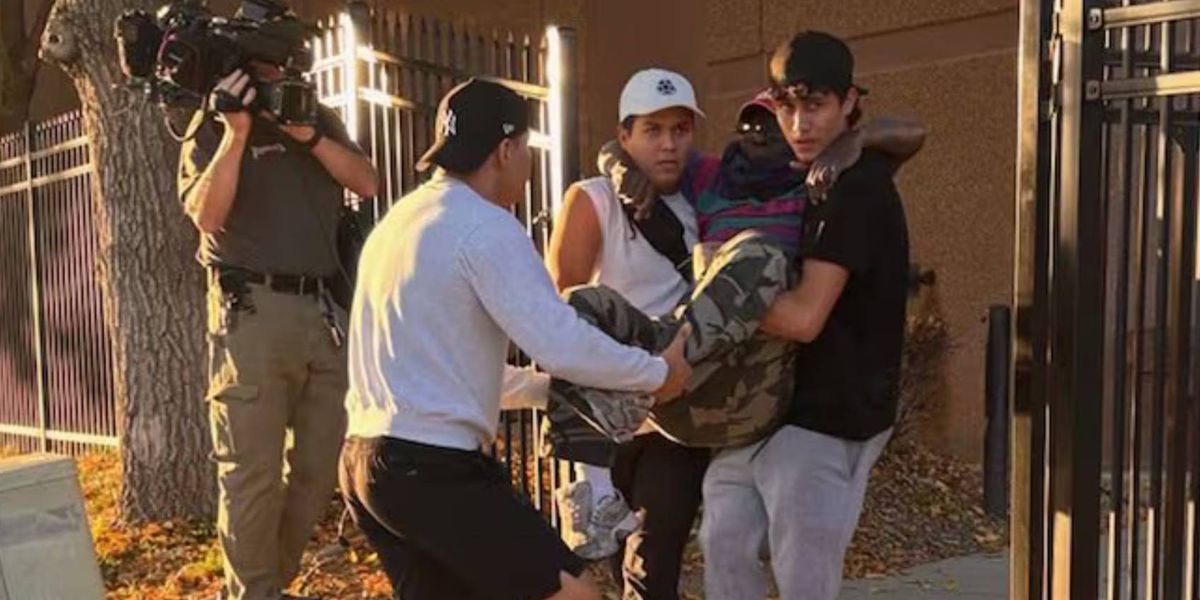
When Rev. Nalwamba was released last week from the GEO Group’s private detention facility in Aurora, Colorado, he was not the same man who had entered. A once-fit, active senior who played ping pong and walked regularly, he emerged physically shattered, requiring the assistance of fellow detainees to reach his car because authorities reportedly refused to allow him the use of a wheelchair to the gate. His case, coupled with the deaths of 60 detainees and the chilling, daylight killings of two U.S. citizens by federal agents, paints a picture of an agency operating with a mandate of intimidation that transcends standard law enforcement.
A Life of Faith and Asylum: A Chronology of Displacement
Rev. Edward Nalwamba’s journey into the American legal abyss began decades ago. Arriving in the United States in 2002 to attend a religious conference, Nalwamba found himself in a precarious position. A vocal critic of human rights abuses under the Ugandan government, he received word from colleagues that his safety—and perhaps his life—would be at risk should he return home. He chose to apply for asylum.
After his initial application was denied in 2010, Nalwamba entered a state of legal limbo. For 15 years, he lived peacefully in Lakewood, Colorado, under an ICE supervision order. During this decade and a half, he was a model of civic engagement: he reported to immigration officials as required, worked as a health aide for individuals with developmental disabilities, and served as a pastor at the Resurrection Anglican Fellowship until his retirement two years ago.
The shift in his status came in September 2025, when ICE arrested the then-77-year-old pastor. Officials cited a removal order dating back to 2010, alleging that Nalwamba had failed to cooperate with efforts to obtain travel documents—a bureaucratic hurdle that essentially requires a detainee to assist in their own deportation. For over a year, he languished in the Aurora facility, while the Department of Homeland Security (DHS) repeatedly promised his imminent deportation, yet failed to carry it out.
The stalemate was only broken on October 20, 2026, when U.S. District Judge Cyrus Chung ruled that the federal government had held Nalwamba for a period exceeding a "presumptively reasonable" six months without any "concrete plan" to return him to Uganda. The court ordered his immediate release, ending a year of detention that had stripped him of his health and dignity.
The Physical and Psychological Toll of Detention
The transformation of Rev. Nalwamba from a robust septuagenarian to an individual struggling to walk serves as a grim indictment of the conditions within ICE facilities. During his detention, Nalwamba contracted pneumonia, which went inadequately treated for weeks. He lost over 30 pounds and suffered from a persistent, painful cough, chronic chest pain, and severe fatigue.
Perhaps more alarming than the lack of medical care was the psychological environment. Nalwamba described a culture where hospital visits were viewed as a threat rather than a remedy. "You don’t want to go to the hospital," he remarked upon his release. "They shackle you like a bull."
Senator John Hickenlooper, who took an interest in the pastor’s plight, offered a scathing assessment of the strategy at play. "They want the misery of one person to be known by others," Hickenlooper noted. "It’s a low-rent form of terrorism to make people so scared they’ll self-deport." The cruelty extended to his final moments in custody; despite promises from detention officials to provide a wheelchair and escort for his release, authorities reneged, forcing the ailing priest to be carried to his vehicle by two fellow detainees.
Institutional Hypocrisy and the Targeting of Faith
The administration’s treatment of Rev. Nalwamba stands in stark contrast to its self-proclaimed role as a defender of Christian values. Critics have pointed to a "staggering hypocrisy" within a regime that frequently accuses political opponents of targeting Christians, while simultaneously sending ICE agents into houses of worship to interrogate staff and detain church elders.
This pattern of performative piety recently backfired during a prayer gathering of Catholic bishops. What was intended to be a photo opportunity for the administration was quickly disavowed by the attendees. Two Archbishops later issued apologies, stating they had been "manipulated" and clarifying that the event was "in no way an endorsement of the president, his policies, or his party." For many observers, the dissonance between the administration’s rhetoric regarding religious freedom and its actual treatment of religious leaders like Nalwamba is indicative of a broader cynicism.
Data and Implications: A System at the Breaking Point
The statistics surrounding the current immigration regime offer a chilling context for Nalwamba’s experience. In the last 18 months, nearly a million people have been deported. At least 60 individuals have died in detention, including two U.S. citizens whose deaths are currently the subject of federal civil lawsuits. The family of Renee Good, who was killed on January 7, has sued the government, alleging a coordinated campaign of "aggression and abduction" against ethnic communities.
The surge in legal action reflects the escalating crisis. Prior to this period, there were fewer than 1,000 habeas corpus petitions filed annually by detained immigrants. Today, that number has ballooned to approximately 90,000. Joy Athanasiou, an attorney with 20 years of experience in the field, describes this as a "demand 100 times greater than what we can provide," noting that she has never witnessed this level of systemic "inhumanity and cruelty."
Official Responses and the Road Ahead
The official stance from the Department of Homeland Security remains rigid. In response to the outcry over Rev. Nalwamba’s release, DHS issued a statement claiming they were "forced" by "an activist judge" to release "an illegal alien" who had "chosen to overstay his welcome." The agency emphasized that despite the court order, Nalwamba "remains in the country illegally" and is still subject to a removal order.
For Nalwamba, the reality is far more human. Now staying with a host family and utilizing an electric scooter to regain his mobility, he expresses a cautious sense of joy. "I am a happy man," he says, though his thoughts remain with the countless others still held in what he describes as conditions "worse than any maximum security prison."
Nalwamba, who once held the United States as a beacon of hope and a model for other nations to emulate, has revised his perspective. "It’s as if they’ve gotten used to treating people that way, like they’re taking care of goats or cows," he said. "I have never imagined human beings treated like I saw in this place."
As his legal team works to reopen his asylum case—arguing that conditions in Uganda have deteriorated to a point where return is untenable—the Rev. Nalwamba’s case serves as a poignant reminder of the human cost of current policies. Whether the judiciary can continue to act as a check against the excesses of the executive branch, or whether the current atmosphere of administrative "terrorism" will continue to erode the foundations of due process, remains the defining question for the American immigration system. For now, the "decency we should expect from our public officials" remains a distant, perhaps even lost, ideal.

 Reynand Wu
 Neng Nana