

 Reynand Wu
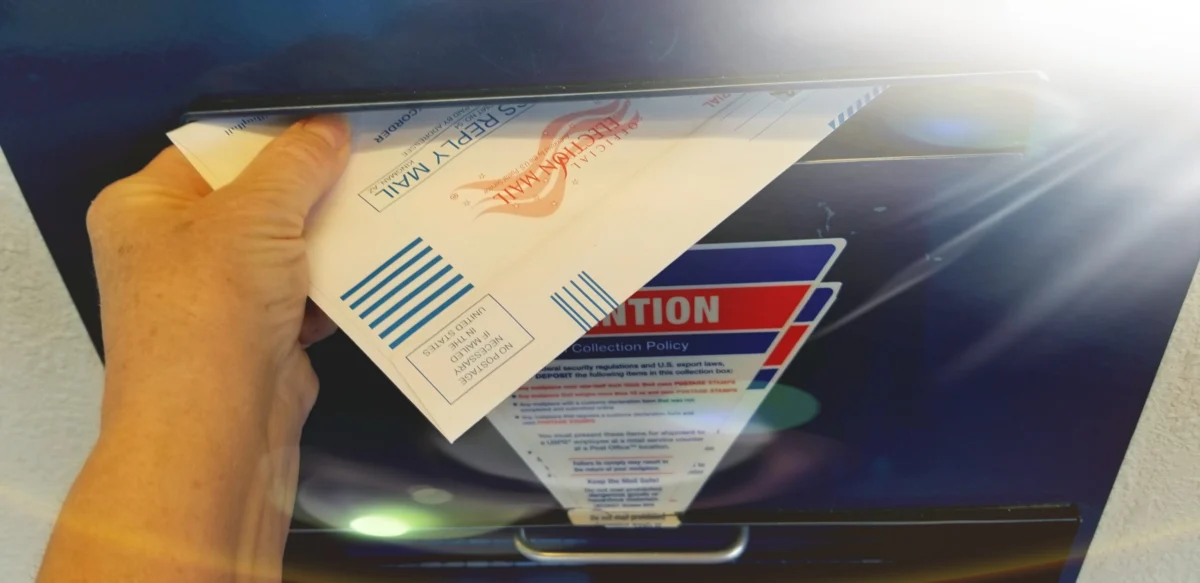
WASHINGTON — In a major judicial intervention just weeks before the November midterm elections, a federal court has issued a nationwide preliminary injunction halting the Trump administration’s attempt to impose sweeping new restrictions on absentee and mail-in voting. The ruling represents a significant victory for a coalition of civil rights organizations, including the Lawyers’ Committee for Civil Rights Under Law, the NAACP, Common Cause, and Black Voters Matter, who argued that the U.S. Postal Service (USPS) had unlawfully exceeded its mandate to facilitate partisan efforts to reshape electoral procedures.
The court’s decision effectively freezes a series of administrative requirements that critics warned would have created systemic chaos and disenfranchised millions of voters. By blocking the implementation of the new rules, the judiciary has reasserted that the executive branch lacks the unilateral authority to overhaul election regulations, particularly when such changes threaten the fundamental constitutional right to vote.
The Core of the Conflict: Administrative Overreach
At the heart of the litigation is a rule issued by the USPS in August, which introduced stringent new design requirements for mail-in ballot envelopes and mandated that such ballots only be transmitted to voters verified through a newly established, proprietary "Federal Ballot Mail Portal."
The administration’s rationale for these measures was ostensibly rooted in election security. However, legal advocates and civil rights leaders characterized the move as a transparent attempt to weaponize the Postal Service to disrupt the democratic process. The court, in its ruling, found that the administration failed to point to any federal statute that granted the USPS the authority to issue these specific, restrictive rules.
"The court has made clear that the U.S. Postal Service exceeded its authority," said Damon Hewitt, president and executive director of the Lawyers’ Committee for Civil Rights Under Law. "This rule had no valid rationale. There is no problem with voting by mail. The problem is the administration’s efforts to obstruct millions of people from the polls and undermine confidence in our electoral system."
A Chronology of the Legal Battle
The struggle to protect mail-in voting did not begin with the August rule. The legal timeline reveals a sustained effort by civil rights groups to push back against administrative interference in the electoral process:
- April: The Lawyers’ Committee, the NAACP, and allied organizations filed an initial challenge against President Trump’s executive order targeting mail-in voting, signaling the beginning of a prolonged legal standoff.
- August: The USPS finalized the controversial rule, attempting to codify new envelope design standards and the "Federal Ballot Mail Portal" requirement, which were intended to apply to all federal elections held 60 days after the rule’s implementation.
- Late Summer: Following the finalization of the August rule, the coalition of plaintiffs renewed their request for emergency relief, arguing that the timing and nature of the restrictions would create irreparable harm to voters across the country.
- Current Date: The federal court grants the nationwide preliminary injunction, noting that the USPS lacked the statutory power to intervene in state-run election administration.
The court’s ruling joins a growing body of case law, as two district courts and one federal circuit court have now collectively pushed back against what advocates call an "unlawful attempt to hijack the mail-voting system."
Supporting Data and Vulnerable Populations
The potential impact of the USPS rule was vast. Statistics suggest that millions of Americans—including seniors, rural residents, military personnel serving overseas, and voters with disabilities—rely heavily on mail-in ballots as their primary means of participating in the democratic process.
Civil rights groups emphasize that these restrictions would have disproportionately affected Black voters and other communities of color. By forcing states to adhere to a federal standard that contradicted existing state election laws, the administration would have effectively invalidated ballots that would have otherwise been counted as legal.
The confusion resulting from such a sudden shift in policy—especially occurring less than 50 days before the midterm elections—posed a "substantial risk of disenfranchisement," according to legal filings. The court’s decision ensures that established state-by-state procedures remain in place, protecting the stability of the electoral infrastructure.
Official Responses and Stakeholder Perspectives
The Legal Perspective
Kristen Clarke, NAACP general counsel, highlighted the urgency of the situation, noting that with the election only 49 days away, the court’s intervention provides much-needed clarity. "We urge the Supreme Court to reject this administration’s request to greenlight this unlawful scheme and leave in place our mail-voting system, which is safe, secure, and orderly," Clarke stated.
The Grassroots Perspective
For groups like Black Voters Matter, the victory is tempered by the reality of the political climate. Cliff Albright and LaTosha Brown, co-founders of the organization, warned that even a blocked rule can still inflict damage by sowing confusion among the electorate.
"We want voters to hear us clearly: the new USPS restrictions are currently blocked, and eligible voters should continue following the mail-voting rules and deadlines established in their states," they said. "We cannot allow voter suppression to be repackaged as voter protection or political interference."
The Institutional Perspective
Robert Weiner, director of the Voting Rights Project at the Lawyers’ Committee, reiterated that the Postal Service’s primary mission is service, not oversight. "This ruling sends a clear message: the Trump Administration cannot use the Postal Service as a means to restrict access to the ballot box. The job of the Postal Service is to deliver mail, not oversee elections."
Implications for Future Elections
The ruling serves as a significant deterrent against future attempts to interfere with election administration through the executive branch. However, advocates remain wary. The legal teams involved in the suit have stated they are preparing for potential appeals and further efforts by the administration to undermine the electoral process.
Preservation of Democracy
The case highlights the importance of the judiciary in acting as a check on executive overreach. By siding with the civil rights groups, the court has affirmed that administrative agencies cannot unilaterally change the landscape of American voting rights to suit a political agenda.
The Role of Vigilance
As the November midterms approach, the coalition of plaintiffs has vowed to remain vigilant. The battle for the ballot is described by these organizations as a "constant struggle," one that requires both legal expertise and grassroots mobilization to ensure that voter suppression efforts are identified and challenged in real-time.
Continued Legal Advocacy
The Lawyers’ Committee for Civil Rights Under Law continues its mission, rooted in the 1963 mandate from President John F. Kennedy, to mobilize legal resources to ensure racial justice and protect the franchise. Through litigation, public policy advocacy, and community outreach, these groups maintain that they will continue to fight any measures that seek to diminish the power of the American voter.
Conclusion
While the immediate threat posed by the USPS rule has been neutralized by the federal court, the broader discourse surrounding mail-in voting continues. For now, the ruling provides a necessary shield for voters, ensuring that the integrity of the upcoming midterm elections is not compromised by administrative maneuvering. As voters prepare to head to the polls—or to their mailboxes—the message from the legal community remains clear: the right to vote is a sacred and fundamental protection that will be defended at every turn.
Eligible citizens are encouraged to ignore the noise of potential changes and follow the established, local guidelines for mail-in voting in their respective states. The democratic process, while currently under intense pressure, remains shielded by the persistent efforts of those who believe that every voice deserves to be heard.


 Neng Nana
 Laily UPN