



 Neng Nana
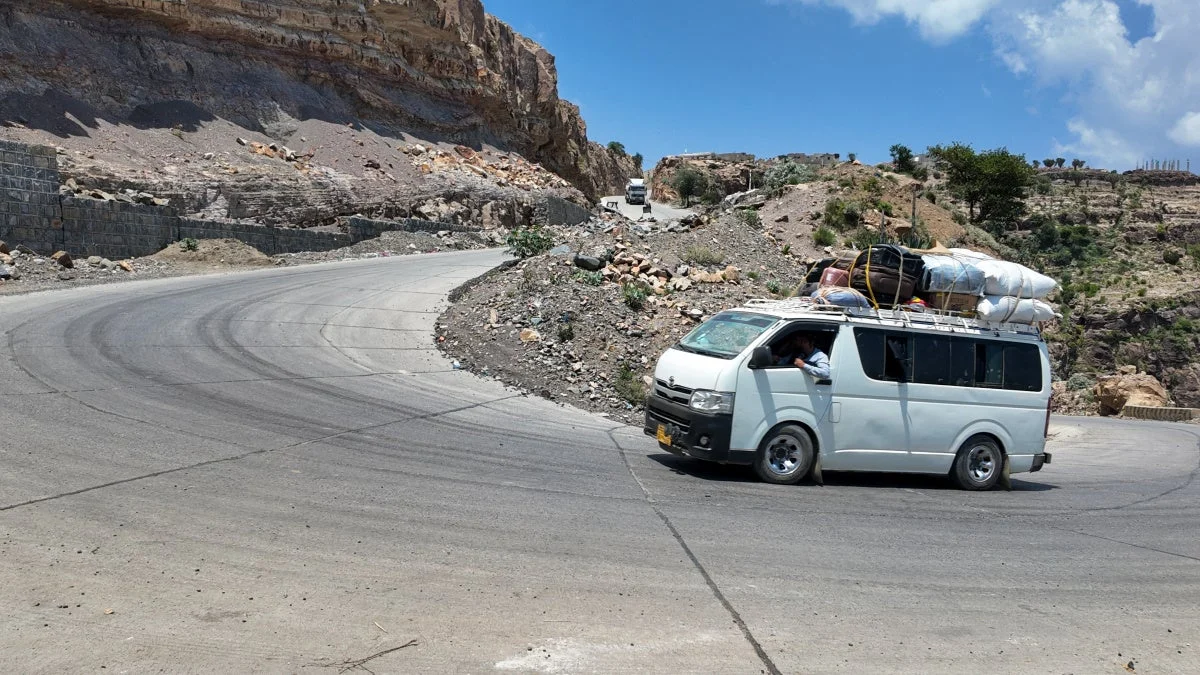
BEIRUT – The ongoing humanitarian catastrophe in Yemen has reached a critical new juncture following a series of calculated attacks by Houthi forces on the Hayjat al-Abd road, the primary artery for food, medicine, and fuel entering the besieged city of Taizz. Human Rights Watch (HRW) reported that on October 18, 2026, Houthi fighters utilized explosives to severely damage this vital infrastructure, an act that international legal experts suggest could constitute a war crime.
For over a decade, Taizz—Yemen’s third-largest city—has existed in a state of suspended animation, choked by a Houthi-imposed siege that has severed its connections to the rest of the country. This latest escalation threatens to push an already desperate population toward a total collapse of essential services.
The Strategic Siege: A Decade of Isolation
Since 2015, control over the Taizz governorate has been fractured. While the city remains under the administration of the internationally recognized Yemeni government, it is physically surrounded by Houthi forces. This geographical containment has effectively turned the city into an open-air prison.
For years, the Hayjat al-Abd road has served as the "umbilical cord" of Taizz. It is the only remaining viable route for commercial trucks and humanitarian convoys to traverse the mountainous terrain and reach the city center. By targeting this specific path, the Houthis are not merely engaging in military maneuvering; they are systematically eroding the survival mechanisms of hundreds of thousands of civilians.
The laws of war, specifically the Geneva Conventions and customary international humanitarian law (IHL), are explicit: while sieges are not inherently illegal, the use of starvation as a weapon of war is strictly prohibited. Furthermore, attacking objects that are "indispensable to the survival of the civilian population" is a clear violation of these international standards.
Chronology of Destruction: October 2026
The recent escalation appears to be part of a deliberate campaign to render the road unusable. The timeline of the destruction illustrates a pattern of tactical sabotage:
- September 30 – October 1: Houthi forces reportedly infiltrated areas surrounding the Hayjat al-Abd road during a period of heightened hostilities. Witnesses and satellite imagery confirmed a massive subsurface detonation at a culvert near the village of al-Muharraqah. The blast damaged the full width of the road, temporarily halting all movement.
- Early October: Government-aligned forces managed to retake the area and attempted to patch the road with dirt to allow for the passage of essential goods. However, the road remained precarious and largely closed for commercial use to prevent further incidents.
- October 18: At approximately 4:00 a.m., Houthi forces, who had maintained control of the town of al-Turba—located 75 kilometers south of the city—detonated explosives on a different section of the Hayjat al-Abd road. Residents reported a "massive and terrifying explosion" that sent debris flying into nearby homes, marking a decisive blow to the already fractured route.
Human Rights Watch, having analyzed satellite imagery and verified video evidence, concluded that the damage is consistent with the deliberate placement of subsurface explosives, ruling out accidental collateral damage from standard combat.
Humanitarian Impact: A City on the Brink
The implications of these attacks extend far beyond the structural damage to asphalt and concrete. The United Nations World Food Programme (WFP) issued a stark warning on October 14, just days before the final attack, noting that over 600,000 residents in Taizz rely entirely on humanitarian assistance for survival.
The "Silent" Famine
According to the WFP, wheat flour stocks in Taizz are nearing exhaustion. With the Hayjat al-Abd road effectively neutralized, the city’s remaining food supplies are expected to last only a short time. Most districts within Taizz are already classified as having "emergency levels" of hunger.
"The Houthi attack on the remaining commercial supply route to besieged Taizz further endangers civilians already struggling with severe shortages of food, water, medicine, and fuel," said Niku Jafarnia, Yemen and Bahrain researcher at Human Rights Watch.
For the residents, the daily reality is one of impossible choices. A resident speaking to HRW noted that the lack of access to clean water—largely transported via trucks using the road—has led to a surge in hygiene-related illnesses. When the road is cut, the price of basic commodities skyrockets, placing survival out of reach for the most vulnerable families.
Legal Analysis: War Crimes and International Obligations
The legal implications of the October 18 attack are profound. Under international humanitarian law, infrastructure such as roads is generally considered a civilian object. Even if a road is utilized for military purposes, rendering it useless becomes a war crime if the expected incidental harm to the civilian population is "excessive in relation to the concrete and direct military advantage anticipated."
Legal scholars and human rights monitors argue that the Houthi leadership was fully aware of the humanitarian crisis in Taizz. Given the repeated warnings from the UN regarding the depletion of food stocks, the decision to destroy the road cannot be categorized as an unforeseen side effect of combat. Instead, it appears to be a calculated effort to use the denial of basic necessities as a coercive tool.
"If Taizz residents’ access along this vital route is cut off for a prolonged period, they could face even greater risks to their lives and well-being," Jafarnia warned.
Official Responses and the Failure of Diplomacy
Human Rights Watch formally reached out to the Houthi authorities on October 21, seeking comment on the destruction of the Hayjat al-Abd road. As of the time of writing, no response has been provided. The silence from the Houthi leadership reflects a broader pattern of obstruction that has defined their interactions with international monitors throughout the 12-year conflict.
The Yemeni government, meanwhile, has struggled to maintain the road, hampered by both the active hostilities and the limited resources available in a fractured state. The lack of an effective ceasefire mechanism has left the road, and the people of Taizz, at the mercy of ground-level military decisions that prioritize territorial control over human life.
Future Outlook: A Humanitarian Vacuum
The situation in Taizz represents the worst-case scenario in modern warfare: the systematic starvation of a civilian population under the guise of military necessity. As winter approaches, the lack of fuel will exacerbate the crisis, as it is needed not only for transport but for the operation of hospitals and water-pumping stations.
The international community, which has frequently called for a peaceful resolution to the Yemeni conflict, now faces a test of its resolve. With the Hayjat al-Abd road compromised, the "life-saving assistance" promised by international agencies is effectively stalled at the city’s perimeter.
Unless there is an immediate cessation of hostilities and a guaranteed humanitarian corridor, the city of Taizz faces the prospect of a catastrophic decline. The damage to the road is more than just a logistical setback; it is a signal that the warring parties remain willing to sacrifice the most basic needs of the civilian population to achieve tactical gains.
"The fighting in Taizz could have dire consequences for the hundreds of thousands of civilians in need of aid," Jafarnia concluded. "All warring parties should take care to protect civilians in Yemen who have already experienced considerable suffering over 12 years of conflict."
As the rubble of the Hayjat al-Abd road remains, so too does the hope for a political solution, which continues to crumble under the weight of the ongoing siege. The residents of Taizz remain trapped, waiting for a lifeline that the international community has yet to successfully restore.


 Iffa Jayyana

 Ammar Sabilarrohman




