


 Asep Darmawan
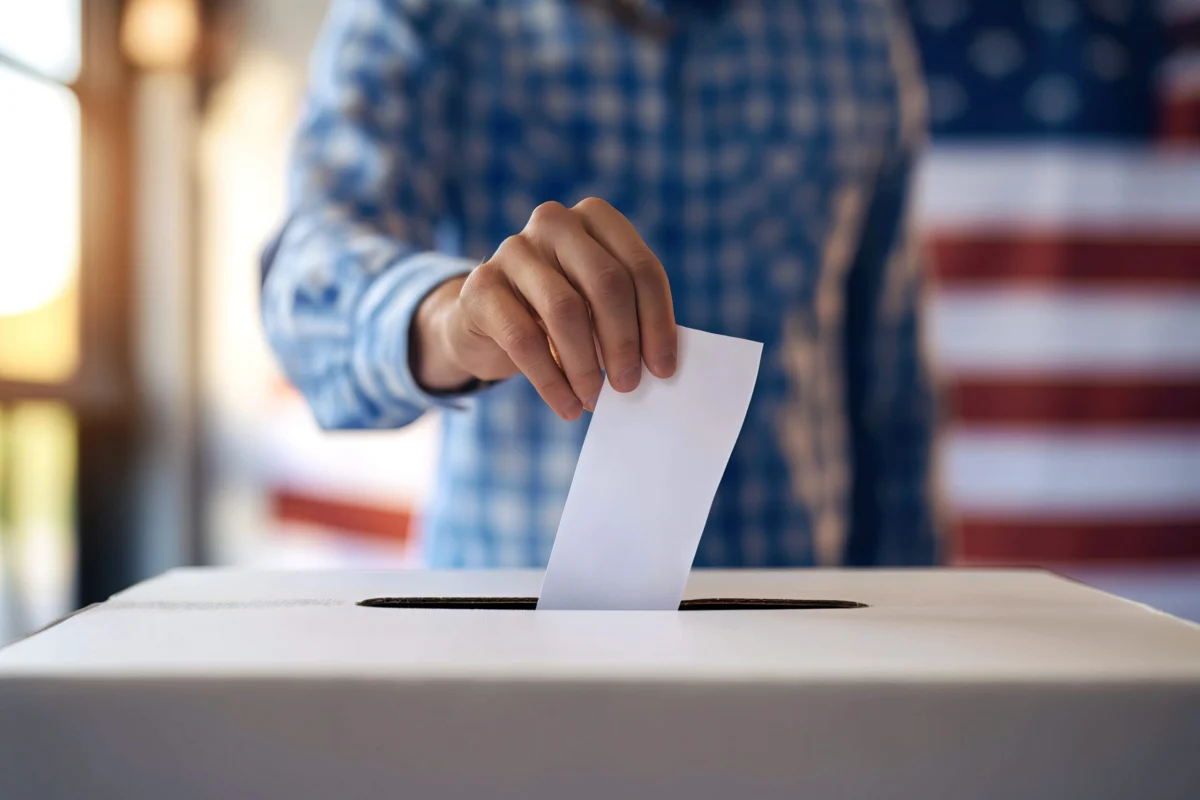
INDIANAPOLIS — A significant legal battle over voting rights in Indiana reached a pivotal, if inconclusive, juncture this week. A federal court has dismissed a lawsuit brought by a coalition of civil rights and nonpartisan advocacy groups seeking to halt the enforcement of state laws that critics argue unfairly target and disenfranchise naturalized and derived U.S. citizens.
The plaintiffs, including the League of Women Voters of Indiana, Common Cause Indiana, Hoosier Asian American Power, and Exodus Refugee Immigration, had sought to block the implementation of statutes they claim violate the National Voter Registration Act (NVRA) and the Civil Rights Act of 1964. While the court’s order to dismiss the case was based on the technical legal grounds of “standing”—a jurisdictional requirement that parties must demonstrate a specific, concrete injury—the ruling notably refrained from weighing in on the substantive legality of the challenged voter registration laws.
For the advocates involved, the decision represents a frustrating procedural setback that leaves thousands of eligible voters in a state of pre-election uncertainty.
The Legal Landscape: Understanding the Challenge
The lawsuit, filed by a legal team including the Lawyers’ Committee for Civil Rights Under Law, the Chicago Lawyers’ Committee for Civil Rights, and attorneys Daniel Bowman and William Groth, centered on Indiana’s recent requirements for documentary proof of citizenship.
Under these laws, state officials are empowered to cross-reference voter registration rolls with databases that advocates argue are prone to error. Specifically, the plaintiffs contend that these systems routinely misidentify naturalized citizens as non-citizens, thereby triggering administrative hurdles that are not imposed on voters born in the United States.
“These laws are discriminatory and risk disenfranchising hundreds, if not thousands, of eligible voters in the November elections, in violation of federal law,” said Ryan Snow, counsel with the Voting Rights Project of the Lawyers’ Committee for Civil Rights Under Law. “The facts show clearly that these laws routinely misidentify eligible new citizens as potential noncitizens and create new barriers to voting for them that no U.S.-born citizen will ever be subjected to.”
The core of the legal argument rests on the principle of equal protection and the mandates of the NVRA. The plaintiffs argue that federal law already provides sufficient mechanisms for ensuring that only eligible citizens vote, including the requirement that every registrant must affirm their citizenship under penalty of perjury. By adding layers of documentary requirements, Indiana has, according to the plaintiffs, created an unequal playing field that burdens a specific class of citizens based on their origin.
Chronology of a Disputed Statute
The journey toward this litigation began as Indiana moved to implement stricter voter verification protocols.
- Initial Implementation: Following the passage of state legislation aimed at “voter integrity,” state agencies began integrating new citizenship verification checks into the voter registration database.
- The Rise of Errors: Almost immediately, advocacy groups, including Exodus Refugee Immigration, began reporting that individuals who had successfully naturalized were receiving notices questioning their eligibility.
- October 2025: Following extensive documentation of these administrative errors, the coalition filed a comprehensive complaint in federal court, arguing that the laws were not merely cumbersome but were fundamentally at odds with federal protections against discrimination.
- August 2026: The plaintiffs filed a motion for a preliminary injunction, seeking to halt the enforcement of these provisions ahead of the November midterm elections.
- September 2026: The court issued its order of dismissal. The ruling concluded that the organizations, as institutions, did not meet the stringent criteria for standing to sue on behalf of their members in this specific context, effectively closing the door on immediate judicial relief for the upcoming election cycle.
Supporting Data: The Burden on Naturalized Citizens
The impact of these laws is not merely theoretical. According to affidavits submitted during the litigation, the state’s current verification system has already misidentified hundreds of eligible U.S. citizens.
Ami Gandhi, director of the Midwest Voting Rights Program with the Chicago Lawyers’ Committee for Civil Rights, emphasized that the state’s reliance on these databases creates a "guilty until proven innocent" scenario for many immigrants. "Indiana’s new documentary proof of citizenship requirements have already misidentified hundreds of eligible U.S. citizens as potential noncitizens, with many more likely to be misidentified, putting their right to vote in jeopardy," Gandhi noted.
The data suggests a systemic failure. When a naturalized citizen is flagged, they are often forced to produce physical documentation of their naturalization certificate—a document that is difficult to replace and often not readily available to the average person on short notice. For many, the bureaucratic burden serves as a de facto poll tax, discouraging participation among populations that may already feel marginalized within the political process.
Implications for the Midterm Elections
The dismissal of the case means that the challenged laws will remain in effect for the upcoming November midterm election. This has left voting rights advocates scrambling to provide emergency assistance to those who may be flagged.
The primary concern is the potential for mass removal of eligible voters from the registration rolls. If a voter is flagged and fails to navigate the complex, often opaque administrative process to clear their name, they may find themselves unable to cast a ballot at their polling place.
The Voices of Advocacy
The coalition partners expressed deep concern regarding the chilling effect this ruling will have on voter turnout:
- On Voter Motivation: Julia Vaughn, executive director of Common Cause Indiana, warned that the "extra hoops" created by the state will likely lead to a decline in participation. "As a state that struggles with low turnout, we hope the court will eventually see the error of this law, and that for future elections these citizens do not have a different set of voting rules," she stated.
- On Civic Participation: Linda Hanson of the League of Women Voters of Indiana highlighted the fundamental unfairness of the situation, noting that such hurdles never confront U.S.-born citizens.
- On Community Impact: Melissa Borja, chair of Hoosier Asian American Power, emphasized that the law creates a specific barrier for the Asian American community in Indiana, which includes a significant number of naturalized citizens. "Hoosiers who are naturalized citizens deserve to participate in our elections as freely as others," Borja said.
- On Refugee Services: Cole Varga, CEO of Exodus Refugee Immigration, reaffirmed the organization’s commitment to the cause: "Despite this setback, we will continue to advocate for fair and equal voting rights for the immigrant and refugee Hoosiers we serve."
Looking Ahead: Legal and Political Pathways
While the court has dismissed the current suit, the legal team representing the coalition is not conceding defeat. The ruling allows the organizations to potentially refile, provided they can address the jurisdictional shortcomings identified by the court.
"We will explore all possible paths forward with our clients to ensure that Indiana voters can safely and securely cast their ballots," said William Groth. The legal team is currently reviewing the judge’s reasoning to determine if an amended complaint can be filed or if an appeal of the standing decision is viable.
However, time is a luxury the plaintiffs do not have. With the midterm elections looming, the window to secure a preliminary injunction has effectively closed. The focus for the organizations has now shifted from litigation to direct community action—helping voters navigate the state’s flawed verification system and providing legal aid to those wrongly purged from the rolls.
The controversy highlights a deepening divide in American election policy. On one side, proponents of strict verification argue that such measures are necessary to prevent voter fraud and ensure the integrity of the ballot box. On the other, civil rights advocates argue that these measures are modern-day barriers to the franchise, designed to suppress the voices of naturalized citizens.
As Indiana heads to the polls, the outcome of this legal drama serves as a stark reminder of the fragility of voting rights. For now, the "disappointing" ruling stands, but the coalition remains steadfast in their commitment to a democratic process where, as Linda Hanson put it, "all eligible voters have the opportunity to make their voices heard."
The documents associated with the case—including the full complaint, exhibits, and the recent court ruling—remain available for public review, serving as a roadmap for the ongoing struggle to protect the fundamental right to vote in the Hoosier State.


 Iffa Jayyana

 Ammar Sabilarrohman