



 Layla Zulfa
By Investigative Desk
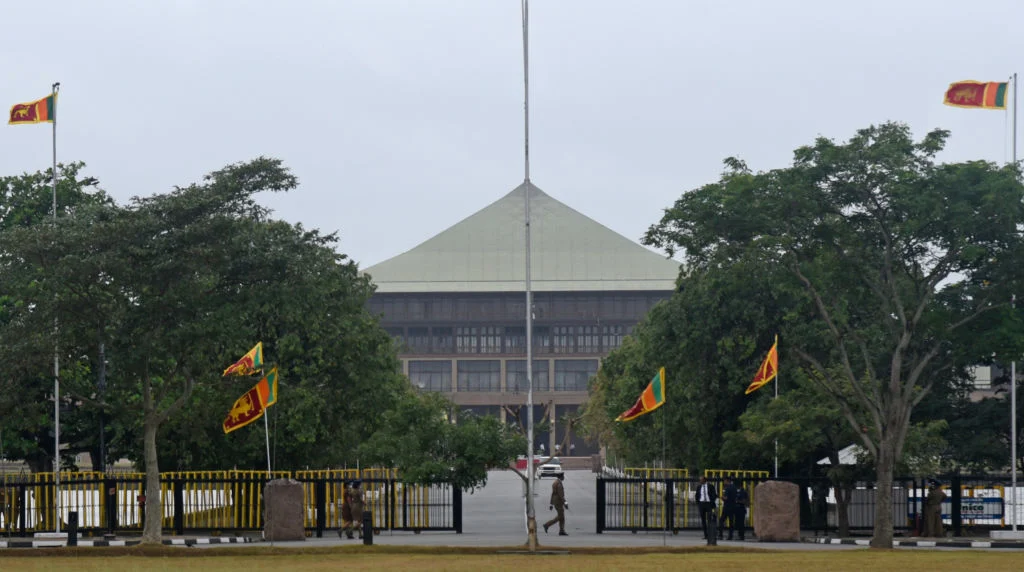
A new legislative proposal currently before the Sri Lankan parliament has ignited a firestorm of criticism from international human rights organizations. The "Prevention of Organised Crimes" bill, tabled on October 6, is being described by critics as a regressive step that threatens to erode fundamental civil liberties, revive the legacy of the infamous Prevention of Terrorism Act (PTA), and institutionalize police overreach under the guise of national security and crime control.
Amnesty International, at the forefront of the opposition to the bill, has issued an urgent call for the National People’s Power (NPP) government to withdraw the legislation in its entirety, warning that it grants authorities "sweeping arbitrary powers" that leave citizens vulnerable to state abuse.
The Core Provisions: A Legal Framework for Impunity
The proposed bill is comprehensive in its scope, aiming to overhaul how the state handles organized criminal activity. However, legal experts and rights defenders argue that the methods authorized by the bill are fundamentally incompatible with international human rights standards.
Key points of contention include:
- Admissibility of Coerced Confessions: The bill permits confessions extracted under duress to be used as evidence in court, provided they are made to a police officer of the rank of Assistant Superintendent or above. This effectively removes the traditional safeguards designed to prevent torture and ill-treatment during interrogations.
- Prolonged Detention without Trial: Suspects can be held for up to one year before being formally charged, with an additional year of pre-trial detention possible, potentially resulting in two years of incarceration without the due process of a trial.
- Warrantless Surveillance and Searches: Police are granted broad authority to conduct searches without warrants and to seize personal data—including subscriber identities, location history, and call records—from telecommunications and digital service providers without judicial oversight.
- Media Gag Orders: The bill introduces provisions that could effectively ban the media from reporting on specific court proceedings, raising significant concerns regarding the right to a free press and the principle of open justice.
Chronology of Legislative Repression
The introduction of this bill is not an isolated event; it is part of a broader, concerning trend in Sri Lanka’s legislative landscape under the current administration.
- 1970s–Present: The Prevention of Terrorism Act (PTA) has remained the primary instrument of state power used to target political dissenters, journalists, and minority groups. Its legacy of arbitrary detention and systemic torture has been the subject of decades of international condemnation.
- Early 2026: The NPP government began pushing through a series of amendments to financial and anti-money laundering laws, including the Financial Transactions Reporting Act. Civil society organizations flagged these as threats to freedom of association and expression.
- October 6, 2026: The "Prevention of Organised Crimes" bill is formally tabled in Parliament, sparking immediate backlash.
- Current Status: The bill remains on the parliamentary agenda, with the government facing mounting pressure from local civil society and international bodies to pause the process and engage in public consultation.
Supporting Data: Defining the "Criminal"
One of the most alarming aspects of the bill is its definition of an "organized criminal group." The legislation describes such a group as a "structured group of three or more persons" acting in concert for material gain. Critics argue that this definition is dangerously vague and susceptible to political weaponization.
The bill allows courts to determine membership in such groups based on highly subjective, circumstantial evidence, including:
- Aesthetic Profiling: An individual’s "style of dress," specific "hand signs," or the presence of "tattoos" associated with known criminal elements.
- Associational Guilt: Frequent visits to locations known to be used by suspected criminal groups, or historical associations with individuals labeled as criminals by the state.
Smriti Singh, Amnesty International’s South Asia Director, underscored the danger of these criteria: "Criminal guilt must be based on actual evidence of individual wrongdoing from objective factual circumstances defined by law with sufficient precision, not appearance, association, or suspicion."
Furthermore, the bill shifts the burden of proof in instances of torture. If a detainee alleges they were abused, the onus is placed on the accused—not the state—to prove that such abuse occurred, a standard that makes it nearly impossible for victims to seek justice.
Implications: The Erosion of Due Process
The implications of this bill extend far beyond the immediate target of organized crime. By lowering the threshold for conviction and providing legal cover for coercive tactics, the bill risks normalizing the following:
1. The Death of the Fair Trial
The bill permits judges to alter indictments mid-trial from organized crime offences to ordinary ones if the evidence for the former is insufficient. Legal scholars argue this violates the principle of fair notice, as a defendant must know exactly what they are being charged with to mount an adequate defense. Additionally, the admission of statements made by individuals who are dead or unavailable for cross-examination denies the accused their fundamental right to confront their accusers.
2. Surveillance of Civil Society
The power to demand digital data without a court order creates a massive risk for journalists, lawyers, and human rights defenders. The ability to track the communications of organizers of "lawful assemblies" could lead to the chilling of public protest and the systematic monitoring of political opposition.
3. The Reintroduction of the PTA’s Darkest Features
The bill effectively "repackages" the most draconian elements of the PTA. By expanding the application of these powers to a wider range of offenses beyond terrorism—such as intellectual property violations or minor penal code infractions—the government is normalizing an emergency-style legal framework for everyday policing.
Official Responses and the Path Forward
The Sri Lankan government has historically defended such measures as necessary tools to combat sophisticated criminal networks and maintain public order. However, the international community, including human rights watchdogs and diplomatic missions, has signaled deep concern.
Amnesty International’s statement is categorical: "This extraordinary bill is the most alarming in a string of repressive laws proposed by the NPP government." The organization argues that while the state has a duty to address crime, it cannot do so by dismantling the very rights and safeguards that distinguish a democratic society from an authoritarian one.
The government is currently attempting to repeal the existing PTA while simultaneously introducing the "Protection of the State from Terrorism Act." Observers note that if both this new anti-terrorism bill and the organized crime bill are passed, the space for civil society in Sri Lanka will shrink to its smallest point in decades.
A Call for Consultation
International experts are calling for a complete withdrawal of the bill, urging the government to adopt a consultative approach. Genuine reform would require:
- Public Hearings: Inviting legal experts, human rights defenders, and the general public to discuss the actual needs of the justice system.
- Alignment with International Law: Ensuring that all anti-crime measures are compliant with the International Covenant on Civil and Political Rights (ICCPR), to which Sri Lanka is a signatory.
- Strengthening Independent Oversight: Rather than empowering the police to act without warrants or judicial oversight, the government should invest in judicial independence and modern, transparent investigative techniques that rely on forensic evidence rather than forced confessions.
Conclusion: A Dangerous Path
As the debate intensifies, the eyes of the international community remain fixed on Colombo. The passage of this bill would represent a significant regression for Sri Lanka, potentially reviving the conditions that enabled years of state-sponsored impunity.
The warning from Smriti Singh serves as a somber reminder of the stakes: "Sri Lanka is following a dangerous path by introducing legislation that weakens safeguards against torture… The international community, which saw and decried the abuses under the PTA, should shudder."
Whether the government will heed these warnings or proceed with a legislative agenda that prioritizes state control over the rule of law remains to be seen. For now, the bill stands as a litmus test for the country’s commitment to its post-conflict democratic transition.

 Asro

 Lina Hope