



 Lina Hope
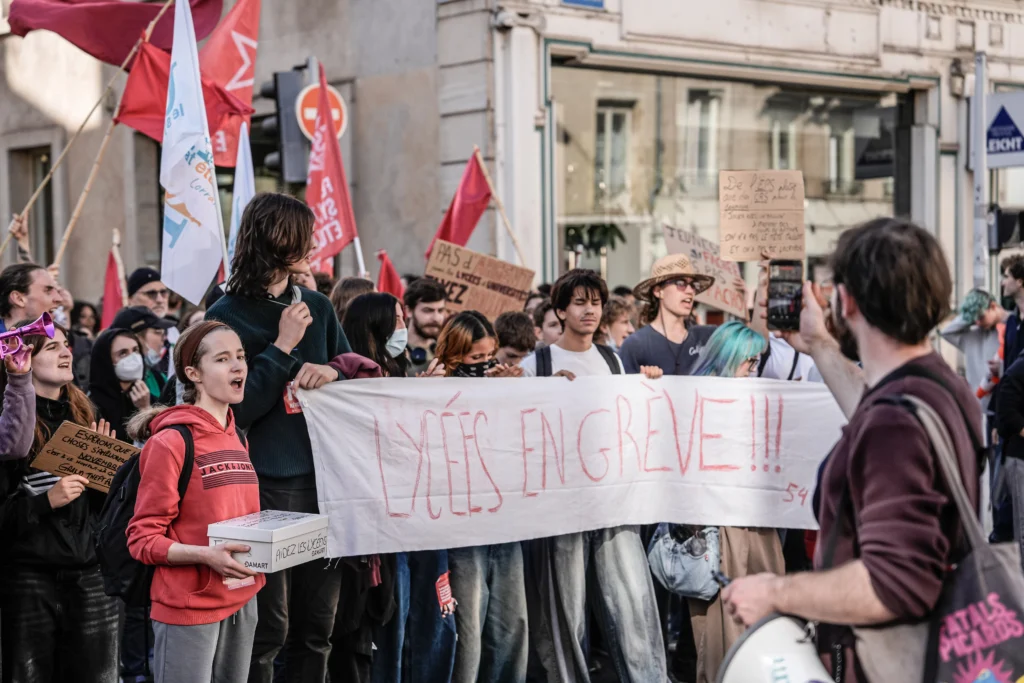
As the French Senate prepares for a pivotal two-day debate, a controversial piece of legislation colloquially dubbed the "Rioters Pay" bill has ignited a firestorm of protest from human rights advocates, legal scholars, and civil society groups. The proposed law, formally titled “Compensation for damage resulting from violence or property damage in public spaces and the recovery of damages,” seeks to fundamentally alter how the state recoups losses incurred during public unrest.
At the heart of the debate is a radical shift in legal liability: the proposal suggests that individuals could be held financially responsible for property damage, theft, or violence occurring at a demonstration, even if they did not personally commit the act. Amnesty International and other critics argue that this expansion of liability is a direct assault on the fundamental right to peaceful assembly and threatens to plunge already marginalized populations into deep poverty.
The Genesis of the Legislation: A Response to Unrest
The origins of this legislative push can be traced back to the chaotic scenes that unfolded during the UEFA Champions League final in May 2026. The widespread violence and property destruction witnessed during that event served as a catalyst for the French government to fast-track a legislative response.
The government’s resolve only hardened as France faced a fresh wave of civil unrest throughout the autumn of 2026. Protests erupted in the overseas territories on August 31, followed by a surge of demonstrations across Metropolitan France on September 18. Faced with mounting pressure to address the costs of these disturbances, the government invoked an accelerated parliamentary procedure to push the bill onto the Senate’s agenda for October 27 and 28.
Core Provisions and Legal Ambiguities
The bill introduces a sweeping definition of liability. Under the proposed framework, an individual could be held liable for up to 10,000 euros in damages if they "knowingly participated" in a gathering where criminal acts occurred. Critics argue that "knowingly" is a dangerously vague term that could effectively criminalize presence alone.
Financial Seizure and the Erosion of Social Safety Nets
Perhaps the most contentious aspect of the bill is its impact on the French social security system. Under existing statutes, family allowances and housing benefits are legally protected from seizure to satisfy civil debts—a safeguard intended to prevent the state from stripping vulnerable citizens of their basic standard of living.
The new bill seeks to pierce this veil of protection. If a protester—or, in cases of minors, their parents—is found liable for damages and cannot pay, the state would be authorized to seize:
- Family social security allowances: Reducing the funds available for childcare and basic necessities.
- Housing assistance: Risking the displacement of families.
- Active Solidarity Income (Revenu de Solidarité Active – RSA): The last-resort benefit for those with little to no income.
By targeting these specific funds, the legislation risks creating a cycle of poverty, where the financial penalty for participating in a protest—regardless of one’s direct actions—could lead to homelessness or the inability to feed a family.
International Law and the Principle of Individual Culpability
International human rights standards, to which France is a signatory, are clear: responsibility for criminal acts must be individual. The principle of individual culpability dictates that a person can only be held liable for their own conduct, proven through evidence.
Amnesty International has been vocal in its condemnation of the bill, labeling it a "deeply regressive step." Nathalie Godard, Director of the Action Department at Amnesty International France, emphasized that the bill creates a "risk of arbitrary punishment."
"Holding protesters responsible—and making them pay—for acts committed by others creates a precedent that is entirely contrary to France’s international obligations," Godard noted. "If passed, this bill would effectively deter people from exercising their rights to freedom of expression and peaceful assembly, fearing that the mere act of standing in a crowd could lead to financial ruin."
Xenophobia and the Expansion of Exclusionary Policies
The bill also addresses the status of foreign nationals found guilty of "serious offences" during public gatherings, such as arson, aggravated theft, or physical assault. It proposes an expansion of the grounds for exclusion from French territory.
While the government argues this is a matter of public safety, human rights observers are deeply concerned about the rhetoric surrounding these provisions. There is a palpable fear that the language used in the legislative debate—and the resulting policies—will fuel the scapegoating of migrants, refugees, and minorities.
"Existing law already allows for the penalty of expulsion," Godard said. "We are therefore deeply concerned that this amendment may introduce xenophobic rhetoric into the legislative debate, and further fuel the scapegoating of refugees, migrants, asylum seekers and minorities."
Furthermore, Amnesty International has warned that any such expulsion mechanism must respect the absolute principle of non-refoulement. Under international law, France is prohibited from expelling anyone to a territory where they would face a real risk of persecution, torture, or other grave human rights violations, regardless of their legal status or alleged offenses.
The Implications for Democracy and Civil Society
The "Rioters Pay" bill is not an isolated development but rather the latest in a series of legislative amendments that critics claim have been systematically restricting the right to protest in France. If the bill becomes law, the implications for the French democratic landscape could be profound.
A Chilling Effect on Assembly
The most immediate impact will likely be a "chilling effect." When the potential cost of attending a protest—even a peaceful one—includes the risk of being saddled with the debts of others, many citizens will likely choose to stay home. This effectively narrows the public square and reduces the capacity for citizens to hold the government accountable through demonstration.
The Vulnerability of Marginalized Families
The proposal to garnish social benefits from parents for the actions of their children, or to seize the minimum income of impoverished protesters, represents a significant departure from the state’s role as a guarantor of social welfare. Instead of addressing the root causes of civil unrest, the state would be utilizing its legal apparatus to further impoverish those who are already struggling.
Legal Precedent and Judicial Overreach
Legal experts are also concerned about the burden of proof. How will the state determine who "knowingly" participated in a violent protest? If the threshold for "knowledge" is merely being present in the vicinity of a protest that later turns violent, the judicial system could be flooded with cases that rely on collective punishment rather than individual evidence.
Looking Ahead: The Senate Debate
As the Senate convenes to deliberate on October 27, the eyes of the international human rights community will be on Paris. Lawmakers face a choice between prioritizing the state’s desire to recoup costs and upholding the fundamental principles of individual justice and human rights that form the bedrock of the French Republic.
Amnesty International’s position remains firm: the bill must be categorically rejected. Whether the French government will heed these warnings or proceed with a policy that risks permanently altering the relationship between the state and its dissenting citizens remains to be seen. The debate over the "Rioters Pay" bill is not merely a technical discussion about property damage; it is a fundamental challenge to the survival of the right to protest in one of the world’s oldest democracies.
As the debate intensifies, the core question remains: at what point does the cost of maintaining public order exceed the price of a free society? For many in France, that threshold has already been crossed.

 Layla Zulfa
 Asro






