


 Laily UPN
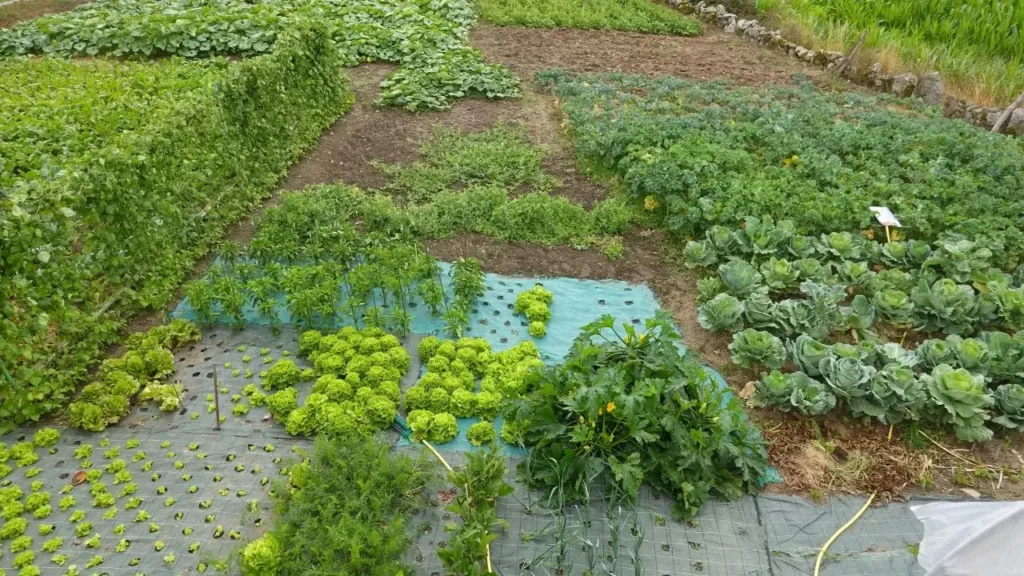
The documentary Groundswell, narrated by Demi Moore and Woody Harrelson, offers a vision of a future that feels almost utopian: a world where food production acts as a carbon sink, where biodiversity flourishes, and where the health of the soil is treated as the foundation of human civilization. It is a compelling, visually stunning argument for regenerative agriculture—a system that moves away from chemical-heavy monocultures toward holistic land management.
However, as the credits roll, a haunting question remains: If this solution is so effective and so necessary, why does it remain a niche alternative while industrial agriculture continues to dominate the global landscape? The answer, according to environmental advocates and climate experts, lies in a systemic bottleneck: the unchecked corporate power of "Big Ag."
The Mirage of Sustainability: The Rise of Greenwashing
The growing public awareness of regenerative agriculture, fueled by media like Groundswell, has created a market incentive for sustainability. Unfortunately, this has triggered a wave of "greenwashing"—a tactic where industrial giants adopt the language of regeneration to maintain the status quo.
Companies like Nestlé and various global dairy conglomerates have begun incorporating "regenerative" terminology into their marketing, promising carbon neutrality and soil health while fundamentally operating within the same high-input, high-emission industrial frameworks. When governments host "regenerative" conferences, they are often less interested in dismantling the industrial model and more focused on rebranding existing practices to capture the lucrative "eco-conscious" consumer market.

This is not merely a linguistic disagreement. It is a strategic effort to protect the profits of a few massive corporations that control the entire food supply chain, from the production of synthetic fertilizers to the final retail shelf.
Chronology of a Crisis: How We Lost Control of Our Food
To understand how our food system became so fragile, one must look at the shift toward industrialization in the mid-20th century.
- 1950s–1970s (The Green Revolution): The post-war era prioritized high-yield, chemically dependent agriculture. This period saw the rise of synthetic nitrogen fertilizers, pesticides, and the consolidation of seed varieties, which increased calorie production but depleted soil carbon and biodiversity.
- 1980s–2000s (Corporate Consolidation): Mergers and acquisitions decimated the competitive landscape. A handful of firms began to control the genetic stock of the world’s crops and the chemical inputs required to grow them.
- 2010s (The Rise of Planetary Boundaries): Scientists began to quantify the "planetary boundaries" for food systems. It became clear that industrial agriculture was the single largest driver of deforestation, freshwater depletion, and nitrogen cycle disruption.
- 2020–Present (The Regenerative Counter-Movement): As climate change manifested in increasingly erratic weather patterns, floods, and droughts, a global movement—documented in Groundswell—began advocating for a return to soil-based, regenerative health.
The Mechanics of Monopoly: Supporting Data
The concentration of power in the food sector is staggering. A handful of multi-billion-dollar corporations control the vast majority of the global market for seeds, fertilizers, and meat processing. This creates a "bottleneck" effect.
- Debt-Trapped Farmers: Industrial agriculture forces farmers into a treadmill of debt. To compete, they must purchase expensive, proprietary seeds and the associated chemical "package" (fertilizers and pesticides). These inputs are often financed through bank loans that necessitate high-volume, low-margin production, leaving farmers with no room to experiment with regenerative techniques that might be more resilient but less reliant on corporate products.
- Environmental Externalities: According to the Stockholm Resilience Centre, agriculture is the primary driver of the Earth system exceeding its planetary boundaries. Despite this, Big Ag corporations use their immense wealth to lobby for continued deregulation and, in many cases, receive government subsidies that incentivize the very practices—such as monocrop corn or soy production—that cause the most damage.
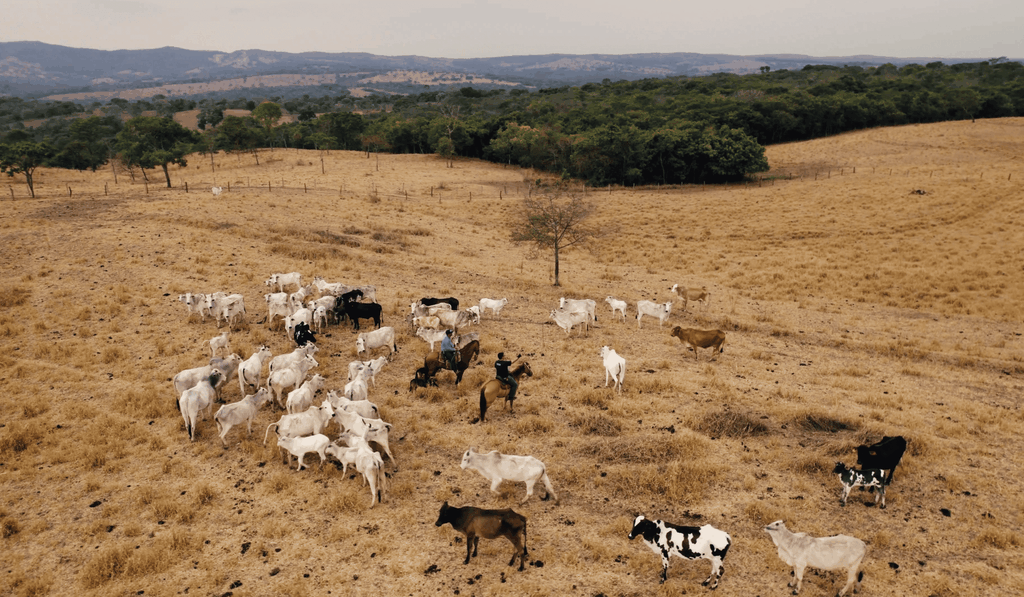
- Expansion into New Frontiers: The strategy of major players, such as the meat giant JBS, is to replicate the destructive Brazilian mega-farm model elsewhere. JBS is currently looking to sub-Saharan Africa as a new frontier for industrial meat production. These expansions are not driven by the need to feed a hungry planet, but by the pressure to provide returns for shareholders.
Official Responses and the Regulatory Standoff
The corporate response to criticism regarding their environmental impact has generally followed a pattern of "deflect and promise." When confronted with reports of labor abuses or environmental destruction, major firms often issue press releases detailing new "sustainability commitments" or "net-zero targets."

However, these targets are rarely legally binding. For instance, when the Brazilian government sued firms like JBS and Cargill for labor abuses in their supply chains, the companies often responded with legal maneuvers rather than systemic reform.
Governments are caught in a difficult position. Many rely on these corporations to ensure food security and economic stability. Yet, by prioritizing the interests of a few conglomerates, policymakers are inadvertently sabotaging the very agricultural resilience needed to survive a changing climate. As regenerative expert Natalie Topa noted, "We can heal the entire world with our food, or we can totally destroy the world with the way we grow food." The political choice is currently skewed heavily toward destruction.
Implications: The Path Forward
The implications of maintaining our current path are dire. We face a future of degraded soil, loss of water security, and a climate system that is increasingly incapable of supporting stable food yields. But there is a path forward—one that requires moving beyond simple consumer choices.
1. Reclaiming Sovereignty
While buying local at farmers’ markets and reducing meat consumption are positive individual actions, they are not sufficient to break the structural power of Big Ag. The real shift requires "people power"—collective action that demands legislative changes. This includes ending subsidies for industrial monocultures, supporting small-scale, diversified farmers, and holding corporations accountable for their environmental footprints.
2. Supporting Local Infrastructure
We must invest in local processing and distribution networks. Currently, the infrastructure of the food system is designed for massive, centralized entities. By decentralizing this infrastructure, we allow smaller producers to compete and thrive, creating a "groundswell" of local resilience that is resistant to the shocks experienced by the globalized industrial model.
3. Ending the Lobbying Stranglehold
Perhaps the most critical step is the regulation of corporate lobbying. So long as the companies responsible for soil depletion are the ones writing the agricultural policies of the world, true regeneration will remain a fringe movement.
Conclusion: A System That Heals
Groundswell provides a beautiful map of what a healed Earth could look like. It reminds us that soil is a living, breathing entity that, when nurtured, can solve many of our most pressing environmental crises. But the film also serves as a warning: the solutions are being blocked by an entrenched system of greed.
To transition from an industrial food system to a regenerative one, we must do more than just change our diets; we must change the power dynamics of our food economy. We need a food system that is owned by communities, not corporations; one that measures success by the health of the soil and the well-being of the farmer, rather than the dividends of shareholders.

The movement is growing. From grassroots activists to independent farmers, the cracks in the industrial model are appearing. It is now up to the public to ensure those cracks become the foundation for a new, living, and restorative food future. We have the knowledge, the tools, and the inspiration. All that remains is the political will to take our power back.

 Layla Zulfa
 Evan Lee Salim