



 Nana
Nana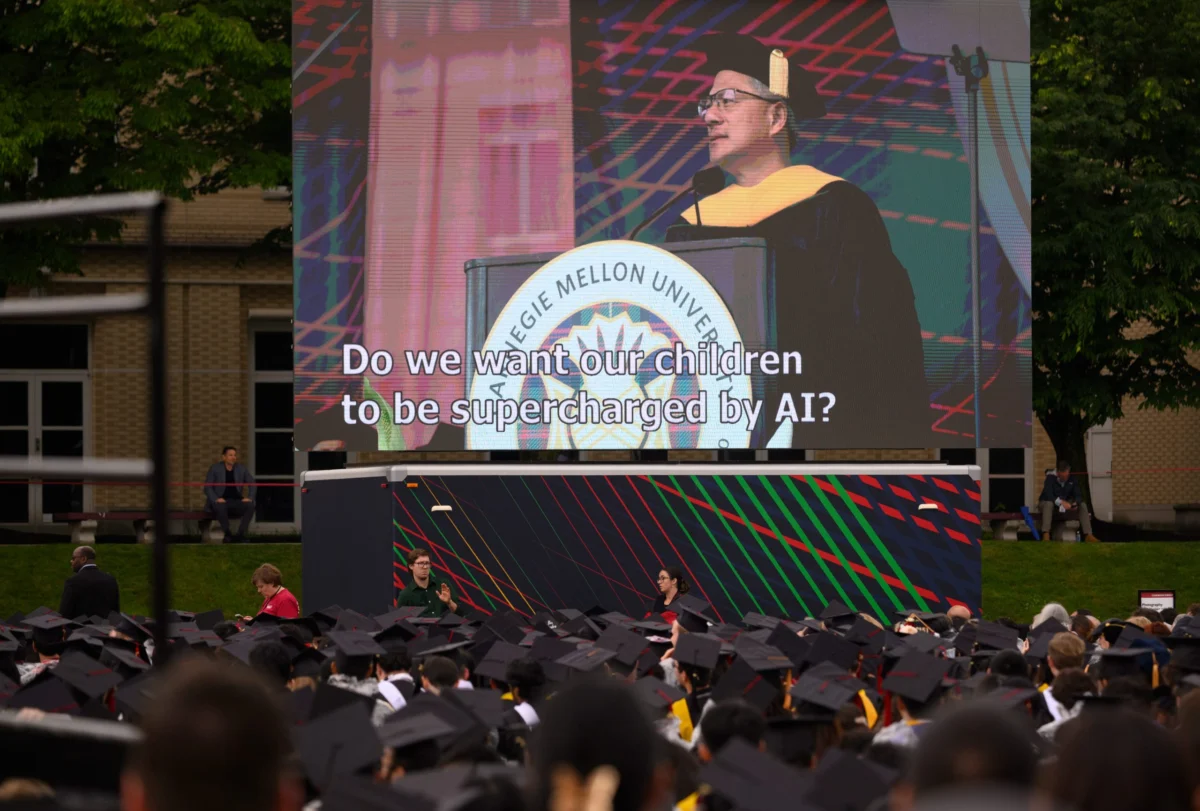
In a striking departure from the optimism that defined the early digital age, a new wave of skepticism is washing over American universities. Across the country, the traditional pomp and circumstance of commencement ceremonies are being interrupted by a vocal, defiant chorus: students booing the mention of artificial intelligence and the tech titans who champion it. This is not merely a reaction to the fear of job displacement; it is a profound, systemic rejection of the Silicon Valley ethos by the generation that has been most affected by it.
As tech executives—from Nvidia’s Jensen Huang to former Google CEO Eric Schmidt—take the stage at elite institutions to offer platitudes about the future, they are met not with the reverence of years past, but with a cold, calculated critique of their industry’s track record. Gen Z has concluded that the "utopian promise" of the tech industry is not just failing—it is effectively on life support.
The Evolution of the Digital Promise
To understand the current hostility, one must look back to the origins of the modern internet. In the 1990s and early 2000s, the tech industry was framed as a democratization engine. Futurists and industry leaders alike, such as George Gilder, promised that the personal computer and the nascent internet would serve as powerful catalysts for community, individuality, and high culture. The prevailing narrative was that technology would flatten hierarchies, provide universal access to knowledge, and invigorate global democracy.
However, the reality delivered by these corporations diverged sharply from the fantasy sold to the public. The pivot point is often traced back to the Cambridge Analytica scandal of 2018, which exposed how personal data was being weaponized for political manipulation. This event solidified the concept of "surveillance capitalism," a term now central to academic and public discourse, describing an economy predicated on the extraction, analysis, and monetization of human experience.
For Generation Z, the "good guy capitalist" myth of the hoodie-wearing founder has been dismantled. They have grown up in the shadow of data breaches, algorithmic radicalization, and the erosion of digital privacy, leaving them uniquely positioned to see the tech industry not as a partner in progress, but as a mechanism for exploitation.
The Architecture of Discontent: A Chronology of Cynicism
The current backlash did not emerge in a vacuum; it is the result of years of mounting evidence that the tech sector prioritizes profit over the public good.
- 2010s: The Rise of the Attention Economy: As social media platforms matured, they transitioned from communication tools to psychological battlegrounds. Tech giants hired behavioral psychologists to engineer apps that prioritize addictive engagement, fueling a mental health crisis among youth.
- 2018: The Cambridge Analytica Watershed: The revelation that personal data could be used to manipulate democratic outcomes signaled that the surveillance model was not just intrusive—it was dangerous to the fabric of society.
- 2020s: The Economic Divide: As the wealth of tech moguls ballooned to unprecedented levels, the economic reality for the average worker remained stagnant. Reports of warehouse workers facing dehumanizing conditions at companies like Amazon while their founders pursued vanity projects in space created a visceral, symbolic divide.
- 2025-2026: The AI Reckoning: With the rapid acceleration of generative AI, students are seeing the same patterns of "surveillance capitalism" applied at scale. They view AI not as a tool for creativity, but as a vehicle for automated slop, synthetic clickbait, and further erosion of job security.
Supporting Data: Why Faith Has Been Lost
The disillusionment is backed by empirical shifts in sentiment. Recent studies, including data from Forbes and various academic institutions, indicate that teenagers and young adults are rapidly losing faith in Big Tech.
The economic argument against these giants is particularly potent. Despite the astronomical valuations of tech companies, the median wage for the working class has failed to keep pace with the hyper-inflation of living costs, while the top one percent of tech wealth holders have seen their assets explode. This disparity has led to the rise of movements like the "Luddite Clubs" at universities like Pomona College, where students are actively choosing to unplug from the "siren song" of social media, opting instead for analog interaction and community-driven knowledge.
Furthermore, the environmental and human cost of the tech industry has become impossible to ignore. When students see reports of corporate welfare claims alongside the mass layoffs at companies like Meta—all while those same companies report record profits—the narrative of the "benevolent innovator" falls apart.
Official Responses and the "Midlife Crisis" of Tech Elites
The tech elite, for their part, appear largely bewildered by this shift in tone. Many leaders seem to be experiencing what can only be described as a collective midlife crisis. They continue to operate as if the old "deal"—whereby tech moguls were granted honorary degrees, media adoration, and invitations to exclusive social circles—is still in effect.
Marc Andreessen, the co-founder of Netscape and a prominent venture capitalist, recently lamented the loss of this social contract. His frustration highlights a disconnect: the industry believes it is still providing a net positive service to humanity, while the public increasingly views it as a source of corruption and instability.
During a 2026 commencement address at the University of Arizona, former Google CEO Eric Schmidt attempted to quell the skepticism of graduating seniors by urging them to "shape the future of AI." His plea was an attempt to invoke the spirit of the early digital age—a call to participate in the "empowerment" of technology. However, the attempt fell flat. The students, unlike their predecessors, are not interested in being collaborators in a system they view as inherently flawed. They have learned that when a billionaire promises to "empower the world," they are almost exclusively referring to themselves.
Implications for the Future of Education and Democracy
The implications of this shift are profound, particularly for higher education. Universities, which have long relied on funding and partnerships from Big Tech, now find themselves in an awkward position. They are tasked with preparing students for a future that is being built by companies the students no longer trust.
- The Crisis of Institutional Legitimacy: Universities that continue to feature tech executives as keynote speakers risk alienating their own student bodies. The classroom is increasingly becoming a site of resistance, where students critically analyze the ethical implications of the tools they are expected to use in their professional lives.
- The Redefinition of "Innovation": We are witnessing a transition from "innovation for its own sake" to a demand for "innovation with accountability." Future generations will likely demand that technological deployment be subject to democratic oversight, rather than the unchecked whims of private corporations.
- The Return to Human-Centric Systems: The growth of Luddite movements and the rejection of addictive algorithms suggest a societal hunger for a digital environment that respects human agency. We may see a push toward decentralized, non-profit, or community-owned digital spaces that prioritize public interest over corporate profit.
Conclusion: A New Social Contract
The booing of AI at commencement ceremonies is a symptom of a much deeper rupture. It signals the end of the era of blind technological optimism. Gen Z has reached a conclusion that earlier generations were too enamored with convenience to admit: the technology is not the problem; the social and economic relations in which that technology is embedded are.
As these students enter the workforce, they are not just looking for jobs; they are looking to rewrite the rules. They are no longer willing to accept the promise of a "connected world" if that connection comes at the cost of their democracy, their privacy, and their mental health. The tech industry has been put on notice: the era of the unquestioned digital baron is over, and the era of the informed, skeptical, and empowered user has begun.


 Neng Nana
 Asep Darmawan