



 Nana
Nana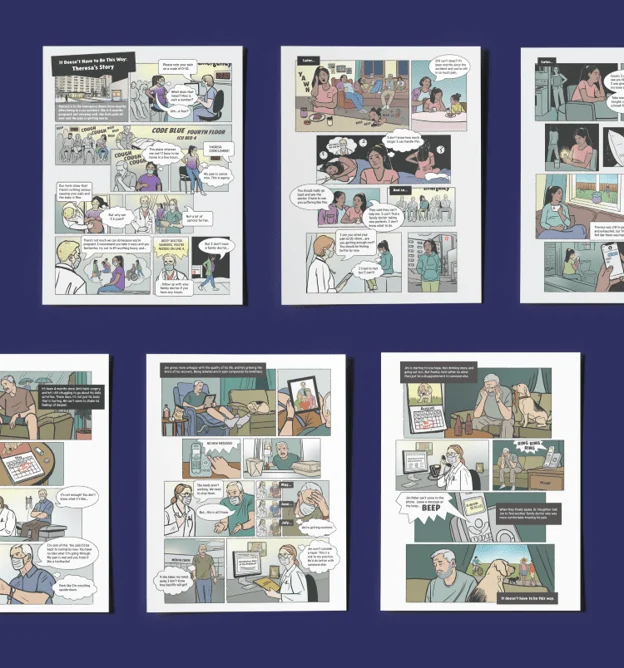
By Dr. Jacob Barry, Knowledge Translation and Engagement Lead, Arcana Creative
Every year, the nonprofit sector invests millions of dollars and thousands of hours into rigorous research, program evaluation, and community-based inquiry. Yet, a staggering percentage of these findings suffer a quiet, ignominious death: they are uploaded to a website as a 60-page PDF, linked in an annual report, and subsequently never read by the people who need the information most.
For nonprofits operating in the complex spheres of social justice, health, and community development, this represents more than just a missed opportunity—it is a failure of mission. Knowledge Translation (KT) is the antidote to this "PDF graveyard." It is the intentional practice of turning research into accessible, usable, and actionable resources. When done correctly, KT is the bridge that allows research to finally catalyze meaningful, systemic change.
The Core Challenge: Why Research Remains Inaccessible
The failure of most research to achieve impact is rarely a reflection of the quality of the data; it is almost always a failure of design.

In academic and traditional nonprofit circles, there is a lingering assumption that if the research is "good," it will speak for itself. However, a 60-page academic report, laden with jargon and dense methodology, is functionally useless to a community member navigating a difficult health decision, a frontline worker seeking a quick reference tool, or a city councillor preparing for a high-stakes budget debate.
Different audiences possess different needs, literacy levels, and time constraints. To treat a single report as a "one-size-fits-all" solution is to ignore the reality of human behavior. Knowledge Translation asks organizations to stop viewing dissemination as a final, passive step and instead treat it as a rigorous design problem. We must ask: Who needs to know this? What do they need to do with it? And what format will actually move them to act?
7 Steps to Strategic Knowledge Translation
For organizations looking to move beyond the traditional report, the following framework provides a roadmap for activation.
1. Prioritize Audience and Action Over Content
The most common mistake is selecting a format—such as "we need a report" or "we need a video"—before understanding the objective. Before a single word is written, project teams must identify their specific audience and the intended "call to action." A funder requires a clear, data-driven argument for sustainability, while a parent accessing a new social service needs a plain-language guide that demystifies the intake process.

2. Define the "Gap" Your Research Closes
Every KT project exists to bridge a specific divide: the space between what people currently believe or do and what they should believe or do to improve their outcomes. Organizations that can succinctly articulate this gap—e.g., "Our research shows that caregivers don’t know about X, and our goal is to increase uptake of Y by 20%"—produce sharper, more effective outputs that are also more compelling in grant applications.
3. Match Format to User Needs
Once the audience and the action are identified, the format reveals itself.
- Policymakers: Respond best to high-level policy briefs and one-pagers that highlight return on investment and clear, actionable recommendations.
- Community Members: Often engage more deeply with illustrated narratives, graphic medicine (comics), social media campaigns, or plain-language infographics.
- Frontline Workers: Require practical, portable tools like checklists, flowcharts, and reference cards that can be used in real-time.
4. Implement Plain Language from Inception
Plain language is not "dumbing down"; it is an act of accessibility and respect. It involves using active voice, avoiding unnecessary jargon, utilizing whitespace, and applying clear headings. Crucially, this content must be tested with representative readers before it is finalized to ensure the message is landing as intended.
5. Foster Participatory Co-Design
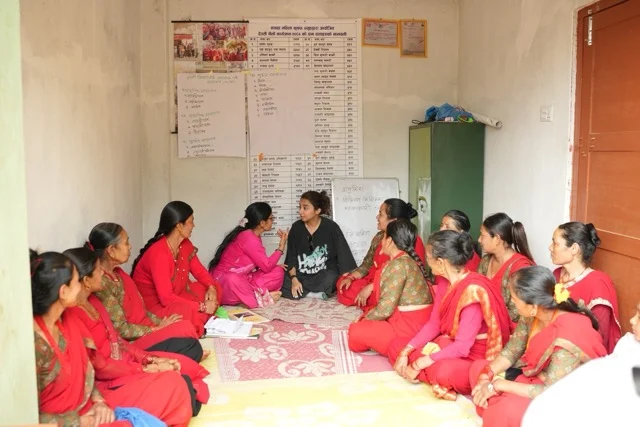
The most effective KT outputs are not "translated" for a community, but developed with them. This involves inviting stakeholders into the design process through advisory groups, focus sessions, or co-design workshops. When communities help shape the message, the final product is not only more accurate but also more trusted.

6. Design for Distribution from Day One
A perfectly designed infographic is useless if it lives on a dormant webpage. Distribution strategy—who will share it, through which channels, and when—must be baked into the project timeline. This includes planning for social media assets, email marketing, partner-sharing agreements, and presentations.
7. Strategic Repurposing of Assets
A single research project should serve as the "mother lode" for multiple outputs. A long-form report can be disassembled into a plain-language summary, a slide deck, a series of social media graphics, and a short video. By planning for this modularity at the start, organizations maximize their ROI and build a consistent, multi-channel narrative over time.
Chronology of an Effective KT Strategy
For organizations aiming to institutionalize KT, the process follows a predictable, albeit intensive, timeline:
- Phase I: Discovery (Weeks 1-4): Identifying key stakeholders and defining the primary "action" required.
- Phase II: Co-Design (Weeks 5-8): Engaging with the community to validate findings and brainstorm accessible formats.
- Phase III: Synthesis and Production (Weeks 9-12): Drafting content in plain language and professional design execution.
- Phase IV: Testing and Iteration (Weeks 13-14): User-testing with a focus group to refine clarity and tone.
- Phase V: Launch and Distribution (Week 15+): Rolling out the materials across selected platforms and monitoring engagement.
Data-Driven Impact: The Evidence for KT
Nonprofits that shift their focus to KT report higher engagement rates and better funding outcomes. Data from the Research Activation Studio at Arcana Creative suggests that when research is presented via visual, multi-format campaigns, audience retention increases by an average of 40% compared to traditional text-heavy dissemination. Furthermore, grant applications that explicitly include a KT budget and a clear "activation" plan are significantly more likely to be funded by foundations seeking measurable impact.

Real-World Case Studies
Case A: Bridging the Gap at City Hall
The Community-University Institute for Social Research (CUISR) faced a common challenge: a dense academic housing report that was technically excellent but politically invisible. By partnering to transform the data into an engaging community report, they created a tool that advocates used directly during City Hall presentations. This research subsequently powered the 2024 Saskatoon Point-in-Time Homelessness Count, providing the city with data that was both rigorous and immediately digestible for public advocacy.
Case B: Graphic Medicine in Healthcare
In partnership with SaskPain and the Saskatchewan Health Authority, Arcana Creative translated complex chronic pain research into "graphic medicine" comics. By utilizing a visual, narrative format, the information became accessible to patients with diverse literacy levels and cognitive needs. These comics are now used by healthcare providers across the province, proving that even the most clinical data can be made trauma-informed and culturally safe through creative translation.
The Cost of Inaction: Common Mistakes
Even well-resourced organizations frequently stumble into the following traps:
- The "General Public" Fallacy: Trying to write for everyone results in writing for no one.
- The Last-Minute Panic: Attempting to turn a report into an infographic in the final week of a project rarely yields high-quality results.
- Underfunding Design: Treating design as an "afterthought" rather than a core component of the research process.
Implications for the Future of the Sector
The nonprofit sector is currently facing a "trust deficit" and an "information overload." To remain relevant, organizations must prove their value by demonstrating that their research is not just existing, but working.

When an organization embraces Knowledge Translation, it signals a shift from being a "service provider" to a "thought leader." It demonstrates a commitment to accessibility, equity, and accountability. It acknowledges that the ultimate measure of research is not the number of pages published, but the degree to which that research has informed a decision, changed a policy, or improved a life.
For those ready to move their findings off the shelf and into the world, the time to act is now. Whether you are planning a new grant application or have a library of existing reports waiting to be brought to life, the principles of strategic KT offer a path to greater visibility and deeper, more lasting impact.
Dr. Jacob Barry (they/them) is the Knowledge Translation and Engagement Lead at Arcana Creative. With a background in Gender, Sexuality, and Women’s Studies, Jacob helps nonprofits and research teams translate complex ideas into actionable change. To learn more or to book a free 30-minute strategy call, visit arcanacreative.ca.

 Reynand Wu
 Nana Muazin