
 Jia Lissa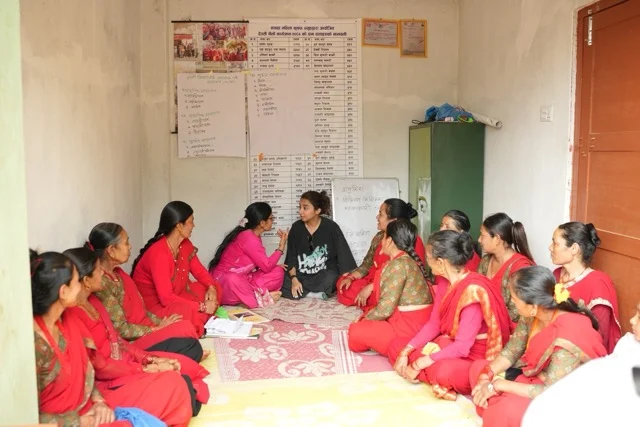
In a significant move to bridge the gap between urban consumers and the rural architects of our food systems, Bollywood star, digital creator, and activist Prajakta Koli has officially joined forces with global nonprofit Heifer International. The partnership serves as a cornerstone for the UN’s International Year of the Woman Farmer, a global initiative aimed at centering the experiences, systemic challenges, and profound resilience of the women who feed the world.
As the ambassador for Heifer International’s campaign, titled "She Has a Story to Tell, Are You Listening?", Koli—known to millions online as ‘MostlySane’—will leverage her massive digital platform to amplify the voices of female agriculturalists across Asia. This collaboration marks a pivotal moment in the fight for gender parity in agriculture, a sector where, despite their immense contribution, women remain significantly marginalized.
The Global Reality: A Disparity of Power and Production
To understand the urgency of this campaign, one must look at the stark data surrounding global agriculture. According to the Food and Agriculture Organization (FAO), women produce up to 80 percent of the food in many developing nations. Yet, these same women face systemic barriers that prevent them from scaling their impact. They are frequently denied equal access to land ownership, credit, modern farming technology, and market infrastructure.
The implications of this gender gap are not merely social—they are economic and humanitarian. UN projections indicate that if women farmers were granted the same access to resources as their male counterparts, farm yields could rise significantly, potentially feeding an additional 100 to 150 million people worldwide. In an era of climate volatility and rising food insecurity, the marginalization of women is not just an injustice; it is a global failure in food system architecture.
Chronology: A Campaign Built on Collective Voices
Heifer International’s "She Has a Story to Tell" initiative is not a static project; it is a rolling global dialogue that has been building momentum throughout 2024.
- March 2024: The campaign launched globally with a high-profile virtual event coinciding with International Women’s Day. The inaugural panel featured women farmers from Kenya and Ecuador, who set the tone by articulating the specific hurdles they face in their respective geographies.
- Spring 2024: The campaign pivoted to a regional focus on Asia. Virtual sessions highlighted the lived experiences of women farmers in Nepal and Cambodia, focusing on local agricultural practices and the necessity of communal support.
- Earth Day 2024: The movement expanded to include perspectives from Africa, emphasizing the nexus between sustainable farming and climate resilience.
- July 6, 2024: The campaign reaches a new milestone with the release of the first episode of the documentary series “Day in the Life of a Woman Farmer,” produced in partnership with CNN-News18. This episode, filmed in Nepal and featuring Prajakta Koli, offers a cinematic look into the daily realities of female farmers.
The Role of Influential Advocacy
Prajakta Koli, 32, brings more than just a massive social media presence—boasting 8.5 million Instagram followers and 7.25 million YouTube subscribers—to the table. She brings a track record of meaningful activism. As the UNDP India’s first Youth Climate Champion and an advisory member for the Bill & Melinda Gates Foundation’s Goalkeepers, Koli has spent years bridging the gap between pop culture and global policy.
"What resonated most with me about Heifer’s campaign is that it is not about speaking for women farmers, but about creating space for their voices to be heard," Koli stated. Her approach highlights a shift in modern activism: the move from being a ‘savior’ to becoming a ‘facilitator.’ She emphasizes the psychological and social distance between the modern consumer and the producer. "Today, much of our food reaches us neatly packaged and processed, making it easy to overlook the people and effort behind it. By putting a face and a story to the journey of our food, we can reconnect with those who grow it and develop a deeper appreciation for its true value."
Supporting Data: Impact and Transformation
Heifer International’s methodology has long focused on the empowerment of women as the most effective route to poverty reduction. As of 2024, two-thirds of the participants in Heifer-led projects are women, a statistic that underscores their commitment to gender-intentional development.
The results are quantifiable:
- Rwanda: Through women-led livestock initiatives, milk production has effectively doubled.
- Bangladesh: Over 5,500 women have undergone intensive training in climate-smart agriculture, allowing them to adapt their farming methods to erratic weather patterns.
- Mexico: Women participating in an egg cooperative achieved a 100 percent participation rate in farm financial decision-making, while simultaneously increasing their household income contribution by an average of 12 percent.
In India, where Heifer has maintained a presence since 1955, the focus has been on the formation of self-help groups (SHGs). The Odisha Sustainable Livelihood Development Project stands as a flagship example, supporting 30,000 smallholder goat farmers. By organizing into cooperatives, these women have gained collective bargaining power, access to specialized veterinary and financial services, and a direct line to broader market networks.
Official Responses and Policy Demands
The leadership at Heifer International remains adamant that the current status quo is unsustainable. Neena Joshi, Senior Vice President for Asia Programs, views the inclusion of Koli as a strategic necessity. "Women farmers are the backbone of our food systems, yet their stories are too often unheard," Joshi remarked. "We are proud to welcome Prajakta Koli as our ambassador, helping more people understand the everyday realities, challenges, and contributions of women farmers across Asia."
The women farmers themselves, through the campaign’s various regional launches, have issued a clear call to action for governments, investors, and NGOs. Their demands include:
- Meaningful Inclusion: Ensuring that women are not just beneficiaries of aid but active architects in the policy and investment decisions that shape rural economies.
- Recognition of Leadership: Acknowledging that women are already leading sophisticated producer associations and financial cooperatives, and that these existing structures deserve sustained, long-term capital investment.
- Climate-Smart Support: Moving beyond subsistence farming models to provide women with the tools—such as drought-resistant seeds and modern irrigation—necessary to build resilient food systems in the face of climate change.
Implications: Building a Resilient Future
The partnership between Prajakta Koli and Heifer International arrives at a critical juncture. As global food systems face pressure from population growth, environmental degradation, and supply chain fragility, the "She Has a Story to Tell" campaign argues that the solution lies in the hands of those who are already doing the work.
By elevating the stories of women farmers, the campaign seeks to transform them from invisible laborers into visible stakeholders. If the success stories from Rwanda, Bangladesh, and Mexico are any indication, the path forward is clear: when women are empowered with resources and agency, the entire community thrives.
As Koli embarks on her journey to highlight these stories, the message to the public is simple: our food has a story, and the people behind it have a voice. It is time for the world to listen. Through the documentary series and continued digital advocacy, the campaign aims to turn this listening into action, ensuring that the "International Year of the Woman Farmer" is not just a commemorative period, but the beginning of a systemic shift in how we value, fund, and support the women who feed the world.

 Rifan Muazin
 Ali Ikhwan