




 Layla Zulfa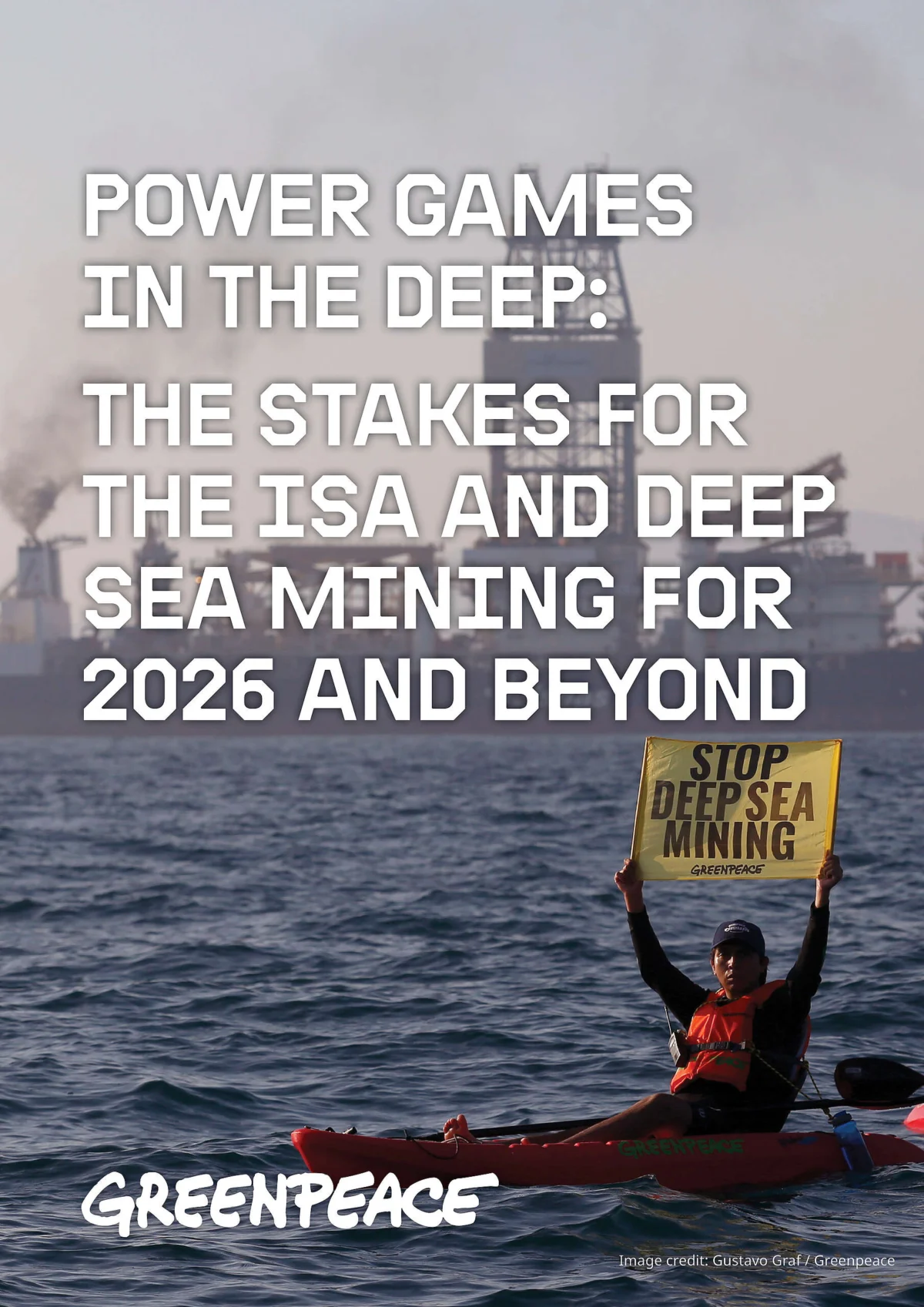
As the international community approaches a pivotal crossroads in 2026, the silence of the ocean floor is being threatened by the roar of industrial machinery. Deep-sea mining, once relegated to the realm of speculative science fiction, has emerged as one of the most contentious environmental and geopolitical issues of the decade. A new report, “Power Games in the Deep: The Stakes for the ISA and Deep Sea Mining for 2026 and Beyond,” warns that the push to exploit the seabed is far more than a quest for battery minerals—it is a unilateral power grab that mirrors the darkest chapters of colonial history.
The Main Facts: A Gold Rush in the Abyss
The core of the controversy lies in the Clarion-Clipperton Zone (CCZ) and other vast expanses of the international seabed. Proponents argue that the polymetallic nodules found there—rich in nickel, cobalt, copper, and manganese—are essential for the global transition to renewable energy. However, critics and environmental watchdogs argue that this narrative is a thin veil for corporate profiteering.
The International Seabed Authority (ISA), the intergovernmental body mandated to organize and control all mineral-related activities in the international seabed area, finds itself at the center of a systemic crisis. Tasked with the "dual mandate" of promoting mineral extraction while ensuring the "effective protection of the marine environment," the ISA is under immense pressure to finalize the "Mining Code"—the regulatory framework that would allow commercial exploitation to begin in earnest.
The report highlights a critical, fleeting window of opportunity. With major global powers and private contractors lobbying for immediate permits, the international community faces a narrow timeline to impose a moratorium or a permanent ban before the industrialization of the deep sea becomes an irreversible reality.
A Chronology of Resistance: From Compliance to Confrontation
The path to 2026 has been marked by a shift from bureaucratic engagement to grassroots and scientific mobilization.
- 2016–2020: The "exploration phase." The ISA grants numerous contracts for deep-sea exploration, primarily to state-sponsored entities and private mining conglomerates. During this period, the environmental impact remains largely unstudied.
- 2021: The "Two-Year Rule" is triggered. Nauru, acting on behalf of a Canadian-based mining subsidiary, invokes a provision that forces the ISA to finalize mining regulations within two years. This shocks the international community, accelerating the timeline for potential extraction.
- 2022–2024: Scientific dissent grows. Marine biologists publish landmark studies indicating that deep-sea ecosystems are far more fragile and slow-recovering than previously believed. The "Pacific Movement" begins to take shape, with indigenous leaders from Pacific Island nations calling the ocean floor their "ancestral heritage."
- 2025: Political polarization reaches its peak. Major nations, including France, Germany, and several Pacific states, declare their support for a precautionary pause. Meanwhile, pro-mining factions argue that national security and supply chain independence necessitate the exploitation of these minerals.
- 2026: The current "Year of Decision." The ISA convenes for critical sessions to determine whether the Mining Code will be adopted. Global public opinion has shifted from passive interest to active, widespread opposition.
Supporting Data: The Cost of Extraction
The arguments against deep-sea mining are supported by a mounting body of evidence that challenges the industry’s "green" credentials.
- Biodiversity Loss: Research indicates that the abyssal plains are home to thousands of species, many of which are endemic to specific seamounts or nodule fields. The extraction process, which involves scraping the seafloor and creating massive sediment plumes, would result in the permanent loss of these habitats.
- Carbon Sequestration: The deep ocean is a critical carbon sink. Disturbing the seabed risks re-suspending sequestered carbon, potentially exacerbating the very climate change that mining proponents claim to be mitigating.
- The "Resource War" Illusion: Economic analyses cited in the report suggest that technological advances in battery chemistry (such as Lithium Iron Phosphate, or LFP, batteries) are already reducing the need for cobalt and nickel. The demand for seabed minerals may be artificially inflated by speculative mining firms looking to capitalize on perceived shortages.
- Economic Disparities: The report documents the "colonial dynamic" where the wealth generated from seabed mining would disproportionately benefit the Global North, while the environmental and social risks would be borne by Pacific Island communities and the global commons.
Official Responses and Geopolitical Fractures
The ISA remains a fractured body. Within its halls, a divide has emerged between those who prioritize "economic development" and those who prioritize "ocean stewardship."
- The Pro-Mining Lobby: Led by countries like Norway—which recently opened its own national waters for exploration—and backed by deep-pocketed private contractors, the argument is that terrestrial mining is equally damaging and that the seabed offers a "cleaner" alternative. They maintain that the ISA’s mandate is to manage, not stop, the industry.
- The Moratorium Coalition: A growing bloc of nations, including Chile, Palau, and Fiji, have officially called for a precautionary pause. These countries argue that the lack of baseline scientific data makes any mining activity reckless.
- The NGO Response: Organizations like Greenpeace have ramped up their campaigns, framing the struggle as a fight for the "common heritage of mankind." Their legal experts argue that the ISA’s current trajectory violates the UN Convention on the Law of the Sea (UNCLOS), which requires the protection of the marine environment for future generations.
The Implications: Why 2026 Matters
The stakes for 2026 and beyond are existential for the marine environment. If the ISA authorizes large-scale mining, it will set a global precedent that the deep ocean is merely another commodity to be harvested.
1. Environmental Irreversibility
Unlike terrestrial mining, where some land can be reclaimed, the deep-sea environment operates on geological timescales. The destruction of seafloor habitats would not be fixed in a human lifetime, or perhaps even in a millennium. We are effectively choosing to destroy an ecosystem we have barely begun to map.
2. A Precedent for Global Governance
The ISA serves as a test case for international cooperation. If a small group of corporate interests can force a multilateral body to abandon its precautionary duties in favor of industrial exploitation, it undermines the credibility of the United Nations and the rule of international law. It suggests that economic pressure will always override scientific consensus.
3. The Rights of Future Generations
The report emphasizes that the seabed is the "common heritage of mankind." The decisions made in 2026 will not just affect current shareholders or national budgets; they will dictate the state of the planet for centuries to come. The current push for extraction is essentially a short-term gamble with long-term assets that belong to everyone.
Conclusion: A Window Still Open
The movement against deep-sea mining is no longer a fringe environmental concern; it has become a global political phenomenon. From the parliaments of Europe to the coastal villages of the Pacific, the consensus is shifting.
The report “Power Games in the Deep” serves as both a warning and a call to action. It argues that the "wall of opposition" currently facing the mining industry is not a sign of defeat for the industry, but a necessary barrier to prevent a catastrophe. The window for intervention is closing, but it has not yet slammed shut.
As we look toward the remainder of 2026, the international community has one last chance to prioritize the health of the planet over the profits of a few. The question is no longer whether we can mine the deep sea, but whether we have the moral fortitude to decide that some places on Earth are simply too valuable to destroy.
For those seeking to engage with the full data sets and legal arguments, the full report, "Power Games in the Deep: The Stakes for the ISA and Deep Sea Mining for 2026 and beyond," is available through official environmental archives.


 Evan Lee Salim
 Laily UPN