
 Evan Lee Salim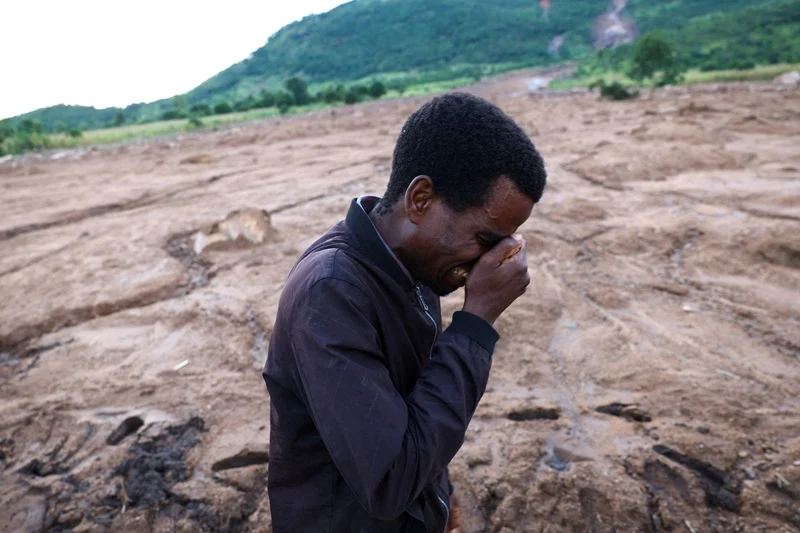
By Wamuyu Manyara and Tarcizio Kalaundi
As the global community gathers this week to debate the operational mechanics of the Fund for Responding to Loss and Damage (FRLD), a shadow looms over the proceedings. For the nations currently weathering the brunt of a climate crisis they did not create, this is not a bureaucratic exercise in policy alignment; it is a fundamental test of the international community’s commitment to justice, human rights, and the survival of the most vulnerable.
The Fund stands at a critical juncture. The discussions surrounding its Resource Mobilisation Strategy are not merely about spreadsheets or budgetary targets—they are about the efficacy of a mechanism designed to serve as a lifeline. If the scale of ambition is insufficient and the barriers to accessibility remain high, the FRLD risks becoming an empty promise, a hollow monument to climate diplomacy that fails the very people it was established to protect.
Main Facts: The Mandate of the FRLD
The Fund for Responding to Loss and Damage was birthed from the hard-fought battles of COP27 in Sharm el-Sheikh and operationalized at COP28 in Dubai. Its purpose is clear: to provide financial assistance to developing countries that are particularly vulnerable to the adverse effects of climate change. Unlike traditional climate finance, which focuses on mitigation (reducing emissions) or adaptation (preparing for future changes), the FRLD focuses on the "loss and damage" that is already occurring—the irreparable destruction caused by extreme weather events and slow-onset disasters.
The current mandate requires the Fund to be inclusive, responsive, and equitable. However, the operationalization phase has been marred by concerns regarding the capitalization of the Fund and the rigidity of its disbursement processes. With the global temperature nearing the 1.5°C threshold established by the Paris Agreement, the urgency to ensure that this Fund is robust cannot be overstated.
Chronology: From Advocacy to Operational Uncertainty
The journey to the FRLD has been a marathon of political friction and moral advocacy.
- COP27 (November 2022): After decades of resistance from wealthy, high-emitting nations, a landmark agreement was reached to establish a dedicated fund for loss and damage. This was viewed as a historic victory for the Global South.
- The Transitional Committee Period (2023): A series of intense meetings were held to determine the structure of the Fund. Debates over whether the Fund should be hosted by the World Bank or operate as an independent entity dominated the narrative, eventually leading to a compromise that placed it under the World Bank’s interim stewardship.
- COP28 (December 2023): The Fund was officially launched. Initial pledges were made, totaling roughly $700 million—a figure that, while symbolic, represents a mere fraction of the estimated hundreds of billions needed annually.
- The 2024 Strategic Pivot: As we approach the current Resource Mobilisation discussions, the reality has set in: current pledges are insufficient, and the timeline for exhaustion is alarmingly short.
Supporting Data: The Reality of the Financial Gap
The fiscal disparity between the climate damage sustained and the capital mobilized is staggering. According to recent reports from the United Nations Environment Programme (UNEP) and various humanitarian organizations, the annual cost of loss and damage in developing countries is expected to reach between $400 billion and $1.8 trillion by 2050.
Against this backdrop, the FRLD’s current trajectory is precarious. Analysis suggests that, without a radical shift in its mobilization strategy, the Fund faces the very real danger of running out of capital by 2027. This "2027 cliff" is not a remote concern; it is an imminent policy failure.
In Malawi, for instance, the impact of cyclones—such as Cyclone Freddy—has decimated agricultural output and public infrastructure. When the financial support for such events is delayed, conditional, or insufficient, the cost of recovery compounds, creating a debt cycle that traps nations in poverty. The current capitalization level—hovering well below the $1 billion mark—is effectively a drop in the ocean compared to the scale of destruction currently being witnessed across the Global South.
Official Responses and Stakeholder Perspectives
The international community is currently divided on the path forward.
The Donor Perspective: Many developed nations argue that the Fund should leverage private sector investment and innovative finance mechanisms, such as global levies on shipping or aviation. While these ideas are theoretically sound, they often lack the immediacy required for disaster relief.
The Perspective of the Global South: Countries on the frontlines, represented by blocs like the G77 and China, have consistently pushed for a grant-based system that is devoid of the bureaucratic red tape that characterizes current climate finance. They argue that the FRLD must be "rights-based," prioritizing those who have lost their livelihoods, homes, and cultural heritage to climate-induced disasters.
The Role of Civil Society: NGOs, including Trócaire, have been vocal in their assessment. We maintain that unless the Fund prioritizes direct access—allowing communities and local governments to receive support without passing through layers of international intermediaries—it will fail to reach those who need it most.
Implications: The Moral Hazard of Inaction
The implications of failing to secure a sustainable Resource Mobilisation Strategy are profound.
H3: The Threat to Human Rights
Climate change is a human rights crisis. When people are displaced by rising sea levels or the loss of agricultural viability, their rights to housing, food, and security are violated. The FRLD is, at its core, a human rights instrument. If it fails, the global community is effectively signaling that the rights of the most vulnerable are secondary to the political convenience of the wealthy.
H3: Erosion of Trust in Global Governance
The Paris Agreement rests on a foundation of mutual trust. If the developed world fails to meet its obligations to support those suffering from climate-induced losses, the collaborative spirit of international climate negotiations will fracture. We are already seeing this in the reluctance of some developing nations to commit to more ambitious emissions targets when their current realities are ignored.
H3: Economic Destabilization
Loss and damage acts as a persistent drag on economic growth in the Global South. By failing to provide adequate financing, the international community is ensuring that developing economies remain fragile and susceptible to collapse with every passing storm. This is not just a humanitarian issue; it is a global economic stability issue.
Conclusion: A Call for Transformative Mobilization
The decisions made this week regarding the Resource Mobilisation Strategy will be judged by history. If the Fund remains trapped in a cycle of voluntary, sporadic contributions, it will be little more than a band-aid on a gaping wound.
To ensure the FRLD fulfills its mandate, we must see:
- Predictable and Scalable Funding: Moving away from reliance on periodic voluntary pledges toward mandatory, automatic contributions based on emissions or GDP.
- Simplified Access: Reducing the burden on recipient nations to provide excessive documentation during times of crisis.
- A Focus on Equity: Ensuring that the most marginalized populations—women, indigenous groups, and the poor—are the primary beneficiaries of the Fund’s resources.
The climate crisis does not negotiate, and it does not wait for fiscal years to conclude. As we stand at this precipice, we must recognize that the FRLD is the last line of defense for millions. The time for incrementalism has passed. We need a strategy that is as bold as the challenge is catastrophic. Anything less is a betrayal of the promise of climate justice.
Wamuyu Manyara is the Country Director for Trócaire Malawi, and Tarcizio Kalaundi serves as its Climate Resilience Officer. They work on the frontlines of climate adaptation and loss and damage advocacy, striving to amplify the voices of those most affected by the global climate emergency.

 Layla Zulfa
 Laily UPN