

 Ali Ikhwan
By Sam LaFrance, Communications Strategist, First Amendment
May 18, 2026
Across the United States, a quiet but profound constitutional crisis is unfolding on the sidewalks, street corners, and public plazas of our cities. Citizens, activists, and journalists are increasingly finding themselves in the crosshairs of law enforcement—not for committing crimes, but for the act of documenting them. From Memphis to Minneapolis, individuals who exercise their First Amendment right to record ICE agents and federal task forces are being met with intimidation, physical violence, and unlawful arrest.
As federal, state, and local agencies coordinate on massive operations like the "Memphis Safe Task Force," the friction between those who hold the camera and those who wield the badge has reached a boiling point. This is not merely a series of isolated incidents; it is a systemic assault on the foundational democratic principle of transparency.
The Current Landscape: A Pattern of Retaliation
The recent surge in hostilities against observers is stark. In Memphis, residents who have attempted to document the aggressive traffic stops and indiscriminate immigration raids conducted by the multi-agency "Memphis Safe Task Force" report being followed home, harassed, and arrested under dubious pretenses. The message from authorities is clear: silence is mandatory, and the presence of a lens is an act of defiance.
The violence extends far beyond the Mid-South. In Minneapolis, the scene of previous landmark struggles for accountability, federal agents were recorded tackling a photographer to the ground and deploying pepper spray against them for the "offense" of documenting a protest against immigration enforcement. Similarly, in Illinois, a federal agent was captured on video threatening to open fire on an observer who had the audacity to record the agent shoving a woman into a government vehicle. In California, the toll on the press has been severe, with dozens of journalists suffering injuries while attempting to report on National Guard presence and immigration enforcement raids.
These instances represent a dangerous erosion of civil liberties. When the government operates in the dark, accountability vanishes. By recording these interactions, ordinary citizens are performing a vital civic function, creating an independent record that stands as the only barrier between state power and absolute impunity.
The Legal Bedrock: What is the Right to Record?
The courts have been unequivocal: the First Amendment is not a suggestion—it is a mandate. The right to record law enforcement performing their duties in public is a cornerstone of American democracy. This right is rooted in two distinct constitutional protections: the freedom of the press (which includes the gathering of information) and the freedom of speech (which protects the act of recording as a medium of expression).
Every federal circuit court that has considered the issue has affirmed that citizens have a protected right to record police and other government officials in public spaces. This is not a right reserved for credentialed members of the media; it is a right belonging to every individual.
A History of Documentation as Accountability
The necessity of this right is etched into the collective memory of the nation. The 1991 footage of the brutal beating of Rodney King and the 2020 video documenting the murder of George Floyd are perhaps the most famous examples of how citizen journalism can force a reckoning with systemic abuse. In both instances, without the amateur recordings of bystanders, the official narratives—often designed to obscure the truth—would have likely prevailed. These recordings did not just document a crime; they sparked nationwide political discourse and ignited movements for legislative and cultural change.
The Evolution of Legal Precedent
The judicial understanding of video as protected speech traces back to the 1952 Supreme Court case Joseph Burstyn, Inc. v. Wilson. The Court recognized that films and videos are "a significant medium for the communication of ideas," capable of shaping public thought and behavior.
In the decades since, courts have expanded this protection to the process of recording. In the 2018 case Animal Legal Defense Fund v. Wasden, the Ninth Circuit ruled that the act of creating a video is inextricable from the final product. If the government can stop a person from recording, they can effectively censor the message before it is ever created.
Furthermore, the First Circuit Court of Appeals has clarified that even non-credentialed, private citizens engaging in recording are performing "newsgathering" as much as any journalist. By documenting on-duty officers, citizens are participating in the vital work of informing the public about the conduct of their government.
The Memphis Case: A Microcosm of National Tension
The most pressing example of these rights being trampled occurs in Memphis. Since September 2025, the city has been under the jurisdiction of the "Memphis Safe Task Force." This entity is a sprawling, 31-agency coalition comprising local, state, and federal law enforcement, operating under federal directives. While the stated mission is to "make Memphis safer," the reality on the ground, according to residents and legal advocates, has been a campaign of intimidation.
The task force utilizes mass traffic stops as a pretext for large-scale immigration arrests, creating a pervasive climate of fear. In response, local residents have formed informal networks to document these encounters. By filming, they are not only protecting themselves but providing a vital service to their neighbors.
The ACLU has recently filed a lawsuit on behalf of four Memphis residents who were subjected to retaliation for recording the task force. These plaintiffs were arrested, intimidated, and harassed—all for the act of holding a camera in a public space. This lawsuit serves as a direct challenge to the authority of the task force to operate outside the boundaries of the First Amendment.
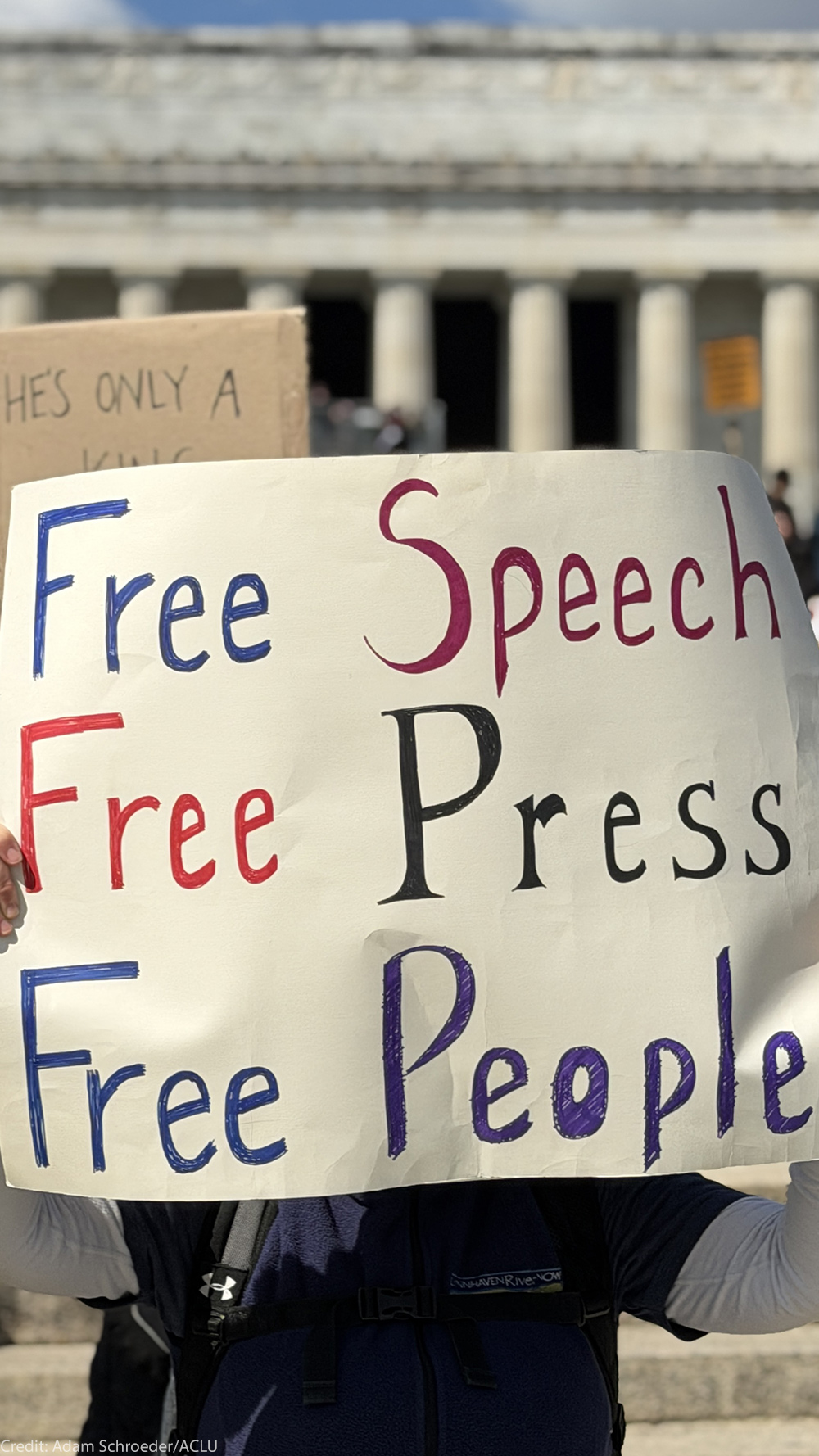
Implications for Democracy
The implications of this crackdown are profound. When law enforcement operates with the ability to intimidate or arrest those who record them, the chilling effect is immediate. People who witness misconduct will hesitate to reach for their phones, fearing for their safety. When witnesses go silent, the "official" version of events—written by the very people involved in the incident—becomes the only record.
This cycle of silence is the death knell for transparency. In a functioning democracy, the government must be accountable to the people, not the other way around. When agents of the state are allowed to act with impunity, the trust between the community and law enforcement evaporates. The "Press in Peril" series, which the ACLU continues to champion, highlights that the challenges faced by journalists are increasingly shared by the general public. We are all, in a sense, the press when we hold a camera to document the actions of those in power.
The Road Ahead: The ACLU’s Commitment
The ACLU remains steadfast in its mission to protect the First Amendment. We have successfully stood up to such abuses in Los Angeles, Minneapolis, and Illinois, and we are prepared to do the same in Memphis and beyond. The fight for the right to record is a fight for the future of democratic accountability.
We believe that the presence of a camera is not an act of aggression; it is an act of citizenship. It is an acknowledgment that the public has a right to see how its laws are enforced and how its tax dollars are utilized. As long as the government continues to treat the First Amendment as an obstacle rather than a foundational requirement, the ACLU will be in the courts, on the streets, and in the halls of government to ensure that the right to record is upheld.
The struggle for civil liberties is never truly finished. It requires constant vigilance, the courage to stand up against intimidation, and the commitment to bear witness. To every person who picks up a camera to document the actions of law enforcement, know this: you are exercising one of your most fundamental rights. The ACLU stands with you, and we will continue to ensure that your voice—and your footage—is heard and seen.

Related Resources:

 Siti Muinah
 Sagoh
Sagoh