

 Rifan Muazin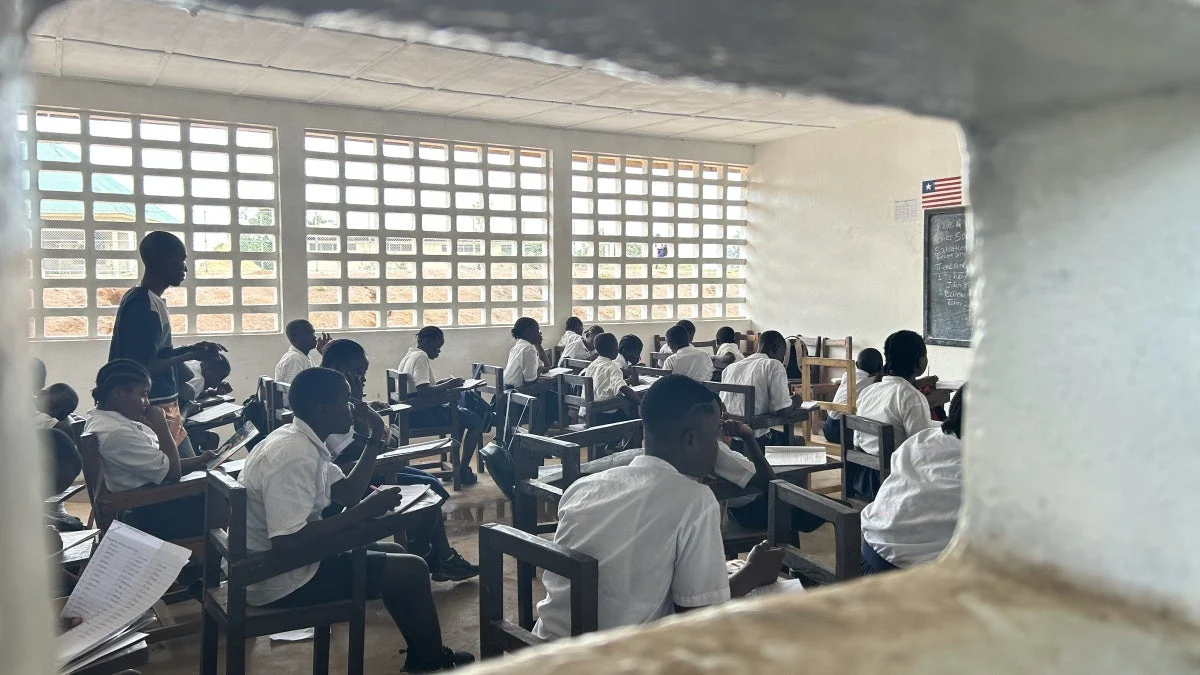
MONROVIA – For millions of Liberian children, the classroom door is not just a threshold to learning; it is a financial barrier guarded by fees that many families simply cannot afford. Despite national legislation guaranteeing free and compulsory education for grades 1 through 9, a new, comprehensive report from Human Rights Watch (HRW) reveals that the reality on the ground is a systemic failure that traps children in a cycle of poverty and exclusion.
The 75-page report, titled “Without Education, There Will Be Nothing”: School Fees and Other Barriers to Education in Liberia, exposes a stark disconnect between the government’s legal commitments and the daily struggles of households. As families across the nation scramble to pay mandatory registration fees and auxiliary costs, many are forced into an impossible choice: pay for schooling and sacrifice basic sustenance, or keep their children home.
The Core Crisis: A Broken Promise
At the heart of the crisis is the persistent imposition of "registration fees" in public schools. Legally, the Liberian government has committed to providing free, mandatory education for the first nine years of schooling. However, HRW’s findings indicate that these laws are being undermined by administrative policies that mandate payments from parents at all levels, from early childhood centers to senior secondary schools.
"The Liberian government has made important commitments to free and compulsory education, but school fees continue to keep children out of the classroom," said Jo Becker, children’s rights advocacy director at Human Rights Watch. "Removing these fees would be a crucial step to expand access to education and improve children’s futures."
For many, these fees are not merely a nominal expense; they are a prohibitive wall. Parents interviewed for the report described taking on predatory debt, skipping meals, and selling essential household goods just to ensure their children can sit at a desk. When these funds are unavailable, the consequences are immediate: children are sent home, their enrollment is delayed by years, or they drop out entirely to seek low-wage labor in markets and fields.
A Chronology of Exclusion
The current state of education in Liberia cannot be viewed in a vacuum. The nation’s pedagogical landscape has been shaped by decades of instability, including the long-term, structural scars of civil wars, the devastating 2014 Ebola epidemic, and the more recent economic shocks caused by the Covid-19 pandemic.
- Pre-2025 Context: Liberia’s education system had already been struggling with low investment and high dropout rates for years.
- November 2025 – January 2026: Human Rights Watch conducted an extensive field study across five counties: Montserrado, Margibi, Nimba, Bong, and Grand Bassa. During this period, researchers visited 21 schools and conducted in-depth interviews with 118 parents, teachers, and school administrators.
- The Child Perspective: To ensure the voices of the most affected were heard, Liberian child advocates facilitated peer-to-peer interviews with 61 children and youth. The testimonies gathered were harrowing. One 14-year-old boy, currently out of school to help his mother sell goods at the market, captured the collective despair of his peers: "Right now, I’m not in school because my parents can’t afford to send me. I really want to go back."
- 2026 Policy Landscape: The current administration continues to navigate the implementation of the Excellence in Learning in Liberia (EXCEL) project, a significant financial initiative aimed at reform. However, as the report notes, the transition from policy to practice remains sluggish.
Supporting Data: The Scale of the Crisis
The statistics provided by the HRW report paint a bleak picture of the Liberian education system, placing it among the most underperforming globally.
- Out-of-School Rates: Roughly one-third of all school-age children (ages 3–17) have never attended school. This figure rises to 50 percent for children living in rural areas.
- Completion Rates: The drop-off rate is severe. Only 38 percent of Liberian children complete the sixth grade, and that number plummets to a mere 17 percent by the ninth grade.
- Late Enrollment: The impact of fees on enrollment timing is profound. At the early childhood level (ages 3–5), 43 percent of children are at least three years older than they should be for their grade. By the time students reach secondary school, more than 60 percent are four or more years older than the official age for their grade level.
- Economic Disparity: With nearly half of the population living in poverty, the requirement to pay fees essentially acts as a tax on the poor. The average child entering school at age 4 can expect to complete only 4.2 years of total schooling by the time they reach age 18.
Infrastructure and Human Capital: Beyond the Fees
While registration fees are the primary point of contention, the report highlights that even if these fees were eliminated, the system would remain in a state of fragile repair. The infrastructure supporting Liberian education is buckling under the weight of neglect.
Overcrowded Classrooms
In many of the schools visited, classrooms are severely overcrowded, with some hosting 80 to 100 students per teacher. This makes individual instruction impossible and compromises the quality of the learning environment.
The Volunteer Teacher Crisis
The reliance on volunteer teachers is another systemic issue. Many teachers in the public system remain unpaid for years, serving in the hope that their dedication will eventually lead to a salaried position. This creates a volatile and unmotivated workforce, where the quality of instruction varies wildly from school to school.
Budgetary Shortfalls
Liberia’s fiscal commitment to education is lagging behind regional and international benchmarks. The 2026 education budget accounts for approximately 11 percent of national spending and roughly 2.73 percent of GDP. In comparison, members of the Economic Community of West African States (ECOWAS) average 4 percent, and international benchmarks suggest that developing nations should allocate between 4 and 6 percent of their GDP to education to see meaningful progress.
Official Responses and the Path Forward
The government is not entirely inactive. The EXCEL project, supported by a US$60 million loan from the World Bank and a US$28.7 million grant from the Global Partnership for Education, represents a significant infusion of capital. Specifically, the project allocates US$18.5 million for school grants—a direct mechanism intended to reduce or eliminate the need for schools to charge individual fees.
Human Rights Watch suggests that this model is not only sound but financially feasible. Their analysis estimates that fully replacing registration fees with these government-funded grants across all levels of public schooling would increase the national education budget by only about 4 percent.
Recommendations for Reform
To bridge the gap between intent and reality, Human Rights Watch has outlined a roadmap for the Liberian government:
- Immediate Elimination: Abolish registration fees at all public primary and junior secondary schools immediately, with a clear, time-bound plan to phase out fees for early childhood and senior secondary levels.
- Sustained Funding: Expand the school grants program to ensure that institutions have the resources to operate without charging parents.
- Human Resource Investment: Prioritize the recruitment and payment of trained, professional teachers while phasing out the reliance on unpaid volunteers.
- Infrastructure Rehabilitation: Direct spending toward the construction of safe, functional classrooms and the installation of basic facilities, such as clean water and restrooms, particularly in rural and underserved regions.
The Long-Term Implications
The implications of failing to act are not limited to the individual child. When a nation fails to educate its youth, it stifles its own human capital, perpetuates the cycle of poverty, and limits its potential for economic growth.
"Liberia has a clear opportunity to build on existing reforms and remove the financial barriers that keep so many children out of school," Jo Becker concluded. "Ensuring free, quality public education is one of the most effective investments the country can make."
As the report concludes, education is not a luxury or a privilege reserved for those who can afford it—it is a fundamental human right. For the children of Liberia, the promise of a future depends on the government’s ability to turn that legal right into a classroom reality. The question moving forward is whether the political will exists to prioritize the next generation over the short-term administrative convenience of fee-based schooling.

 Siti Muinah
 Sagoh
Sagoh