


 Basiran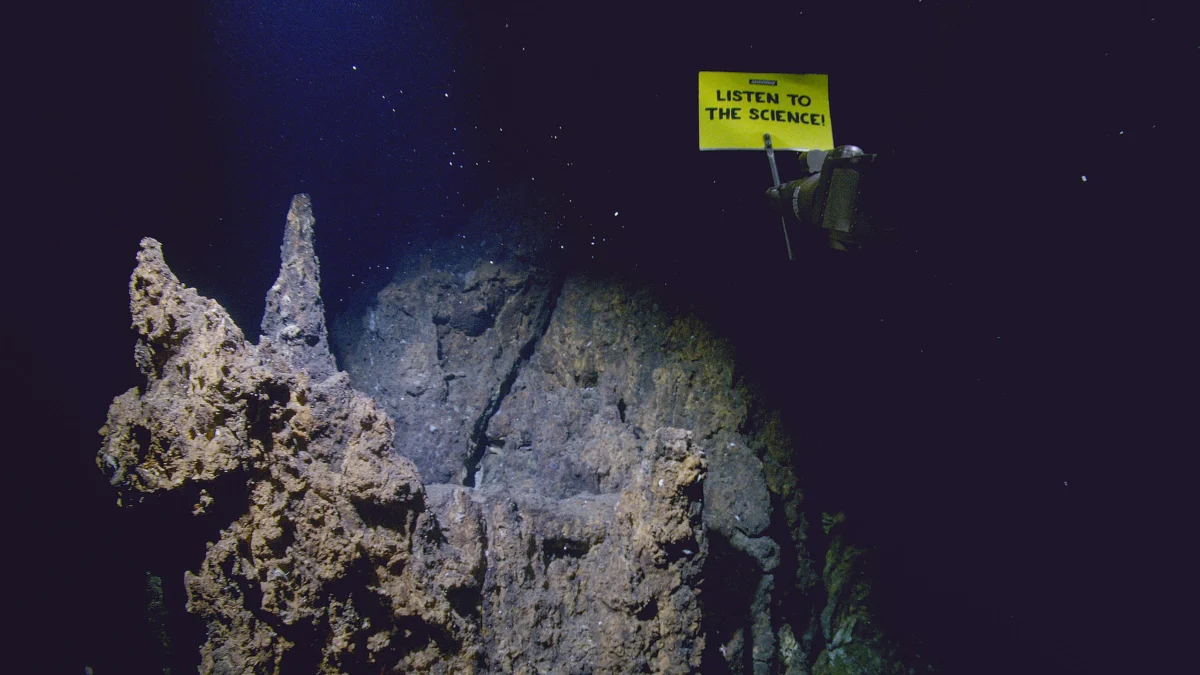
NORWEGIAN SEA, ARCTIC — In a feat of technological precision and environmental advocacy, Greenpeace has successfully executed the deepest banner protest in human history. Operating 2,315 meters beneath the surface of the Norwegian Sea, a remotely operated vehicle (ROV) named "Holly" unfurled a stark, urgent message directly onto the floor of the Arctic Mid-Ocean Ridge: "LISTEN TO THE SCIENCE!"
This unprecedented action, carried out amidst the volcanic, alien landscape of the "Loki’s Castle" hydrothermal vent field, serves as a visceral reminder of the fragile, unexplored frontiers currently facing the looming threat of industrial-scale exploitation.
Main Facts: A Call from the Cradle of Life
The protest took place as part of the Deep Arctic Expedition, a collaborative scientific venture led by Greenpeace International, Greenpeace Germany, and Greenpeace Nordic. Running from May 8 to June 5, the expedition aims to document the biodiversity of Arctic seamounts and hydrothermal vents—areas that are as biologically significant as they are vulnerable.
Loki’s Castle is not merely a geographic location; it is a profound scientific site. The field is characterized by "black smokers"—geological chimneys emitting mineral-rich, superheated fluid at temperatures ranging from 300°C to 320°C. These vents support complex ecosystems that thrive in complete darkness, relying on chemosynthesis rather than sunlight. For researchers, these sites represent potential "cradles of life," holding the secrets to the ancestral microbes that may have birthed complex life on Earth billions of years ago.
By placing a protest banner in such a sensitive environment, Greenpeace is drawing a line in the sand—or rather, on the seabed—demanding that global leaders prioritize ecological preservation over the short-term gains of deep-sea mining.
Chronology of the Expedition and the Protest
The mission to bring the protest to the depths of the Norwegian Sea was months in the planning, requiring a high level of technical coordination.
- May 8, 2024: The Deep Arctic Expedition officially commences, with the research vessel arriving at the Arctic Mid-Ocean Ridge to begin mapping and observing the seafloor.
- Ongoing Observation: Throughout the first weeks, scientists onboard conducted systematic surveys, livestreaming footage to the public via the Greenpeace International YouTube channel to ensure transparency and public engagement.
- The Deployment: Utilizing the ROV "Holly," the team successfully navigated the extreme pressures of the 2,315-meter depth. The operation required precise maneuvering near the delicate hydrothermal structures to ensure no harm was done to the vent field while the banner was positioned.
- The Message: Once in position, the banner was captured on video, providing a visual juxtaposition between human political demands and the silent, ancient majesty of the volcanic seafloor.
- Current Status: The expedition continues its work, documenting species and collecting data that will be crucial for the ongoing global debate surrounding the legal status of the deep sea.
Supporting Data: The Stakes of Deep-Sea Mining
The urgency of the "LISTEN TO THE SCIENCE" campaign is underscored by the rapid, often irreversible, changes currently impacting the Arctic. As one of the regions most affected by climate change, the Arctic is experiencing a cascade of ecological disruptions.
The Biodiversity Hotspot Risk
Scientists have identified the deep sea as a critical biodiversity hotspot. Unlike terrestrial ecosystems, which can sometimes recover from disturbance over decades, deep-sea environments are characterized by slow growth rates and extremely long lifespans. Mining activities—which involve scraping the seabed, releasing toxic sediment plumes, and creating noise and light pollution—pose a direct threat of:
- Habitat Destruction: The physical removal of crusts and nodules eliminates the substrates upon which specialized marine life depends.
- Species Extinction: Many organisms found at these depths are endemic, meaning they exist nowhere else on the planet. The loss of a single hydrothermal vent field could result in the total extinction of species not yet discovered or categorized.
- Disruption of Carbon Cycles: The deep sea acts as a massive carbon sink. Large-scale industrial mining could potentially interfere with the ocean’s ability to sequester carbon, exacerbating the very climate crisis it is supposed to help manage.
The Legislative Landscape
The region where the expedition is taking place was controversially opened for deep-sea mining exploration by the Norwegian government in 2024. However, after intense pressure from environmental groups, the scientific community, and opposition political parties, the government moved to halt these practices until 2029. While this represents a temporary victory for conservationists, the threat remains that the moratorium could be lifted if industrial interests regain political leverage.
Official Responses: The Scientific Imperative
Dr. Sandra Schöttner, Chief Scientist for the Deep Arctic Expedition, has been the primary voice of the mission. Her rhetoric emphasizes that the era of "unseen" destruction must come to an end.
"This marks the deepest banner protest in history, to speak for ecosystems that have no voice of their own," Dr. Schöttner stated during the mission. "World leaders have already promised to protect 30 percent of the oceans. Now, they must listen to the science and actually do it. We cannot meet our global goals if we also allow industrial exploitation of unexplored and vulnerable ecosystems."
Dr. Schöttner argues that the policy-making process is currently lagging behind the available data. "Science clearly predicts the limits of what our planet can endure, but human action determines our survival," she added. "By safeguarding these deep-sea ecosystems within a global network of ocean sanctuaries and establishing a moratorium on deep-sea mining, we can create a resilient safety net for marine life."
Implications: A Global Responsibility
The implications of the Deep Arctic Expedition extend far beyond the Norwegian Sea. The protest acts as a catalyst for a broader international discussion on the UN Ocean Treaty, which aims to protect 30% of the world’s oceans by 2030.
The Demand for a Moratorium
Greenpeace is calling for an immediate, legally binding global moratorium on deep-sea mining. They argue that:
- Lack of Knowledge: We currently know less about the deep ocean than we do about the surface of Mars. Proceeding with mining without a comprehensive understanding of the environmental impact is a reckless gamble.
- Corporate Accountability: The race to extract minerals for "green technology" (such as EV batteries) often overlooks the "green" cost of destroying deep-sea habitats. There is a call for increased focus on the circular economy and battery recycling rather than the destruction of the seafloor.
- Global Equity: The high seas belong to no single nation. Any exploitation of the seabed requires a level of global consensus that currently does not exist.
A Turning Point for the Arctic
The Arctic is a canary in the coal mine for global climate health. If the international community allows industrial exploitation to begin in one of the most sensitive parts of the planet, it sets a dangerous precedent for the rest of the world’s oceans.
The success of the protest—in terms of both the technological achievement and the media attention it has garnered—highlights a growing public awareness of deep-sea issues. As the expedition continues to livestream its findings, it brings the "hidden" world of the abyss into the living rooms of the public, effectively turning the deep sea into a visible, protected common heritage of humanity.
Conclusion
As the Deep Arctic Expedition moves toward its conclusion in early June, the message left at the bottom of the ocean remains as a permanent, symbolic challenge to policymakers. The "cradle of life" at Loki’s Castle is a reminder of our origins and a test of our future stewardship. Whether world leaders will indeed "listen to the science" remains the defining question of this decade.
For those wishing to follow the ongoing scientific work, Greenpeace continues to provide updates, maps, and livestream footage via their official channels, ensuring that the voice of the deep sea is heard, understood, and ultimately, protected.
For further information, please contact:
- Daniel Bengtsson, Communications Lead Onboard, Greenpeace Nordic: +46 70 300 9510
- Greenpeace International Press Desk: +31 (0)20 718 2470 (Available 24 hours)


 Rifan Muazin
 Layla Zulfa