

 Dwi Wanna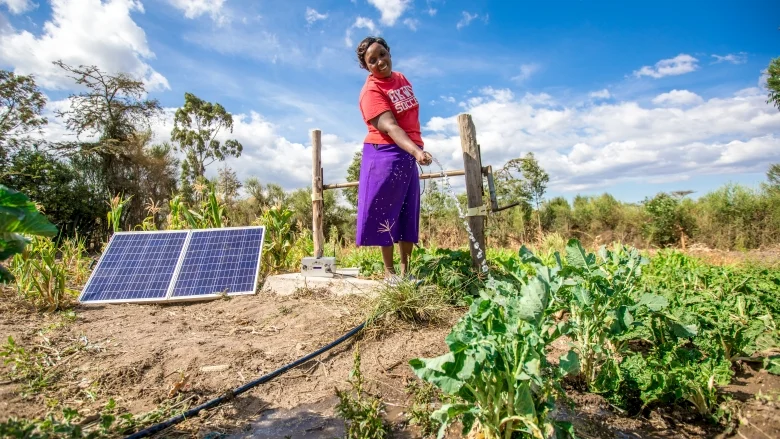
NAIROBI – At the African Development Bank (AfDB) annual meetings this week, a palpable shift in the narrative surrounding the continent’s energy crisis emerged. For decades, the discourse regarding Africa’s energy poverty has been dominated by the metric of "access"—the binary measurement of whether a household possesses a lightbulb. However, as the continent faces a convergence of climate challenges and economic stagnation, African heads of state are signaling a transition from mere household connectivity to the strategic deployment of energy as an industrial catalyst.
The message from the summit was unequivocal: electricity must move beyond the domestic sphere to power the engines of agriculture, manufacturing, and commerce if the continent is to achieve true sustainable development.
The Core Mandate: Powering Economies, Not Just Homes
The centerpiece of the current energy strategy is the AfDB’s ambitious "Mission 300" initiative, which seeks to provide electricity access to 300 million Africans by 2030. While the project is hailed as a monumental logistical undertaking, its architects and regional leaders are now emphasizing that the quality and application of this power are just as critical as its availability.
President Faustin-Archange Touadera of the Central African Republic (CAR) offered a sobering assessment during the proceedings. "Without a reliable and sustainable power supply, we will not be able to achieve development," Touadera stated. His remarks highlight a growing realization among African policymakers: that energy is the foundational infrastructure upon which all other economic sectors—education, healthcare, and digital services—are built. Without the bedrock of electricity, national development plans are relegated to theoretical exercises.
The Republic of Congo’s President, Denis Sassou Nguesso, reinforced this sentiment by connecting the grid to the rural economy. "As we need to help our people to turn towards agriculture, to turn towards livestock rearing, we also need to provide power to them," Nguesso noted. His comments strike at the heart of the "productive use of energy" (PUE) movement—the idea that electricity must be utilized as an input for production rather than just a convenience for consumption.
Chronology: The Evolution of Africa’s Energy Agenda
The current focus on productive energy is the culmination of years of iterative policy shifts.
- 2015–2018: The Era of Off-Grid Hype. The focus was primarily on Pay-As-You-Go (PAYG) solar home systems. While these successfully reached millions of remote households, they provided only enough power for lighting and phone charging, falling short of the capacity needed for industrial machinery.
- 2020–2022: The Post-COVID Economic Shock. The pandemic exposed the vulnerability of African economies reliant on fragile, centralized grids. The crisis accelerated the conversation around decentralized renewable energy (DRE) as a means to ensure economic resilience.
- 2023: The Birth of Mission 300. The African Development Bank, in partnership with the World Bank, launched Mission 300 to unify fragmented energy efforts. The goal of connecting 300 million people by 2030 became the new North Star for development finance institutions.
- 2024–2025: The "Productive Use" Pivot. Recognizing that small-scale solar cannot power a processing plant or a cold-storage warehouse, the focus shifted toward mini-grids and grid-extension projects specifically designed to serve SMEs, cooperatives, and agricultural clusters.
Supporting Data: The Energy-Development Gap
The urgency of these calls is underscored by staggering statistics that define the current landscape:
- The Access Deficit: According to the International Energy Agency (IEA), nearly 600 million people in sub-Saharan Africa still lack access to electricity. This represents the single largest barrier to regional economic growth.
- The Cost of Inaction: The World Bank estimates that the economic cost of power outages in many African countries amounts to 2% to 4% of GDP annually.
- Agriculture’s Untapped Potential: Africa holds 60% of the world’s uncultivated arable land, yet post-harvest losses remain among the highest globally, often exceeding 40% in certain regions due to a lack of cold-chain infrastructure—a direct consequence of inadequate energy access.
- The Investment Gap: To achieve the goal of universal energy access by 2030, Africa requires an estimated $100 billion in annual energy investment, a significant portion of which must be directed toward productive-use infrastructure.
The Strategic Shift: The Centre of Excellence for Productive Use of Energy
As the momentum behind Mission 300 builds, a new institutional architecture is being constructed to ensure that electrification creates tangible economic value. The Global Energy Alliance for People and Planet (GEAPP), a philanthropically funded organization, is spearheading the launch of a "Centre of Excellence for Productive Use of Energy."
This Centre aims to provide technical assistance, policy support, and pilot-funding for projects that integrate electricity into the value chains of key sectors. Carol Koech, GEAPP’s Vice President for Africa, emphasized in an interview with Climate Home News that the initiative is designed to bypass the limitations of traditional electrification models.
"The initiative is designed to ensure that electrification supports income generation, agriculture, and local economic development rather than only basic household access," Koech explained. By focusing on the productive aspect, the project aims to create a virtuous cycle: businesses use electricity to increase their output, which increases their income, allowing them to pay for the electricity, which in turn makes the energy infrastructure financially sustainable for utility providers.
Official Responses and Stakeholder Perspectives
The reception among development stakeholders has been largely positive, though guarded by the complexity of the task.
The AfDB Perspective: The bank views itself as the conductor of this massive energy symphony. By leveraging its balance sheet to de-risk private sector investments, the AfDB hopes to crowd in the billions required for grid modernization. For the AfDB, "productive use" is the metric that justifies the high capital expenditure of grid expansion.
The Private Sector View: Independent Power Producers (IPPs) are welcoming the policy shift. Many argue that supplying energy to a household with low purchasing power is a risky business model. However, supplying power to a cluster of agro-processors or a commercial zone provides a reliable, high-volume customer base that significantly improves the bankability of energy projects.
Civil Society and Local Communities: Advocates are cautious. While they applaud the focus on economic development, they emphasize that "productive use" must not come at the expense of social equity. There is a strong push to ensure that rural women—who constitute the bulk of the agricultural labor force—are prioritized in the distribution of these new productive energy assets, such as solar-powered mills and water pumps.
Implications: The Road Ahead
The shift toward productive energy is not merely a technical change; it is a fundamental reconfiguration of the development paradigm in Africa. If successful, the implications will be profound:
1. Industrialization and Value Addition
For too long, African nations have exported raw commodities, only to import them back as finished goods. By powering local processing centers—cocoa in Ghana, coffee in Ethiopia, textiles in Nigeria—energy access can facilitate the "value addition" required to keep more wealth within the continent.
2. Climate Resilience and Energy Transition
By prioritizing renewable energy sources like solar, hydro, and wind to power these productive sectors, Africa can chart a "green industrialization" path. This allows the continent to avoid the carbon-intensive mistakes of the West while simultaneously building the infrastructure needed to adapt to a changing climate.
3. Food Security
The energy-food nexus is arguably the most critical implication. Modern, electric irrigation systems and cold-storage facilities will transform agricultural productivity, enabling farmers to move from subsistence to surplus. This is a direct weapon against the food insecurity that plagues many parts of the continent.
4. Job Creation
The primary challenge for African leaders is the "youth bulge"—the need to create millions of jobs for a rapidly growing population. Powering rural businesses and SMEs is the most effective way to stimulate local employment, as these entities are the primary employers in the informal sector.
Conclusion: A Turning Point?
The meetings this week in the context of the AfDB annual gathering represent more than just another round of policy discussions. They signify a maturation of the African energy agenda. The realization that "electricity for all" must mean "electricity for growth" is a profound shift that aligns with the realities of the 21st-century global economy.
As the Global Energy Alliance for People and Planet and the AfDB move forward with the Centre of Excellence and the Mission 300 rollout, the world will be watching to see if these ambitious goals can survive the harsh realities of implementation. However, the unified voice of leaders like Presidents Touadera and Nguesso provides a clear mandate: the era of thinking about energy as a domestic luxury is over. The era of energy as the lifeblood of African industry has begun.
The path to 2030 is narrow and fraught with financial and political obstacles, but the shift in strategy—from lighting the night to powering the day—offers the most viable route to a resilient, industrialized, and prosperous African future.


 Rifan Muazin
 Layla Zulfa