

 Nana Wu
By [Your Name/Journalistic Desk]
As the global community prepares for COP31, the atmosphere is defined not by the usual bureaucratic maneuvering of climate diplomacy, but by a palpable sense of existential urgency. Andreas Sieber, head of political strategy at 350.org, and Shady Khalil, a senior global policy strategist at Oil Change International, recently underscored a sobering reality: the upcoming summit arrives at the epicenter of what Fatih Birol, the Executive Director of the International Energy Agency (IEA), has characterized as the "biggest energy crisis in history."
For a leader typically known for his measured, data-driven pragmatism, Birol’s rhetoric serves as a clarion call. It signals that the traditional separation between climate policy and economic stability has vanished. A UN climate summit that fails to address the triad of fossil fuel dependency, energy affordability, and equitable energy access will not merely be a political disappointment—it will be an economic and social catastrophe.
Main Facts: The Stakes of COP31
COP31 stands as a crucible for the international order. The core argument presented by policy experts is that the transition away from fossil fuels is no longer a luxury of the wealthy, but a prerequisite for the survival of the developing world.
The summit must pivot from the aspirational "frameworks" of the past—such as the Global Implementation Accelerator and the Just Transition Mechanism—toward tangible, measurable delivery. The previous summit in Belém laid the groundwork, but the architecture of climate action is currently fragile. The "Belém Roadmaps," particularly those concerning the transition away from fossil fuels (TAFF), require immediate operationalization. The Santa Marta conference in Colombia this past April provided the necessary political momentum, but COP31 remains the venue where this momentum must be codified into binding, state-level commitments.
Chronological Evolution: From Belém to Santa Marta
To understand the weight of COP31, one must trace the recent trajectory of climate diplomacy:
- The Belém Legacy: The previous COP concluded with several landmark initiatives. These included the establishment of a formal climate finance work programme, the expansion of the Action Agenda linked to the first Global Stocktake (GST1), and the introduction of the Belém Roadmaps. These were intended to act as the scaffolding for a post-fossil fuel economy.
- The Santa Marta Catalyst: In April, the international community convened in Santa Marta, Colombia, for the first-ever international conference specifically dedicated to the transition away from fossil fuels. This event was pivotal in moving the needle from "whether we should transition" to "how we facilitate an orderly exit."
- The Current Crisis: We are now in a period characterized by extreme volatility in energy markets. Geopolitical tensions, supply chain disruptions, and the realization that fossil fuel price spikes are inherently inflationary have created a "development crisis" that threatens to undo decades of progress in the Global South.
Supporting Data: The Economic Toll of Dependency
The narrative that climate action is a burden on the economy is being systematically dismantled by hard data. The current energy crisis is, in fact, a crisis of fossil fuel dependency.
The Geography of Vulnerability
The economic consequences of energy volatility are distributed with profound inequality. According to recent reports, over three-quarters of the world’s population resides in countries that are net importers of fossil fuels. For these nations, the global price of oil and gas is not merely a market indicator; it is a determinant of national stability.
The Inflationary Spiral
When global fossil fuel prices surge, the impact is immediate and cascading. High energy costs directly correlate with increased food prices, as agricultural production and transport are heavily reliant on fuel. This inflation is not a temporary nuisance; it is a driver of political instability. In many low-income nations, the fiscal burden of subsidizing energy or managing inflation has led to skyrocketing national debt, effectively strangling domestic development budgets.
The Security Dividend of Renewables
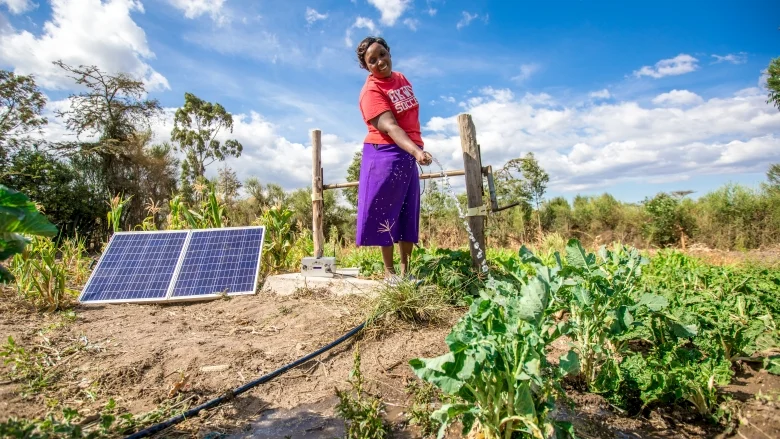
Data from organizations like Ember Energy suggests that the transition to wind and solar is the most effective hedge against such volatility. Unlike fossil fuels, which are subject to the whims of cartels and geopolitical conflict, renewables offer a localized, decentralized, and predictable energy source. By investing in renewables, importing nations can insulate themselves from the "boom-and-bust" cycles of the oil market, thereby strengthening their national security and economic sovereignty.
Official Responses and Strategic Perspectives
The divide between the "status quo" proponents and the "transition" advocates has never been clearer.
The IEA Perspective
Fatih Birol’s warnings are not merely warnings about carbon emissions; they are warnings about systemic economic failure. The IEA has consistently advocated for a rapid scaling of clean energy infrastructure, arguing that the cost of inaction far exceeds the capital investment required for a green transition.
The Advocate’s Stance
Andreas Sieber and Shady Khalil argue that COP31 must move beyond the "voluntary commitment" model. They contend that the Presidency-led TAFF roadmaps must be integrated into the Nationally Determined Contributions (NDCs) of every signatory. Without this integration, the transition will remain a series of disconnected initiatives rather than a coherent global strategy.
Implications: The Social and Political Fallout
The implications of a failed COP31 are severe. If the summit produces only rhetoric, the "development crisis" currently gripping the Global South will likely deepen.
The Social Contract
When governments cannot provide affordable energy, the social contract begins to fray. We have already witnessed the political consequences of energy-price-induced civil unrest in various regions. If the global community does not provide the financial mechanisms to help developing nations transition to renewables, these nations will be forced to choose between economic survival—often through the exploitation of their own dirty energy reserves—and climate commitments.
The Debt Trap
A major focus at COP31 must be the reform of international financial institutions. Currently, many developing nations are trapped in a cycle of debt servicing that prevents them from investing in their own energy transitions. COP31 must provide a pathway for "debt-for-climate" swaps and concessionary financing that treats the transition not as a gift, but as a global investment in stability.
The Geopolitical Reordering
The transition is also a shift in geopolitical power. As nations move away from fossil fuel imports, the leverage held by petrostates diminishes. This creates a vacuum that could either lead to greater global cooperation or a scramble for the critical minerals required for the new energy economy. COP31 provides a unique, perhaps final, opportunity to establish a multilateral framework that governs this transition in a way that is equitable and prevents a new era of resource-based conflict.
Conclusion: The Mandate for Delivery
The rhetoric surrounding COP31 is stark because the reality is stark. We are no longer debating the science of climate change; we are navigating the politics of energy survival.
To succeed, the COP31 Presidency must hold a firm line on the following mandates:
- Operationalize the TAFF: The transition away from fossil fuels must be the central metric of the summit’s success.
- Finance for Development: Establish concrete mechanisms to relieve the debt burdens of low-income, net-importing nations, allowing them the fiscal space to invest in renewable infrastructure.
- Security through Renewables: Acknowledge that the shift to clean energy is a fundamental component of global security and economic stability.
The "biggest energy crisis in history" is a warning shot. If COP31 fails to deliver, the repercussions will be felt far beyond the negotiating halls. It will be felt in the rising cost of bread, the instability of fragile states, and the lost potential of an entire generation. The world is watching to see if diplomacy can evolve at the speed of the crisis it seeks to solve. The era of frameworks is over; the era of delivery must begin in earnest.

 Rifan Muazin
 Layla Zulfa