


 Nana Wu
In the landscape of American democracy, few processes are as fundamental—or as frequently manipulated—as redistricting. It is the architectural blueprint of our political system, determining how millions of voices are grouped together to select the officials who represent them in city councils, state legislatures, and the halls of Congress. However, a seismic shift in the legal landscape has occurred. The Supreme Court’s recent ruling in Louisiana v. Callais has fundamentally altered the rules of the game, creating a environment where discriminatory voting maps can be drawn with unprecedented impunity.
As the mechanisms of electoral power are being reconfigured, it is critical for voters to understand what is at stake. The core tenet of a representative republic is that voters should choose their politicians, not that politicians should choose their voters. With the protections of the Voting Rights Act (VRA) severely curtailed, that foundational principle is under siege.
The Core Facts: Defining Redistricting and Gerrymandering
At its most basic level, redistricting is a logistical necessity. Every ten years, following the decennial census, states must redraw the lines of their electoral districts to account for population shifts. This ensures that districts remain relatively equal in size, upholding the "one person, one vote" standard established by the Supreme Court in the 1960s.
When performed fairly, this process allows for a dynamic democracy that evolves alongside its citizens. However, when the process is hijacked for partisan or discriminatory gain, it becomes "gerrymandering." Gerrymandering is the deliberate manipulation of boundary lines to concentrate or fracture specific voting populations. By packing members of a specific group into a single district or diluting their influence by spreading them across many, bad-faith actors can pre-determine the outcome of elections, rendering the voters’ choices irrelevant.

A Chronology of Legal Retreat: From the VRA to Callais
To understand the gravity of the current moment, one must look at the historical trajectory of voting rights protections.
- 1965: The Voting Rights Act is signed into law, providing a robust federal shield against racial discrimination in voting, including the drawing of district lines that effectively silenced minority communities.
- The 1960s (The "One Person, One Vote" Era): The Supreme Court issues a series of landmark rulings confirming that the Fourteenth Amendment guarantees equality of voting power, forcing states to move away from malapportioned districts.
- Decades of Precedent: For nearly 60 years, Section 2 of the VRA served as the primary tool to combat vote dilution. It prevented maps that resulted in discriminatory outcomes, regardless of whether explicit "intent" could be proven in court.
- April 2026 – Louisiana v. Callais: The Supreme Court strikes down a Louisiana congressional map that included two districts allowing Black voters to elect their candidate of choice. By ruling against these maps, the Court effectively gutted the "results" test of the VRA.
The Callais decision has shifted the burden of proof from the state to the voter. Now, challengers must meet an almost impossible standard: proving that a legislature acted with explicit, intentional discriminatory malice. In the complex world of legislative map-drawing, such intent is rarely documented in writing, making this standard a functional green light for discriminatory redistricting.
Supporting Data: Demographic Shifts vs. Political Representation
The tension in current redistricting efforts is exacerbated by a demographic reality that clashes with the political status quo. According to 2020 Census data, nearly all of the nation’s population growth over the last decade has occurred within communities of color.
While the country is becoming more diverse, the political maps in many states are failing to mirror this evolution. Instead, as Sophia Lin Lakin, Director of the ACLU’s Voting Rights Project, points out, we are seeing the systematic elimination of districts that have provided fair representation for Black and Latino voters.
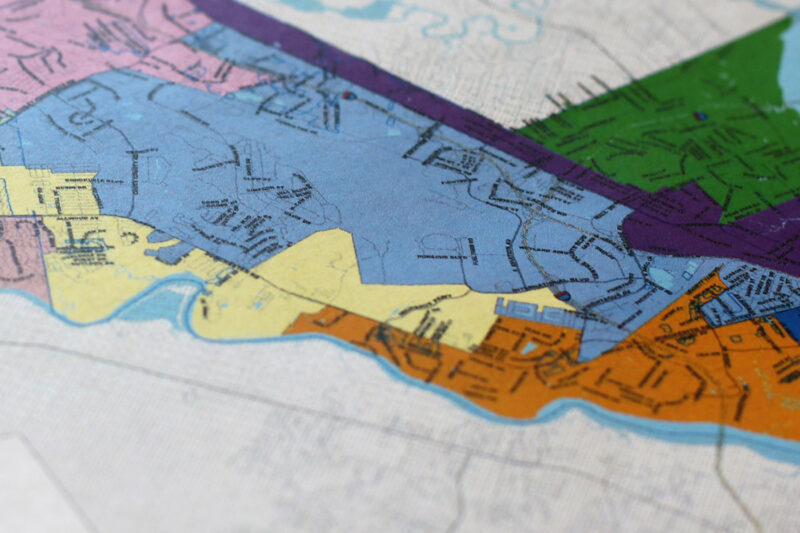
When you examine the math of "vote dilution," the impact is clear. If a community of color constitutes 20% of a state’s population but is fractured into five different districts where they make up only 5% of the electorate in each, they may never be able to elect a candidate of their choice. Conversely, "packing" them into a single, overwhelming district can render them powerless in the remaining districts of the state. These tactics turn the demographic growth of the country into a paradox: as these groups grow in number, their influence in the halls of power is actively being diminished.
The Distinction: Reapportionment vs. Redistricting
A frequent point of confusion is the difference between reapportionment and redistricting.
- Reapportionment is the high-level math of democracy. After the census, the 435 seats in the U.S. House of Representatives are re-allocated among the 50 states. For example, a state like Texas might gain two seats due to rapid growth, while a state like New York might lose one. This is a statistical process.
- Redistricting is the internal task of drawing the lines within those states. Once a state knows how many representatives it has, it must divide its territory into that many geographic districts.
The risk today is that states can use the chaotic nature of the post-reapportionment shuffle to hide their gerrymandering tactics, masking discriminatory intent behind the guise of "geographic necessity."
Implications: The New Era of Disenfranchisement
The implications of the Callais ruling are profound and immediate. By removing the guardrails that protected minority voting power, the Court has invited a "wild west" scenario in state capitols across the country.

- The Rise of Mid-Decade Redistricting: While the standard practice is to redraw lines once per decade, some states have begun experimenting with mid-decade redistricting. Without federal oversight, this allows parties in power to redraw lines whenever they feel their majority is threatened by changing demographics.
- Increased Legal Costs for Civil Rights Groups: Because the "intent" standard is so difficult to prove, civil rights organizations must invest exponentially more resources into discovery and expert testimony, straining the ability of grassroots organizations to fight back.
- Institutional Cynicism: When voters realize that the lines are drawn to ensure a specific outcome, voter turnout often drops. The feeling that "my vote doesn’t count" becomes a self-fulfilling prophecy, which is exactly what gerrymandering aims to achieve.
Official Responses and the Path Forward
The legal community, particularly the ACLU and other voting rights advocates, has expressed deep alarm at the Callais ruling. The consensus among civil rights experts is that the decision represents a significant retreat from the egalitarian promises of the Voting Rights Act.
However, the fight is not over. While federal protections have been weakened, advocates are pivoting toward:
- State Constitutional Challenges: Many state constitutions offer stronger protections for voting rights than the federal Constitution. Litigators are increasingly filing suits in state courts, citing state-level guarantees of "free and fair" elections.
- State Voting Rights Acts (SVRAs): Some states, such as California, New York, and Virginia, have passed their own versions of the Voting Rights Act. These laws can provide the necessary legal leverage to challenge discriminatory maps even when federal law remains silent or hostile.
- Legislative Advocacy: The ultimate fix for a broken system is the ballot box and the statehouse. Activists are pushing for independent redistricting commissions—bodies composed of citizens rather than politicians—to handle the map-drawing process. These commissions have shown success in removing the self-interest of incumbents from the equation.
Conclusion: Why We Must Care
Redistricting is not merely an administrative chore for bureaucrats; it is the fundamental process that defines who has a seat at the table. When the lines are drawn fairly, the government reflects the will of the people. When they are drawn to suppress specific voices, the democracy itself becomes hollow.
As the impact of Louisiana v. Callais ripples across the nation, public engagement has never been more vital. Informed citizens must monitor their local and state redistricting processes, attend public hearings, and demand transparency from their representatives. By participating in these forums, we can ensure that, even in a challenging legal environment, the promise of representative government remains intact. The power to draw the lines may currently be in the hands of the powerful, but the power to hold them accountable remains with the voters.


 Lina Hope
 Neng Nana