

 Neng Nana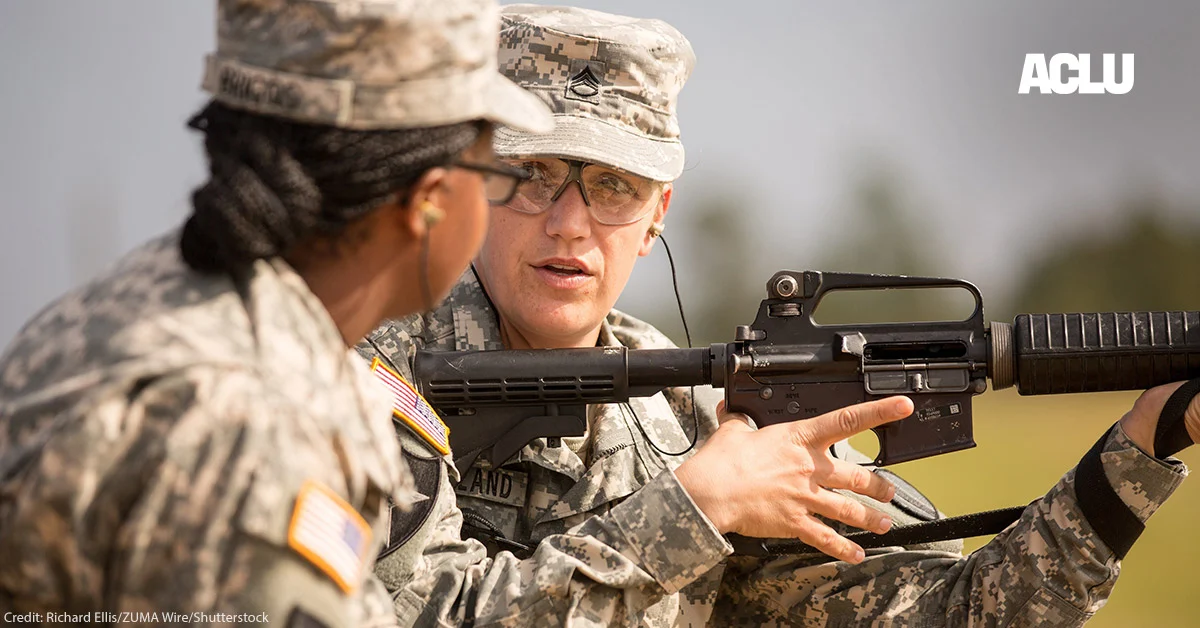
By Vania Leveille, Senior Legislative Counsel, ACLU National Political Advocacy Department
May 29, 2026
For over a decade, the United States military has operated under the fundamental premise that merit, physical capability, and professional aptitude—not gender—should dictate a service member’s career trajectory. Since the lifting of the ban on women in combat in 2016, thousands of women have integrated into infantry, armor, artillery, and special forces units, proving their mettle on the training ground and in the field. However, this hard-won progress now faces an existential threat. Under the leadership of Secretary of Defense Pete Hegseth, the Department of Defense (DoD) has signaled an intent to reverse these policies, citing unsubstantiated claims regarding readiness and standards. As the legislative cycle heats up, Congress finds itself at a critical juncture: will it uphold the professional integrity of the armed forces, or will it allow a return to an era of discriminatory exclusion?
A Chronology of Exclusion and Integration
The struggle for gender equality in the U.S. military is long and complex. For decades, the Department of Defense maintained a policy that effectively barred women from competing for or being assigned to direct ground combat roles. This exclusion extended to infantry, armor, artillery, combat engineering, and various special operations positions.
By the early 2010s, more than 200,000 military positions were deemed “off-limits” to women, regardless of their individual physical fitness or technical expertise. This systemic barrier was fundamentally at odds with the military’s own stated commitment to a meritocratic system, where service members are evaluated based on their achievements and potential.
The legal turning point arrived in 2012 when the American Civil Liberties Union (ACLU) filed a landmark lawsuit, Service Women’s Action Network v. Esper, challenging the Department of Defense’s discriminatory policies. The lawsuit argued that the ban was not only archaic but a violation of the U.S. Constitution. The pressure of the litigation, combined with shifting cultural expectations, led to a sea change. By 2016, the DoD officially opened all ground combat arms occupations to women. This shift was widely regarded as a watershed moment for the nation, comparable in its significance to President Harry Truman’s 1948 executive order to desegregate the armed forces.
The Performance Record: Data Over Dogma
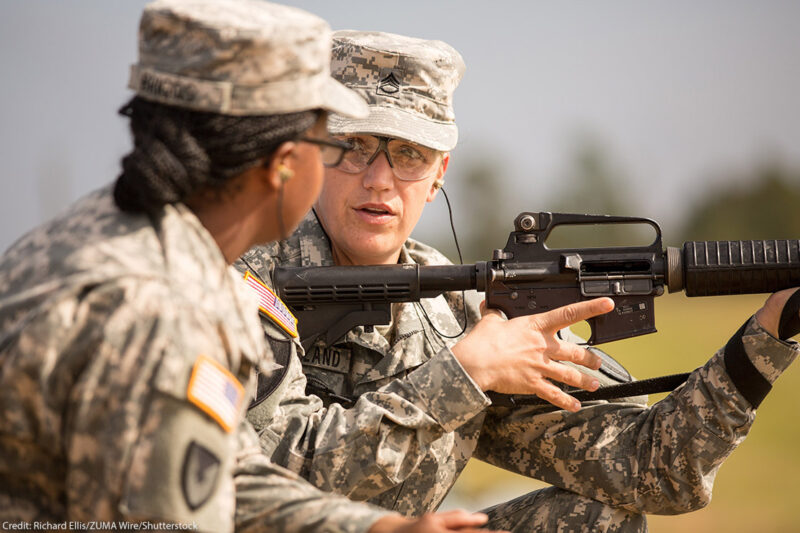
In the ten years since the ban was lifted, approximately 5,000 women have successfully entered and served in ground combat roles. Far from being a social experiment, their integration has been marked by rigorous adherence to standardized testing. By law, every recruit—male or female—must meet the same occupational standards to qualify for these roles.
The record of achievement is substantial. Nearly 200 women have earned the coveted Ranger Tab, a testament to their ability to endure the U.S. Army’s grueling 62-day small-unit tactics and leadership course. Beyond this, women have qualified for the elite Ranger Regiment, served as Master Gunners, led as Company Commanders, and provided expert instruction in combat arms schools. They have been decorated with Expert Infantry Badges, Combat Dive Badges, and Expert Soldier Badges.
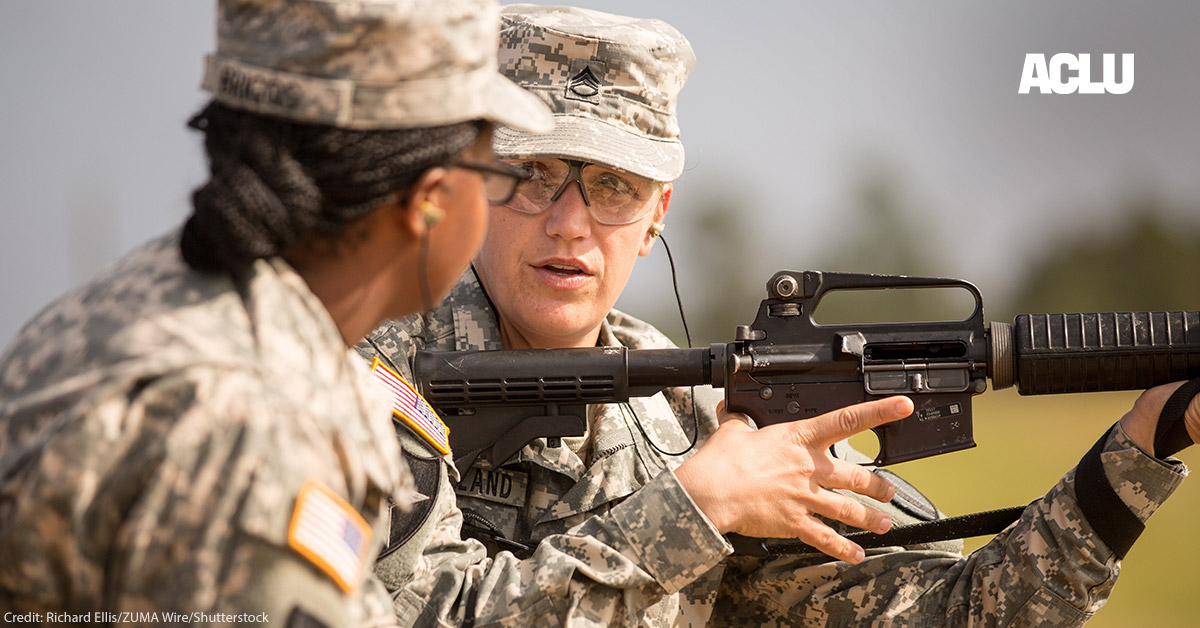
These accomplishments debunk the persistent myth that inclusion necessitates the lowering of standards. In truth, the standards remain gender-neutral and strictly job-related. The integration of women has been a strategic asset, expanding the talent pool for senior leadership positions and fostering a more diverse, capable, and representative military force.
The Current Crisis: A Policy Reversal Based on Stereotypes
Despite this record of success, the Department of Defense is currently under the leadership of Secretary Pete Hegseth, who has expressed profound skepticism regarding the presence of women in combat arms. Hegseth has publicly alleged, without providing empirical evidence, that the integration of women has only been possible through the lowering of physical and professional standards.
Furthermore, Secretary Hegseth has asserted that the presence of women has undermined “combat readiness, lethality, and unit cohesion.” These claims represent a pivot toward arguments rooted not in modern military science or data, but in archaic stereotypes about the “proper” role of women in society.
The danger of this rhetoric cannot be overstated. When a leader of the armed forces dismisses evidence-based performance in favor of gender-based assumptions, it undermines the morale of the thousands of women currently serving in combat roles and risks eroding the professional standards of the entire military.
Expert Consensus and Military Studies
The assertion that women degrade unit effectiveness is directly contradicted by years of internal military research. Between 2019 and 2023, the U.S. Army conducted a series of comprehensive studies to evaluate the impact of women’s service in combat arms. The findings were categorical: there is no evidence that the integration of women has had any adverse effect on readiness, lethality, or unit cohesion.
This consensus was reinforced during a high-profile February 2026 hearing of the Senate Armed Services Committee. Under questioning from lawmakers, the most senior enlisted leaders of the U.S. military—the individuals responsible for the day-to-day training and performance of troops—unanimously affirmed that there is no data to suggest women are lowering standards or damaging combat efficacy. These leaders, who oversee the very units in question, have made it clear that the current policy is working and that there is no operational justification for a reversal.
Legislative Intervention: The WARRIOR Act
Recognizing the fragility of current protections, a bipartisan coalition in Congress has introduced H.R. 8175, known as the WARRIOR Act. The ACLU has joined numerous veterans’ and civil rights organizations in endorsing this legislation, which serves as a vital firewall against the administration’s proposed rollbacks.
The WARRIOR Act does more than just protect current service members; it establishes a framework for accountability. Key provisions of the bill include:
- A Statutory Prohibition: The bill explicitly declares that the integration of women into combat roles must not be reversed.
- Preventing Reinstatement: It mandates that the ground combat ban lifted in 2016 cannot be reinstated by administrative fiat.
- Congressional Oversight: The act grants the House and Senate Armed Services Committees the authority to monitor and challenge any attempts by the Department of Defense to alter occupational standards. Crucially, the DoD would be required to provide clear, evidence-based data proving that any proposed changes are strictly job-related, rather than based on demographic preferences.
As the House and Senate Armed Services Committees prepare to debate the National Defense Authorization Act (NDAA) in June, the stakes for the WARRIOR Act—and for related amendments—are at an all-time high. The NDAA, as the annual legislative vehicle for defense policy, represents the primary opportunity for Congress to force the executive branch to stay the course.
The Implications for National Security
The debate over women in combat is not merely a matter of civil rights; it is a matter of national security. A military that rejects top-tier talent based on gender is a military that is intentionally handicapping itself. By excluding women, the DoD would be shrinking the recruitment pool, limiting the diversity of thought and experience within its ranks, and stalling the career progression of thousands of high-performing soldiers.
Moreover, the morale of the force depends on the belief that the system is fair. If service members see their peers being pushed out or sidelined despite meeting every rigorous standard, the trust that is essential to unit cohesion will evaporate. The military’s strength lies in its ability to adapt and to demand the best from every individual. To regress now would be a betrayal of the men and women who have dedicated their lives to protecting the nation.
A Call to Action
The progress made over the last ten years has required immense courage and fortitude from thousands of women who chose to step onto the front lines. They have faced the challenges of training, the rigors of combat, and the skepticism of their peers, and they have succeeded at every turn.
Now, it is up to Congress to show the same level of resolve. The rhetoric coming from the Pentagon suggests an administration willing to ignore the facts in pursuit of a social agenda. The only way to ensure that this progress is not erased is for Congress to hold the line. Members of the Armed Services Committees must stand firm, support the WARRIOR Act, and ensure that the next NDAA includes the necessary protections to safeguard the future of our armed forces.
The military is not a museum for 20th-century social norms; it is a dynamic, high-stakes organization that must be fueled by merit. By protecting the right of women to serve in all capacities, Congress will not only be upholding the Constitution—it will be ensuring that the United States military remains the most capable, prepared, and effective fighting force in the world. The time for empty rhetoric is over; it is time for legislative action that honors the service of all our troops.

 Lina Hope
 Basiran