


 Reynand Wu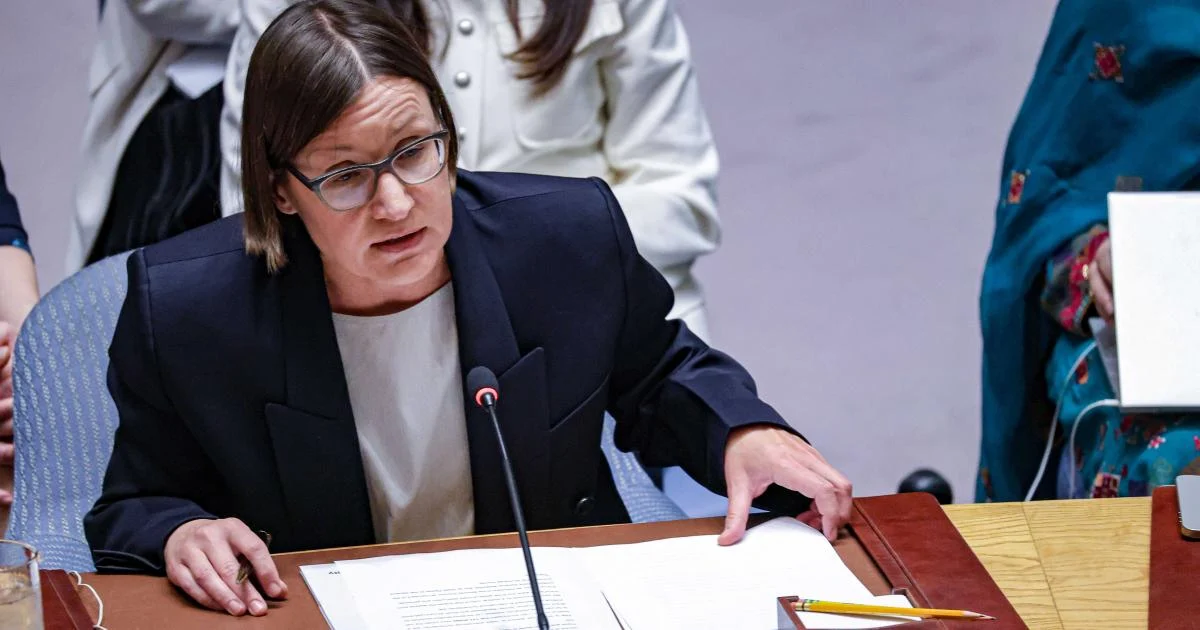
NEW YORK — In a sobering address to the United Nations Security Council on May 20, 2026, Mirjana Spoljaric, President of the International Committee of the Red Cross (ICRC), delivered a blistering indictment of the current state of global warfare. Addressing the Open Debate on the Protection of Civilians in Armed Conflict, Spoljaric argued that the international community is witnessing a systematic collapse of the moral and legal frameworks designed to limit the carnage of war.
Spoljaric’s remarks, grounded in recent field missions across the Middle East, the Horn of Africa, and Eastern Europe, suggest that the "rules of war"—once considered an immutable baseline for civilized nations—are being treated as optional, if not entirely obsolete.
The Death of Restraint: A Systemic Crisis
At the heart of Spoljaric’s address was a chilling diagnosis: the transition from wars between combatants to wars against civilian populations. The ICRC President contended that the sheer scale of destruction currently observed in conflict zones globally is not an accidental byproduct of modern weaponry, but a deliberate choice by political and military leadership.
"We can no longer pretend that what we are witnessing across war zones is in accordance with the law," Spoljaric stated. "Not the scale of destruction. Not the scale of suffering. And not the language being used to justify it."
The ICRC, which has historically served as the neutral guardian of the Geneva Conventions, warns that the normalization of "brutalizing rhetoric" is creating a permissive environment for atrocities. When leaders label adversaries as "sub-human" or threaten the collective existence of populations, they strip away the psychological barriers that prevent soldiers from committing war crimes. This dehumanization, Spoljaric noted, is the consistent precursor to genocide and mass atrocity.
Chronology of Escalation: From Rhetoric to Rubble
The decline in the protection of civilians has not occurred overnight; it is the result of a gradual erosion of norms that has accelerated over the past decade.
- Pre-2020: International Humanitarian Law (IHL) faced challenges, yet remained the primary framework for military conduct.
- 2020–2023: The proliferation of regional conflicts in the Horn of Africa and the intensification of hostilities in Eastern Europe saw the weaponization of civilian infrastructure—including energy grids and water supplies—as a standard tactical maneuver.
- 2024–2025: The shift toward urban warfare in the Middle East resulted in unprecedented civilian death tolls, with hospitals, schools, and aid convoys being frequently targeted under the guise of "military necessity."
- May 2026: The ICRC reports that access to detention centers—a cornerstone of their mission to ensure the humane treatment of prisoners—is now being denied or severely restricted by state and non-state actors at an alarming rate, marking a new low in international compliance.
The Shadow World: Detention and the Absence of Oversight
A significant portion of Spoljaric’s address focused on the "shadows"—the clandestine detention centers, interrogation rooms, and prisons where the absence of public scrutiny allows for the total breakdown of moral boundaries.
The ICRC President emphasized that torture is never an accident. It is a product of systemic design. By stripping prisoners of their identity, legal status, and records of existence, belligerents ensure that these individuals effectively "vanish" from the international consciousness.
Spoljaric drew specific attention to her recent visit to Karkh Central Prison in Baghdad, which holds thousands of individuals from nearly 70 nations, including children caught in the crossfire of conflicts they did not initiate. "Their situation symbolizes what can happen when the international community deems entire categories of people outside the bounds of the law," she remarked. The refusal of states to allow ICRC monitoring of such facilities is, in her view, a dangerous betrayal of the Geneva Conventions that invites future instability and radicalization.
Supporting Data: The Cost of Impunity
While the ICRC maintains strict confidentiality regarding its specific field findings, the broad trends presented to the Security Council paint a grim picture:
- Infrastructure Destruction: In multiple theaters of war, the destruction of civilian infrastructure has reached a level where recovery is estimated to take decades, effectively "shackling" the future of millions of survivors to a cycle of poverty and displacement.
- Targeting of Aid Workers: Data from the past 24 months suggests that medics and humanitarian workers are facing unprecedented risks, with incidents of deliberate targeting reaching a statistical high.
- The Global IHL Initiative: Despite the bleak outlook, Spoljaric highlighted a glimmer of hope: the Global IHL Initiative, supported by Brazil, China, France, Jordan, Kazakhstan, and South Africa. Currently, 111 states have signed onto this effort to reaffirm their commitment to the laws of war, suggesting that while the rules are being broken, the diplomatic infrastructure to enforce them still exists.
Official Responses and Diplomatic Implications
The Security Council, often paralyzed by the veto power of its permanent members, faced a stern challenge from the ICRC. Spoljaric urged the council to move beyond "cursory management" of conflicts and toward genuine, long-term resolution.
"Protecting civilians and treating your adversary within the confines of the law does not make you weaker," she insisted. "It strengthens your moral upper hand at home and abroad."
Diplomatic observers note that the ICRC’s intervention is a calculated attempt to leverage the "moral high ground" to shame states into compliance. By framing the adherence to IHL as a strategic asset rather than a humanitarian burden, the ICRC hopes to appeal to the self-interest of state leaders.
However, the reality remains that many modern conflicts involve non-state actors or "asymmetric" warfare where traditional state-to-state pressure is less effective. The implication of Spoljaric’s warning is that if the UN Security Council does not act to uphold the Geneva Conventions, the world faces a return to a "pre-law" era of total war, where the survival of the civilian population is purely a matter of luck.
Conclusion: A Call to Political Courage
The address concluded with a plea for political courage. Spoljaric reminded the international community that the first steps toward peace are often found in the most mundane, yet profound, humanitarian acts: the exchange of prisoners, the return of the deceased to their families, and the restoration of communication lines.
"We cannot succumb to a political culture that erases the lessons born out of world wars, out of the ashes of mass destruction and genocide," Spoljaric said.
As the international community navigates an increasingly fragmented and volatile geopolitical landscape, the ICRC’s message serves as both a warning and a roadmap. The "rules of war" are not merely legal technicalities; they are the thin red line between humanity and chaos. Whether the world’s leaders possess the will to redraw that line remains the defining question of our time.
The silence that followed the speech in the Security Council chamber underscored the gravity of the situation: the norms that were built to save us are failing, and the time for half-measures has passed. The responsibility now rests with the UN member states to decide whether the future of warfare will be governed by the rule of law or the raw, unbridled destruction of the past.

 Rifan Muazin
 Asep Darmawan