


 Nila Kartika Wati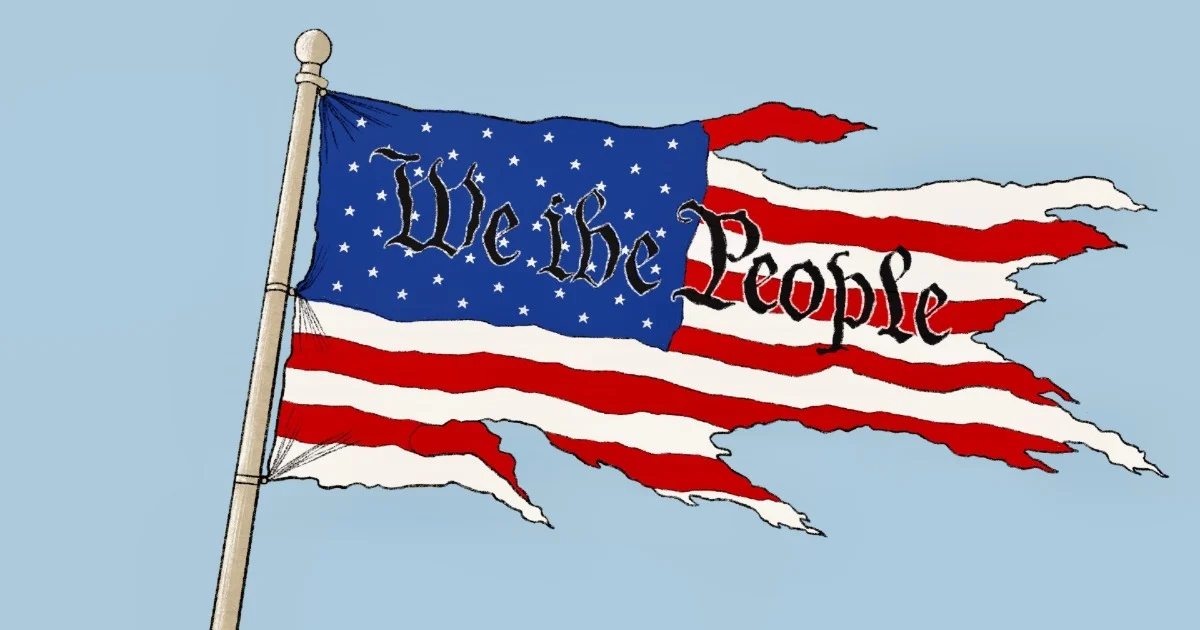
As the United States approaches the 250th anniversary of its founding, a somber realization is settling over the international community: the American Revolution, once heralded as the world’s most potent beacon of democratic aspiration, is increasingly viewed as a parochial, inward-looking affair. The "torchbearer of freedom" has become, in the eyes of many, a cautionary tale of institutional ossification and imperial overreach.
The Settler-Colonial Mirror: A Historical Parallel
In 1899, as the Second Boer War raged, F.W. Reitz—State Secretary of the South African Republic—published A Century of Wrong. Primarily authored by Jan Smuts, the text articulated a desperate defense of the Afrikaner settler’s right to self-government, framing their struggle against the British Empire as a fight for liberty "prized above all earthly treasures."
Historically, the American War of Independence bears a striking, uncomfortable resemblance to the Boer struggle. Both were settler revolts against the British Crown, both were explicitly racialized, and both viewed the subjugation of Indigenous populations and the preservation of slaveholding as essential to their economic and social stability. Thomas Jefferson’s own grievances in the Declaration of Independence regarding Native peoples highlight this foundational commitment to territorial expansion and settler supremacy.
The Evolution of a Global Symbol
The distinction between the American experience and other settler revolts lies in the symbolic capital the United States accrued throughout the 20th century. For global figures like Jawaharlal Nehru and Sukarno, the American founding was not merely a local eruption of colonial conflict; it was a universal promise.
In his 1949 address to the U.S. Congress, Prime Minister Nehru honored the American founders as "torchbearers of freedom." Six years later, at the 1955 Bandung Conference, Indonesian President Sukarno famously cited Paul Revere’s ride as the inception of a global anti-colonial struggle. To the leaders of the emerging Third World, the American Revolution represented the possibility of a "dynamic relationship" between a changing people and their governing institutions. They saw a nation that—despite its deep-seated flaws—possessed a protean capacity for renewal.
The Erosion of the American Promise
The mid-20th century saw the United States attempt to reconcile its settler history with its role as a global superpower. Between the 1930s and 1960s, a period defined by the New Deal coalition, the rise of powerful labor unions, and the burgeoning Civil Rights Movement, the U.S. polity appeared to be in a state of productive flux. This period of "democratic evolution" gave outside observers hope that the U.S. project could eventually encompass true equality.
However, the late 20th and early 21st centuries have signaled a sharp reversal. The institutional mechanisms that once allowed for the incorporation of excluded groups have been systematically degraded. The current American landscape is marked by:
- Institutional Paralysis: A constitutional system that prioritizes the rule of a mobilized minority over multiracial majorities.
- Plutocratic Capture: The hollowing out of the social safety net and the unchecked power of corporate elites.
- Resurgent Ethno-Nationalism: A return to exclusionary politics that mirror the very settler-colonial biases the nation once sought to transcend.
Chronology of Disenchantment
- 1776: The Declaration of Independence establishes the American template for self-determination.
- 1945–1955: The "Bandung Era," where Third World leaders view the U.S. as a model for decolonization.
- 1965: The end of racially restrictive immigration quotas sparks a new wave of immigrant attachment to the American project.
- 2016–Present: The rise of Trump-era populism and the subsequent institutionalization of travel bans and anti-democratic rhetoric.
- 2024–2026: The erosion of accountability, characterized by illegal executive wars and the normalization of impunity for state violence.
The Crisis of Impunity and Global Perception
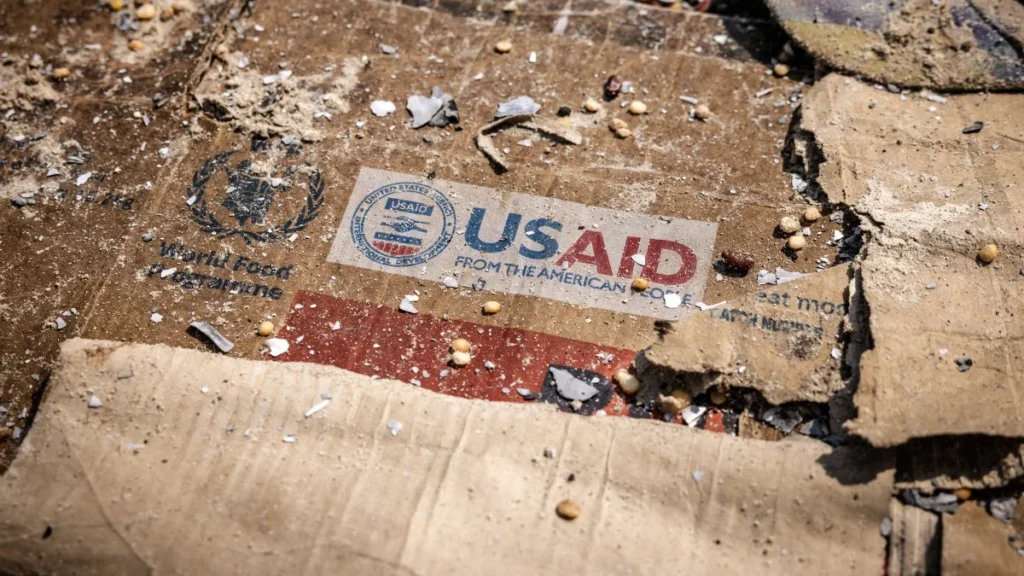
Perhaps the most damaging development is the U.S. government’s descent into unchecked executive violence. Whether through illegal wars of aggression in the Middle East, the facilitation of humanitarian crises, or the casual threats of annihilation against foreign nations, the current U.S. administration has effectively abandoned the liberal international order.

Legal scholars and global observers note that this culture of impunity—where high-ranking officials face no consequences for war crimes—is a direct descendant of the domestic immunity granted to state actors during the Jim Crow era. When the United States projects this internal disregard for the rule of law onto the global stage, it shatters the myth of American exceptionalism.
Implications for the Twenty-First Century
The question remains: if the American Revolution has lost its status as a global lodestar, where does that leave the project of human liberty?
1. The Death of the "American Century"
The collapse of the Soviet Union and the decline of the Third World solidarity movement have removed the external pressures that once incentivized the U.S. to pursue racial liberalism and economic redistribution. Without these pressures, the American right has abandoned the post-WWII consensus, leading to a political environment defined by presidential diktat rather than legislative debate.
2. The Shift of Constituent Power
If the United States can no longer serve as a vehicle for global freedom, the burden of history shifts elsewhere. The immanent critique once practiced by leaders like Martin Luther King Jr. and Nehru—who engaged with the American project to force it to live up to its own rhetoric—is being replaced by a total disengagement. The future of self-determination will likely be carried forward by transnational civil society movements that do not rely on the patronage of the American state.
3. The Need for Re-founding
The "Right of the People to alter or to abolish" their government, as written in the Declaration of Independence, remains the most radical element of the American experiment. However, for this to be enacted, the U.S. public must first overcome its own "moral deadening." The current paralysis of the electorate, coupled with the systemic corruption of the judiciary and the Senate, suggests that only a massive, grassroots mobilization—spanning workplaces, schools, and religious institutions—can reclaim the constituent power necessary for a genuine re-founding.
Conclusion: A New Horizon
The 250th anniversary of the United States should not be a moment of nostalgic celebration, but a reckoning. The "American project" is trapped by its own history—a history of settler supremacy that is now manifesting as a dangerous, plutocratic authoritarianism.
Yet, as history teaches, no society is fixed in amber. While the governing elite remains indifferent to the suffering caused by their policies, there remains a flicker of resistance in the communities organizing against detention, war, and inequality. If a new vision of global dignity is to emerge, it will not come from the halls of Washington, but from the collective refusal of the people to accept a world governed by the whims of an empowered few. The thread that connects 1776 to the present is not the American state, but the enduring, global human desire for a world that honors the equal worth of all people—a future that is, as ever, a work in progress.

 Nana
Nana
 Pevita Pearce