




 Pevita Pearce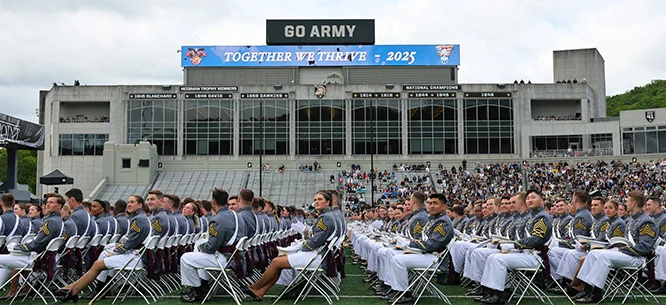
In the modern American political landscape, the intersection of military service, educational institutionalism, and the construction of masculine identity has become one of the most potent, yet under-analyzed, fault lines. On the latest episode of the Know Your Enemy podcast, hosts Matthew Sitman and Sam Adler-Bell sit down with investigative journalist Jasper Craven to dissect his provocative new book, God Forgives, Brothers Don’t: The Long March of Military Education and the Making of American Manhood.
The conversation serves as a deep dive into the historical and cultural machinery that has, for decades, attempted to manufacture a specific brand of American male—one forged in the fires of military discipline and exported to the highest echelons of civilian power. As the authors suggest, this is not merely a story about the armed forces; it is a story about the "surprising camp" of conservatism and the persistent, often violent, mythos of civilization.
Main Facts: The Nexus of Power and Discipline
At the core of Craven’s investigation is the argument that military education—from elite service academies to the broader culture of JROTC programs—has functioned as a critical laboratory for American social engineering. This pipeline does not simply produce soldiers; it produces a governing class indoctrinated with a worldview centered on hierarchy, combat-tested stoicism, and a binary view of global power.
The podcast episode highlights several key figures who embody this trajectory, most notably Peter Brian Hegseth. By examining the rise of such individuals, Sitman, Adler-Bell, and Craven explore how the "warrior ethos" is increasingly weaponized in domestic culture wars. This is not a static phenomenon. As the hosts observe, the influence of these institutions has shifted in the age of Donald Trump, where the traditional, polished veneer of the military establishment is frequently challenged—or co-opted—by populist, anti-institutional fervor.
Chronology: A History of Managed Masculinity
To understand how we arrived at this moment, one must look at the historical precedents that paved the way for the current climate.
The Post-War Stabilization (1950s–1970s)
Following the Second World War, the American establishment sought to codify a stable, patriarchal structure to manage the anxieties of the Cold War era. This period saw the rise of child-rearing manuals and psychological frameworks that emphasized "firmness" and "discipline." James Dobson’s 1970 seminal work, Dare to Discipline, serves as a cornerstone of this era. Dobson argued that traditional authority was essential to raising children, particularly boys, to withstand the perceived moral decay of a changing society.
The Evangelical-Military Convergence (1980s–2000s)
As the culture wars intensified, the lines between military discipline and religious fundamentalism began to blur. Organizations like Focus on the Family bridged the gap, framing the preservation of traditional gender roles as a divine mandate. Dan Gilgoff’s The Jesus Machine details how these institutions built the infrastructure necessary to influence national policy, effectively creating a "pipeline" that funneled young men from disciplined, faith-based homes into the military or conservative political circles.
The Populist Upheaval (2010s–Present)
The contemporary era has seen a dramatic shift. The "Long March" identified by Craven has moved into a phase of open hostility toward the "establishment." Figures like Hegseth represent a new breed: those who have been through the elite military machine but who frame their identity in opposition to the very institutions that trained them. This paradox—the "insider-outsider"—has become a defining feature of the modern American Right.
Supporting Data: The Anatomy of a Worldview
The research presented in God Forgives, Brothers Don’t is exhaustive, mapping the systemic ways in which educational and military environments reinforce one another.

- The Institutional Pipeline: The book highlights how JROTC programs often act as the initial point of contact for low-income and rural youth, providing a structured environment that prioritizes martial values over liberal arts inquiry.
- The Gender Gap: As noted in Craven’s Baffler piece, "Battle of the Sexes: Pete Hegseth’s War on Women," the rhetoric used by these figures is often deeply reactionary. The hostility toward women in combat roles is not merely a military policy debate; it is a defense mechanism intended to preserve the military as a "last bastion" of traditional, unadulterated masculine authority.
- The "Camp" of Conservatism: Perhaps the most intriguing element of the discussion is the aestheticization of the military. Sitman and Adler-Bell argue that there is a theatricality to the modern conservative male archetype—a "camp" element that relies on performative violence, stylized imagery, and a curated sense of righteous victimhood.
Official Responses and Critiques
While the work of Craven and the analysis provided by Know Your Enemy offer a compelling critique, they are met with resistance from proponents of the military-educational status quo.
Defenders of the military academy system argue that the rigorous training and character-building inherent in these institutions are essential for national security. They contend that the emphasis on "masculinity" is not an act of social engineering, but rather a reflection of the biological and historical realities of combat leadership. Critics of Craven’s work often dismiss his research as a "partisan hit job," claiming it ignores the nuanced, diverse, and modernizing efforts currently underway at institutions like West Point.
However, the podcast hosts push back against these defenses, suggesting that the "nuance" is often a smokescreen for the preservation of entrenched power dynamics that are fundamentally at odds with a democratic, pluralistic society.
Implications: The Future of the American Right
The implications of this "long march" are profound. If the most influential figures in the conservative movement are being shaped by a worldview that prioritizes martial dominance, hierarchical submission, and a perpetual state of "war" against the domestic Other, the prospects for political consensus appear dim.
- Normalization of Violence: As military tropes move into the domestic sphere, the distinction between political opponents and "enemies" becomes increasingly blurred. This shift potentially justifies the use of extreme rhetoric and even extra-legal actions in the name of "defending civilization."
- The Crisis of Authority: The paradox of the "insider-outsider" means that the very institutions designed to produce order (the military, the academy, the judiciary) are being undermined by their own products. When the elite turn against the institutions that granted them their status, the resulting vacuum is often filled by populist demagoguery.
- The Gendered Battlefield: The ongoing efforts to rollback rights for women and marginalized groups are inextricably linked to the preservation of this masculine identity. We should expect the "Battle of the Sexes" to become an even more central theme in national discourse, as the traditional male archetype feels increasingly threatened by a more inclusive reality.
Conclusion: A Necessary Reckoning
The conversation between Matt, Sam, and Jasper Craven serves as a wake-up call. By dissecting the history of military education and its impact on the American psyche, they force us to confront the uncomfortable reality that our most "patriotic" institutions may be the ones most responsible for the fracturing of our social fabric.
God Forgives, Brothers Don’t is more than a history book; it is a diagnostic tool for understanding the current American crisis. As the podcast concludes, the path forward requires not just an analysis of these institutions, but a fundamental reimagining of what it means to be a citizen in a democracy—one that is defined not by the "warrior ethos" of the past, but by a commitment to the collective survival and shared dignity of the future.
For those looking to understand the mechanics of the modern American Right, the Know Your Enemy podcast remains an essential resource. Whether you are a student of history, a political observer, or simply a concerned citizen, this episode provides the intellectual scaffolding necessary to navigate the turbulent waters of our current cultural moment.
For more in-depth analysis and to support the work of independent journalism, listeners are encouraged to subscribe to the Know Your Enemy Patreon for access to bonus episodes and extended interviews.


 Nana
Nana
 Nila Kartika Wati