



 Nana
Nana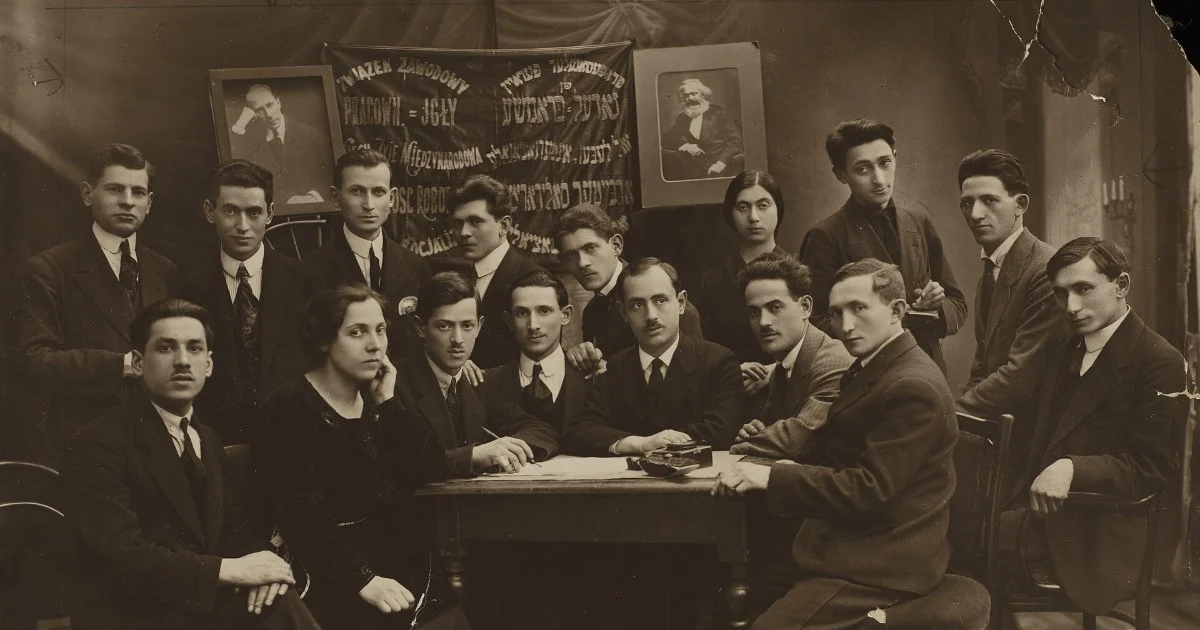
In an era defined by political polarization and a growing disillusionment with established nationalist frameworks, the legacy of the Jewish Labor Bund has surfaced as more than just a historical footnote. In her compelling new bestseller, Here Where We Live Is Our Country: The Story of the Jewish Bund (One World, 2026), artist and writer Molly Crabapple excavates a tradition of secular, anti-Zionist socialism that once served as the heartbeat of Eastern European Jewish life.
For many contemporary readers, particularly those within the Jewish diaspora grappling with the complexities of modern Zionism and the humanitarian crisis in Gaza, Crabapple’s work serves as a "usable past"—a reminder that there was, and perhaps still is, an alternative to the binary choices of nationalism and religious isolationism.
The Foundations of "Hereness"
Founded in 1897, the General Jewish Labour Bund in Lithuania, Poland, and Russia operated on a foundational principle that stood in stark contrast to both the religious orthodoxy of the time and the burgeoning Zionist movement. While Theodor Herzl’s Zionism argued that Jewish survival required a state in Palestine—a philosophy of "thereness"—the Bundists advocated for doikayt, or "hereness."
The Bundists believed that Jewish workers were an integral part of the nations in which they lived. They were committed to the radical transformation of their current homes, working in tandem with local socialist movements to secure democratic rights, economic justice, and cultural autonomy. This was not merely a political stance; it was a totalizing worldview that fostered a vibrant, secular Yiddish culture. From trade unions and women’s rights groups to the famed Medem Sanatorium, the Bund provided a comprehensive social infrastructure that functioned as, in the words of Emanuel Nowogrodski, the "universities of socialist self-management."
A Chronology of Resistance and Repression
To understand the rise and fall of the Bund, one must trace its journey through the fires of the twentieth century:
- 1897: The Bund is founded in the Russian Empire. Simultaneously, the Zionist movement is born, setting the stage for a century-long ideological conflict.
- 1903–1905: The Bund briefly affiliates with the Russian Social Democratic Labor Party (RSDLP) but splits over the issue of Jewish autonomy. During the 1905 Revolution, the Bund emerges as the largest socialist party in the Russian Empire, leading worker soviets in cities like Vilna and Lodz.
- 1917: The Russian Revolution brings the Bund back to the forefront of political life. Leaders like Henryk Erlich and Viktor Alter attempt to bridge the gap between revolutionary fervor and democratic socialism.
- 1918–1939: In independent Poland, the Bund reaches its zenith, boasting nearly 100,000 members. It survives the transition into a state-led by Józef Piłsudski, though it faces increasing violence from both the state and right-wing nationalist groups.
- 1939–1945: The Nazi invasion and the subsequent Holocaust effectively dismantle the Bund’s infrastructure, murdering 90 percent of Polish Jews.
- 1948–Present: The founding of the State of Israel sees the Bundist tradition marginalized, categorized as "naïve" by supporters of the new state, and effectively erased from the mainstream narrative of Jewish history.
The Human Cost: Portraits of Leadership
Crabapple’s narrative is elevated by her focus on the individuals who shaped the movement. Her inclusion of Henryk Erlich and Sophia Dubnova—the grandparents of reviewer Mark Erlich—provides a deeply personal lens. Henryk Erlich, a towering figure in the Bund, was a man who challenged the authoritarianism of both the Tsarist regime and, later, the Bolsheviks.
His 1933 observation remains a cornerstone of the book’s thesis: "We are not a chosen people. Our nationalism is just as ugly, just as harmful, and has the same inclination to fascist debauchery as the nationalisms of all the other nations." This sentiment, echoed by the Bund’s persistent refusal to prioritize ethnic exceptionalism over universalist human rights, is what makes the book resonate so powerfully today.

Supporting Data and the Shift in Jewish Identity
The relevance of Crabapple’s work is underscored by shifting demographics and political sentiment among American Jews. For decades, the mainstream consensus equated anti-Zionism with antisemitism. However, the events of October 7, 2023, and the subsequent bombardment of Gaza have acted as a catalyst for a profound ideological pivot.
Polling data from February 2026 illustrates this seismic shift:
- Declining Zionist Identification: Only 37 percent of American Jews now identify as Zionist, a figure that drops significantly among the younger generation.
- Changing Perception of Conflict: By September 2025, 61 percent of American Jews expressed the belief that Israel had committed war crimes during its campaign in Gaza.
- The "Genocide" Discourse: A growing segment of the Jewish population, particularly those under the age of forty, has begun to categorize the conduct of the Israeli state as a form of ethnic cleansing, arguing that such actions are not merely the byproduct of a specific administration, but are inherent to the Zionist model established in the mid-twentieth century.
These statistics suggest that the "hereness" of the Bund—the commitment to justice in one’s own community rather than the pursuit of an exclusionary national project elsewhere—is finding a new, receptive audience.
Implications for Modern Democratic Socialism
The accusation that the Bund "failed" is addressed by Crabapple with surgical precision. She argues that the movement did not fail due to a lack of viability; it was decimated by an "overpowering malicious force"—the convergence of Stalinism and Nazism. Furthermore, she highlights the abandonment of the Bund by the democratic Western powers, who refused to intervene during the destruction of European Jewry.
The implications for contemporary activists are clear. The Bund offers a model for a "usable past" that rejects the trap of ethno-nationalism. As the world witnesses the consequences of state-sponsored violence and the failure of traditional diplomatic frameworks, the Bundist insistence on cross-ethnic solidarity, worker-led self-management, and the defense of civil rights in one’s own country provides a roadmap for those seeking a post-nationalist future.
Conclusion: Beyond the Archive
Molly Crabapple has done more than write a history book; she has unearthed a buried political consciousness. Here Where We Live Is Our Country forces the reader to confront a difficult question: What would the political landscape of the twenty-first century look like if the Bundist tradition had not been silenced?
As the international community grapples with the fallout of the war in Gaza and the rise of right-wing populism globally, the legacy of the Bund serves as a reminder that history is not a static set of facts. It is a tool. By reviving the stories of those who fought for a universalist, socialist, and secular vision of the world, Crabapple provides a beacon for those who refuse to accept that "there is no alternative." The Bund may have been lost to the horrors of the 1940s, but its spirit—defiant, internationalist, and rooted in the struggle for human dignity—is being resurrected for a new generation.


 Pevita Pearce
 Nila Kartika Wati