


 Sagoh
Sagoh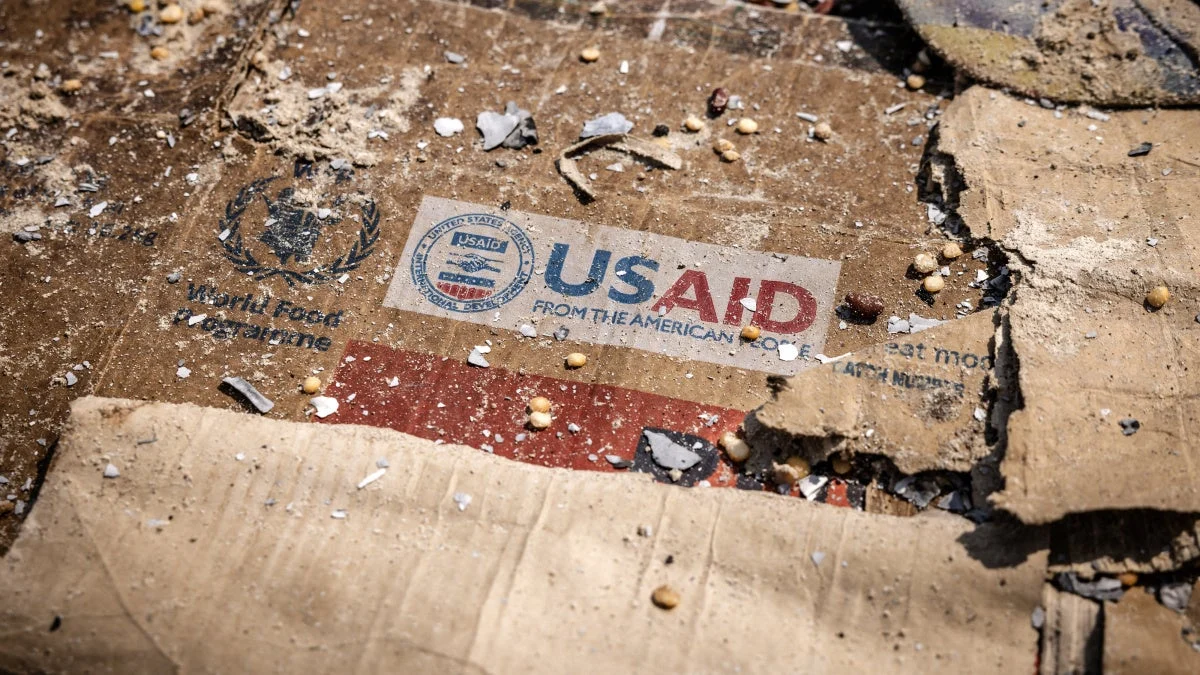
WASHINGTON, D.C. — In a seismic shift that has reverberated across the global geopolitical landscape, the United States government’s decision to abruptly terminate nearly all foreign aid in early 2025 has created a vacuum of power that autocrats and human rights abusers are moving swiftly to fill. A comprehensive 42-page report released today by Human Rights Watch (HRW), titled “Every Autocrat’s Dream: A Global Snapshot of the Human Rights Harms of US Foreign Aid Cuts,” provides a sobering account of the immediate, devastating consequences of this policy pivot.
For decades, the United States functioned as the world’s primary financier of human rights initiatives, democratic development, and civil society support. By gutting this infrastructure between January and March 2025, the Trump administration has not only signaled a retreat from its role as a global leader but has effectively dismantled the safety nets that protected millions of vulnerable people from state-sponsored violence and systematic oppression.
The Anatomy of a Policy Shift: Chronology of the 2025 Cuts
The dismantling of U.S. foreign assistance was not a gradual tapering; it was a rapid, systemic withdrawal. The following timeline outlines the acceleration of these policy shifts:
- January 2025: Immediately upon taking office, the administration issues a series of executive directives freezing all non-essential foreign aid disbursements, citing a need for "fiscal responsibility" and a "complete re-evaluation of international obligations."
- February 2025: The State Department and USAID are instructed to terminate existing grant agreements with non-governmental organizations (NGOs) focused on media freedom, judicial reform, and anti-corruption, regardless of the status of ongoing investigations or project timelines.
- March 2025: The final phase of the cuts is implemented, effectively severing ties with international aid partners and local human rights defenders across 16 critical nations. By the end of the first quarter, the U.S. had transitioned from a primary donor to a bystander in global human rights crises.
Supporting Data: A Global Snapshot of Instability
The Human Rights Watch report details the impacts across 16 countries, spanning four continents. While the contexts vary from active conflict zones to tightening authoritarian regimes, the common thread is the sudden loss of a "lifeline."
The Erosion of Media Freedom and Digital Security
In countries like Myanmar and Venezuela, U.S. funding had been the backbone of independent journalism and digital security tools. With the disappearance of this support, investigative journalists have reported a spike in cyberattacks and a drastic reduction in their ability to verify state-sanctioned abuses. The report notes that when NGOs were forced to scale back, the "chilling effect" on dissent was immediate.
Justice and the Rule of Law
In Ukraine and Georgia, the cuts were felt in the corridors of justice. Funding that previously supported the documentation of war crimes and provided resources for judicial independence programs evaporated overnight. The result? A diminished capacity for civil society to hold government actors accountable, creating an environment of impunity that emboldens those who violate the rule of law.
Targeted Violence and Discrimination
In nations such as the Democratic Republic of Congo and Haiti, the funding cuts disproportionately affected groups providing services to victims of sexual violence and marginalized communities. The withdrawal of aid meant that shelters were forced to close and legal advocacy groups—often the only recourse for those facing systemic discrimination—ceased operations.
The "Autocrat’s Dream": Implications of the Withdrawal
"The U.S. government’s withdrawal of support from the global human rights movement was music to the ears of autocrats," said Sarah Yager, Washington director at Human Rights Watch. The implications of this retreat extend far beyond the immediate loss of funds; it represents a psychological and strategic victory for regimes that have long sought to silence international monitoring.
Strategic Consequences
By cutting funding so quickly, the U.S. essentially signaled that it would no longer serve as a deterrent to human rights violators. Authoritarian leaders in Tanzania, Nicaragua, and Turkmenistan have reportedly leveraged the U.S. absence to intensify crackdowns on opposition figures. Without the pressure of U.S.-backed human rights monitoring, these regimes are operating with a renewed sense of confidence that the international community will not intervene—or even bear witness.
The Human Toll
The report emphasizes that while policy debates often focus on "fiscal efficiency," the reality is measured in human lives. The abruptness of the cuts meant that ongoing investigations into atrocities were abandoned mid-stream. Victims who were relying on witness protection programs or legal aid were left defenseless. The resilience of local human rights groups, while described by Yager as "extraordinary," is simply not a substitute for the structural support required to combat modern, well-funded authoritarian state apparatuses.
Official Responses and the Call for Accountability
The administration’s rationale for the cuts—largely rooted in a broader "America First" philosophy—has faced significant criticism from both international observers and domestic human rights advocates. While the administration argues that many foreign aid programs were plagued by mismanagement and inefficiency, Human Rights Watch counters that the "valid criticisms" of past programs do not justify a total, uncoordinated withdrawal that causes predictable, widespread harm.
The Call for an Independent Review
Human Rights Watch is now calling on the U.S. Congress to take immediate action. The primary recommendations include:
- Independent Oversight: Mandating a comprehensive, independent review to assess the full scale of the human rights consequences stemming from the 2025 cuts.
- Appropriations Restoration: Restoring targeted funding for human rights in future budget cycles to stabilize the movement before further irreparable damage is done.
- Sustainable Reform: Moving toward a "rights-respecting" model of foreign assistance that ensures transparency and efficiency without sacrificing the mission of protecting vulnerable populations.
Rebuilding the Global Human Rights Architecture
The 2025 cuts have forced a necessary, albeit painful, conversation about the role of the U.S. in the international order. If the United States is to regain its credibility as a defender of democratic values, it must recognize that foreign aid is not merely an act of charity—it is a vital component of global security.
"By cutting funding so quickly and comprehensively, the U.S. government pulled away the lifeline for many people facing abuse," Yager stated. "Their determination is not a substitute for sustained support."
As the international community grapples with the fallout, the burden of maintaining human rights now falls on a fragmented coalition of donor nations, private philanthropies, and local organizations. However, the report is clear: the global human rights movement cannot survive, let alone thrive, without a major power acting as a consistent, reliable partner.
The events of 2025 will be remembered as a turning point in history—a period where the withdrawal of a superpower created a climate of uncertainty and fear. Whether this is a permanent realignment or a temporary lapse in judgment remains to be seen, but for the millions currently living under the shadow of authoritarianism, the time for a re-evaluation of these policies is already long overdue.
The global human rights movement is resilient, but the lesson of 2025 is clear: resilience alone cannot withstand the calculated dismantling of the systems that provide for justice, equality, and safety. The world is watching to see if the United States will recognize the damage caused by its abrupt retreat and choose a path of renewed commitment to the principles it once championed.
Country-Specific Impacts: A Summary
- Central Asia: In Turkmenistan and Georgia, the loss of aid has led to the closure of key civil society hubs, leaving journalists and activists vulnerable to state surveillance.
- The Americas: In Venezuela, Nicaragua, El Salvador, Haiti, and Guatemala, the cuts have undermined efforts to address democratic backsliding and provided cover for state-led crackdowns on civil liberties.
- Africa: In the Democratic Republic of Congo, Cameroon, and Tanzania, the withdrawal has crippled local initiatives focused on health, gender-based violence, and human rights advocacy.
- Asia: From the conflict-ridden borders of Myanmar and Afghanistan to the political pressures in Bangladesh and Thailand, the U.S. departure has weakened the voices of those working to hold powerful actors to account.
- Europe: Even in Ukraine, where democratic resilience is tested by war, the loss of consistent U.S. aid has hindered the long-term documentation of war crimes and the rebuilding of civic institutions.

 Rifan Muazin
 Asep Darmawan