


 Lina Hope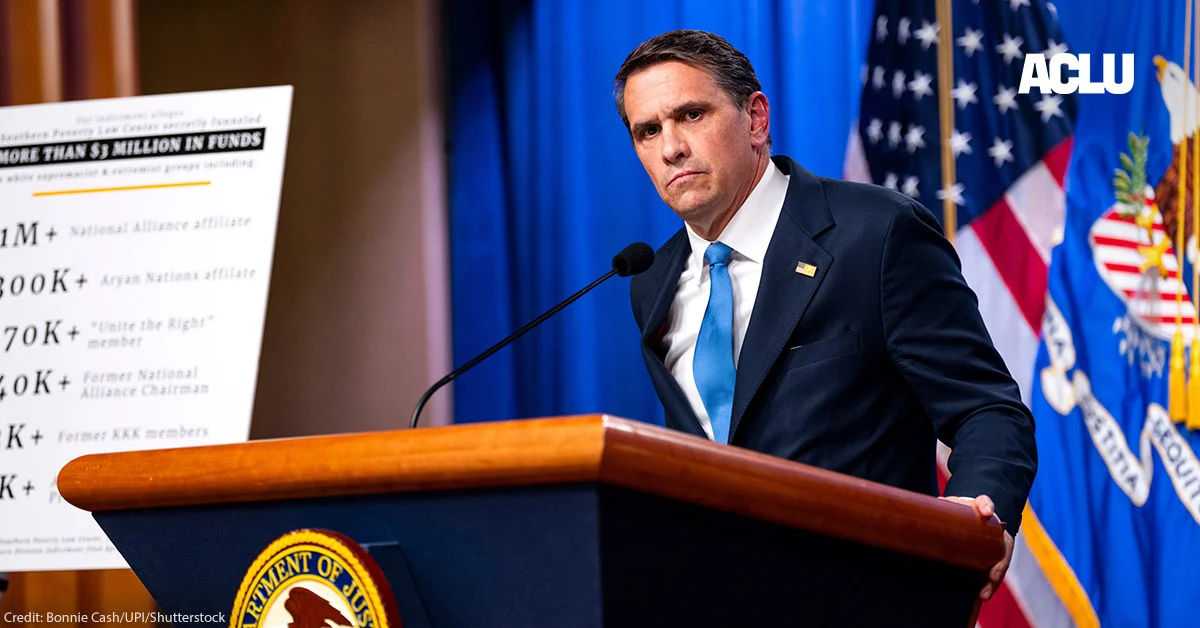
By Mike Zamore, National Director of Policy & Government Affairs, ACLU
May 20, 2026
The American legal system has long been considered the bedrock of our democracy, a neutral arbiter designed to uphold the rule of law. However, recent actions by the Trump administration suggest a chilling departure from this tradition. By launching a formal indictment against the Southern Poverty Law Center (SPLC)—a storied civil rights organization renowned for its decades-long battle against hate groups and systemic injustice—the executive branch has signaled that no entity is immune to the reach of a politicized Department of Justice (DOJ).
This is not merely a legal dispute; it is a calculated effort to punish ideological dissent, intimidate civil society, and consolidate power by forcing organizations to choose between their mission and their survival.
The Core Facts: A Manufactured Indictment
For years, the SPLC has been a thorn in the side of right-wing extremist movements, providing critical research and legal advocacy that has exposed the dark underbelly of hate groups across the American South. The organization’s work has frequently intersected with federal law enforcement, including the FBI, to track and dismantle threats to domestic stability.
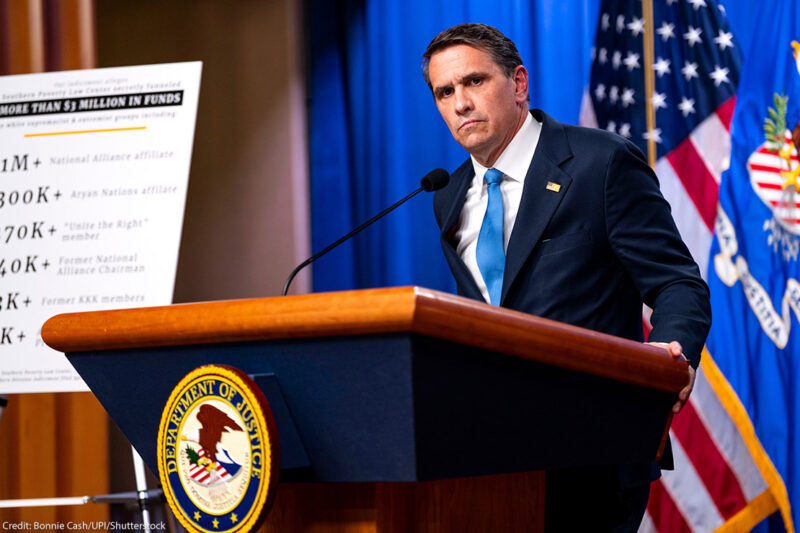
Now, the narrative has been inverted. The Trump administration, through the office of Acting Attorney General Todd Blanche, alleges that the SPLC has engaged in a "conspiracy" to advance the interests of extremist groups. This accusation, which lacks substantive evidence, is widely viewed by legal scholars and civil rights advocates as a textbook case of bad-faith prosecution. By framing a civil rights watchdog as an extremist collaborator, the administration is attempting to delegitimize the very concept of monitoring right-wing radicalism.
Chronology of Coercion
The assault on the SPLC did not occur in a vacuum; it is the culmination of a multi-year strategy to neutralize institutional checks on executive power.
- 2024–2025: The administration began laying the groundwork by labeling various civil rights organizations as "threats to national security" during congressional hearings. Simultaneously, the FCC began scrutinizing media outlets that provided favorable coverage to these groups.
- Early 2026: The Department of Justice opened an investigation into the SPLC’s donor records and research methodologies.
- April 2026: Major financial institutions, including Fidelity, Vanguard, and Schwab, faced intense pressure from administration-aligned interests. Following the DOJ’s public announcement of their investigation, these firms abruptly halted certain customer-directed donations to the SPLC, citing the "ongoing legal uncertainty."
- May 2026: The formal indictment was announced, marking the first time in modern history that a major civil rights organization has been subjected to such severe federal legal action based on its advocacy work.
The Financial "Chilling Effect": A New Tool for Repression
A conviction is not the administration’s primary objective; the process is the punishment. The current strategy relies on the "chilling effect"—a tactic designed to bleed an organization dry through legal fees and administrative burdens.
The immediate withdrawal of support from major donor-advised funds represents a dangerous evolution in how the state exerts control over the private sector. By creating a climate where being associated with an organization—even through a donation—is deemed a liability, the government effectively deputizes financial institutions to act as censors. When a non-profit is forced to spend its limited resources on defense attorneys rather than its mission, the administration has already achieved its goal: the silencing of a prominent critic.
Supporting Data and the Pattern of Abuse
The prosecution of the SPLC is merely one facet of a broader, systemic campaign. The administration’s playbook for silencing opposition is consistent and multi-dimensional:
- Administrative Retaliation: The government has used research grant clawbacks as a weapon. Projects focusing on DEI (Diversity, Equity, and Inclusion) and gender identity have been targeted by the NIH, which rescinded funding based on "prohibited" terminology.
- Immigration and Speech: Green card holders have faced deportation threats for participating in peaceful protests, a clear violation of First Amendment protections for non-citizens.
- The Press as a Target: Media outlets have been systematically marginalized. Journalists refusing to act as mouthpieces for the White House have been barred from briefings, while federal agencies have threatened to pull licenses or funding for organizations that broadcast "un-American" content.
These are not isolated incidents; they are part of a deliberate strategy to dismantle the "tug-of-war" that defines American democracy.
Official Responses and the Judicial Perspective
While the Department of Justice maintains that these actions are "standard oversight," the legal community is sounding the alarm. The ACLU, drawing on 106 years of history in defending civil liberties, maintains that this weaponization of the state is unprecedented.
History provides a clear lesson on the dangers of such behavior. Only two years ago, in the landmark Supreme Court case National Rifle Association v. Vullo, the Court unanimously (9-0) ruled that the State of New York could not use its regulatory power to punish an advocacy group for its viewpoint. The current administration’s actions against the SPLC fly directly in the face of this precedent. The executive branch is testing the boundaries of the law, hoping to create a new reality where the DOJ serves the President’s political agenda rather than the Constitution.
The Broader Implications for Democracy
What happens to the SPLC today could happen to any organization tomorrow. If the federal government is allowed to define its critics as criminals, the democratic process itself collapses. A functioning democracy requires a robust civil society where people can organize, protest, and hold their leaders accountable without fear of incarceration or financial ruin.
Why This Matters for All Americans
Whether one agrees with the SPLC’s specific political objectives is irrelevant to the constitutional crisis at hand. The issue is not the content of the speech, but the right to speak at all. When the government is permitted to choose which groups are "legitimate" and which are "subversive," it destroys the free marketplace of ideas.
If we allow the administration to turn the Department of Justice into a weapon against its political rivals, we are effectively conceding that our rights are subject to the whims of the party in power. This is a direct assault on the American experiment.

The Path Forward: A Call to Action
The protection of our civil rights requires a unified, non-partisan defense of the institutions that make democracy possible. To counteract this trend, several steps are essential:
- Public Accountability: Citizens must demand that their representatives in Congress condemn these abuses of power. The legislative branch has a duty to provide oversight, and silence in the face of this overreach is complicity.
- Corporate Responsibility: Private sector actors, particularly financial institutions and media companies, must resist the temptation to bow to government pressure. They must understand that bowing to censorship today makes them the target of tomorrow’s regime.
- Civil Solidarity: We must stand with the SPLC and other organizations under fire. An attack on one is an attack on the collective capacity of the American people to dissent.
The Trump administration’s attempt to crush the SPLC is a litmus test for our nation. We have a right to a government that serves the people, not one that views its citizens as enemies to be managed or eliminated. As we look to the future, we must decide if we will allow the erosion of our fundamental freedoms or if we will draw a line in the sand.
The struggle for civil rights has never been easy, but the stakes have never been higher. To protect our democracy, we must stand firm against the weaponization of our institutions. The time to speak up is now, before the tools of repression are turned against the rest of us.


 Neng Nana
 Basiran